
A safe dog beach day depends on active supervision, frequent access to fresh drinking water, shade and rest, awareness of heat and surface temperature, and a decision to leave questionable water alone. If a boat or open-water outing is involved, add a properly fitted canine life jacket, a practiced retrieval plan, and a way to contact veterinary help. Swimming ability or flotation equipment reduces some risks but never replaces a person watching the dog continuously.
Plan the destination before you leave
Beach conditions and rules vary by destination. Before loading the car, confirm that dogs are permitted, learn whether they must be leashed, and check current beach, boating, weather, and water-quality advisories. Conditions can change during the day, so check again shortly before departure. The Centers for Disease Control and Prevention (CDC) pet-travel guidance also recommends advance preparation, current identification and vaccination planning, supervision, and readily available veterinary and poison-control contact information.
As an Amazon Associate I earn from qualifying purchases.
Pack for control, hydration, shade, and emergencies
| Item | Why it matters |
|---|---|
| Fresh drinking water | Provides a safe alternative to seawater, lake water, river water, or any water of uncertain quality. |
| Bowl or portable dog water bottle | Makes it practical to offer small drinks frequently; an attached bowl is a convenience, not a substitute for carrying enough water. |
| Leash, collar or harness, and current identification | Helps you control the dog around people, wildlife, hooks, bait, and sudden hazards. |
| Shade and a resting area | Allows the dog to cool down away from hot sand, pavement, rocks, or direct sun. |
| Waste bags and familiar supplies | Supports local rules and keeps the dog’s routine predictable. |
| For boating: a properly fitted canine life jacket | Adds buoyancy and a lifting or guiding point if the dog falls or needs help in the water. |
| Pet first-aid supplies | Useful for minor problems during a boat outing; identify nearby veterinary care before departure. |
Do not assume a destination has safe water, shade, a usable exit from the water, or nearby veterinary services. Know how you would get the dog back if it bolted, became exhausted, or went overboard.
Do these 3 things before closing this tab:
1Scan for outdated or missing drivers - takes under a minute2Clear out junk files and repair common Windows errors3Fix the driver behind crashes, sound loss and screen glitchesManage heat, sun, and hot surfaces
Choose a cooler part of the day when possible, provide shade, and schedule rest before the dog looks exhausted. Beach sand, boardwalks, rocks, asphalt, and boat decks can become uncomfortable or dangerously hot. The available veterinary guidance urges owners to watch for heat and paw discomfort but does not establish one universal safe-temperature threshold for every dog, surface, or weather condition.
#1 Best Overall

- Dog Life Jacket: Maximum-buoyancy vest for large dogs (28–32" girth) of all swimming skill levels; supports without restricting movement; ideal for pool, lake, beach, or boat
- Secure, Easy Fit: Instant security with adjustable straps and quick-release buckles for easy on/off; see size chart and fitting video for guidance
- Durable & Lightweight: Ripstop material with thick foam padding and reinforced stitching for long-lasting comfort and strength
- Head Support & Rescue Handle: Front float helps support the head and neck; strong top safety handle for lifting and assisting your dog in an emergency
- High Visibility: Bright color with reflective accents for easily spotting your dog in low light and in all types of water, from pools to lakes
- Walk the dog briefly on the planned route before a long beach session and watch its gait and willingness to continue.
- Use shade for regular breaks rather than waiting for heavy panting or weakness.
- Limit direct-sun exposure and shorten the outing when the dog is struggling to settle, repeatedly seeking shade, or showing discomfort on its paws.
- Keep fresh water available throughout the visit; thirst is not a reason to permit drinking from the sea or a lake.
Dogs differ in age, fitness, coat, and heat tolerance. If your veterinarian has given your dog individual limits, follow those limits instead of a generic beach schedule.
Check water quality before paws get wet
Keep a dog away from stagnant or visibly polluted water. CDC guidance says: “Don’t let pets swim in, play in, or drink stagnant water or water that looks discolored, smells bad, has foam, scum, algal mats, or paint-like streaks on the surface, or has dead fish or other animals washed up on its shore or beach.” Read local advisories for the specific beach, lake, river, or harbor before entering the water and heed closures when they are posted.
Harmful algal blooms can occur in fresh, salt, and brackish water. According to CDC veterinary guidance, an animal can be exposed by drinking contaminated water, eating algae or contaminated fish, touching the water with skin or eyes, or inhaling droplets. A bloom can be harmful or deadly. Do not try to identify safety from appearance alone, and do not treat a consumer water test as a replacement for official advisories or veterinary care.
What’s actually slowing this PC down?
Pick the symptom - the matching free tool is one click away.
If your dog contacts suspicious water
Move the dog away from the water, prevent licking of wet fur, and rinse with clean fresh water as soon as practical. Call a veterinarian promptly if the dog may have contacted a harmful bloom or begins acting ill. CDC notes that there are no known antidotes to the toxins involved, while prompt supportive medical care can save an animal’s life. The CDC prevention guidance explains additional precautions for pets and livestock.
Rank #2

- Dog Life Jacket: Maximum-buoyancy vest for medium dogs (21–27" girth) of all swimming skill levels; supports without restricting movement; ideal for pool, lake, beach, or boat
- Secure, Easy Fit: Instant security with adjustable straps and quick-release buckles for easy on/off; see size chart and fitting video for guidance
- Durable & Lightweight: Ripstop material with thick foam padding and reinforced stitching for long-lasting comfort and strength
- Head Support & Rescue Handle: Front float helps support the head and neck; strong top safety handle for lifting and assisting your dog in an emergency
- High Visibility: Bright color with reflective accents for easily spotting your dog in low light and in all types of water, from pools to lakes
Supervise every swim
Stay close enough to intervene. Even a dog that swims confidently can tire, become disoriented, encounter waves or currents, or struggle to find an exit. The AKC beach guidance and its water-safety guidance both emphasize close supervision and gradual introductions.
Introduce water gradually
- Start at a calm, shallow edge with an obvious route back to dry land.
- Let the dog investigate at its own pace; never push, throw, or drag a reluctant dog into water.
- Remain beside the dog as depth increases and watch its body language and breathing.
- End the session while the dog is still comfortable, then offer fresh water and a shaded rest.
Keep the dog under control around strong currents, waves, slippery rocks, fishing hooks, bait, fuel, wildlife, dead marine animals, and other beach or marina hazards. A leash can help on land, but do not create an entanglement hazard by attaching the dog to a boat in a way that could trap it if the craft capsizes.
How do I keep my dog from drinking salt water?
Bring more fresh water than you expect to use, offer it frequently in a bowl or portable bottle, and interrupt attempts to drink seawater. Salt water can worsen thirst and cause illness. Do not rely on ocean, lake, river, or brackish water for hydration. If your dog repeatedly seeks seawater despite access to fresh water, end the activity and ask a veterinarian for advice.
Quick wins for a faster PC:
Fix the driver behind crashes, sound loss and screen glitchesFind Drivers →Repair Windows errors before they cause bigger problemsFix Now →Boat and open-water safety: choose and fit a life jacket
The American Animal Hospital Association states, “Have your pet wear a properly fitted life jacket on or near boats.” A life jacket can help keep a dog afloat and gives an adult a handle or other point for guiding or lifting, but it cannot prevent every accident and does not replace supervision or a retrieval plan.
Rank #3

- Unrestricted Movement: Designed with a ‘sports’ concept, the VIVAGLORY patented dog life vest opens up more around the neck and front chest. It doesn’t restrict your dog’s movement and avoids contact near the armpits and belly, preventing rubbing against your pup’s skin. Ideal for most breeds, especially those with broader or deeper chests, this dog swimming vest offers unmatched comfort during swimming and boating adventures
- Superior Buoyancy: This dog lifejacket features evenly distributed buoyancy with ultra-buoyant foam covering under the neck, top, and sides. Supporting your dog's entire body, this dog floating vest helps them doggy paddle confidently and easily in any water setting—perfect for both experienced swimmers and beginners, whether in pools, lakes, or at the beach
- Boosted Safety: Equipped with a sturdy handle and D-ring, this puppy life jacket allows for easy restraint and quick rescue if your puppy falls overboard or swims too far. Reflective strips and bright colors increase visibility, ensuring your doggy life jacket is easy to spot even in low-light conditions. The soft mesh belly band dries quickly for comfort, while adjustable straps with weight-bearing buckles guarantee a secure fit
- Built to Last: Made from ripstop Oxford material that passed the CA65 test, this dog lifevest is durable enough for swimming, boating, floating, and paddle boarding. Reinforced stitching and a comfortable lining ensure long-lasting performance. Whether it's your first trip or a frequent outing, this dog flotation vest is designed to handle repeated water adventures. NOTE: Always supervise your dog during water activities, even when wearing the dog lifejacket
- Universal Fit: The secure hook-and-loop fastening and adjustable buckled straps at the neck and belly of the dog swim vest provide a custom fit for your puppy. Putting the dog water vest on takes seconds. For best fit, measure the widest part of your dog’s ribcage and check the VIVAGLORY sizing chart
Compare jackets by function, not breed label
| Feature | What to check |
|---|---|
| Fit and adjustment | Use the dog’s measurements and the manufacturer’s size guidance. Straps should be secure without restricting breathing or movement. |
| Freedom of movement | The dog should be able to swim, sit, and lie down comfortably. |
| Flotation and coverage | Look for enough buoyant material to support the dog in the intended water conditions without making movement awkward. |
| Visibility | Bright colors or reflective material make a dog easier to locate in changing light and busy water. |
| Rescue handle | A sturdy handle can help an adult guide or lift the dog; verify that it is securely attached. |
| Durability and condition | Inspect seams, buckles, straps, and flotation before each outing and replace damaged equipment. |
AKC fitting guidance recommends that two fingers fit beneath the straps and that the jacket permit comfortable swimming, sitting, and lying down. A breed name alone cannot establish fit: measure the individual dog and test the jacket in a controlled, shallow setting before relying on it on a boat. See the AKC life-jacket fitting guidance for the fitting principles.
Acclimate before the longer trip
- Let the dog investigate the jacket on land and reward calm behavior.
- Put it on for short periods, checking that straps do not rub and that the dog can walk, sit, and lie down.
- Practice in calm, shallow water with an easy exit and your hands close by.
- Increase duration only while the dog remains relaxed and coordinated.
- Before departure, inspect buckles, adjustment points, seams, and the rescue handle again.
The AKC boating guidance recommends giving a dog time to get used to the boat and flotation gear before a longer outing. Keep a person assigned to watch the dog rather than assuming everyone aboard will notice a fall.
Have a retrieval plan before casting off
Decide who will call for help, who will control the boat, and how the dog would be brought aboard without creating a second casualty. The jacket’s handle may help an adult guide or lift the dog, but it is not a guarantee that a person can safely reach overboard. Keep the dog away from propellers, lines, anchors, fishing gear, fuel, and sharp hardware. Never tether the dog so a capsize or sudden movement could leave it trapped underwater.
Monitor the dog throughout the outing
Offer regular breaks, fresh water, and shade. Stop swimming or boating activity when the dog appears distressed, fatigued, uncoordinated, or unwilling to continue. Remove the dog from hazards immediately rather than waiting for a symptom to become severe. If you are unsure whether a sign is heat stress, exhaustion, injury, or toxic exposure, contact a veterinarian.
Rank #4
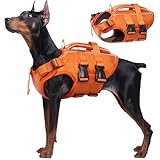
- 【Dog lifejacket Size】XS, S, M, L, XL, XXL fits most breeds furry friend,our size of dog life vest for swimming has been strictly measured. Chest girth is the key measurement, choose the smaller size if between two. Ideal for small dog life jacket, large dog life jacket, medium dog life jacket, and pet life jacket needs
- 【High Flotation Dog Swim Vest】This dog vest for swimming consist of ripstop Oxford & Polyester cloth, and high-density pearl cotton foam, which offers the dog swim vest great flotation support. Dog swimsuit gives dog additional safety and endurance in the water. Perfect as dog life vest for swimming, dog pool float, or dog swim vest for safe water fun
- 【Safe & Protective Dog life Vest】Dog swimming vest has a sturdy handle for quick rescue, which helps keep your pet safer in the water. The biggest role of the life safe vest is assist the dog to swim, reduce the amount of movement of the hind legs, helps reduce strain on the hind legs. Suitable for dog life vests for boating, dog life jackets for large breeds, and small dog life vest for swimming
- 【Adjustable Dog Swimming Vest】The dog life jackets belly and neck are designed with sturdy adjustable nylon straps and double-row quick-release buckles with hook & loop panels to provide double security for your dog. These designs make the dog water vest is easy to put on and take off. Works for dog swim vest, dog water vest, dog life vest with handle, and dog life jacket small or large
- 【Reflective Dog Safety Vest】 Kuoser dog flotation vest with bright colors and reflective strips can help you better notice your dog's position. Ideal for dog beach essentials, dog pool floats for small dogs, dog pool float for large dogs, and other outdoor water activities. Make swimming, boating, and pool time safer and more enjoyable for your furry friend
- Keep the dog close around fishing hooks, bait, wildlife, dead fish, and unfamiliar objects.
- Prevent scavenging of algae, fish, marine animals, or debris.
- Maintain control near strong currents, surf, ramps, docks, and slippery surfaces.
- Reassess the plan when weather, waves, visibility, or water advisories change.
Rinse and check the dog after swimming
AAHA recommends rinsing a pet with fresh water after swimming to remove salt, sand, algae, bacteria, and other irritants. Rinse the coat, paws, underside, and areas around the collar or jacket, then dry the dog and inspect for cuts, embedded debris, irritated skin, or tangled straps. Clean and dry the life jacket according to its care instructions before storing it.
Contact a veterinarian promptly after possible harmful-bloom exposure or if the dog develops illness. Bring details about where and when the exposure occurred, whether the dog drank the water or only touched it, and any visible warning signs or local advisory information. Do not wait for a suspected toxin to “wear off.”
A simple decision checklist
- Go: Dogs are allowed, advisories are clear, weather and surfaces are manageable, and you have fresh water, shade, control equipment, and a plan for veterinary help.
- Change the plan: The dog is unaccustomed to water, conditions are hot or rough, shade is unavailable, or the boat and life jacket have not been introduced calmly.
- Do not enter the water: There is stagnant or discolored water, foam, scum, algal material, paint-like streaking, dead animals on shore, or an official advisory or closure.
- End the outing: The dog is fatigued, distressed, overheated, repeatedly drinking seawater, or showing any sign of illness or injury.
For individual medical concerns, life-jacket fit, or suspected toxic exposure, your veterinarian is the appropriate source of advice. Safety equipment and preparation lower risk; neither guarantees that a dog will be safe in every beach or boating situation.
Windows Errors? Fix Them Before They Spread
Repair common Windows errors and clear accumulated junk for a smoother, more stable PC - no reinstall needed.Free scan · no reinstallCrashes, No Sound, or Screen Glitches?
Random freezes, missing sound and display glitches usually trace back to one bad driver. Find and replace yours safely.Free scan · under a minuteQuick Recap
Product prices and availability are accurate as of the date/time indicated and are subject to change. Any price and availability information displayed on Amazon at the time of purchase will apply.





Leave a Reply