Recommended Free Tools
Neither daycare nor a dog walker is automatically better for a dog with separation anxiety. Choose the arrangement that keeps your dog below its current distress threshold while a veterinarian or qualified behavior professional helps guide treatment. A dog who can relax at home between visits may do well with a one-to-one walker; a dog who cannot tolerate being alone may need someone to stay with them, or daycare if they are comfortable in that setting. Care arrangements help manage the problem—they do not, by themselves, teach a dog to feel safe alone.
How to choose between daycare and a dog walker
Start with your dog’s actual response, not the name of the service or the convenience of its schedule. The central question is whether your dog can stay calm in that setting and during the time they are not directly with a person. A lively group environment may suit one dog and overwhelm another; a short walk may be enough for a dog who can settle at home, but not for one who becomes distressed as soon as the owner leaves.
As an Amazon Associate I earn from qualifying purchases.
| Decision factor | Daycare may be a fit if… | A walker may be a fit if… |
|---|---|---|
| Comfort around other dogs | Your dog is comfortable in a group and can settle between activity. | A group is stressful, or your dog does better with a familiar one-to-one outing. |
| Being at home alone | Your dog cannot tolerate being alone for the relevant period and is comfortable at the facility. | Your dog can remain calm at home between visits, and the visit breaks up the absence without pushing them past their current tolerance. |
| Care and observation | Staff actively supervise, provide rest and enrichment, notice behavior changes, and communicate them to you. | The walker can follow your dog’s behavior plan, notice distress, and share timely observations. |
| Role in treatment | Daycare is a temporary way to avoid an overwhelming absence while treatment proceeds. | Walks or visits are also management; they do not replace gradual alone-time training. |
These are practical decision factors, not results from a clinical comparison. Veterinary and animal-welfare sources do not establish that daycare or walkers have a higher success rate for separation anxiety. There is no evidence-based universal winner or numerical success rate to use when choosing. Individual observation matters more than a general claim that one type of care is best.
Free tools Windows power users keep installed
One-click scans. No signup required.
When a walker is more likely to work
A walker can be a reasonable choice when your dog is comfortable staying home for at least part of the day, enjoys the walker’s company, and can relax before and after the visit. A predictable visit may provide a break in an absence without adding the stimulation of a group setting. This works only if the dog remains within their current tolerance; a visit that comes after the dog has already become distressed does not prevent that distress.
#1 Best Overall

- 【Anxiety Relief】WEOK heartbeat puppy toy which is a simulation of the true pulsing heartbeat enables the puppy to feel the comfort. It can help puppies and cats to relief the separation anxiety, loneliness, go through the tough time and adapt the new home or other complex environment. Important tips for heartbeat device: Press and hold the switch long enough, it works; Press and hold the switch long enough, it stops.
- 【Crate Training Toy & Sleep Aid Toy】When the time comes for crate training, cuddling with WEOK heartbeat buddy will help reduce negative behaviors, such as whining and barking,which means you will get more sleep at night. It is a good behavioral training aid toy which could comfort your puppies.
- 【Suitable for all kinds of dogs and cats】Whether an older rescue dog or a new puppy, the WEOK Heartbeat Puppy Toys help your special pup through the tough times with comforting calmness from a warm, cuddly friend with a heartbeat can ease their fears and offer general anxiety relief. This heartbeat stuffed animal helps your dog find the peace and relaxation they need.
- 【Best Gift for Pet & Comfort Toy for Puppy】The WEOK plush toy with heartbeat simulate is suitable for all puppies, small, medium, large dogs, cats, helps pets reduce anxiety, tension, loneliness, behavior training, insomnia aid, soothes dogs and more, and it is a great dog birthday or festival gift.
- 【Perfect buddy for our new puppy】The WEOK heart beat dog toy for puppy can help dogs not bark, howling and make noise when they are alone, with the company of heartbeat stuffed animal toy to make dogs adapt to their kennels or dog bed, reduce the dog's sticky behavior and sleep aid at night, let the dog sleep well.
Ask whether the same person can come consistently, whether they can follow any instructions from your veterinarian or behavior professional, and how they will tell you if your dog seems uneasy. Share known triggers and the plan for departures and arrivals. There is no universally safe number of hours between visits: what a dog can manage depends on that dog and should be judged from observation and professional guidance.
A walker is not the same as someone staying with your dog. If your dog cannot settle at all during the periods before or after a walk, a visit that briefly interrupts the day may leave the main difficulty unchanged. In that situation, ask whether a sitter who remains with the dog, either in your home or another familiar arrangement, would be a more suitable temporary way to prevent a difficult absence. The important distinction is not simply “walk versus daycare”; it is how much time your dog can safely spend without company and whether the proposed care fills that gap.
When daycare may be more appropriate
Daycare may help with management when your dog cannot be left alone during the relevant stretch and genuinely enjoys the facility. It can also be unsuitable: discomfort around other dogs, inability to rest, or signs of stress in a busy environment can make the setting a poor fit, even if it solves a scheduling problem. A gradual introduction and observation of your dog’s behavior during and after visits can help you assess whether the arrangement is working.
The Tool Desk
Outbyte PC Repair FREERepair Windows errors before they cause bigger problemsFix Now →Outbyte Driver Updater FREEScan for outdated or missing drivers - takes under a minuteDriver Scan →Before enrolling, ask how dogs are grouped and supervised, when they can rest, what enrichment is offered, how staff recognize fear or anxiety, how they respond when a dog is uncomfortable, and how behavior changes are recorded and shared with owners. Make sure the facility can separate a dog who needs space. UK licensing guidance specifically calls for monitoring and communicating signs of stress, fear, or anxiety in the context covered by that guidance. It is UK-specific and should not be treated as a licensing rule elsewhere; local requirements vary.
Ask the facility to explain what happens if your dog is not coping: who notices, what steps staff can take, and how quickly you will hear about a change. A suitable program should be able to tell you about your individual dog’s experience, not only describe the group’s general routine. A facility’s willingness to discuss rest, supervision, separation when needed, and communication can help you decide whether it can accommodate your dog. Do not assume that a full day of activity is necessarily restful or appropriate for an anxious dog.
Rank #2

- Heartbeat Toy for Medium Breeds: Plush comfort toy (12 x 8 in) sized for dogs 25-70 lbs; includes beating heart, 1 disposable heat pack, and 2 AAA batteries; also available in Junior for small breeds and Large for 70+ lb breeds
- Battery-Powered Heartbeat: Provides a rhythmic pulsing sensation designed to comfort puppies during rest, crate time, or overnight use; press button and place heart in belly pouch; batteries included; not a chew toy, remove heart before unsupervised play
- Calming Comfort for New Puppies: Designed to help your puppy settle during first nights home, crate training, and bedtime; rhythmic heartbeat and warmth create a soothing littermate-like presence; many owners use during travel, storms, and separation
- Heat Pack and Easy Care: Disposable heat pack inserts into belly pouch for up to 24 hours of warmth (single-use; replacement packs sold separately in 6-pack and 12-pack); plush toy is machine washable; remove heart unit and heat pack before washing
- Trusted by Over 1 Million Dog Owners: The original heartbeat comfort toy designed by SmartPetLove; used by breeders, shelters, and veterinary professionals; available in three sizes to fit every breed; batteries included and ready to use from day one
Confirm what is causing the distress
Behavior that appears when an owner leaves does not, on its own, establish separation anxiety. Other problems—including distress related to noise or confinement, or incomplete housetraining—can look similar. A veterinarian can assess what may be contributing and whether another health or behavior issue needs attention. Seek veterinary advice especially if your dog panics, injures themselves, cannot eat, or has a sudden behavior change.
Video can capture behavior that is easy to miss when you are away. If it is safe and practical, record a short absence and share it with your veterinarian or behavior professional. The American Veterinary Society of Animal Behavior (AVSAB) describes video as useful for identifying behavior that may otherwise go unnoticed. The recording can help show when distress starts and what your dog does; it is an observation aid, not a diagnosis on its own.
What’s actually slowing this PC down?
Pick the symptom - the matching free tool is one click away.
Try to observe rather than provoke. The goal is not to leave your dog alone for a long time to see how bad things get. A short, safe recording may provide useful context, while deliberately pushing past what the dog can tolerate risks creating another distressing experience. Share what you see with a professional, including when the behavior begins and whether it appears tied to a particular circumstance such as being confined or a noise.
Use care to manage absences while treatment proceeds
Daycare, a walker, or a sitter can reduce the chances that your dog experiences an absence longer or more intense than they can currently tolerate. They are management choices, not a cure. The ASPCA describes using a sitter in the home, a sitter’s home, or daycare during desensitization so the dog does not have to experience the full-intensity fear trigger. The right option is the one your individual dog can tolerate.
The Merck Veterinary Manual advises that dogs with separation anxiety be left alone as rarely as possible during treatment because repeated distress can make sensitization worse and treatment more difficult. That can require coordinating household schedules and care arrangements with a professional’s plan. If a walker visit still leaves a long or difficult period alone, consider whether someone can stay with the dog instead, or whether a different arrangement is needed.
Rank #3

- Puppy Anxiety Relief Toy: Our heartbeat dog toy simulates the sound of a real heartbeat, when the heartbeat is activated, the dog or cat (or other pet) will feel regular vibrations, just like a mother's or partner's heartbeat, to relieve their anxiety and stress.
- Heartbeat Pet Toy: The heartbeat simulates a real companion environment, just like an environment accompanied by someone. After turning on the heartbeat mode, the heartbeat sound is very natural, which will calm down the dog slowly, which can effectively help the dog reduce anxiety and stress. heartbeat can work continuously for 8H , it will automatically close.
- Behavioral Training Aid Toy: When you work away from home, heartbeat stuffed toy is a great comforting, training toy, it can accompany your dog play or sleep or training, and the dog won't feel lonely, scared, even with thunder and lightning weather.
- Afety Velcro: Compared with zippers, velcro will be safer, more durable, and has a good seal, reducing the risk of dogs eating the zipper by mistake, making you more assured of stuffed animal with heartbeat to accompany your dog.
- Premium Quality: Puppy toy with heartbeat is made of high quality short plush and PP cotton, very soft, comfortable and safe.
Think through the whole absence, not just the time a caregiver is present. Consider the period before the visit, the visit itself, and the time afterward. If care changes only one part of the day but the dog is still left beyond their current ability to cope, the arrangement may not be preventing the distress that treatment is meant to avoid. Tell the professional helping you with treatment what care you can arrange, so that the behavior plan and your daily routine work together.
Management can be temporary and may need to change as your dog’s needs or treatment plan change. For example, a dog who is comfortable with an individual walker but not groups may use walks or a sitter rather than daycare. Conversely, a dog who cannot manage the hours alone between visits may need more continuous company for now. These are conditional options, not steps that every dog should follow in a fixed order.
What treatment generally involves
Gradual desensitization
Cornell’s veterinary guidance describes gradual desensitization: begin with very short absences the dog can handle, then increase duration only gradually. The starting point and pace should be tailored to the dog’s response rather than to a fixed timetable. If an absence provokes distress, it is too difficult for that stage of the plan; discuss how to adjust the process with a veterinarian or qualified behavior professional.
This is different from expecting a dog to “get used to it” by being left alone for a long stretch. The care arrangement and the training plan have separate jobs: care helps avoid an overwhelming absence, while gradual practice is designed to build tolerance in manageable steps. Do not set an arbitrary target duration or increase absences on a schedule that ignores the dog’s response.
Relaxation and counterconditioning
Merck notes that relaxation training and counterconditioning may help some mild cases. Counterconditioning pairs an experience with something positive; food-based independent activities, such as a chew or puzzle feeder, may be part of an individualized plan for a dog able to use them safely. These activities are not a substitute for treatment when anxiety is significant, and a toy or exercise session should not be presented as a cure.
Rank #4
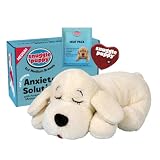
- Heartbeat Toy for Medium Breeds: Plush comfort toy (12 x 8 in) sized for dogs 25-70 lbs; includes beating heart, 1 disposable heat pack, and 2 AAA batteries; also available in Junior for small breeds and Large for 70+ lb breeds
- Battery-Powered Heartbeat: Provides a rhythmic pulsing sensation designed to comfort puppies during rest, crate time, or overnight use; press button and place heart in belly pouch; batteries included; not a chew toy, remove heart before unsupervised play
- Calming Comfort for New Puppies: Designed to help your puppy settle during first nights home, crate training, and bedtime; rhythmic heartbeat and warmth create a soothing littermate-like presence; many owners use during travel, storms, and separation
- Heat Pack and Easy Care: Disposable heat pack inserts into belly pouch for up to 24 hours of warmth (single-use; replacement packs sold separately in 6-pack and 12-pack); plush toy is machine washable; remove heart unit and heat pack before washing
- Trusted by Over 1 Million Dog Owners: The original heartbeat comfort toy designed by SmartPetLove; used by breeders, shelters, and veterinary professionals; available in three sizes to fit every breed; batteries included and ready to use from day one
Professional and veterinary guidance
Ask a veterinarian to assess the behavior and discuss treatment options. A veterinary behaviorist or qualified reward-based trainer can help implement a plan; the professional’s role is distinct from the day-to-day management provided by a walker, sitter, or daycare. Merck’s medication information is specific to the United States, and decisions about medication belong with a veterinarian. Cornell recommends positive reinforcement and advises against harsh or punitive methods.
How to assess whether an arrangement is helping
- Get a behavioral assessment. Describe what happens before, during, and after departures, including any known triggers or sudden changes. Ask whether other explanations need to be considered.
- Observe a short absence. Use video if appropriate, then share it with the veterinarian or behavior professional. Do not deliberately prolong an absence to provoke a reaction.
- Match care to your dog’s tolerance. Choose a walker, sitter, or daycare based on whether your dog can settle with that person or in that setting, not solely on availability.
- Agree on communication. Tell the caregiver about the behavior plan and ask for prompt updates about distress, inability to settle, or other changes. For daycare, ask how staff record and report observations.
- Introduce the arrangement gradually. Observe your dog’s response during and after visits or daycare. If group care appears stressful, stop treating it as a suitable solution and discuss another management option.
- Keep treatment moving. Coordinate care with the gradual behavior plan so the dog is not repeatedly left to experience an absence beyond their current ability to cope.
When reviewing updates, look for whether your dog can settle in the arrangement and whether staff or the walker report changes that should be discussed with your professional. A single positive or difficult visit does not create a universal rule about what will work, but repeated discomfort is important information. If you cannot get clear observations from a provider, you have less information to judge whether their care is a good fit.
Independent reader supportYour contribution helps us test, update, and keep practical guides available for everyone.Food puzzles and chews: optional, with safety checks
A food puzzle or chew may provide enrichment or support counterconditioning for some dogs, but it cannot make an unsuitable absence safe by itself. Introduce any item while you are present and check that your dog uses it safely. AVSAB advises checking that a dog consumes long-lasting treats safely; do not leave an item your dog may break apart or swallow. If your dog will not eat when alone, that observation is useful to share with a veterinarian, not a reason to assume a more appealing toy will solve the anxiety.
A camera can likewise help you observe behavior during an absence and share it with a veterinarian or behavior professional, but it does not treat anxiety. These tools are optional aids, not replacements for supervision, care that suits your dog, or an individualized behavior plan.
Windows Errors? Fix Them Before They Spread
Repair common Windows errors and clear accumulated junk for a smoother, more stable PC - no reinstall needed.Free scan · no reinstallCrashes, No Sound, or Screen Glitches?
Random freezes, missing sound and display glitches usually trace back to one bad driver. Find and replace yours safely.Free scan · under a minuteCommon decision mistakes
- Choosing daycare simply because the dog cannot be alone. The dog must also be comfortable with the group and able to rest there.
- Assuming a walker visit solves any length of absence. A visit helps only if the dog can cope with the time before and after it.
- Expecting care to treat the underlying problem. Daycare, walks, and sitting can prevent overwhelming absences while a treatment plan is underway; alone-time training remains separate.
- Using toys or extra exercise as a standalone cure. Enrichment may be one tool in a broader, individualized plan.
- Ignoring a change in behavior. Panic, self-injury, inability to eat, or a sudden change warrants veterinary attention.
- Assuming one difficult response means every service will fail. The relevant question is how the individual dog responds to each appropriate option; discuss a poor fit with a professional rather than forcing a setting.
- Assuming a provider’s general policy tells you how your dog did. Ask for specific observations and timely communication about your dog’s ability to settle and any changes in behavior.
Frequently Asked Questions
Should I use daycare or a dog walker for my dog’s separation anxiety?
Choose based on what your dog can tolerate. A walker may suit a dog who can rest at home between visits; daycare may be an option for a dog who cannot be alone but is comfortable in a group setting. If neither fits, consider whether a sitter can stay with the dog, and ask a veterinarian or qualified behavior professional to guide treatment.
Best Value

- Ships in One of 3 Assorted Colors - Chosen at Random: Your mini Tabbie Lambie will arrive in coral pink, soft teal, or lavender. We can't take specific color requests - every pup gets a fun surprise for gifting or for collecting all three
- Mini Size for the Tiniest Pups: At a compact 8 inches, this Tabbie Lambie is sized just right for toy breeds, teacups, and very young puppies - easy for tiny mouths to carry, tug, and cuddle without being overwhelming
- Pet-Safe Lavender Aromatherapy: A heart-shaped pouch inside is infused with artificial lavender fragrance beads - a safer alternative to essential oils. The calming scent helps soothe separation anxiety, vet visits, fireworks, and thunderstorms
- Stuffing-Free, So No Cleanup: No fluff to explode across your floors. The flat, floppy body is satisfying for light chewers to mouth and carry, with none of the mess of a typical stuffed toy
- Gentle Squeaker and Ribbon Tabs: A soft squeaker in the head plus colorful knotted ribbon tabs around the body create a quiet, multi-sensory experience that keeps small pups curious and engaged without overwhelming them
Does dog daycare help separation anxiety?
Daycare can help manage absences if the dog is comfortable there, but it does not by itself teach the dog to feel safe alone or treat separation anxiety. Use it as part of a broader plan, not as a cure.
Can a dog walker prevent separation anxiety?
A walker may break up an absence for a dog who can remain calm at home before and after the visit. There is no universal safe number of hours between visits, and a walk does not replace gradual alone-time training.
How do I know whether my dog has separation anxiety?
Behavior around departures can have other causes, including noise or confinement distress and incomplete housetraining. A veterinarian can assess what is happening. Video of a short, safe absence may help show behavior that would otherwise be missed; it is not a diagnosis by itself.
Should I leave a puzzle toy or chew with my dog when I go out?
Food-based activities may be useful for some dogs as enrichment or part of counterconditioning, but they are not a cure. Introduce the item while present and make sure the dog consumes it safely; do not leave an item they may break apart or swallow.
The Bottom Line
The better choice is the care arrangement your dog can tolerate—not daycare or a walker by default. Use a walker when your dog can settle at home between visits; consider daycare or a sitter when being alone is not manageable, but only if your dog is comfortable with that care. Have a veterinarian or qualified behavior professional guide an individualized treatment plan, and use care to prevent overwhelming absences while that work proceeds.
Quick Recap
Product prices and availability are accurate as of the date/time indicated and are subject to change. Any price and availability information displayed on Amazon at the time of purchase will apply.




