
Quick wins for a faster PC:
Clear out junk files and repair common Windows errorsFree Scan →Fix the driver behind crashes, sound loss and screen glitchesFind Drivers →A dog with a painful, suddenly changed, or visibly injured eye needs veterinary attention rather than home diagnosis. Go to an emergency hospital if the eyeball is protruding from its socket or has suffered severe trauma. For squinting, a closed eye, cloudiness, colored discharge, marked redness or swelling, sudden bulging, eyelid damage, suspected corneal injury, or sudden vision loss, arrange prompt veterinary assessment.
Until your dog is seen, prevent rubbing, avoid manipulating the eye, and use first aid only for a known chemical or fine-debris exposure. Eye drops, ointments, and general eye-wash products should not be used as a treatment for an undiagnosed problem.
As an Amazon Associate I earn from qualifying purchases.
Choose the right level of care
Eye conditions can worsen quickly, and the visible appearance does not reliably identify the cause. Merck Veterinary Manual notes that redness, discharge, swelling, and discomfort can have multiple causes and that appearance alone is generally insufficient for diagnosis. A veterinarian may need your dog’s history, a full eye examination, and additional tests.
Recommended Free Tools
| What you see | What to do |
|---|---|
| Eyeball protruding from the socket (proptosis) or severe trauma to the eyeball | Go to an emergency veterinary hospital now. |
| Squinting, holding the eye closed, cloudy eye, colored drainage, pronounced redness or swelling, sudden bulging, or an eyelid cut or other damage | Seek prompt veterinary assessment; do not wait to see whether a painful or suddenly changed eye improves. |
| Sudden loss of vision, suspected corneal injury, or a possible embedded object | Treat as urgent and contact a veterinarian or emergency service for immediate direction. |
| Known chemical splash or fine debris in the eye, with no embedded object visible | Flush immediately with sterile saline or clean water for 5 to 10 minutes, then obtain veterinary care. |
This is a triage guide, not a way to diagnose the condition. Merck’s specialist-reviewed emergency reference also lists corneal foreign bodies or lacerations, ulcerative keratitis, globe rupture, acute glaucoma, lens displacement, and acute vision loss as ophthalmic emergencies requiring rapid diagnosis.
#1 Best Overall

- Our formula contains various beneficial ingredients for dog & cat Eye Infection Treatment, Soothe Infection Allergy, Relieve Dry Eyes & Red Eye,Eye Cleaner And Tear Stain Remover such as Artifcial Musk, Gentian Tablets, Borneol,Aloe, chrysanthemum, Cassia Seed.
- Product effectiveness: Under normal circumstances, significant improvement can be seen after three days of continuous use. If the condition is more complicated and serious, you can continue to use this product for your pet. The product ingredients are natural and mild, and the safety of your pet is guaranteed.
- Daily Dosage and Frequency: 1. For initial use, apply 2 drops twice daily to your pet for 15 consecutive days. Starting on the 16th day, apply once daily. 2. Under normal circumstances, apply once daily. If the condition has recovered, apply once every two days.
- Product safety: This product uses natural plant extracts, so the ingredients are non-irritating and can be used normally for your pets. The product is gentle and effective, and is very effective for pet recovery.
- Effect after use: Using this product can keep your pet's eyes bright, moisturized and comfortable, avoiding various eye problems caused by the external environment, making your pet's daily life more pleasant.
Signs that should not be watched at home
Squinting or a closed eye
Dogs commonly protect a painful eye by blinking tightly, squinting, or keeping it shut. VCA Urgent Care identifies these signs as reasons for urgent evaluation. Pain can come from problems on the surface of the eye or from deeper structures, so the degree of squinting does not tell you how serious the cause is.
Cloudiness or a sudden change in appearance
A cloudy or hazy eye, a sudden bulge, or a marked change compared with the other eye warrants prompt examination. Do not try to wipe away cloudiness or press on the eye to check it. A change that appears suddenly is especially important to report when you call the clinic.
Colored discharge, redness, or swelling
Yellow, green, or otherwise colored drainage, pronounced redness, and swelling are urgent signs. Conjunctivitis is one possible explanation, but Merck emphasizes that dogs can develop similar-looking signs from different disorders. A discharge color cannot establish the cause or indicate which medication would be safe.
Rank #2
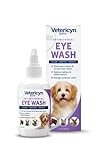
- SOOTHE PET'S IRRITATED EYES: Vetericyn Plus Eye Wash works to effectively flush the pet's eye and provide relief from symptoms of pink eye and other eye irritations
- DAILY PET EYE CLEANING: Safe to use daily to reduce allergy symptoms and redness, and can even help clean and remove tear stains
- ANTIBIOTIC FREE & NON-TOXIC: Vetericyn Plus Eye Rinse is a cost-effective, safe, and pain-free alternative to antibiotics ointments or expensive eye drops that may cause your pet discomfort
- VETERINARIAN RECOMMENDED: An essential pet first aid product giving you the ability to care for your pets from the comfort of your own home
- TRUSTED BRAND: Vetericyn is a leader in at-home animal health products manufactured to help pet owners take the best care of their animals
Eyelid damage, bulging, or vision change
A cut or other damage to the eyelid can expose or injure the eye. Sudden bulging, a loss of vision, or an eye that looks displaced requires rapid professional assessment. If the globe is outside its socket, treat the situation as an emergency rather than an urgent-care appointment.
What to do while arranging care
Prevent rubbing and pawing
Rubbing can add trauma to an already painful eye. If you have an appropriately sized Elizabethan collar (E-collar or cone), place it on your dog while arranging care, provided doing so does not require forcing the neck or touching the injured eye. VCA guidance describes the collar as protection against pawing, scratching, and further trauma. It is temporary protection, not treatment.
Do not manipulate a wound or object
If you can see an object stuck in the eye, do not pull it out. Do not probe the eye, press on the globe, or attempt to close a wound with a bandage. VCA first-aid guidance specifically advises immediate veterinary care without removing an object or bandaging an eye laceration. Manipulation can increase damage and complicate the veterinarian’s examination.
Rank #3

- A powerful synergy of cross-linked and linear lubricants which provide enhanced & sustained relief and comfort
- Dual polumer action works twice as hard to soothe and confort your pet's irritated eyes
- Available in a large 20g stand up tube with eye dropper tip.
- For use in dogs, cats, and horses
Flush only a known chemical or fine-debris exposure
When you know that a chemical or fine debris has just irritated the eye, flush it promptly with sterile saline or clean water for 5 to 10 minutes, then seek veterinary care. This limited first-aid step is for a known exposure. It should not be generalized to an unknown injury, a penetrating wound, or an eye with an embedded object.
Do not start eye medication on your own
Do not use leftover prescription drops, human eye medicine, antibiotic ointment, steroid products, or a general eye-wash product to treat an undiagnosed problem. Different eye disorders can look alike, and the wrong product may be unsafe or obscure important findings. Use medication only when a veterinarian has examined your dog and given directions for that specific episode.
Getting your dog safely to the clinic
- Call before leaving. Describe which eye is affected, when the change began, whether it followed a fight, collision, plant material, chemical, or other event, and whether vision seems impaired. Tell the clinic if the eyeball is protruding or if there is severe trauma so staff can direct you to emergency care.
- Keep your dog calm. Excitement can increase rubbing and make handling harder. Use a leash or carrier appropriate to your dog’s size, and avoid pressing the head against a surface.
- Protect the eye from contact. Use the E-collar if available and tolerated. Do not tape, wrap, or cover the eye unless a veterinarian specifically instructs you.
- Bring useful information. Note the time symptoms started, any known exposure, first-aid steps already taken, and any products that touched the eye. Bring medication containers if something was accidentally applied.
- Follow the clinic’s destination advice. A regular practice may refer you to an emergency hospital when the injury is severe or an ophthalmic emergency is suspected.
Why a visual guess is unreliable
Redness, swelling, discharge, cloudiness, and discomfort are signs rather than diagnoses. Conjunctival disorders can result from several different causes, and corneal disorders can range from superficial damage to injuries that threaten vision. Merck’s owner guidance states that the appearance of a conjunctival problem alone is generally not enough to determine its cause.
Rank #4

- Soothe Pets Irritated Eyes: Gently cleanses and refreshes sensitive pet eyes while helping flush away debris, discharge, and irritants associated with redness, allergy, dry, cherry, pink eye, and conjunctivitis symptoms, without stinging or causing discomfort.
- Daily Cleaning & Tear Stain Removal: Safe for everyday use to remove crust, gunk, and unsightly tear stains around the eyes and face. This eye cleaner for dogs and cats maintains hygiene for kittens, puppies, and adult animals of all breeds.
- Antibiotic-Free & Non-Toxic Formula: Backed by science and powered by nature, our 3-ingredient solution uses Hypochlorous Acid. This antimicrobial eye rinse is a safe, pain-free alternative to expensive ointments or irritating medicated eye drops.
- Vet Strength Professional Formula: Recommended by veterinarians as an essential pet first aid product. Our pH-balanced, non-irritating eye infection treatment for dogs and cats allows you to provide professional-grade care from the comfort of home.
- Made in the USA – Produced under strict quality guidelines to ensure consistency, safety, and reliability for pets of all ages and breeds.
The same caution applies to a “minor-looking” scratch. A corneal foreign body, laceration, ulcerative keratitis, or another painful condition may initially resemble irritation. Conversely, a discharge that looks like ordinary conjunctivitis may accompany a problem requiring a different treatment. Only an examination can establish what is happening and whether the eye is at risk.
Independent reader supportYour contribution helps us test, update, and keep practical guides available for everyone.What information the veterinarian will need
Before the appointment, write down details that can change triage and testing:
- Which eye is affected and whether both eyes changed.
- The exact time you first noticed the sign and whether it appeared suddenly.
- Whether your dog is squinting, holding the eye closed, pawing at the face, or behaving as if vision has changed.
- The color and amount of discharge, if any.
- Any fight, collision, grooming incident, plant material, dust, chemical, or other possible exposure.
- Whether you flushed the eye and what product or water source you used.
- Any eye or other medication given recently, including a product intended for people or another pet.
These details do not replace an examination, but they help the veterinary team decide how quickly your dog should be seen and what history to investigate.
Best Value

- Lubricating Solution with Viscoadaptive Biopolymers: I-DROP VET PLUS is a leader in ocular surface disorder (OSD) management, providing a safe and effective formula that refreshes and stabilizes the tear film. Its viscoadaptive biopolymers offer long-lasting lubrication for dogs with dry eyes.
- Unique Formulation: I-DROP VET PLUS for dogs is formulated by I-MED Animal Health, a leader in ocular surface disorder management, offering uniquely formulated hyaluronan-based products.
- 10-mL Sterile Packaging: Each package of I-DROP VET PLUS contains a convenient 10-mL sterile bottle, ensuring the freshness and safety of the lubricating solution. It’s easy to use and provides an adequate supply for your dog's eye care needs.
- Trusted by Veterinarians: I-DROP VET PLUS is the trusted choice of veterinarians for managing ocular surface disorders in dogs. Its high-quality ingredients and proven effectiveness make it a reliable solution for maintaining optimal eye health in your furry friend.
- Supports Ocular Health: Help your dog's eyes stay comfortable by promoting natural moisture and overall eye health. I-DROP VET PLUS works gently to hydrate and protect the eyes without causing irritation.
Emergency conditions veterinarians consider
Merck’s specialist-reviewed list includes several conditions that require rapid diagnosis: proptosis, eyelid lacerations, corneal foreign bodies and lacerations, ulcerative keratitis, globe rupture, acute glaucoma, lens displacement, and acute vision loss. The list explains why an eye that looks only red or cloudy should not be assessed by appearance alone when pain or a sudden change is present.
“Emergency” describes the need for rapid professional evaluation; it does not identify which condition your dog has. Do not attempt to sort these possibilities at home by comparing photographs or trying different drops.
Common mistakes that can make an eye injury worse
- Waiting for spontaneous improvement: painful or suddenly changed eyes should be assessed promptly rather than monitored for a day or two.
- Removing a visible object: pulling or probing can enlarge an injury.
- Bandaging the eye: a home bandage can put pressure on the globe and conceal worsening damage; VCA advises not to bandage an eye laceration.
- Using a leftover prescription: a medication prescribed for a previous episode may be inappropriate for the current cause.
- Assuming discharge proves conjunctivitis: multiple disorders can produce similar discharge and redness.
- Allowing persistent rubbing: pawing can create additional trauma, which is why an E-collar may be useful while care is being arranged.
After the veterinary examination
Follow the clinic’s instructions exactly, including any medication schedule, recheck appointment, activity restriction, or collar requirement. VCA notes that dogs with corneal ulcers must wear an Elizabethan collar to prevent rubbing. If your dog is sent home with a collar, keep it on for the period directed even if the eye appears better.
Free tools Windows power users keep installed
One-click scans. No signup required.
Contact the veterinary practice again if the eye becomes more painful, your dog starts holding it closed, discharge or swelling increases, vision appears worse, or the eye changes suddenly. Those developments are reasons to report a change rather than substituting a new home product.
Quick Recap
A simple decision checklist
- Look without touching. Check for protrusion, severe trauma, a visible object, cloudiness, swelling, redness, discharge, or a closed eye.
- Classify the situation. Protrusion or severe globe trauma means emergency hospital care. Other painful, sudden, or visibly damaged changes need prompt veterinary assessment.
- Use only narrow first aid. Flush a known chemical or fine-debris exposure with sterile saline or clean water for 5 to 10 minutes, then seek care. Do not manipulate wounds or objects.
- Stop rubbing. Use an available E-collar if appropriate and tolerated.
- Call and go. Provide the onset, possible cause, affected eye, vision changes, and anything already applied.
Product prices and availability are accurate as of the date/time indicated and are subject to change. Any price and availability information displayed on Amazon at the time of purchase will apply.





Leave a Reply