
The Tool Desk
Outbyte Driver Updater FREEFix the driver behind crashes, sound loss and screen glitchesFind Drivers →Outbyte PC Repair FREEClear out junk files and repair common Windows errorsFree Scan →There is no reliable evidence that 13 dog foods are universally “vet-approved” for stomach ulcers. A canine ulcer requires veterinary diagnosis and cause-directed treatment. Food can support recovery, but it cannot remove an ulcer’s underlying cause or replace prescribed medication. Veterinary guidance commonly discusses three therapeutic gastrointestinal (GI) diet lines as examples: Purina EN, Royal Canin GI, and Hill’s i/d. Your veterinarian must select the formula, feeding schedule, and duration for your dog’s diagnosis and other health conditions.
This guide explains what those diets are intended to do, why a bland diet is not a precise medical category, how ulcer treatment works, what signs require urgent care, and how to make a safe feeding plan without turning a product list into a substitute for examination.
As an Amazon Associate I earn from qualifying purchases.
Why a 13-food ranking is not supported by the evidence
The available veterinary sources do not compare 13 foods, report a healing rate for any commercial product, or establish a formal approval that makes one diet suitable for every dog with an ulcer. PetMD’s canine-ulcer guidance names Purina EN, Royal Canin GI, and Hill’s i/d as common diet recommendations, but it does not say that every formula in those ranges is appropriate for ulcers or for every patient. University of California, Davis nutrition guidance and VCA’s GI-diet overview likewise emphasize that therapeutic diets differ by disease, nutrient profile, ingredients, and intended use.
That distinction matters because an ulcer is a medical lesion, not a simple food intolerance. A diet may be highly digestible or moderate in fat and still be wrong for a dog with kidney disease, pancreatitis, food allergy, endocrine disease, bleeding risk, or another condition. The useful question is not “Which of 13 bags is best?” but “Which complete diet, if any, fits this dog’s suspected cause, treatment, and nutritional requirements?”
#1 Best Overall

- DOGS WITH DIGESTIVE CONCERNS: Royal Canin Gastrointestinal dog food is a veterinary-exclusive dog dry food for digestive health concerns
- LOW FAT DOG FOOD: Specialized sensitive digestion dog food that is low in fat and easy to digest
- PREBIOTICS FOR DOGS: Sensitive digestion dog food made with prebiotics to help support good bacteria in the gut
- FIBER FOR DOGS: Low fat dog food contains a blend of dietary fibers to help support healthy digestion for optimal stool quality
- HIGHLY FLAVORFUL: Dog kibble texture is highly flavorful and appeals to dogs, including those with picky appetites
What a stomach ulcer means in a dog
A gastrointestinal ulcer is a defect in the stomach or intestinal lining that can expose deeper tissue and bleed. Merck Veterinary Manual’s section on gastrointestinal ulcers in small animals explains that treatment is directed primarily at the underlying cause. Possible causes vary, so a food chosen without a diagnosis can miss the central problem. The same source describes reducing gastric acidity and protecting the mucosa as parts of medical management.
Ulcers can occur alongside medication exposure, systemic illness, inflammation, foreign material, tumors, or other disorders. The cause is not established by appetite, stool appearance, or a response to a new food alone. A dog that seems better after eating a gentle diet may still have an untreated lesion.
Signs that need prompt or emergency veterinary care
Contact a veterinarian promptly if you see signs compatible with bleeding or significant gastrointestinal disease. PetMD specifically identifies vomiting blood, black tarry stools, weakness, and lethargy as reasons for early veterinary care. Black, sticky stool can represent digested blood even when no red blood is visible.
PC Slower Than It Used to Be?
A free scan shows the junk files, broken settings and background clutter dragging Windows down - then fixes them in one click.Free scan · Windows 10 & 11Crashes, No Sound, or Screen Glitches?
Random freezes, missing sound and display glitches usually trace back to one bad driver. Find and replace yours safely.Free scan · under a minute- Emergency concern: collapse, severe weakness, pale gums, repeated vomiting, a painful or distended abdomen, or large amounts of blood require immediate veterinary assessment.
- Do not wait for a food trial: a dog that cannot keep water down, is rapidly worsening, or appears dehydrated needs examination rather than a retail diet experiment.
- Perforation is critical: Merck describes perforation as a serious ulcer complication. It can lead to abdominal infection and requires urgent treatment.
Keep the packaging or a photo of anything your dog has eaten and a list of all medicines, supplements, and recent diet changes. Those details help the veterinarian investigate causes and avoid contraindicated ingredients or drugs.
How veterinarians diagnose and treat an ulcer
Diagnosis may involve history, physical examination, blood testing, imaging, and evaluation for an underlying disorder. Merck identifies endoscopy as the diagnostic gold standard for gastrointestinal ulceration because it allows direct visualization and, when appropriate, sampling. The exact work-up depends on the dog’s stability, suspected cause, and test availability.
Treatment is cause-directed. Merck notes that proton pump inhibitors provide more complete gastric-acid suppression than H2-receptor antagonists. A veterinarian may also prescribe mucosal-protective medication, fluids, anti-nausea treatment, pain control, or therapy for the initiating disease. Never start, stop, or change an acid suppressant, steroid, pain medicine, or other prescription on the basis of a food article.
Diet works alongside that plan. PetMD describes treatment as potentially including medication, diet changes, and management of the cause. If a medicine is contributing to ulceration, changing food alone does not remove the exposure; the prescriber must decide whether a medicine should be adjusted or discontinued.
Free tools Windows power users keep installed
One-click scans. No signup required.
Rank #2
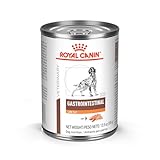
- DOGS WITH DIGESTIVE CONCERNS: Royal Canin Gastrointestinal low fat dog food loaf is a veterinary-exclusive dog wet food for digestive health concerns
- LOW FAT DOG FOOD: Specialized sensitive digestion wet dog food that is low in fat and easy to digest
- PREBIOTICS FOR DOGS: Royal Canin gastrointestinal dog food made with prebiotics to help support healthy bacteria in the gut
- FIBER FOR DOGS: Low fat dog food contains a blend of dietary fibers to help support healthy digestion for optimal stool quality
- HIGHLY FLAVORFUL: Pate dog food loaf is highly flavorful and appeals to dogs, including those with picky appetites
What a therapeutic GI diet is designed to do
UC Davis veterinary nutrition guidance describes therapeutic GI diets as generally highly digestible, with some diets using moderate or restricted fat concentrations. High digestibility can reduce the digestive workload, while fat restriction may be relevant for particular diseases. Those are design features, not guarantees that a diet heals an ulcer.
VCA cautions that “bland diet” is not a specific formulation. Veterinary GI diets can be highly digestible, low in fat, or high in fiber for different indications. A high-fiber formula that helps one intestinal disorder may not suit a dog whose suspected cause calls for fat restriction, and a low-fat diet may not address another condition. Ingredient lists, nutrient concentrations, calorie density, and feeding instructions vary by formula and region.
Ask the veterinarian to identify the nutritional strategy being used: digestibility, fat level, fiber level, a novel or hydrolyzed protein, or another restriction. The strategy should match the diagnosis and remain nutritionally complete for the intended duration.
The three therapeutic GI lines veterinarians may consider
The names below are examples cited in PetMD’s ulcer guidance, not a ranking, endorsement, or proof that every product in each range treats ulcers. Product recipes and availability can vary, so verify the exact formula with the treating veterinarian.
| Diet line | How it may fit a plan | What the evidence does not establish |
|---|---|---|
| Purina EN | A therapeutic GI line a veterinarian may consider when a highly digestible, condition-appropriate complete diet is desired. | It is not proven to heal every canine ulcer, and no particular formula was compared with the others. |
| Royal Canin GI | A therapeutic GI line that may be selected when its specific nutrient profile matches the suspected cause and the dog’s other conditions. | The name alone does not identify the correct formula, fat level, ingredients, or feeding duration for an individual dog. |
| Hill’s i/d | A therapeutic GI line a veterinarian may use as part of nutritional support during gastrointestinal disease. | The available evidence does not show that all products in the range are suitable for ulcers or that it outperforms another line. |
These lines should be treated as categories to discuss at the appointment. Bring the exact product name and life-stage statement to the clinic; “GI” on the front of a package is not enough to determine whether a formula meets the medical goal.
How to choose among GI diets with your veterinarian
Use the following questions to turn a general product discussion into an individualized decision.
Rank #3

- DOGS WITH SENSITIVE STOMACHS: Royal Canin Gastrointestinal is a veterinary-exclusive dry dog food for adult dogs with long- or short-term digestive sensitivities
- DIGESTIVE SUPPORT: Highly digestible proteins, enhanced omega-3 fatty acids like EPA+DHA, and a fiber blend help support digestive health
- MICROBIOME SUPPORT: Includes selected prebiotics to help support a healthy gastrointestinal microbiome
- HIGH ENERGY CONTENT: 14% more energy content (compared to Royal Canin Gastrointestinal Moderate Calorie Dry Dog Food) supports underweight dogs or dogs with a reduced appetite
- HIGHLY PALATABLE: Helps satisfy decreased appetites with highly palatable dog kibble
- What is the suspected cause? Ask whether the ulcer is linked to a medicine, systemic disease, inflammation, foreign material, infection, or another process. The answer determines whether diet is supportive only or whether a particular nutrient restriction is needed.
- What dietary feature is required? Clarify whether the plan prioritizes high digestibility, moderate or restricted fat, altered fiber, a protein restriction, or another property. Do not infer the answer from the word “bland.”
- Does the dog have competing nutritional needs? Kidney, liver, pancreatic, endocrine, allergic, growth, pregnancy, and weight-management concerns can change the appropriate formula.
- Is the product complete and balanced for the planned duration? A short-term feeding strategy and a long-term maintenance diet are not interchangeable. Confirm the intended life stage and duration on the label and with the clinician.
- What exact amount and schedule should be used? Portion size depends on body weight, condition, calorie density, activity, and the medical plan. Follow the written instruction rather than copying a generic package chart.
- What counts as failure? Establish which signs warrant a same-day call, an emergency visit, or a recheck even if appetite improves.
Feeding after the diagnosis: a practical, veterinarian-led plan
Once the veterinarian has examined the dog and selected a diet, consistency is usually more useful than constant switching. Make changes only as directed, especially if the dog is vomiting or has concurrent disease.
- Confirm the exact food. Record the manufacturer, product name, texture, life-stage designation, and whether it is a prescription or veterinary-exclusive formula. Similar names can represent different nutrient profiles.
- Follow the prescribed transition. Some dogs can change promptly under veterinary supervision; others need a gradual transition. The clinician’s instructions take priority over a generic transition schedule.
- Measure portions. Use the amount and frequency provided by the clinic. Measuring prevents accidental overfeeding and makes it possible to judge appetite, stool, and weight accurately.
- Keep extras controlled. Treats, table scraps, chews, flavored medicines, and supplements can add fat, introduce an unwanted protein, or undermine a dietary trial. Ask which additions are permitted.
- Provide water as directed. A vomiting or dehydrated dog may need veterinary fluids rather than simply being encouraged to drink at home. Do not force water into a dog that is repeatedly vomiting.
- Track the response. Note meals eaten, vomiting, stool color and consistency, energy, abdominal discomfort, medications, and body weight when your veterinarian recommends weighing. Share the record at the recheck.
If vomiting, bloody material, black stool, worsening pain, weakness, or refusal to eat develops, stop treating the situation as a routine diet transition and contact a veterinarian.
Recommended Free Tools
Why homemade chicken and rice is not a universal ulcer diet
VCA’s guidance makes clear that a bland diet is not a defined medical formulation. Chicken and rice may be suggested temporarily in some circumstances, but an improvised recipe can be too high or too low in fat, lack essential vitamins and minerals, provide an inappropriate protein, or fail to meet the needs of a growing, pregnant, elderly, or chronically ill dog. It is not automatically complete for long-term feeding.
Do not add oil, butter, seasoning, bones, fatty skin, or supplements unless the veterinarian specifically directs it. If a home-prepared diet is medically necessary beyond a brief period, ask for a recipe formulated by a veterinary nutrition professional and follow it precisely.
Common mistakes that delay recovery
- Buying food before seeking care: an ulcer and its cause cannot be diagnosed from a label.
- Assuming “sensitive stomach” means ulcer treatment: over-the-counter sensitive-stomach foods may not provide the nutrient profile selected for this patient.
- Changing several variables at once: switching food, treats, supplements, and medicines together makes adverse effects and improvement difficult to interpret.
- Using a leftover prescription diet: a diet prescribed for another dog or another disease may be unsuitable, expired, or nutritionally mismatched.
- Stopping medication when appetite returns: clinical improvement does not prove that the lesion has healed. The prescriber decides when treatment changes.
- Ignoring stool color: black, tarry stool can indicate digested blood and deserves prompt assessment.
- Trusting a product claim over the diagnosis: “GI,” “natural,” or “bland” does not identify the right fat level, fiber level, protein strategy, or duration.
Monitoring and follow-up
Follow-up timing depends on the severity of the ulcer, the suspected cause, medications, and the dog’s response. A dog may eat a new diet willingly while an ulcer continues to bleed, so appetite alone is not a healing test. Keep scheduled rechecks and ask whether repeat blood work, imaging, or endoscopy is needed.
At home, record objective observations rather than trying to grade the ulcer yourself. Useful information includes the time and amount of vomiting, whether material contains red or coffee-ground blood, stool color, water intake, medication times, energy, gum color, and body-weight trends. Bring those notes to the veterinarian.
Rank #4

- DOGS WITH DIGESTIVE CONCERNS: Royal Canin Gastrointestinal dog food is a veterinary-exclusive dog dry food for digestive health concerns
- LOW FAT DOG FOOD: Specialized sensitive digestion dog food that is low in fat and easy to digest
- PREBIOTICS FOR DOGS: Sensitive digestion dog food made with prebiotics to help support good bacteria in the gut
- FIBER FOR DOGS: Low fat dog food contains a blend of dietary fibers to help support healthy digestion for optimal stool quality
- HIGHLY FLAVORFUL: Dog kibble texture is highly flavorful and appeals to dogs, including those with picky appetites
Frequently asked questions
Can a dog food heal a stomach ulcer by itself?
No. Food may support digestion and nutritional status, but Merck states that ulcer treatment is directed at the underlying cause and includes medical measures to reduce acid and protect healing tissue. A diet should be used within that treatment plan.
Which of the three named GI lines is best?
None is universally best. The veterinarian chooses among available formulas according to the suspected cause, digestibility, relevant fat or fiber level, ingredient restrictions, other diseases, and whether the product is complete for the intended duration.
Is a bland diet always low fat?
No. VCA explains that “bland diet” is not a defined formulation. Therapeutic GI diets vary; some are highly digestible, some are low in fat, and others use higher fiber for different conditions.
How long should a dog stay on a GI diet?
The appropriate duration is individual. It may be a short supportive period or part of longer-term management, depending on the diagnosis and nutritional goals. Do not extend or shorten it without veterinary guidance.
Can I use an over-the-counter food instead of a veterinary GI diet?
Only if the veterinarian confirms that its nutrient profile and ingredients meet the plan. The front-label category does not establish suitability for an ulcer or for a dog’s concurrent diseases.
When is black stool an emergency?
Black, tarry stool can represent digested blood. PetMD lists it, along with vomiting blood, weakness, and lethargy, as a reason for early veterinary care. If the dog is collapsing, severely weak, repeatedly vomiting, or painful, seek emergency care immediately.
Best Value

- DOGS WITH DIGESTIVE CONCERNS: Royal Canin Gastrointestinal dog food is a veterinary-exclusive dog dry food for digestive health concerns
- LOW FAT DOG FOOD: Specialized sensitive digestion dog food that is low in fat and easy to digest
- PREBIOTICS FOR DOGS: Sensitive digestion dog food made with prebiotics to help support good bacteria in the gut
- FIBER FOR DOGS: Low fat dog food contains a blend of dietary fibers to help support healthy digestion for optimal stool quality
- HIGHLY FLAVORFUL: Dog kibble texture is highly flavorful and appeals to dogs, including those with picky appetites
Bottom line
There is no evidence-based list of 13 universally approved ulcer foods. The defensible approach is veterinary diagnosis, treatment of the underlying cause, and a complete therapeutic GI diet selected for the individual dog. Purina EN, Royal Canin GI, and Hill’s i/d are examples your veterinarian may discuss—not self-prescribing answers and not proven rankings.
Frequently Asked Questions
Can a dog food heal a stomach ulcer by itself?
No. Food is supportive; an ulcer requires veterinary diagnosis and treatment of its underlying cause.
Which GI diet is best for an ulcer?
The veterinarian must choose the exact formula based on the suspected cause, nutrient needs, ingredients, and other medical conditions.
Is chicken and rice a complete long-term ulcer diet?
Not automatically. Homemade bland diets may be nutritionally incomplete and should be used only as directed by a veterinarian.
What signs mean my dog needs urgent care?
Vomiting blood, black tarry stool, marked weakness, lethargy, collapse, repeated vomiting, or severe abdominal pain require prompt veterinary assessment.
Quick Recap
Product prices and availability are accurate as of the date/time indicated and are subject to change. Any price and availability information displayed on Amazon at the time of purchase will apply.
Do these 3 things before closing this tab:
1Repair Windows errors before they cause bigger problems2Scan for outdated or missing drivers - takes under a minute3Clear out junk files and repair common Windows errors




Leave a Reply