
Do these 3 things before closing this tab:
1Scan for outdated or missing drivers - takes under a minute2Clear out junk files and repair common Windows errors3Fix the driver behind crashes, sound loss and screen glitchesThe short answer: A coyote is a wild canid; a dog is a domesticated canid whose appearance and behavior have been shaped by people. Coyotes usually look leaner, longer-legged and more narrow-faced, with pointed ears and a bushy tail carried below the back. Those are useful clues, not a foolproof test. Dogs range from tiny to very large and can have almost any coat, ear or tail type, so a distant animal may be impossible to identify confidently.
The practical difference matters more than the label. Coyotes adapt to rural, suburban and urban habitat, take food that is easy to reach, and may approach yards when garbage, pet food or small animals are available. Keep dogs supervised and leashed near known coyote activity, remove attractants, and follow your local wildlife agency’s instructions after a concerning encounter.
As an Amazon Associate I earn from qualifying purchases.
What separates a dog from a coyote?
Both animals belong to the dog family (Canidae), but they occupy different relationships with people. Dogs are domesticated and live under human management, whether as pets, working animals or free-roaming dogs. A coyote is a wild species that finds its own food, chooses its shelter and moves through territories without being bred for a particular human purpose.
Crashes, No Sound, or Screen Glitches?
Random freezes, missing sound and display glitches usually trace back to one bad driver. Find and replace yours safely.Free scan · under a minutePC Slower Than It Used to Be?
A free scan shows the junk files, broken settings and background clutter dragging Windows down - then fixes them in one click.Free scan · Windows 10 & 11That distinction creates typical differences in body form, daily ecology and reactions around people. It does not make every dog predictable or every coyote aggressive. Breed, age, health, previous experience and the immediate setting can change what an individual animal does.
#1 Best Overall

- Added Safety: Carry SprayShield Animal Deterrent Spray with you when you and your dog go on walks together to protect you both against a potential encounter with aggressive animals
- Citronella Scent: When using this product, a burst of citronella spray is released that surprises and distracts threatening pets without harming them
- Compact Design: This small-sized can has an added belt clip so you can easily carry it with you wherever you go
- Spray Distance: The deterrent contains enough citronella spray to create a 10-foot stream for up to 12 seconds
- Quality Promise: PetSafe brand has been a trusted global leader in pet behavior, containment and lifestyle innovations since 1998 to help keep your pet healthy, safe and happy
| Comparison | Domestic dog | Coyote |
|---|---|---|
| Relationship with people | Domesticated; generally managed, fed and sheltered by people | Wild; survives by locating natural or human-associated food and cover |
| Body variation | Extremely broad because of breeds and mixed ancestry | More consistent overall, but regional populations still vary in size, color and build |
| Typical silhouette | May be compact, heavy, short-legged, long-haired or otherwise specialized | Usually slender, long-legged, narrow-muzzled and relatively lightly built |
| Tail at rest or while moving | Shape and carriage vary widely; some dogs curl or carry the tail high | Commonly held below horizontal, including while standing, walking or running |
| Food and habitat | Usually receives food from people, though free-roaming dogs may forage | Opportunistic feeder in rural, residential and urban settings |
| Interaction risk | Temperament and training differ from dog to dog | Usually avoids people but can be drawn toward food, pets or livestock |
Use the table as a starting framework, not an identification key. A dog with a lean frame can resemble a coyote, and a coyote seen in poor light may look unlike the mental image people have of one.
How can you tell a coyote from a dog?
Identification works best when several features point in the same direction. Look from a safe distance, preferably with a clear view and good light. Do not approach an animal to inspect its teeth, ears or tail.
Body shape and proportions
A coyote commonly has a slim torso, a deep chest, long legs and a relatively small-looking body between those legs. The outline often appears built for efficient travel rather than the compact or heavily muscled proportions seen in many dogs. The chest may be noticeably narrower than the hips when viewed from behind.
What’s actually slowing this PC down?
Pick the symptom - the matching free tool is one click away.
Dogs cover the entire range from short-legged, barrel-chested forms to very tall, narrow sighthound-like forms. Mixed-breed dogs can combine traits in ways that make a single silhouette unreliable. A coyote that is wet, underweight, carrying a winter coat or partly hidden by vegetation may also look different from the usual profile.
Ears and muzzle
Pointed, upright ears and a narrow muzzle are common coyote clues. The muzzle tends to taper forward, and the ears often look large in relation to the head. Many dogs have floppy ears, broad muzzles or shortened faces, but some breeds and mixes have upright ears and a pointed face that can look very similar at a distance.
Tail carriage
New Jersey Fish and Wildlife notes that a coyote commonly carries its tail below horizontal while standing, walking or running. This low, straight or slightly drooping tail can be more informative than color. Dogs may hold their tails level, high, curled over the back or in many other positions, depending on breed and emotion. A coyote can change posture, however, and a view blocked by grass or a fence may hide the tail entirely. See the agency’s description at New Jersey Fish and Wildlife’s coyote guide.
Coat color is a weak clue
Coyote coats can range from dark gray to blonde, red or black. North Carolina Wildlife lists that broad variation in its species guidance. Dogs show an even wider palette, including solid, brindle, spotted and merle patterns. Color alone cannot establish identity, and unusual lighting can alter how either animal appears.
Quick wins for a faster PC:
Fix the driver behind crashes, sound loss and screen glitchesFind Drivers →Clear out junk files and repair common Windows errorsFree Scan →Scan for outdated or missing drivers - takes under a minuteDriver Scan →Rank #2
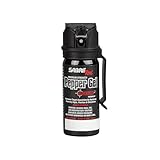
- TRUSTED BY PROFESSIONALS FOR REAL‑WORLD PROTECTION: SABRE is the #1 pepper spray brand trusted by police and consumers, including New York PD, Chicago PD, and the U.S. Marshals; proudly Made in the USA and backed by over 50 years of safety leadership
- MAXIMUM STRENGTH GEL YOU CAN TRUST - SABRE RED pepper gel spray provides the same stopping power provided to top-tier law enforcement agencies across the US. Every canister is HPLC lab tested in‑house to ensure consistent quality, heat, and strength
- 360° ANY‑ANGLE DEPLOYMENT FOR MOVING THREATS: Trusted by law enforcement, the Crossfire technology allows pepper gel to spray at any angle, even upside down - delivering dependable protection for women and men against fast moving or unpredictable threats
- SAFER GEL WITH GREATER RANGE: Pepper gel deploys in a powerful stream with an effective range of up to 20 feet, resists wind blowback, and can be used both outside & indoors, making it ideal for hallways, doorways, and close‑quarter situations
- SELF DEFENSE SPRAY FOR EVERYDAY: Flip Top safety helps prevent accidental discharge; The integrated clip attaches easily to belt, bag, purse, or pocket, keeping your pepper spray accessible during commutes, campus life, travel, errands, or walking alone
Movement and setting
A coyote may travel with a light, efficient gait and may pause to scan open ground before continuing. It can be active in a neighborhood, on a farm, along a greenway or in a more remote landscape; an urban sighting does not make it a stray dog. A dog is more likely to be associated with a residence, person, vehicle, collar or familiar route, but an unattended dog may have none of those visible signs.
Ask whether the animal’s overall proportions, tail, head and behavior agree. If they do not, treat the identification as uncertain. When safety, a bite report or a possible disease exposure is involved, keep away and contact the responsible local wildlife or animal-control authority instead of attempting capture.
How big are coyotes compared with dogs?
Coyote size is not a single universal number. Official agencies describe different typical ranges in different geographic contexts, and those figures should not be combined into a definitive standard.
| Agency and page | Typical figures reported | How to use the figure |
|---|---|---|
| North Carolina Wildlife Resources Commission | About 2 feet at the shoulder, about 4 feet long; adults around 20–45 pounds | Regional description for North Carolina guidance, not a range for every population |
| California Department of Fish and Wildlife (August 10, 2023) | Typically 10–35 pounds and 18–23 inches at the shoulder | Typical California identification description; local animals may fall outside it |
Those agency ranges overlap but are not identical. Nutrition, sex, age, regional genetics and measurement methods can all affect an individual. A large coyote may weigh less than many medium dogs, while a small dog may be close to a coyote’s height. Size should support an identification made from several features, never decide it by itself.
Dogs have no comparable species-wide size range because domestic dogs include toy breeds, giant breeds and every size between them. Even within one neighborhood, a 5-pound companion dog and a 100-pound working dog may both be correctly called dogs.
Where coyotes live and what they eat
Coyotes are adaptable generalists. California’s wildlife guidance describes them in rural, residential and urban settings, where they use whatever combination of cover, water and food is available. A wooded edge, drainage corridor, vacant lot or park can provide travel cover close to houses.
Their diet is opportunistic rather than restricted to one prey species. Natural food can include small mammals and other available wildlife; human-associated sources can include unsecured garbage, food scraps, compost, pet food and accessible livestock feed. North Carolina and California guidance both warn that these sources can bring wildlife closer to homes.
Rank #3

- PredatorPee Wolf Urine creates the illusion that a wolf is nearby
- Predator pee Real Wolf Urine is a powerful communicator to animals at the top of the food chain; Coyote, Fox, Moose, Bear, Elk, Weasel, Beaver & Mule Deer fear the wolf more than any other animal
- Predator pee creates the illusion that a predator is nearby and triggers the genetic fear reaction that causes pest animals to leave and not come back!
- Predator pee Real Wolf Urine is a powerful communicator to animals at the top of the food chain; Coyote, Fox, Moose, Bear, Elk, Weasel, Beaver & Mule Deer fear the wolf more than any other animal
Domestic dogs are not an ecological equivalent. A pet’s diet is normally selected and supplied by a person, and its access to habitat is controlled by a household. A free-roaming or poorly supervised dog may forage or chase wildlife, but that behavior is an individual management problem rather than the species’ normal survival strategy.
Why a food source changes the situation
A coyote that passes through a yard is not necessarily seeking a confrontation. Repeated access to food can nevertheless teach it that the yard is worth visiting and can reduce the distance it keeps from people. Leaving a bowl outside, allowing trash to spill, or feeding pets on a porch can therefore turn an occasional sighting into a recurring one. Removing the reward is a prevention step, not a guarantee that an animal will never return.
How do dogs and coyotes behave around each other?
Interactions vary by the animals, the location and what each is trying to do. A coyote may avoid a dog, defend a den or food source, investigate it, or treat a small unattended pet as potential prey. A dog may bark, chase, play, guard its owner or run away. Size and escape routes can change the outcome quickly.
What one video study found
A 2018 study by Boydston, Abelson, Kazanjian and Blumstein examined 35 publicly available YouTube clips downloaded in fall 2014. The researchers classified observed encounters as playful, agonistic, predatory or other/undetermined. Both species were recorded directing play toward the other. Agonistic clips included dogs biting coyotes and coyotes biting dogs; the study reported that coyotes usually displayed defensive aggression in those encounters, while dogs did not.
The sample was a selected set of online videos, not a representative field survey. It shows that several kinds of interaction occur, but it cannot predict what a particular coyote or dog will do in your yard. The study and its methods are summarized by the U.S. Geological Survey.
Recommended Free Tools
Are coyotes dangerous to dogs?
There is no single answer for every dog. Risk rises when a dog is small, off leash, outside alone, near a den or food source, or able to chase a coyote into a confined space. A larger dog can still be bitten, especially if it corners an animal or approaches pups. Coyotes can also be attracted to the same food that draws a dog outdoors.
Do not interpret a coyote’s retreat as proof that all future encounters are harmless, or an approach as proof that an attack is inevitable. Treat every sighting as a reason to improve supervision and remove attractants, then use your local agency’s advice for the location.
Rank #4

- MARK YOUR TERRITORY: Tired of unwanted visitors? Coyote urine simulates the presence of a real predator in the area.
- HUMANE APPROACH: Unlike other methods, it does not harm animals; instead, it taps into instinctive behaviors that occur in nature.
- CLEAN & EASY APPLICATION: Squeezable bottle with a flip-top cap lets you apply predator urine directly where you need it. No waste, no mess.
- KEEP IT FRESH & GREEN: As a nature-derived substance, coyote pee leaves no synthetic residues behind. Gentle on soil, grass, plants, and pet areas.
- ENHANCED FORMULA: 16 oz of authentic, pure predator urine enhanced with coyote gland essence for a more complete scent profile. No synthetics; not watered down!
How to protect a dog when coyotes are active
North Carolina Wildlife’s core instruction is direct: “Never leave pets outside and unattended.” The following measures translate that guidance into a routine. Seasonal timing and agency rules differ by location, so use the February-through-May period mentioned by North Carolina as regional guidance rather than a continent-wide calendar.
1. Supervise every outdoor trip
Go outside with your dog, including in a fenced yard. Stand where you can see the entire area, especially edges near woods, brush or drainage corridors. Bring a small dog in promptly rather than leaving it to patrol the yard alone.
2. Use a six-foot leash in coyote areas
Keep your dog on a six-foot leash near known activity, on neighborhood walks and on trails where visibility is limited. A leash prevents a chase and gives you control if a coyote appears. Choose open trails where an animal can be spotted sooner, as North Carolina Wildlife recommends, and avoid places with recent activity when a practical alternate route exists.
3. Remove food and garbage attractants
- Feed pets indoors and take bowls inside after meals.
- Keep garbage in secure containers and clean up spilled food.
- Manage compost and food scraps so wildlife cannot reach them.
- Do not leave livestock feed accessible overnight.
- Secure backyard poultry or other small livestock in enclosures that prevent entry and digging.
These steps address the reason a coyote may return. They do not remove every natural food source, so continued awareness is still necessary.
4. Consider a properly designed fence
North Carolina Wildlife says a coyote-proof fence may be at least six feet tall with an outward extension or a coyote roller at the top. A roller is a fence-top device intended to prevent an animal from gaining purchase on the edge. The agency guidance is not a comparative product test and does not promise that any fence will prevent entry. Evaluate gates, gaps, terrain and digging points together, and seek qualified installation advice for your property.
5. Increase caution during local breeding and pup-rearing periods
North Carolina’s guidance identifies February through May as a period for particular care in its region. Coyotes elsewhere may follow different timing because climate and latitude vary. Check your state, provincial or municipal wildlife agency for the dates and precautions that apply where you live rather than transferring that calendar automatically.
What to do when you see a coyote
Stay far enough away that the animal can leave without being cornered. Bring a dog close to you, keep the leash short without wrapping it around your hand, and move toward a building, vehicle or other secure location. Do not approach to confirm the species, allow a dog to chase, or attempt to handle an injured or sick-looking animal.
Best Value

- Expanded Scent Coverage: Includes 16 oz of 100% coyote urine and 10 ScentTags to help establish a scent perimeter across larger outdoor areas.
- Natural Territorial Marking: Simulates predator scent communication to create the perception of an active coyote nearby.
- Supports Animal Awareness: Encourages natural avoidance behaviors in deer, raccoons, groundhogs, rats, and similar animals.
- Simple Application Process: Apply scent to ScentTags and place throughout your space; refresh weekly or after rain for consistent scent presence.
- Outdoor Versatility: Suitable for use in yards, gardens, landscaping, and around property boundaries.
If the coyote is unusually unafraid, threatens a person, remains around a home, or has been involved in an encounter with a pet or livestock, follow the reporting and response instructions for your jurisdiction. California’s conflict guidance covers property, pets, livestock and human-safety situations, but the responsible office and permitted response vary by place; start with California Department of Fish and Wildlife’s conflict guidance if you are in California, or your own local wildlife agency elsewhere.
After any bite or physical contact, separate the animals safely without putting your hands between them, seek veterinary care for the dog and report the incident as local authorities require. Public-health and animal-control instructions can depend on vaccination status, exposure details and regional disease rules.
Common identification mistakes
“It was brown, so it was a coyote.”
Color overlaps extensively. Coyotes can be gray, blonde, red or black, while dogs can be any of those colors and many more. Use body proportions, ears, muzzle, tail and setting together.
The Tool Desk
Outbyte Driver Updater FREEFix the driver behind crashes, sound loss and screen glitchesFind Drivers →Outbyte PC Repair FREERepair Windows errors before they cause bigger problemsFix Now →“It was too small to be a coyote.”
Agency descriptions differ: California lists 10–35 pounds and 18–23 inches at the shoulder, while North Carolina describes adults around 20–45 pounds and roughly two feet at the shoulder. Those are regional typical figures, not hard limits. A small dog can also look coyote-like.
“A coyote always carries its tail in one exact position.”
Low tail carriage is a useful clue noted by New Jersey Fish and Wildlife, but posture, speed, terrain and the viewing angle can obscure it. Never treat one body part as definitive.
“A dog-friendly animal cannot be a coyote.”
The video study documented playful as well as agonistic and predatory interactions, and the online sample cannot establish how common each outcome is. Apparent calmness is not a safety guarantee; keep control of your dog and maintain distance.
A practical decision checklist
- Pause and create distance. Bring your dog beside you and stop the approach.
- Check the whole outline. Compare leg length, torso width, head shape, ear position and tail carriage rather than color alone.
- Look for context. Note whether the animal is near food, cover, livestock, a den-like area or a person with a dog.
- Assume uncertainty when the view is poor. Dusk, distance, foliage and seasonal coats can defeat visual identification.
- Choose the safer response. Leave the area, secure pets and remove attractants; contact local wildlife or animal control if the animal is threatening, unusually bold or involved in a conflict.
This approach protects the dog without requiring a risky close inspection. It also avoids turning regional descriptions into a false promise that every sighting can be classified from a photograph or a few seconds of video.
Quick Recap
Authoritative guidance
- North Carolina Wildlife Resources Commission: Coyote
- U.S. Geological Survey: Canid vs. canid: Insights into coyote–dog encounters from social media
- California Department of Fish and Wildlife: Human-Wildlife Conflicts: Coyotes
- New Jersey Department of Environmental Protection, Fish and Wildlife: Coyote
- California Department of Fish and Wildlife: How can I tell the difference between a coyote, fox and a wolf?
Product prices and availability are accurate as of the date/time indicated and are subject to change. Any price and availability information displayed on Amazon at the time of purchase will apply.





Leave a Reply