
The Tool Desk
Outbyte PC Repair FREERepair Windows errors before they cause bigger problemsFix Now →Outbyte Driver Updater FREEFix the driver behind crashes, sound loss and screen glitchesFind Drivers →Dry cat food does not appear to cause urinary disease by itself. Its low moisture content can matter because cats that eat it may need to drink more, particularly if they are already prone to lower urinary tract disease. Urinary signs can also result from idiopathic cystitis, stones, urethral obstruction and other disorders, so food choice alone cannot diagnose or explain a problem.
The practical priorities are to recognize emergency signs, arrange a veterinary examination, keep clean water available and make any diet change—including a switch to wet or therapeutic food—under guidance suited to your cat’s diagnosis.
As an Amazon Associate I earn from qualifying purchases.
Why dry food is discussed in urinary care
Cats obtain water from both drinking and food. Dry diets contain much less water than canned diets, so a dry-fed cat may need to compensate by drinking. Cornell University’s guidance specifically emphasizes plentiful fresh water for dry-fed cats that are prone to lower urinary tract disease and says wet food can be offered alongside, or instead of, dry food.
Free tools Windows power users keep installed
One-click scans. No signup required.
That is a hydration consideration, not proof of causation. The available veterinary guidance does not establish that ordinary dry food alone creates cystitis, stones or obstruction in an otherwise healthy cat. Some cats maintain adequate hydration on dry food; others drink little or have medical, environmental or behavioral factors that increase their risk. The right question is not simply “dry or wet?” but whether your individual cat is producing an appropriate amount of urine, staying hydrated and receiving food that fits any diagnosed condition.
#1 Best Overall

- UPDATED FORMULA: Clinically shown to promote urinary health by supporting a healthy mineral content in the urine
- Features natural fiber to help comfortably reduce hairballs and support healthy digestion
- Made with natural ingredients, plus added vitamins, minerals, and amino acids
- Made in the USA with global ingredients you can trust
- Hill's Pet Nutrition is the US Veterinarians' #1 recommended brand
A food change can also be unsafe if it delays treatment. A cat straining in the litter box, crying, passing blood or producing little urine needs assessment rather than an experiment with a new diet.
Urinary signs that need attention
Lower urinary tract signs can look similar even when the underlying diseases differ. Cornell lists the following warning signs:
- Difficulty or pain while urinating
- Repeated trips to the litter box or increased frequency
- Crying or vocalizing during urination
- Blood in the urine
- Urinating outside the litter box
- Frequent licking of the genital area
Watch what actually comes out. A cat that repeatedly attempts to urinate but passes only drops or nothing may have a urethral obstruction. Cornell describes obstruction as an absolute emergency requiring immediate veterinary treatment. Do not wait to see whether wet food, extra water or a supplement helps, and do not give human pain medicine.
Quick wins for a faster PC:
Scan for outdated or missing drivers - takes under a minuteDriver Scan →Repair Windows errors before they cause bigger problemsFix Now →Rank #2

- Purina ONE +Plus Urinary Tract Health cat food made with real chicken to help provide the protein she needs for strong muscles, including a healthy heart
- Urinary care cat food provides low magnesium and supports urinary tract health by reducing urinary pH
- Easily digestible SmartBlend of high-quality ingredients in Purina ONE urinary tract cat food includes four antioxidant sources for a strong immune system
- Deliciously crunchy cat food bites deliver great taste with no artificial flavors or colors
- Urinary health cat food crafted in Purina-owned, U.S. facilities
Why obstruction is different
When the urethra is blocked, urine cannot leave the bladder normally. The cat can deteriorate rapidly, and home hydration measures cannot remove a blockage. Call an emergency veterinary service or your veterinarian’s urgent line while arranging transport. If you are unsure whether the cat is urinating, treat repeated straining with little output as urgent.
What can cause urinary problems?
“Feline lower urinary tract disease” is an umbrella term rather than one diagnosis. Cornell identifies several common causes:
Idiopathic cystitis
Feline idiopathic cystitis (FIC) causes bladder inflammation without an identifiable infection or stone in many cases. Environmental stress and major routine changes can be relevant, which is why management may include both medical care and changes to the cat’s surroundings.
Rank #3
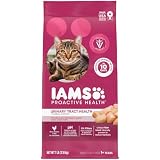
- Urinary Tract Health: IAMS Proactive Health Hairball & Urinary Tract Health dry cat food features clinically proven technology to promote urinary health in 10 days
- Cat Dry Food Reduces Hairballs: This cat food dry recipe includes a unique fiber blend clinically proven to reduce hairballs
- #1 Ingredient Is Real Chicken: IAMS Proactive Health Hairball & Urinary Tract Health cat food is made with real chicken as the #1 ingredient
- Quality Recipe: This recipe provides 100% complete and balanced nutrition for adult cats, delivering the nutrition they need
- Supports A Healthy Heart: IAMS Proactive Health Hairball & Urinary Tract Health dry cat food is crafted with essential nutrients including calcium and potassium to help nourish a healthy heart
Urinary stones
Uroliths, or stones, form from mineral material in the urinary tract. Their composition matters: struvite stones may sometimes be dissolved with a veterinarian-prescribed diet, while calcium oxalate stones cannot be dissolved by diet and generally require a different treatment plan.
What’s actually slowing this PC down?
Pick the symptom - the matching free tool is one click away.
Urethral obstruction and other disease
Plugs, stones, inflammation and other processes can obstruct urine flow. Kidney disease, infection and less common conditions can also produce urinary changes. “UTI” should not be used as a catch-all for every episode of frequent or painful urination; symptoms alone cannot distinguish infection from FIC, stones or obstruction.
How a veterinarian finds the cause
A food label or a symptom checklist cannot establish the diagnosis. Cornell describes a physical examination and urinalysis as likely parts of an initial evaluation. Depending on the findings, the clinician may add blood tests, imaging or a urine culture.
Rank #4

- Hill's Prescription Diet c/d Multicare Urinary Care with Chicken Dry Cat Food is specially formulated by Hill’s nutritionists and veterinarians to support a cat’s urinary health
- Clinically tested to lower the recurrence rate of most common urinary signs by 89%
- Dissolves struvite stones in as little as 7 days (Average 27 days) and promotes desirable urine pH levels
- Formulated to promote a urinary environment that reduces the risk of developing struvite and calcium oxalate crystals
- Recommended for lifelong feeding of adult cats
- Describe the pattern. Note when signs began, how often the cat visits the box, whether urine is produced, any blood, changes in appetite or thirst, vomiting, and recent household or litter changes.
- Allow an examination. The veterinarian may assess hydration, bladder size and pain, and look for other illness.
- Test the urine. Urinalysis can provide information about concentration, blood, crystals and other abnormalities. A culture may be needed when infection is suspected.
- Use imaging or bloodwork when indicated. These tests can help identify stones, obstruction, kidney involvement or systemic effects.
- Follow the diagnosis-specific plan. Treatment may involve relieving an obstruction, pain control, medication, environmental changes or a prescribed diet—not simply replacing dry food.
Dry, wet and added-water options compared
Each option has a different role. The best choice depends on the diagnosed condition, the cat’s willingness to eat it and the veterinary team’s recommendation.
| Option | Moisture contributed by food | When it may fit | Important precautions |
|---|---|---|---|
| Dry food | Lower than canned food | May remain appropriate when the cat eats it reliably and has no conflicting medical need | Provide fresh water; pay closer attention to hydration in cats prone to lower urinary tract disease |
| Wet food | Higher than dry food | Can be fed with dry food or instead of it; may help increase water obtained from meals | It is not a universal treatment or guarantee against urinary disease; select a complete diet your cat will eat |
| Water added to food | Increases moisture in the meal | Useful for some cats that accept a wetter texture | Introduce gradually and stop if intake falls; maintaining calories is essential |
| Fountain | Does not add moisture to food, but may encourage drinking in some cats | Optional enrichment for cats that prefer moving water | No evidence here shows that a fountain prevents urinary disease; keep it clean and retain a plain-water option |
| Therapeutic urinary diet | Formulated for a specific nutritional objective | May be prescribed for a diagnosed stone type or other condition | Use only with veterinary direction and review whether it remains necessary |
Practical ways to increase water intake
Fresh, clean water should be available every day, including for cats that eat wet food. Place bowls where the cat can reach them easily and refresh the water routinely. Some cats drink more when water is offered in several locations or from a fountain; a fountain is an option, not a required treatment.
Make changes the cat will accept
Offer a small amount of wet food alongside the familiar diet rather than removing a food the cat currently eats. If the cat accepts it, increase the proportion slowly. You can also mix a little water into food, increasing only as tolerated. Texture, smell, bowl shape and location can affect acceptance.
Best Value

- Urinary Tract Health: IAMS Proactive Health Hairball & Urinary Tract Health dry cat food features clinically proven technology to promote urinary health in 10 days
- Cat Dry Food Reduces Hairballs: This cat food dry recipe includes a unique fiber blend clinically proven to reduce hairballs
- #1 Ingredient Is Real Chicken: IAMS Proactive Health Hairball & Urinary Tract Health cat food is made with real chicken as the #1 ingredient
- Quality Recipe: This recipe provides 100% complete and balanced nutrition for adult cats, delivering the nutrition they need
- Supports A Healthy Heart: IAMS Proactive Health Hairball & Urinary Tract Health dry cat food is crafted with essential nutrients including calcium and potassium to help nourish a healthy heart
Monitor actual food intake during every transition. A cat that refuses the new food should not be starved into accepting it. International Cat Care advises gradual changes and specifically warns against withholding food to force acceptance. If appetite drops, return to a tolerated food and contact the veterinary team, especially if the cat has an active urinary condition.
Independent reader supportYour contribution helps us test, update, and keep practical guides available for everyone.When a urinary diet is appropriate
Prescription urinary diets are not interchangeable with ordinary foods marketed with urinary claims. Their mineral composition and other nutritional features are intended for particular clinical situations. Cornell notes that a veterinarian may prescribe a stone-dissolving diet for struvite stones; calcium oxalate stones cannot be dissolved by diet. That distinction makes a correct diagnosis essential.
International Cat Care explains that urinary diets do not suit every cat, may not be needed for life and should be reviewed with the veterinary team. Ask why a diet is being recommended, what outcome will be monitored and when it will be reassessed. Speak with the veterinarian before using urinary supplements, urine-acidifying products or a diet intended for a different stone type.
Prevention beyond the food bowl
For cats with lower urinary tract disease, prevention is usually a package of measures rather than one guaranteed product.
- Maintain a healthy weight. Ask the veterinary team for a calorie target and a safe weight plan if your cat is overweight.
- Keep water accessible. Provide fresh water continuously and use additional bowls or a fountain only if your cat prefers them.
- Provide clean litter boxes. Place adequate boxes in quiet, easy-to-reach locations and remove waste regularly.
- Reduce abrupt routine changes. Environmental stress can be relevant to idiopathic cystitis, so keep feeding, litter and household routines as predictable as practical.
- Track recurrence. Record urinary frequency, urine volume, appetite and any straining so subtle changes can be reported promptly.
These steps support comfort and may reduce triggers, but they do not replace diagnosis or treatment when signs appear.
A safe decision path for a cat with urinary signs
- Check urine output immediately. Repeated straining with little or no urine is an emergency; seek immediate veterinary care.
- Arrange an appointment for other signs. Painful urination, blood, frequent attempts, genital licking or accidents outside the box all warrant veterinary advice.
- Do not assume infection. Ask whether urinalysis, culture, imaging or bloodwork is needed to identify the cause.
- Discuss hydration options. Tell the veterinarian what your cat currently eats and drinks, whether wet food is accepted and whether water can be added safely.
- Change food gradually. Follow the transition schedule provided, protect total calorie intake and never force a starving cat to accept a new diet.
- Follow up. Confirm how progress will be measured and when the diet or treatment should be reviewed.
Common mistakes to avoid
- Blaming dry food alone: This can distract from stones, obstruction, FIC or another illness that needs treatment.
- Waiting out straining: A possible obstruction cannot be managed safely at home.
- Starting a prescription diet without testing: A diet designed for one stone type may be unsuitable for another condition.
- Changing food abruptly: Refusal can reduce calorie intake and make a sick cat more vulnerable.
- Relying on a fountain or supplement as prevention: These may support drinking for some cats, but they are not proven universal safeguards.
Key takeaway for owners
Dry food’s low moisture content makes water access and hydration worth discussing, especially for cats with a history of lower urinary tract disease. It is not established as a sole cause of urinary problems. Treat urinary signs as medical symptoms, use emergency services for straining with little or no urine, and let testing guide decisions about wet food, added water and therapeutic diets.
Quick Recap
Product prices and availability are accurate as of the date/time indicated and are subject to change. Any price and availability information displayed on Amazon at the time of purchase will apply.
Do these 3 things before closing this tab:
1Clear out junk files and repair common Windows errors2Fix the driver behind crashes, sound loss and screen glitches3Repair Windows errors before they cause bigger problems




Leave a Reply