
Quick wins for a faster PC:
Clear out junk files and repair common Windows errorsFree Scan →Fix the driver behind crashes, sound loss and screen glitchesFind Drivers →Some links on this page are affiliate links: if you buy through them we may earn a commission, at no extra cost to you.
Dubia and discoid roaches are different species, but neither is a universal winner. Dubia (Blaptica dubia) are generally reported to establish and reproduce faster, while discoids (Blaberus discoidalis) can reach a somewhat larger adult size. For a reptile, amphibian or other insect-eating pet, the practical choice depends more on prey size, feeding response, your ability to maintain a colony, local regulations and the quality of the supplier than on small differences in published nutrition tables.
The breeding and size distinction comes mainly from a recent husbandry comparison, not a controlled, species-versus-species production trial. Nutrition evidence is similarly limited: vendor composition estimates disagree, and a 2025 peer-reviewed study shows that the diet fed to Dubia changes measured nutrients. Use the comparison below to choose a workable feeder and feeding routine rather than treating one roach as automatically superior.
As an Amazon Associate I earn from qualifying purchases.
Dubia and discoid roaches at a glance
Both species are commonly sold as captive feeder insects. They are not two names for the same roach: Dubia are Blaptica dubia, and discoids are Blaberus discoidalis. Each can be purchased as small nymphs, larger nymphs or adults, allowing the feeder to be matched to the animal’s mouth and swallowing ability.
| Decision factor | Dubia (Blaptica dubia) | Discoid (Blaberus discoidalis) | What the evidence means |
|---|---|---|---|
| Colony growth | Described as faster to mature and reproduce | Described as slower | Qualitative husbandry reporting; no controlled week-by-week yield figures were established |
| Adult size | Large feeder adults available | Often described as slightly larger adults | Individual size varies; select prey by the animal’s needs, not species name alone |
| Feeder sizes | Small nymphs through adults are sold | Small nymphs through adults are sold | Seller inventories and size labels vary |
| Activity | Usually treated as a relatively manageable feeder | An educational guide says they tend to be more active | Activity may improve feeding response for some animals, but it is not guaranteed |
| Nutrition | Vendor estimates include about 23% protein and a Ca:P estimate of 1:3 in one table | Vendor estimates include about 17% protein and a Ca:P estimate of 1:3 in one table | These are publisher estimates, not a controlled comparison; another vendor reports different values |
| Breeding guidance | One vendor guide recommends about 90–95°F ambient temperature and about 60% humidity for successful breeding | No equivalent validated target was established in the material reviewed | Do not transfer Dubia-specific settings to discoids without species-appropriate guidance |
| Legal and shipping status | Rules differ by jurisdiction; a June 25, 2026 comparison reports a Florida restriction that was not confirmed on the retrieved agency homepage | Seller policies and local rules vary | Check the current regulator and the seller before ordering live insects |
Which roach breeds faster?
If you plan to maintain a feeder colony, Dubia are the more practical starting point according to the available comparison. Matt Goren’s article, updated June 25, 2026, describes Dubia colonies as ramping up faster than discoid colonies. That is a useful directional difference, not a guaranteed production schedule. Temperature, humidity, food, hydration, enclosure size, starting numbers and the age mix of the colony all affect output.
Popular on Amazon
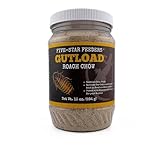
- Formulated for daily feeding, this roach chow delivers balanced protein and calcium to support essential functions, healthy growth, and optimal reproduction. It’s the everyday fuel your colony needs to thrive.
- We don’t believe in cutting corners. That’s why our recipe includes real fruits, whole grains, and essential nutrients to promote energy, healthy growth, and reproduction. No fillers, no dog food, no mystery powders—just clean, effective fuel for your feeders.
- Smell the difference—our roach chow is naturally sweet-smelling thanks to real fruit and whole food ingredients. No artificial fragrances, just better nutrition that’s easy on the senses.
- Whether you raise Dubia, Discoid, Orange Head, or other feeder roaches, our roach chow provides the balanced nutrition they need to thrive. Expect faster growth, better reproduction, and healthier feeders for your reptiles, amphibians, and exotic pets.
- Five-Star Feeders Roach Chow is made in the USA in small batches to ensure consistent quality. Each batch is carefully mixed, packaged, and sealed for freshness and reliability you can count on.
No defensible controlled figures establish how many nymphs either species should produce in a particular number of weeks. Avoid colony plans that promise an exact harvest date from the species label alone. Start with enough healthy insects to cover your animal’s consumption, keep conditions stable, and increase the colony only after you see its actual reproductive rate.
What faster reproduction changes
- For a single small pet: buying assorted sizes may be simpler than breeding either species.
- For several animals: faster colony growth can reduce the time before home-produced feeders become available, provided the colony is kept warm, hydrated and clean.
- For occasional feeding: the breeding advantage may not justify maintaining equipment and surplus insects.
- For a new breeder: supplier quality and a stable setup matter at least as much as the species choice.
Which species gets larger?
Discoids are described as somewhat larger as adults in the recent comparison. That does not mean every discoid is larger than every Dubia, nor does it make adult discoids the correct prey for every animal. Roaches are sold by life stage and approximate size, and individual growth varies.
Choose a prey size your animal can safely manage. A young reptile, amphibian or invertebrate may need tiny nymphs even when an adult of the same species can eat large roaches. Ask the seller how the size is measured, inspect the shipment on arrival and keep more than one size available if your animal is growing.
When the larger adult can help
A larger adult can provide more food per insect for a suitably sized animal and may reduce the number of feeders needed at one meal. It can be inconvenient, however, if your pet refuses large prey or if the roaches are too wide for safe swallowing. The useful comparison is the roach’s body width against the individual animal’s feeding guidance, not “discoid versus Dubia” in the abstract.
Are Dubia or discoids more nutritious?
The evidence does not establish a definitive nutritional winner. A Dubia.com table lists discoids at 66% moisture, 17% protein, 8% fat, 1% ash, 3% fiber and a calcium-to-phosphorus (Ca:P) estimate of 1:3. The same table lists Dubia at 66% moisture, 23% protein, 7% fat, 1% ash, 3% fiber and Ca:P of 1:3. All Angles Creatures’ 2025 comparison gives approximately 20% protein for discoids and approximately 23% for Dubia, with different moisture estimates. Those discrepancies show why the figures should be read as vendor-published estimates rather than precise laboratory rankings.
Also popular on Amazon

- High Protein Content: Packed with essential amino acids for muscle growth and repair.
- Long Lifespan: Our roaches live longer, ensuring you get the most out of your purchase.
- Easy to Digest: Soft-bodied and easy on your pet’s digestive system.
- Odorless and Quiet: Say goodbye to the noise and smell typically associated with crickets.
- Nutrient-Rich: A balanced diet with the right mix of protein, fat, and carbohydrates.
Feeder composition also changes with what the insects eat. Barras and colleagues’ 2025 paper in the Journal of Herpetological Medicine and Surgery examined diets and nutritional changes in Dubia roaches. Its experiment found that a high-calcium diet increased the Ca:P ratio in Dubia, while not every gut-loading diet changed that ratio. As the authors put it: “These results confirm that a high calcium diet can increase the Ca:P ratio in dubia roaches; however, not all gut-loading diets can alter the Ca:P ratio.” The experiment involved Dubia and does not prove that discoids are inferior or superior.
What this means at feeding time
- Feed the roaches a nutritious, fresh diet before offering them when possible; “gut-loaded” is not a guarantee of a particular mineral profile.
- Use the whole diet plan for your pet, including species-appropriate calcium or vitamin supplementation when its husbandry or veterinarian recommends it.
- Do not calculate a pet’s mineral intake from one vendor table as though it were a universal laboratory value.
- Remove spoiled food and excess moisture from the colony so mold and contamination do not undermine feeder quality.
Does activity affect feeding response?
An educational feeder-insect guide says discoids tend to be more active. Movement can draw the attention of some reptiles and amphibians that ignore slow or motionless prey. “May” is the important qualification: an individual animal can prefer stationary prey, and a very active roach can be harder to contain in an open enclosure.
Offer only as many insects as your animal can locate and eat promptly. Supervise unfamiliar prey, especially with young or slow-feeding animals, and remove leftovers according to the species’ enclosure-care routine. Activity is a useful tiebreaker when two correctly sized feeders are otherwise suitable, not a reason to ignore prey size or nutrition.
How to choose between them for your animal
Choose based on the animal first
- Identify the animal’s feeding stage. Hatchlings, juveniles, adults, gravid animals and recovering animals can have different prey and frequency requirements.
- Set a safe prey-size range. Use the animal’s species-specific care guidance and body dimensions. Order nymphs if adults would be too large.
- Decide whether you need a colony. Frequent feeding for multiple animals may reward home breeding; occasional feeding usually favors small, regular purchases.
- Consider feeding behavior. If your pet responds to movement, the reported higher activity of discoids may be worth testing in a controlled feeding session.
- Check supplementation requirements. Some reptiles and amphibians need calcium or vitamins; follow the plan for that species rather than assuming either roach supplies everything.
- Confirm legality and delivery. Verify your jurisdiction and the seller’s shipping coverage before paying.
Typical decision patterns
| Your situation | Reasonable starting choice | Why |
|---|---|---|
| You want to establish a breeding colony quickly | Dubia | The comparison describes faster colony ramp-up, although results vary with conditions |
| Your adult animal can safely eat larger prey | Either; test discoids if larger adults are useful | Discoids are described as somewhat larger adults, but individual feeder size still matters |
| Your pet ignores inactive prey | Try discoids | An educational guide describes them as more active; observe your individual animal |
| You need a small number of feeders | Whichever species is legal, healthy and available in the correct size | Breeding speed has little value when you are not maintaining a colony |
| You are comparing nutrition alone | Do not choose on species name alone | Vendor tables conflict, and diet changes Dubia composition |
Colony conditions and equipment
A Dubia care guide says these roaches can survive at room temperature but recommends an ambient 90–95°F for successful breeding and about 60% humidity. It also recommends monitoring with a digital probe thermometer/hygrometer. Treat those numbers as vendor guidance for Dubia, not as a validated target for discoids. A discoid colony may require different conditions, so obtain species-specific instructions from a reliable husbandry source or the breeder supplying your insects.
Basic colony checklist
- Ventilated, escape-resistant housing sized for the number of insects
- Vertical egg-crate or similar surfaces that increase usable area without blocking airflow
- Reliable heat control when room temperature is insufficient
- A digital thermometer/hygrometer with a probe positioned where the roaches live
- Dry staple food plus a controlled moisture source
- Routine removal of moldy food, dead insects and accumulated waste
- Hand-washing and allergy precautions for people repeatedly handling roaches or their debris
Do not add wet produce in quantities the colony cannot consume before it spoils. Replace moisture sources regularly, keep the enclosure dry enough to discourage mold and record readings so a gradual failure in heating or humidity is visible before reproduction drops.
Also popular on Amazon

- Formulated for daily feeding, this roach chow delivers balanced protein and calcium to support essential functions, healthy growth, and optimal reproduction. It’s the everyday fuel your colony needs to thrive.
- We don’t believe in cutting corners. That’s why our recipe includes real fruits, whole grains, and essential nutrients to promote energy, healthy growth, and reproduction. No fillers, no dog food, no mystery powders—just clean, effective fuel for your feeders.
- Smell the difference—our roach chow is naturally sweet-smelling thanks to real fruit and whole food ingredients. No artificial fragrances, just better nutrition that’s easy on the senses.
- Whether you raise Dubia, Discoid, Orange Head, or other feeder roaches, our roach chow provides the balanced nutrition they need to thrive. Expect faster growth, better reproduction, and healthier feeders for your reptiles, amphibians, and exotic pets.
- Five-Star Feeders Roach Chow is made in the USA in small batches to ensure consistent quality. Each batch is carefully mixed, packaged, and sealed for freshness and reliability you can count on.
Buying live feeder roaches
Seller quality can outweigh small species differences. A commercial discoid listing describes the insects as a Dubia alternative, offers multiple sizes and states that the seller does not ship to Hawaii or outside the United States. That is the seller’s shipping policy, not a universal legal rule. Other sellers may have different regions, weather holds, minimum orders and live-arrival terms.
Questions to ask a seller
- What approximate body size or life stage is included in each count?
- Are the insects captive-bred and recently fed?
- How are heat packs, weather delays and live-arrival claims handled?
- Which states or territories are excluded from shipping?
- What is the replacement or refund process if the parcel arrives dead or delayed?
- Can the seller provide the species name rather than only a trade label such as “large roaches”?
On arrival, check for unusual odor, widespread lethargy, mold or excessive dead insects. Separate questionable stock from an established colony until you are confident it is healthy. Never release feeder roaches outdoors.
Legal checks before ordering
Live-insect rules are local and can change. A comparison article updated June 25, 2026 reports that Dubia are restricted in Florida and advises checking state and local rules. The Florida Department of Agriculture & Consumer Services homepage reached through that article did not expose a species-specific rule in the retrieved content, so the Florida statement should not be treated as independently confirmed here. It also should not be generalized to every US state or municipality.
- Search the current agriculture, plant-health, wildlife or invasive-species regulator for your state.
- Check county or municipal rules if your area regulates live insects separately.
- Ask the seller whether it has a current shipping exclusion for your address.
- Keep a record of the species and seller in case a permit or inspection question arises.
Complete these checks before ordering, not after a shipment is in transit. A seller’s inability to ship to a location can reflect company policy, weather risk or carrier limits rather than a legal prohibition.
Feeding and supplementation routine
Use feeder roaches as one component of the animal’s diet. The appropriate number and frequency depend on species, age, size, body condition and health. Follow a care plan for the individual animal, and obtain veterinary advice when appetite, weight or digestion changes.
Also popular on Amazon

- 【Ventilation design】:Featuring specially designed escape-proof bevels, common insects such as crickets, dubia roaches, and beetles cannot pass through the ventilation holes. A carefully designed ventilation system ensures airflow while maintaining a dark environment, creating an ideal growth environment for mealworms, dubia roaches, and other live food.
- 【Convenient feeding】The flip cover is equipped with a magnetic lock, making it easy to open and safe to feed.
- 【Detachable climbing ladder】It has three built-in climbing ladders to expand the insect's activity space and create a three-dimensional activity area.
- 【Easy to clean】The specially designed mesh bottom of the box shakes off dust, which falls into the bottom drawer tray. Cleaning is simple: just pull out the bottom tray, or you can rinse the entire box with water.
- Convenient to carry and easy to store
A practical routine
- Offer roaches that are clearly smaller than the animal’s safe prey limit.
- Provide the colony with fresh food and a controlled hydration source before harvest when you are gut-loading at home.
- Dust or supplement feeders only according to the animal’s established schedule; more powder is not automatically better.
- Observe the entire feeding session and remove uneaten insects as appropriate for the enclosure.
- Record the feeder type, approximate size, quantity eaten and the animal’s body condition so you can adjust the next offering.
Wild-caught insects are a poor substitute for a known captive feeder because of parasite, pesticide and other contaminant risks. Captive-bred Dubia or discoids still need clean handling and sensible storage.
Independent reader supportYour contribution helps us test, update, and keep practical guides available for everyone.Common mistakes and fixes
Assuming a nutrition table is a guarantee
Symptom: You select a species solely because one chart shows more protein or a favorable Ca:P number. Fix: Treat the figures as estimates, gut-load appropriately and follow the pet’s complete supplementation plan.
Using adult feeders for a juvenile
Symptom: The animal refuses prey, struggles to swallow or becomes stressed during feeding. Fix: Order smaller nymphs and reassess size as the animal grows.
Recommended Free Tools
Expecting a fixed breeding schedule
Symptom: A colony produces fewer insects than an online timetable promised. Fix: Check measured temperature and humidity, food and hydration, cleanliness, starting colony size and age distribution before blaming the species.
Transferring Dubia settings to discoids
Symptom: You run a discoid enclosure at the Dubia guide’s temperature and humidity without evidence that it is suitable. Fix: Use species-specific guidance; the 90–95°F and approximately 60% humidity recommendations cited above are Dubia vendor guidance.
Also popular on Amazon

- ESSENTIAL HYDRATION: These insect water crystals provide a natural source of hydration
- PET-FRIENDLY FORMULA: The crystals are non-toxic and safe for insects to drink from.
- LONG-LASTING HYDRATION: Just add water and the crystals will absorb it, forming a moist surface that provides a water source
Ignoring local restrictions
Symptom: A seller refuses an order or a shipment is held. Fix: Verify regulator rules and seller coverage before purchase, and do not assume a rule reported for Florida applies elsewhere.
Bottom line: which should you buy?
Choose Dubia if your priority is a feeder colony that the available husbandry comparison describes as faster to establish. Choose discoids if correctly sized, somewhat larger adults or potentially greater activity better fit your animal. If you are not breeding, buy whichever species is legal, healthy and consistently available in the right size. Neither the published vendor nutrition tables nor the current evidence supports declaring one species universally more nutritious. Good prey sizing, clean captive culture, appropriate gut-loading and an animal-specific supplementation plan will have a larger practical effect than the species label alone.
Do these 3 things before closing this tab:
1Repair Windows errors before they cause bigger problems2Scan for outdated or missing drivers - takes under a minute3Clear out junk files and repair common Windows errorsFrequently Asked Questions
Can I keep Dubia and discoid roaches in the same colony?
They are separate species with different reported husbandry characteristics. Keeping colonies separate lets you monitor conditions, reproduction and feeder identity accurately; no evidence here establishes a benefit to mixing them.
Are discoid roaches legal in every US state?
No universal status can be stated. Regulations and shipping policies vary, so check the current agriculture, wildlife or invasive-species authority for your location before ordering.
How do I know whether a roach is too large for my pet?
Use the prey-size limit in care guidance for the individual species and life stage, and choose smaller nymphs when uncertain. Seller size labels are approximate, so inspect the actual insects.
Does gut-loading guarantee a favorable calcium-to-phosphorus ratio?
No. The 2025 Dubia study found that a high-calcium diet increased Ca:P, but not every gut-loading diet changed the ratio.





Leave a Reply