The Dutch Shepherd is a medium-sized working dog from the Netherlands, recognized for its brindle coat, athletic build, intelligence, and ability to work independently. It was developed as an all-purpose farm and shepherd’s dog rather than as a companion breed with a narrow job description. Modern Dutch Shepherds may excel at obedience, tracking, scent work, herding, search and rescue, and police work.
That versatility comes with responsibility. This is an active, persistent dog that usually needs structured training, meaningful daily activity, and careful socialization. Intelligence does not automatically make the breed easy for inexperienced owners: Dutch Shepherds can also be independent, vigilant, reserved, and occasionally obstinate.
As an Amazon Associate I earn from qualifying purchases.
Dutch Shepherd Dog at a glance
| Trait | Details |
|---|---|
| Official FCI name | Hollandse Herdershond |
| Origin | The Netherlands |
| FCI classification | Group 1: Sheepdogs and Cattledogs; Section 1: Sheepdogs |
| Recognized coat varieties | Short-haired, long-haired, and wire-haired |
| Standard color | Brindle, with a golden or silver base |
| Height | Males: 22.4–24.4 inches; females: 21.7–23.6 inches under the FCI standard |
| Typical lifespan | About 12–14 years, according to the American Dutch Shepherd Association health statement |
| Best suited to | Active owners interested in training, dog sports, working activities, or structured outdoor life |
Height ranges vary slightly by registry. The United Kennel Club lists males at 22½–24½ inches and females at 21½–23½ inches. The FCI standard does not prescribe a fixed adult weight; instead, it calls for a balanced, muscular, medium-sized dog with enough substance and endurance for work.
History and original purpose
The Dutch Shepherd developed in the rural Netherlands as a practical farm dog. Its jobs included keeping sheep away from crops, accompanying flocks to pasture and markets, herding cattle, keeping chickens out of gardens, pulling milk carts, and warning farmers when strangers approached.
#1 Best Overall

- New communication tool about you and your puppy.
- Pet Dog Training Clickers for Puppy, Cat, Potty, Bird, Horse, Pet, Trainer Training Tools, Behavior Aids
- Just press to mark desired behavior, then reward for faster learning.
- The spring wrist length : 16cm/6.3inches and can strength to 25cm/9.84inches.
- Package include : Black + Blue,each color 1 pcs.
This background explains much of the modern breed’s character. Dutch Shepherds were expected to notice what was happening around them, make decisions, persist through physically demanding work, and cooperate with a handler without requiring constant direction.
As sheep farming declined around 1900, the breed’s versatility helped it transition into police work, tracking, search work, and guide-dog roles. Dutch Shepherds continue to work in herding, obedience, tracking, scent sports, search and rescue, and law enforcement.
The first breed standard was published on June 12, 1898. The current FCI standard is No. 223, published as valid on December 21, 2019 and dated January 9, 2020.
What does a Dutch Shepherd look like?
The Dutch Shepherd is slightly longer than tall, with the FCI describing an approximate body-length-to-height ratio of 10:9. It should look powerful and well-muscled without appearing heavy. The breed is built for a smooth, supple trot and sustained activity rather than exaggerated movement or bulky mass.
The head is wedge-shaped, dry, and proportional to the body. The skull and muzzle are approximately equal in length, with the muzzle slightly longer than the forehead. The nose is black, the eyes are dark and almond-shaped, and the medium-sized ears stand erect when the dog is alert.
The tail reaches approximately to the hock. At rest it hangs straight or with a slight curve; during movement it is carried upward but should not curl over the back or fall sideways.
Coat types and color
A Dutch Shepherd is not necessarily short-haired. The FCI recognizes three coat varieties:
- Short-haired: A hard, close-fitting coat with a woolly undercoat. The standard calls for a visible ruff, breeches, and tail plume.
- Long-haired: A straight, harsh coat with a woolly undercoat, distinct ruff and breeches, feathering on the backs of the forelegs, and a heavily coated tail. The ears should not have fringes.
- Wire-haired: A dense, harsh, tousled coat with a woolly undercoat. The face has characteristic eyebrows, whiskers, a moustache, and a beard.
All three varieties are brindle. The base may be golden or silver, with golden shades ranging from light sand to chestnut red. A black mask is preferred. Heavy white markings on the chest or feet are undesirable under the FCI standard, although the UKC permits very small white markings.
Rank #2

- ▼Come in 4 pack button clickers with wrist strap in 4 different colors:Black, Green, Orange, Yellow, each color 1 PCS
- ▼Can be used to train the dog basic obedience, small trick, and correct the bad behavior; Scientific method of training your pet safely and easily.
- ▼Stop barking and dog obdeience. Train your dog quiqly just by simply pressing the clicker and command.
- ▼Well constructed and durable, metal clicker will not rust or break.
- ▼Big button for easy clicking and loud sound. Easy to use in any position.
Because every coat variety has an undercoat, Dutch Shepherds shed and should not be presented as hypoallergenic or non-shedding dogs.
Dutch Shepherd temperament
Breed standards describe the Dutch Shepherd as loyal, reliable, alert, watchful, active, intelligent, persistent, and willing to work with its owner. It can also handle an assigned task independently and may work alongside other dogs when managing larger flocks.
In a home, those qualities can produce a highly responsive and rewarding dog—but also one that notices everything and invents its own activities when underemployed. A Dutch Shepherd may be devoted to its family without being socially indiscriminate. Some individuals are reserved, particularly with unfamiliar people, which makes early and ongoing socialization important.
Recommended Free Tools
“Protective” and “aggressive” are not interchangeable descriptions. A well-bred, properly socialized Dutch Shepherd should not be assumed to be aggressive simply because it is alert or watchful. Conversely, owners should not ignore vigilance, suspicion, chasing, or territorial behavior and assume training will fix it automatically.
Temperament varies with genetics, early experiences, training, and the individual dog. Meet the parents when possible, observe how they respond to unfamiliar people and handling, and ask the breeder about the behavior of related dogs.
Exercise and mental stimulation
This is a high-activity working breed with substantial stamina. It needs regular physical activity as well as tasks that engage its brain. A walk around the block may be useful, but it is unlikely to meet the needs of many Dutch Shepherds by itself.
Good outlets include:
- Structured obedience training
- Tracking and nose work
- Herding activities
- Agility and other dog sports
- Retrieving and controlled games
- Search-and-rescue-style exercises
- Hiking and active outdoor work
There is no scientifically validated exercise number that applies to every Dutch Shepherd. Age, health, weather, conditioning, and temperament all matter. Puppies need controlled activity and rest rather than forced running, repetitive jumping, or long endurance sessions. Adults generally benefit from a routine that combines exercise, training, decompression, and rest.
The Tool Desk
Outbyte PC Repair FREERepair Windows errors before they cause bigger problemsFix Now →Outbyte Driver Updater FREEScan for outdated or missing drivers - takes under a minuteDriver Scan →Watch for the difference between a tired dog and an overstimulated one. Constant ball throwing, frantic high-arousal play, or excessive physical exertion can create a fitter dog without teaching it how to settle. Include calm leash walking, mat training, impulse control, scent searches, and quiet time at home.
Rank #3
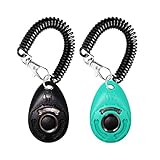
- EASY TO USE - Simple push button with distinct clicking sound.
- Comes with an elastic wrist band so you can leave it on your wrist or clip it to the leash or your pants.
- Not only train the dog but also the cat, bird, chicken, sheep a new behaviors like sit, fetch, roll over, lie down.
- For effective pet training ALWAYS reward with a treat after clicking.
- Can be used to train the dog basic obedience, small trick, and correct the bad behavior; Scientific method of training your pet safely and easily.
Training and socialization
Dutch Shepherds are intelligent and generally prepared to work with their handlers, but they are not mechanically obedient. Their independent streak, persistence, and possible obstinacy require clear training rather than repeated commands or physical confrontation.
- Start with everyday control: Teach name response, recall, loose-leash walking, a settle behavior, and cooperative handling.
- Use consistent rules: Everyone in the household should respond to jumping, door rushing, barking, and chasing in the same way.
- Reward useful decisions: Reinforce checking in, disengaging from distractions, choosing a mat, and calmly observing unfamiliar situations.
- Build distractions gradually: Practice around increasing levels of people, dogs, movement, livestock, traffic, and noise instead of testing the dog suddenly.
- Provide controlled work: Give the dog an appropriate outlet for tracking, obedience, herding instinct, or another structured activity.
Socialization means controlled exposure paired with positive experiences, not forcing a puppy to greet every person or dog. A reserved dog should be allowed to observe at a comfortable distance. If the dog shows fear, reactivity, guarding, or predatory behavior, work with a qualified reward-based trainer or veterinary behaviorist.
Grooming and shedding
Grooming requirements depend on coat type, but none of the varieties is maintenance-free. Regular brushing helps remove loose undercoat and prevents tangles, especially in the long-haired variety’s feathering, breeches, ruff, and tail furnishings.
Do these 3 things before closing this tab:
1Scan for outdated or missing drivers - takes under a minute2Clear out junk files and repair common Windows errors3Fix the driver behind crashes, sound loss and screen glitchesThe wire-haired variety has a specific grooming requirement: its coat should be hand-plucked, on average, twice a year. Clipping can change the texture and appearance of a harsh coat, so owners should find a groomer familiar with wire-coated working breeds.
Routine care should also include nail trimming, ear checks, tooth brushing, and inspection of the skin after outdoor work. Brushing frequency may need to increase during seasonal shedding.
Health and expected lifespan
The American Dutch Shepherd Association describes the breed as generally healthy and athletic, with a stated life expectancy of approximately 12–14 years. “Generally healthy” does not mean free of inherited disease. Responsible breeding still requires orthopedic, eye, and genetic screening.
ADSA recommends that breeding dogs receive:
- An OFA hip evaluation or a PennHIP evaluation
- An OFA elbow evaluation
- Annual OFA eye examinations beginning at one year of age
The health statement also recommends genetic testing appropriate to the dog and coat variety, including testing for degenerative myelopathy. Additional recommendations include autoimmune thyroiditis testing for long-haired dogs; SCA1 and SCA2 testing for short-haired dogs; and von Willebrand disease type I testing for long-haired dogs.
Ask to see the sire’s and dam’s registered names and search the relevant health databases yourself. A test result only addresses the condition or trait tested; it cannot guarantee that a dog will never develop another health problem.
Rank #4

- MANUAL AUDIBLE CLICKER: Produces an audible click when manually pressed. The clicker contains no electronics, batteries, remote-control functions, or Electronic Stimulation features.
- INDIVIDUAL RESPONSE TO SOUND MAY VARY: Dogs and other animals may respond differently to audible clicker sounds. Introduce the clicker gradually and discontinue use if the animal shows discomfort or fear.
- COMPACT HANDHELD DESIGN: Small finger-clicker design is intended to be carried and operated by the user. Review the product images and compact size before ordering to confirm it meets your expectations.
- 5-INCH VELCRO FINGER STRAP: Includes an approximately 5-inch adjustable Velcro strap designed to position the clicker on the user's finger or hand. The strap is worn by the user and is NOT intended to be worn by the pet.
- TEAL CLICKER ACCESSORY: Includes one Teal manual finger clicker and training instructions. Remote transmitter, receiver collar, batteries, and other training-system components are NOT included.
ADSA also advises owners to tell their veterinarian about possible anesthesia sensitivity associated with herding breeds. This is a precaution that may affect monitoring or protocol choices, not a diagnosis that every Dutch Shepherd is anesthesia-sensitive.
Is the Dutch Shepherd recognized by the AKC?
In the United States, the Dutch Shepherd is listed by the American Kennel Club in the Foundation Stock Service (FSS) and Miscellaneous Class systems. It is not a fully AKC-recognized breed eligible for regular conformation competition in the same way as an AKC Herding Group breed.
The AKC accepted the breed into FSS in April 2012 and approved its advancement to the Miscellaneous Class effective January 1, 2017. Within these programs, the breed carries a Herding Group designation.
Free tools Windows power users keep installed
One-click scans. No signup required.
The United Kennel Club recognized the Dutch Shepherd on January 1, 1995; its current standard was revised May 1, 2017. Registry status is worth checking because websites sometimes incorrectly describe the Dutch Shepherd as fully AKC-recognized.
Dutch Shepherd, Belgian Malinois, or German Shepherd?
These are separate breeds, even though working-line dogs can look similar. The Dutch Shepherd’s defining standard color is brindle, and it exists in short-haired, long-haired, and wire-haired varieties. The Belgian Shepherd has different recognized varieties and standards, while the German Shepherd Dog has its own structure, coat, color, and registry history.
Brindle coloring alone does not prove that an unverified dog is a Dutch Shepherd. Shelter descriptions, online breed labels, and visual guesses are not equivalent to a documented pedigree or registration. DNA breed tests may provide useful information, but they do not replace a verified pedigree when breed identity matters.
Independent reader supportYour contribution helps us test, update, and keep practical guides available for everyone.Who should get a Dutch Shepherd?
A Dutch Shepherd may suit an owner who enjoys training and wants a dog capable of substantial physical and mental work. A home with access to safe outdoor activity can help, but a large yard does not replace interaction or instruction. The owner must be prepared to manage alertness, chasing, barking, social reserve, and the dog’s need for a purposeful routine.
What’s actually slowing this PC down?
Pick the symptom - the matching free tool is one click away.
It may be a poor match for someone seeking a naturally easygoing dog that is content with occasional walks, or for a household that has little time for training. First-time ownership is not impossible, but the breed’s independence and intensity make experienced guidance particularly valuable.
Best Value

- Stronger Bark Control with 3X Ultrasonic Emitters: Unlike single-emitter devices, our upgraded dog bark deterrent features three synchronized ultrasonic heads—delivering 3X the coverage to quickly stop barking, biting, and jumping behaviors. Ideal for anti barking training, safer than bark collar, more effective than a dog whistle, offers a humane, high-performance dog training solution
- 6-in-1 Safe & Humane Training Modes:Our dog bark deterrent device features dual ultrasonic frequencies (fixed 25kHz and variable 20-30kHz), combining 4 ultrasonic modes plus an audible beep and LED flashlight for versatile training. Whether for daily training or stubborn, persistent barking, this anti bark device adapts to different dogs providing effective bark control without causing pain or distress. Perfect for training at home or to stop neighbors dog bark that disturbs your peace
- 23 FT Extended Range & Night Safety: Bark Control Anytime, Anywhere: Stop barking and bad behavior from up to 23 feet away with our powerful dog bark deterrent device — perfect for your yard, neighbor’s yard, outdoor walks, and off-leash areas. Whether you're relaxing at home or out for a stroll, enjoy safe, long-distance control to correct disruptions quickly. The built-in LED flashlight adds safety for evening walks, and low-light training
- Fast Charge & Long Battery Life – Always Ready for Training:With a Type-C fast charging port, our dog bark deterrent device reaches a full charge in just 2 hours and provides up to 30 days of regular use on a single charge, along with 180 days of standby time. Whether you're correcting anti barking behavior or training your dog in public places, you’ll always be prepared for any situation. Forget the hassle of frequent charging and enjoy reliable, long-term barks no more support
- Ultra-Compact Design for Everyday Convenience:50% smaller than standard dog bark deterrent devices, our anti barking device is ultra-compact and lightweight, fitting effortlessly into your pocket, bag, or hand. Whether you're on daily walks, outdoor adventures, or dealing with unexpected situations in public places, this portable design helps you stop barking and encourage good behavior anywhere, anytime. Say goodbye to constant noise and enjoy a barks no more experience with your dog
How to choose a responsible breeder
Before placing a deposit, request documentation rather than relying on general assurances. Verify:
- Hip results through OFA or PennHIP.
- Elbow results through OFA.
- Annual eye examinations through OFA, beginning at one year.
- Relevant coat-variety DNA tests, including DM, thyroiditis, SCA1, SCA2, or von Willebrand disease type I where applicable.
- The registered names and searchable results of both parents.
- The parents’ behavior around strangers, handling, other dogs, and ordinary household activity.
A responsible breeder should discuss both the breed’s strengths and its management demands. Be cautious of anyone promising a Dutch Shepherd that is automatically calm, universally friendly, effortless to train, or guaranteed to be free of health problems.
FAQ
Are Dutch Shepherds good family dogs?
They can be devoted and reliable family dogs in a household prepared for their activity level, training needs, and alert nature. Individual temperament matters, and children should always be supervised with any dog. Early socialization and teaching calm household behavior are important.
Crashes, No Sound, or Screen Glitches?
Random freezes, missing sound and display glitches usually trace back to one bad driver. Find and replace yours safely.Free scan · under a minuteWindows Errors? Fix Them Before They Spread
Repair common Windows errors and clear accumulated junk for a smoother, more stable PC - no reinstall needed.Free scan · no reinstallDo Dutch Shepherds shed?
Yes. All three recognized coat varieties have an undercoat and shed. Long-haired and wire-haired dogs may need more specialized grooming, and the wire-haired variety is generally hand-plucked about twice a year.
Are Dutch Shepherds aggressive?
Aggression is not a defining requirement of the breed. Dutch Shepherds are alert and watchful and may be reserved with unfamiliar people. Genetics, socialization, training, and handling strongly affect behavior, so owners should not confuse normal vigilance with aggression or ignore concerning behavior.
How much exercise does a Dutch Shepherd need?
The breed needs regular physical activity plus mental work, but there is no scientifically validated daily number that applies to every dog. Obedience, tracking, scent work, herding, and dog sports can be valuable outlets. Puppies need age-appropriate activity and plenty of rest.
What colors do Dutch Shepherds come in?
The breed standard color is brindle, based on golden or silver shades ranging from light sand to chestnut red. A black mask is preferred. Heavy white markings and incorrect colors are faults under the relevant standards.
Quick wins for a faster PC:
Repair Windows errors before they cause bigger problemsFix Now →Fix the driver behind crashes, sound loss and screen glitchesFind Drivers →Are Dutch Shepherds fully recognized by the AKC?
No. The AKC currently lists the Dutch Shepherd in its Foundation Stock Service and Miscellaneous Class systems, with a Herding Group designation in those programs. It is not fully recognized for regular AKC conformation competition.
What health tests should Dutch Shepherd breeders complete?
ADSA recommends hip screening through OFA or PennHIP, OFA elbow screening, and annual OFA eye examinations beginning at one year. It also recommends relevant genetic testing, including coat-variety-specific tests such as SCA1, SCA2, thyroiditis, or von Willebrand disease type I where applicable.
The Bottom Line
The Dutch Shepherd is a capable, athletic working dog—not simply a brindle-coated companion breed. Its three coat varieties, stamina, intelligence, independence, and watchfulness can make it an exceptional training or sport partner for the right owner. The same traits can become difficult if the dog lacks structure, socialization, and meaningful work. Choose carefully, verify health testing, meet the parents, and plan for a lifetime of training rather than expecting exercise alone to solve every problem.
Quick Recap
Product prices and availability are accurate as of the date/time indicated and are subject to change. Any price and availability information displayed on Amazon at the time of purchase will apply.




