
A 2025 study of Icelandic horses found a strong association between the age at first Culicoides exposure and later clinical hypersensitivity. Horses first exposed from birth had no observed clinical allergy in either birth-onset cohort, while allergy occurred in some horses first exposed during adolescence and in more horses first exposed as adults. The result is important evidence about timing in this specific horse model—not a recommendation to deliberately expose foals, and not proof that early allergen exposure prevents allergy in every horse.
What the study found
Simonin and colleagues compared related horses that encountered Culicoides allergens at different stages of life. The animals were Icelandic horses that had been naïve to the allergen in Iceland, where Culicoides midges were absent, and were then studied in the United States, where the insects appeared during warm summer months. The comparison included an adult-onset parent cohort, an adolescent-onset full-sibling cohort, and two full-sibling cohorts exposed from birth.
As an Amazon Associate I earn from qualifying purchases.
| Cohort | First allergen exposure | Horses in cohort | Horses with reported clinical allergy | Observed rate |
|---|---|---|---|---|
| Adult-onset parent cohort | Adulthood | 16 | 10 | 62.5% |
| Adolescent-onset C1 cohort | Adolescence | 14 | 3 | 21.4% |
| Birth-onset cohort 1 | From birth | 15 | 0 | 0% |
| Birth-onset cohort 2 | From birth | 15 | 0 | 0% |
The adolescent group included delayed cases: the paper reports that some horses developed allergy only after six or seven summers of exposure. That detail matters because an apparently unaffected young horse was not necessarily permanently protected at the time of an early examination.
Do these 3 things before closing this tab:
1Scan for outdated or missing drivers - takes under a minute2Clear out junk files and repair common Windows errors3Fix the driver behind crashes, sound loss and screen glitchesAll four cohorts were followed for at least nine years of allergen exposure. The study also measured allergen-specific immunoglobulin E (IgE) and IgG isotypes, allowing the investigators to examine immune responses as well as the clinical outcome.
#1 Best Overall
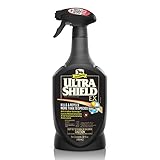
- USA-MADE FORMULA: Kills & repels 70+ species of insects: flies, mosquitoes, ticks, gnats, ants & more
- WEATHERPROOF: Protection up to 17 days with UltraBond Technology; ideal for the most challenging conditions
- NO MIXING: Ready to use, water-based formula for horses, ponies, dogs, barns, or on premise
- BUGS & SUN: Advanced formula contains protection against insects plus multiple sunscreens and coat conditioners
- AWARD WINNING: Consistently voted The Chronicle of the Horse Reader's Choice for favorite fly sprays multiple years running
What is Culicoides hypersensitivity?
Culicoides hypersensitivity is a seasonal, recurrent, IgE-mediated equine allergy associated with proteins in the saliva of biting Culicoides midges. Clinical disease appears after exposure during seasons when the insects are active and can return in subsequent years. The relevant allergen is therefore not the insect as a whole but salivary proteins delivered during a bite.
In an IgE-mediated allergy, the immune system treats an otherwise harmless environmental protein as a threat. Allergen-specific IgE can bind to immune cells that release inflammatory mediators when the allergen is encountered again. The Simonin study did not reduce the condition to an antibody measurement: its headline comparison was whether horses developed reported clinical hypersensitivity over years of natural exposure.
How the horse experiment was designed
Exposure timing was the main comparison
The investigators arranged the comparison around when a horse first encountered the Culicoides allergen: adulthood, adolescence, or birth. This is different from testing a medicine, vaccine, supplement, insect barrier, or desensitization product. The paper examined a naturally occurring exposure history in a defined horse population.
Full siblings reduced some sources of variation
The offspring groups were full siblings and were raised under the study’s shared environmental conditions. Close genetic relationships and a common setting make it easier to compare exposure timing than in an unrelated group of horses living in different places. They do not, however, make the work a randomized clinical trial. The horses were not a broad sample of all breeds, climates, or management systems.
The study used a midge-free starting point
The horses had been naïve to Culicoides allergen while in Iceland. After export to the United States, they encountered midges during warm summers. This created a clear transition from no known exposure to repeated seasonal exposure, but it also means that the findings are tied to that geographic and environmental history.
Rank #2

- For Barn Fly Control and Pasture Insect Management: Suitable for stable, turnout, and pasture environments as a regular equine fly spray and mosquito repellent spray for consistent fly protection and horse care
- Horse Fly Spray & Equine Insect Control with Permethrin Concentrate: Repel-X pe helps protect horses against barn flies, gnats, mosquitoes, ticks, & lice as a concentrated horse fly repellent that mixes with water for economical, ready-to-use spray
- Multi-purpose horse fly repellent & flea and tick spray for dogs that also helps protect against flies & mosquitoes. Great for outdoor and farm dogs.
- No Mixing Required, Just Spray and Go: Repel-X Ready-to-Use delivers full equine fly and mosquito spray protection straight from the bottle and refills with Repel-X pe concentrate
- Use on Horses, Dogs or Livestock or Around the Barn and Home: Ready-to-use Farnam Fly Spray for dogs and horses, or use as a house, barn, and stable fly repellent spray to help reduce flying pests in your animals' environment
Follow-up lasted through repeated seasons
At least nine years of exposure allowed the researchers to observe outcomes beyond a single summer. The late cases in the adolescent cohort show why multi-year follow-up is essential for a recurrent seasonal allergy. A short study could have classified those horses as unaffected simply because their disease had not yet appeared.
Why maternal antibodies were examined
The two birth-onset cohorts differed in whether dams transferred allergen-specific maternal antibodies to their foals through colostrum. Colostrum is the first milk, and antibody transfer through it can shape early immune experience in young animals. The investigators therefore asked whether maternal allergen-specific IgE and IgG altered the apparent protection associated with exposure from birth.
Quick wins for a faster PC:
Scan for outdated or missing drivers - takes under a minuteDriver Scan →Clear out junk files and repair common Windows errorsFree Scan →In the reported clinical outcome, they did not observe a difference between the two birth-onset groups: neither group developed clinical allergy during the study follow-up. The authors interpreted this as evidence that early-life exposure was associated with protection even when maternal allergen-specific antibody transfer differed.
That conclusion does not mean maternal antibodies are biologically irrelevant in every setting. It means that, under the conditions and sample sizes of this experiment, the presence or absence of the measured maternal antibodies did not change the observed clinical result. Antibody concentrations, timing, other immune cells, genetics, and environmental exposures can all interact in ways this design cannot fully separate.
How to interpret the allergy rates
The progression from adult onset to adolescent onset to birth onset is consistent with an age-dependent effect: later first exposure was associated with more clinical hypersensitivity, while earlier first exposure was associated with less. The contrast was observed in offspring born to parents with an allergic phenotype, which makes the result notable because inherited susceptibility did not eliminate the apparent association with early exposure.
Rank #3

- Provides Up to 14 Days of Long-Acting Protection: Compared to ordinary horse fly sprays, this insect repellent offers extended protection that repels flies; helps avoid frequent reapplication and maintains effective insect protection
- For Broad-Spectrum Fly Spray and Insect Control for Horses: This equine fly spray kills and repels house, stable, face, and horn flies, gnats, mosquitoes, ticks, deer ticks, and lice for dependable horse fly control and insect protection
- Repelock Technology for Sweat-Resistant Coverage: The outdoor fly repellent technology binds to the hair shaft to support long-lasting fly repellent effectiveness through rain, heat, humidity, and sweat during hot weather
- Engineered for Hot, Humid, and High-Sweat Conditions: Farnam Endure Horse Fly Repellent maintains sweat-resistant, rain-ready horse fly protection during turnout, training, heavy work, and competition in demanding outdoor environments
- Flexible Spray or Wipe-On Application: Apply Farnam Fly Spray or wipe-on insect repellent for horses to support full-body coverage with a non-greasy finish, including the face, legs, and other sensitive areas
These percentages are cohort outcomes, not population-wide probabilities. A rate calculated from 16 horses describes those 16 horses under their study conditions; it does not predict the exact chance for an individual foal at a different farm. The birth-onset result of zero cases is especially important to phrase carefully. It means no clinical cases were observed in each group of 15 during follow-up, not that the true risk in every population is mathematically zero.
The study also measured IgE and IgG responses, but an immune response is not interchangeable with clinical disease. A horse can produce allergen-specific antibodies without meeting the study’s clinical definition of hypersensitivity, and a clinical outcome can depend on factors beyond a single laboratory value. The paper’s strength is the combination of immune measurements with long-term clinical observation.
What the authors concluded
The paper’s abstract says:
“We provide strong evidence in a full-sibling study that early-in-life allergen exposure, independent of maternal allergen-specific immunoglobulin, prevents Culicoides hypersensitivity development in individuals born to parents with an allergic phenotype.”
This is the authors’ conclusion about their horse model. For readers, the most accurate translation is that early exposure was strongly associated with protection from observed clinical hypersensitivity in these related horses, despite the allergic parental phenotype and despite differing maternal antibody transfer. The wording should not be turned into a guaranteed prevention claim for an individual animal.
What the study does not establish
- It does not provide an exposure schedule. The paper does not specify a safe dose, route, frequency, or age-by-age plan for intentionally exposing a foal to Culicoides allergens.
- It does not test deliberate intervention. No commercial product, treatment, supplement, allergy test, insect barrier, or immunotherapy protocol was evaluated as a way to reproduce the result.
- It does not prove causation in every horse. The design compares cohorts rather than randomly assigning a broad population to different exposure regimens.
- It does not establish a breed-independent effect. The animals were Icelandic horses with a defined history of living in Iceland and then the United States.
- It does not show that early exposure is risk-free. The absence of observed clinical cases in the birth-onset cohorts does not rule out disease in another environment, genetic background, or exposure pattern.
Important limits and sources of uncertainty
Small, specialized cohorts
The groups were modest in size, with 14 to 16 horses in the adult and adolescent comparisons and 15 horses in each birth-onset cohort. Small cohorts can reveal a striking pattern, as this study did, but they produce wide uncertainty around any estimated rate and may not capture uncommon outcomes.
What’s actually slowing this PC down?
Pick the symptom - the matching free tool is one click away.
Rank #4
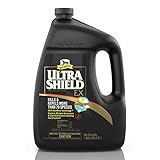
- USA-MADE FORMULA: Kills & repels 70+ species of insects: flies, mosquitoes, ticks, gnats, ants & more
- WEATHERPROOF: Protection up to 17 days with UltraBond Technology; ideal for the most challenging conditions
- NO MIXING: Ready to use, water-based formula for horses, ponies, dogs, barns, or on premise
- BUGS & SUN: Advanced formula contains protection against insects plus multiple sunscreens and coat conditioners
- AWARD WINNING: Consistently voted The Chronicle of the Horse Reader's Choice for favorite fly sprays multiple years running
Shared genetics and environment
Full-sibling comparisons help control some genetic variation, yet they also mean the findings come from closely related horses. Shared housing, climate, management, parasite pressure, and seasonal exposure can affect allergy expression. A different farm or region could produce a different result.
Natural exposure is not the same as controlled dosing
The horses encountered Culicoides in a real seasonal environment. Natural exposure varies with midge abundance, weather, habitat, and biting intensity. It cannot be assumed to equal a measured laboratory dose, and the paper does not identify a threshold below which exposure is beneficial or above which it is harmful.
Clinical disease can emerge late
Delayed adolescent cases demonstrate that the timing of diagnosis matters. Long follow-up improves confidence that the investigators did not simply miss early-onset or late-onset disease, but it also shows why a single season of observation is insufficient for judging protection.
Maternal immunity differs across species
The authors specifically caution against carrying the result directly to humans because maternal immunoglobulin transfer differs between horses and people. Even within veterinary medicine, an immune mechanism observed in this horse model should not automatically be assumed to operate identically in another species.
What horse owners and veterinarians should do with the finding
For a foal or adult horse, this paper is evidence to discuss—not a do-it-yourself prevention protocol. Deliberately increasing exposure to biting midges could cause suffering, trigger clinical disease, or create risks that were not measured in the experiment. There is no study-backed instruction to expose a foal from birth, and no validated way to reproduce the birth-onset conditions at an individual stable.
Best Value

- Kills and Repels Six Types of Flies Plus More: Bronco E horse fly spray with citronella kills and repels stable flies, horse flies, face flies, deer flies, house flies, and horn flies, plus mosquitoes, gnats, ticks, deer ticks, lice, fleas, and chiggers
- For Barn Fly Control, Outdoor Fly Repellent, and Premises Use: Ideal as a barn and stable fly spray, an outdoor mosquito repellent, and a premises spray in kennels, trailers, stalls, dog beds, and camping setups
- For Horse Owners, Dog Owners, Fishing, Camping and for use on Ponies, Horses, Foals, and Dogs: Use as an equine fly spray on horses of all ages and as a permethrin spray for dogs to protect against mosquitoes, flies, fleas, ticks, lice, and gnats
- Citronella-Enhanced Formula Creates a No-Fly Zone: Pairs permethrin, prallethrin, and piperonyl butoxide with a fresh citronella scent to help deter horse flies and mosquitoes from the area, not just off the coat
- Protect the Whole Horse, Including Sensitive Areas: Non-toxic, gentle citronella formula sprays on for coat-to-hoof coverage or can be wiped on with a cloth or sponge around the face, ears, and muzzle for targeted fly and mosquito protection
Owners concerned about Culicoides hypersensitivity should document when signs occur, which seasons are involved, and whether other horses in the same environment are affected. A veterinarian can assess the animal, consider competing explanations for skin or allergy signs, and choose management appropriate to the horse’s history. The study does not replace that individual assessment.
It is also important not to treat a normal first season as proof of permanent protection. Because some adolescent-onset horses developed disease only after six or seven summers, continued observation is warranted whenever a horse remains exposed to Culicoides.
Does this change how human allergy prevention should be discussed?
No. The study is about a particular insect allergy in horses, not food allergy, inhaled allergy, or infant immune development in humans. The difference in maternal immunoglobulin transfer between horses and humans is one direct reason the authors’ conclusion cannot be used as human guidance.
Free tools Windows power users keep installed
One-click scans. No signup required.
“Early allergen introduction” can sound similar to advice studied in human infant nutrition, but the resemblance is linguistic rather than evidentiary. The allergen, species, exposure route, immune system, clinical endpoint, and study design are different. Nothing in this paper supports deliberately exposing a human infant to an environmental insect allergen.
Publication and source details
The study was published on 21 October 2025 in Frontiers in Immunology, volume 16, article 1654693. Its DOI is 10.3389/fimmu.2025.1654693. The authors are Elisabeth M. Simonin, Sigurbjorg Torsteinsdóttir, Vilhjálmur Svansson, Sigríður Björnsdóttir, Heather Freer, Justine Tarsillo, and Bettina Wagner. The article is indexed in PubMed as PMID 41194920 and available in PubMed Central as PMCID PMC12583015.
The central takeaway is precise: in this long-term full-sibling study of Icelandic horses moved from a Culicoides-free environment to the United States, earlier first exposure was associated with fewer observed cases of clinical hypersensitivity. That finding advances understanding of how age and immune history may shape equine allergy, but it does not authorize intentional allergen exposure or guarantee protection for an individual horse.
Quick Recap
Product prices and availability are accurate as of the date/time indicated and are subject to change. Any price and availability information displayed on Amazon at the time of purchase will apply.
Recommended Free Tools





Leave a Reply