
The Eurasian blue tit (Cyanistes caeruleus) is a small, energetic songbird recognized by its blue cap, white cheeks crossed by a dark eye line, yellow underparts and blue-green wings. It lives across much of Europe and parts of western Asia, occupying woodland as readily as parks, orchards, hedgerows and gardens. A European assessment lists it as Least Concern, yet responsible garden practices still matter because food hygiene and suitable nesting cavities affect individual birds.
How to identify a Eurasian blue tit
Start with the complete head-and-body pattern rather than with the blue color alone. An adult has a vivid blue crown, a white face, and a narrow dark stripe running through the eyes. The breast and belly are yellow, while the wings and back combine blue and green tones. Cornell’s identification description calls the plumage “distinctive, with blue cap, white face with dark line through eyes, yellow underparts.”
As an Amazon Associate I earn from qualifying purchases.
Blue tits are compact and constantly in motion. They hop along twigs, hang upside down from slender branches and inspect the undersides of leaves for small prey. Their restless behavior can make a brief view challenging, but the blue crown and dark eye stripe remain useful even when the bird is partly hidden by foliage.
The Tool Desk
Outbyte Driver Updater FREEFix the driver behind crashes, sound loss and screen glitchesFind Drivers →Outbyte PC Repair FREERepair Windows errors before they cause bigger problemsFix Now →Adult size
Cornell gives a length of 11–12 centimetres and a weight of 7.5–14.7 grams. That makes the species noticeably smaller and more delicate than a great tit, although both may visit the same garden or woodland feeding area.
#1 Best Overall

- 【New Upgraded 5-Pronged Base】Upgraded 5-forked base that resists tipping, adds more stability for this birdbath, make sure this birdbath stay in the soil of your garden upright and firmly. Heavy duty metal stake with black powder coat finish offers strong support for this bird bath, so that it is hard to bend, break or fracture.
- 【Heavy Duty Metal Bird Bath】Designed with All-Metal Solid Structure, it is stronger than plastic and resin bird baths. Our bird baths for outdoors are made of high quality Iron material and covered with safety coating. Strong load-bearing capacity, not easy to fall apart, break, blow away. Weatherproof and rustproof, durable that can be used for long time outdoor.
- 【Large Capacity Bird Bath Bowl】This Large bird bath bowl for outdoor(Diameter: 12 in/30.5cm, Depth: 2in /5cm). Compared to the conical bird bath, our circular platform bird bath can hold more water. If you add a solar fountain, you can have more water to use instead of adding water all the time, which will add liveliness to your garden and fun for lovely birds.
- 【Easy to Install & Clean】No tools are needed, installation is very easy and can be done in minutes. Durable bowl detaches from the steel ring for easy cleaning and filling. Keeping it clean is very important for the health of birds. You can inserted birdbath into the ground or lawn of patios and gardens, attracting charming birds to your backyard to bath or share a feast.
- 【Great Bird Lover Gifts】This garden birdbath can be a superior and elegant decor in your outside areas, a great gift for your friend or family member, also a special gifts for wild bird watchers and nature lovers. Enjoy bird watching beautiful colors as wild birds drink and bathe in your bird baths. Keeping your yard or garden full of songbirds all year long!
Juvenile plumage
Young blue tits look duller than adults. A juvenile commonly shows a yellowish cheek and a grey rather than strongly blue crown, with less saturated yellow and blue throughout the plumage. These differences are normal and should not be mistaken for another species.
Blue tit versus great tit
| Feature | Eurasian blue tit | Great tit |
|---|---|---|
| Overall size | Smaller, about 11–12 cm long | Larger and more robust |
| Head pattern | Blue cap, white cheeks and a dark line through the eyes | Black head and bib with prominent white cheek patches |
| Underparts | Yellow, without the great tit’s broad central black stripe | Yellow with a strong black stripe down the breast and belly |
| Behavior | Especially nimble; often hangs upside down while searching leaves | Usually appears heavier and less acrobatic |
| Calls | High, quick contact and alarm notes | Different, often stronger and more varied notes |
Color can vary with light and wear, so use several marks together. A small bird with a blue crown, white cheek, dark eye stripe and yellow underside is a much safer identification than a vague impression of “a blue bird.”
Range, habitat and seasonal movement
Eurasian blue tits are broadly distributed through Europe and extend into parts of western Asia. They use deciduous and mixed woodland, but their habitat choices are much wider than forests alone. Parks, gardens, orchards, thickets, hedgerows and farmland edges all provide the trees, shrubs and insects they need.
Free tools Windows power users keep installed
One-click scans. No signup required.
In Britain and Ireland, the blue tit is a common resident breeder. The British Trust for Ornithology (BTO) notes that it is absent from the Northern Isles and parts of the Hebrides, while the Royal Society for the Protection of Birds (RSPB) describes it as widespread across the UK except for some Scottish islands. Those statements describe the UK and Irish distribution, not the limits of the species’ full Eurasian range.
Rank #2

- ➤【Mom's Backyard Deserve the Best Bird Feeder Pole】When Mom goes old, Birdwatching become one of the greatest and simplest joys in her life, there's something incredibly peaceful about the sound of songbirds. If the beauty and song of the birds in the backyard have piqued Mom's interest, it may be time to purchase some bird feeder poles for her to hang hummingbird & bird feeders as a gift to accompany Mom When we are not around with her
- ➤【Upgraded Shepherds Hooks for Outdoor】 Transform your outdoor space into a haven of beauty and charm with our Shepherd's Hooks. Crafted with utmost quality and attention to detail, these hooks offer the perfect solution for showcasing your favorite birder feeders, lanterns, plants, and decorative accents. With their sturdy construction and weather-resistant features, they are designed to stand the test of time
- ➤【Easy Installation Hummingbird Feeder Stand】 simply stake the hooks into the ground and let them instantly elevate your outdoor décor. The versatile design allows you to effortlessly hang hummingbird & bird feeders to attract colorful visitors, wind chimes for soothing melodies, or even create a mesmerizing ambiance with hanging lanterns
- ➤【Multi-Purpose Shepherds Hooks】Choose from our selection of various heights to create eye-catching displays and add vertical interest to your garden or patio. Whether you want to create a blooming oasis with hanging flower baskets or illuminate your outdoor gatherings with enchanting lights or hang bird feeders to attract colorful visitors, our shepherd's hooks provide the ideal platform
- ➤【Lifetime Guarantee】No-Risk Purchase! We provide you with professional product, and we have fully confidence on our product, If you have any questions about ToyHotels Shepherds Hooks, just contact us, we will give you the most satisfactory solution, we are here to provide you the best shopping experience we can
Winter flocking
Blue tits often join mixed-species feeding flocks during winter. Remaining in contact with neighboring birds helps a flock move through vegetation while watching for predators and locating food. Their short contact calls are part of this social coordination, and a moving flock may include several tit species and other small woodland birds.
Spring and summer territories
In the breeding season, calls also help defend a territory and attract a mate. A bird that is quiet and close to cover in winter may become conspicuous in spring as it advertises from branches around a potential nesting area.
What blue tits eat and how they forage
Invertebrates make up the core of the diet. Blue tits take insects, caterpillars, spiders and other small invertebrates, especially while feeding growing young. They search actively through leaves, buds and branch junctions, using their small bill to reach prey that larger birds may miss.
PC Slower Than It Used to Be?
A free scan shows the junk files, broken settings and background clutter dragging Windows down - then fixes them in one click.Free scan · Windows 10 & 11Crashes, No Sound, or Screen Glitches?
Random freezes, missing sound and display glitches usually trace back to one bad driver. Find and replace yours safely.Free scan · under a minuteSeeds and berries become more important outside the breeding season. In spring, blue tits may also take nectar and pollen. This flexible diet allows them to exploit seasonal peaks: caterpillars in the period when trees are leafing out, then fruit, seeds and supplementary food when insect numbers fall.
Rank #3
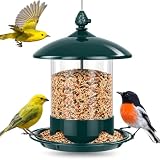
- Sturdy & Durable Metal Construction: The lid and tray are metal with anti-rust coating, thickened PC tube. Slider-lock cap system design can effectively deter squirrels from opening. Weatherproof roof and drainage holes keeps seeds dry in rain, snow
- 360° All-Around Feeding: Holds various types of bird seeds including sunflower seeds and mixed grains. Equipped with 360° seed tray with 4 feeding ports and circular perch supporting multiple birds feeding simultaneously
- Easy to Refill & Clean: Its lightweight build and wide mouth opening facilitates easy filling and clear PC tube enables easy monitoring of seed levels reduces refill frequency and minimizes waste. Designed to be detachable, allowing for thorough washing
- Built for All-Season Use: Ideal for backyards, gardens, decks and trees, hang it from a branch, deck hook or shepherd hook, away from locations where squirrels can easily jump onto it. Extra protection also can be provided by using squirrel baffle
- Designed for Attracting Wild Birds: This hanging metal bird feeder is built to bring cardinals, finches and mixed flocks to your backyard, garden with a steady, clean food source all year round. Perfect for homeowners, gardeners, families and gift buyers
Foraging behavior to watch
- Inspecting the underside of leaves for larvae and eggs.
- Hanging upside down from thin twigs to reach hidden prey.
- Moving rapidly between branches instead of remaining on one feeding perch.
- Joining a mixed-species flock and responding to contact calls.
Garden feeders can be visited, but feeding is optional rather than a requirement for a healthy population. Natural vegetation that supports insects remains important even where supplementary food is offered.
Breeding, nesting and the blue tit life cycle
Blue tits are cavity nesters. They use holes in trees and may accept nest boxes that provide a suitable cavity. Nesting is closely tied to seasonal food supply: RSPB notes that laying is synchronized with the emergence of caterpillars, giving parents a reliable source of protein when chicks hatch.
Eggs and incubation in the UK
BTO BirdFacts data for the UK gives a typical clutch of 8–10 eggs, with observed clutches ranging from 2 to 16. The larger number is an exceptional maximum, not the normal clutch size. The female normally incubates the eggs, and incubation typically lasts 13–14 days.
Feeding and fledging
After hatching, both parents feed the nestlings. BTO reports that young usually fledge after 18–21 days; Cornell describes departure as occurring at about three weeks. Adults continue to provide care around the nest area while recently fledged young learn to forage and respond to danger.
Rank #4

- BUILT FOR SMALL SONGBIRDS — AND IT KEEPS THE BIG ONES OUT: Six small ports with 1.4" perches are sized for finches, chickadees, sparrows and nuthatches. Larger birds like blue jays, grackles and cardinals can't get a grip, so they stop raiding the tube and flinging the small seed on the ground to get at the big kernels. If you want cardinals or woodpeckers too, pair this with a platform or hopper feeder — this one is deliberately the small-bird station.
- WIDE LIFT-TOP + SEE-THROUGH TUBE — REFILL IN SECONDS: Lift the metal lid straight up and pour; the opening is wide enough that you are not funnelling seed through a narrow neck. The clear tube shows the level from across the yard, so you refill before it runs empty instead of checking by opening it. Holds 1.5lb of sunflower, safflower or mixed seed — a small tube on purpose: seed gets eaten before it can sit and go stale.
- HOW TO CLEAN IT: The lid lifts off and the tube is clear, so you can see exactly what needs cleaning. The base is fixed — not removable — so here is what works: tip the feeder upside down and tap to empty packed seed, run a bottle brush or pipe cleaner in through the ports, rinse, then stand it upside down until fully dry before refilling. Do this every 2-3 refills and after any spell of wet weather, so damp seed never sits at the bottom.
- METAL LID, BASE AND PORTS: The lid, base, perches and all six port surrounds are metal, so beaks and claws land on metal rather than thin plastic; the seed tube itself is clear polycarbonate, which is what lets you see the level. Note: this is not a squirrel-proof feeder — the ports are open and a determined squirrel can reach seed. If squirrels are a problem in your yard, hang it from a pole with a baffle, which is what owners who have no squirrel trouble do.
- HANG IT WHERE YOU CAN WATCH — POLE, BRANCH OR SHEPHERD'S HOOK (POLE NOT INCLUDED): The metal hanger fits a standard shepherd's hook, deck pole or tree branch. Most owners hang it within sight of a kitchen or living-room window — finches find a new feeder within days, and you get the show from inside. Works all four seasons, with the busiest months being late autumn and winter when wild food runs short. A ready gift for a parent, grandparent or anyone who watches birds.
Why timing matters
A mismatch between chick demand and caterpillar availability can reduce breeding success. The blue tit’s nesting schedule therefore reflects the seasonal development of deciduous trees and the insects associated with them. Retaining mature trees, shrubs and insect-rich vegetation can support the wider food web on which breeding birds depend.
Conservation status and population figures
The IUCN Red List Europe assessment, last assessed in 2020, lists the Eurasian blue tit as Least Concern and records an increasing population trend in that assessment. BirdLife International’s European breeding estimate is 29.8–47.6 million pairs, equivalent to 59.7–95.1 million mature individuals. This is a European estimate, not a global population total.
UK indicators add useful context rather than changing the European classification. RSPB places the blue tit in the Green category of the UK Birds of Conservation Concern list, the lowest concern level. BTO reports that the UK population has increased since the 1970s, with fluctuations, while noting a shallow decline over the most recent decade covered by its profile. Continued monitoring is therefore appropriate even though the species is not currently treated as threatened at European level.
Do these 3 things before closing this tab:
1Scan for outdated or missing drivers - takes under a minute2Repair Windows errors before they cause bigger problems3Fix the driver behind crashes, sound loss and screen glitchesHow to support blue tits in a garden
A garden can offer useful habitat without trying to manage the birds as pets. The most valuable approach is to provide safe vegetation, natural food and undisturbed nesting opportunities. Neither a feeder nor a nest box guarantees occupation.
Best Value
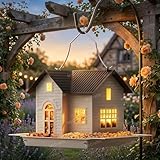
- STURDY AND ATTRACTIVE DESIGN: Metal bird feeders boast a durable construction, able to withstand harsh outdoor conditions. A waterproof coating adds protection against rain, wind, and snow, ensuring the feeder remains in excellent condition for years
- MULTI-FUNCTIONAL: Features two compartments for different seed types and an expanded bird pole for more birds. Small holes in the bottom tray prevent water accumulation, keeping seeds dry and reducing maintenance concerns
- SOLAR BIRD FEEDER: Equipped with a solar panel and rechargeable battery, this feeder collects solar power by day and automatically lights up at night with an LED, offering a reliable light source for birds to forage in the dark.
- WORTHWHILE GIFTS: Hang this feeder to attract birds. It's a great gift for bird lovers and garden enthusiasts, ideal for special occasions. You and your feathered friends will love it
- NO-WORRY AFTER-SALES SERVICES: It is our mission to create products that enhance people’s lives. If you are not satisfied with our products, you can give us your valuable suggestions and we will deal with them for you
Offer a nest cavity, not a promise
Because blue tits nest in cavities, a nest box can give them an additional option where natural holes are scarce. BTO says box provision is likely to continue benefiting the species. Install a sturdy box designed for small cavity-nesting birds, place it where cats and other predators cannot easily reach, and avoid opening it during the breeding period. Occupancy depends on local competition, habitat, weather and the birds’ own choices.
- Choose a location with nearby shrubs or trees that provide cover and foraging habitat.
- Make sure the box is firmly secured and protected from persistent disturbance.
- Do not inspect eggs or chicks for curiosity or photography.
- Clean the box only when the breeding season has ended and local wildlife guidance permits it.
Feed only if you can maintain hygiene
BTO considers garden bird food likely to benefit blue tits, but feeding is optional. Feeders can also contribute to the spread of avian pox when many birds congregate around contaminated surfaces or food. If you provide food, hygiene is part of the responsibility.
- Clean feeders and feeding surfaces regularly rather than allowing old food and droppings to accumulate.
- Remove wet or spoiled food promptly.
- Move feeding points periodically so contamination does not build up beneath one site.
- Pause feeding and seek local wildlife advice if sick or lethargic birds repeatedly appear.
A garden planted with native or well-adapted trees, shrubs and flowering plants can support insects, berries and shelter without the maintenance and disease risks associated with a high-density feeding station.
Responsible observation
Blue tits are small enough to be overlooked, so deliberate watching rewards patience. Look along the outer branches of deciduous trees, especially where leaves are dense and insects are likely to gather. In winter, listen for contact calls and scan mixed flocks moving through hedges and woodland edges. In spring, watch from a distance for repeated visits to a cavity or nest box, but avoid approaching often enough to alter the birds’ behavior.
Record the date, habitat, number of birds and whether the plumage appears adult or juvenile. Notes made across seasons can reveal when local birds return to a garden, when young appear and how flock size changes. Keep observation separate from intervention: the goal is to understand the birds while leaving their choices and nesting attempts undisturbed.
Quick Recap
Key points to remember
- Identify the species by the combination of blue cap, white face, dark eye line and yellow underparts; juveniles are duller with a yellow cheek and grey crown.
- It is a small, highly active insect-eater that also takes seeds, berries, nectar and pollen as seasons change.
- It nests in cavities; UK clutches are typically 8–10 eggs, with female incubation lasting about 13–14 days and fledging around 18–21 days.
- The 2020 European estimate of 59.7–95.1 million mature individuals applies to Europe, not the entire world.
- Feeders and nest boxes are optional aids. If you feed, strict hygiene is essential because of avian-pox concerns.
Product prices and availability are accurate as of the date/time indicated and are subject to change. Any price and availability information displayed on Amazon at the time of purchase will apply.





Leave a Reply