Recommended Free Tools
Feline primary hyperaldosteronism (often abbreviated PHA) is a disorder in which an adrenal gland produces too much aldosterone, a hormone that controls how the body handles sodium and potassium. The excess commonly causes potassium loss and can raise blood pressure. Early signs may be subtle, and the diagnosis rests on combining several findings rather than on one test. When the disease comes from a single adrenal gland, removing that gland is generally the preferred treatment once the cat has been stabilized. Medical management is the alternative when surgery is not suitable. This article is educational and does not replace a veterinary examination. Test interpretation, medications, and doses must be chosen and monitored by your veterinarian.
What aldosterone does and what goes wrong
Aldosterone tells the kidneys to hold on to sodium and let potassium go. In a healthy cat, its output rises and falls with the body’s needs. In primary hyperaldosteronism, the adrenal gland makes more of it than the body requires, and the regulation no longer follows normal feedback. The result is a tendency toward low potassium and high blood pressure, which are the two clues veterinarians look for first.
Why is my cat’s potassium low?
Low blood potassium, called hypokalemia, is one of the most common clues. The American Animal Hospital Association (AAHA) notes that in this condition hypokalemia is frequently below 3 mEq/L, while serum sodium is usually normal. A low potassium result is a reason to investigate, not a diagnosis on its own, because several other conditions can also lower potassium. A 2010 veterinary review by Rhonda L. Schulman, based on the evidence available at that time, cautioned that treating low potassium as the deciding screening criterion can lead to late diagnosis or missed cases. Its findings should not be read as a current estimate of how often the condition occurs.
Some findings should prompt a closer look, according to the AAHA guideline:
#1 Best Overall
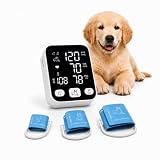
- [PET-SPECIFIC BP MONITORING AT HOME]: Built with animal-focused settings, this digital blood pressure monitor displays SYS, DIA and pulse readings for dogs and cats.
- [3 CUFF SIZES FOR SMALL TO LARGE PETS]: Includes S, M and L adjustable cuffs for cats and dogs of different sizes, allowing this blood pressure monitor for dogs to support multiple pets.
- [3×199 MEMORY FOR LONG-TERM TRACKING]: This pet blood pressure monitor stores 199 readings for each of 3 profiles, helping you compare changes and share records with your veterinarian.
- [ONE-TOUCH QUIET CHECKS FOR CALMER PETS]: Automatic inflation starts with one button, while the quiet operation of this dog blood pressure monitor helps make checks easier for nervous pets.
- [LARGE BACKLIT LCD FOR EASY READING]: Clearly view SYS, DIA and pulse readings day or night, making this digital pet blood pressure monitor simple to use during routine checks.
- Unexplained hypokalemia, especially when it responds poorly to potassium supplementation.
- Hypertension in a cat without concurrent heart or thyroid disease.
- Nonspecific illness in a middle-aged or older cat, which is the point at which blood pressure should be measured.
Signs can be subtle in the early stages, so a cat may look well while these laboratory and blood pressure changes are already present.
Can an adrenal mass cause high blood pressure in a cat?
It can, but a mass on an ultrasound scan is not proof of primary hyperaldosteronism. The MSD Veterinary Manual notes that an adrenal mass may be nonfunctional or may secrete other hormones, including catecholamines, cortisol, or sex hormones. Only a mass that produces aldosterone fits this disease, and that has to be shown by the laboratory and clinical picture.
Rank #2

- 【Extra-Large LCD Screen】Our veterinary blood pressure monitor features an extra-large screen with oversized digits and a clear blue backlight, making results easy to read even in low-light conditions.
- 【One-Touch Simple Operation】Get accurate animal blood pressure monitor results with just one button. Two charging methods are available: battery or Type-C cable (not included)
- 【Silent with Alert】Provides precise, quiet measurements without disturbing your pet. Includes an intelligent Irregular heartbeat Alert, which is especially helpful for monitoring senior pets such as dog, cat, horse, rabbit, pig or other animals.
- 【3 Cuffs & Settings:】Includes three specialized cuffs designed for different animal sizes: small (1.65-2.8 inch), medium (1.97-3.74 inch), large (3.5-5.9 inch). Store up to 270 readings to easily track your pet’s health trends over time.
- 【3X199 Memory】Dog Blood Pressure Monitor Home Use 3 Cuff S/M/L/XL Size Dog/Cat/Pet Veterinary Monitor for Vet Heart/Pulse/Vital/Health Automatic Digital BP Machine 3X199 Memory,Silent
The reverse is also true. AAHA reports that imaging may reveal a unilateral adrenal mass, sometimes up to 5 cm across, but that some affected cats have adrenal glands that look apparently normal. A normal scan therefore does not rule the disease out. Whether the change is on one side or both sides matters greatly for treatment planning, and it is the veterinary team that weighs these results together.
How is primary hyperaldosteronism diagnosed in cats?
There is no single decisive test. A typical work-up combines the following elements, with the veterinarian interpreting them together:
The Tool Desk
Outbyte Driver Updater FREEScan for outdated or missing drivers - takes under a minuteDriver Scan →Outbyte PC Repair FREERepair Windows errors before they cause bigger problemsFix Now →Rank #3

- Wearable Design for Home Monitoring:Innovative chest-strap wearable design allows pets to move naturally during monitoring. Ideal for reducing stress and minimizing the “white coat effect” commonly seen during clinic visits.
- Advanced Oscillometric Algorithm for Pets:Optimized specifically for cats and dogs with faster heart rates and different vascular characteristics. Intelligent motion filtering improves measurement stability for more consistent readings.
- Continuous & One-Click Measurement:Supports repeated measurements with simple one-button operation. Recommended to take 5–7 readings and calculate the average for improved reference accuracy.
- 240 Sets Memory for Dual Users:Stores up to 240 records (2 users × 120 readings each). Easily track long-term trends for multiple pets, helping with daily health management at home.
- Multi-Size Cuffs Included:Comes with small, medium, and large cuffs to fit different limb circumferences. Adjustable chest strap ensures a secure and comfortable fit for dogs and cats of various sizes.
- History and physical examination, including a search for other causes of the cat’s signs.
- Blood pressure measurement, which the AAHA guideline treats as part of routine care for adult cats.
- Serum biochemistry, to assess potassium, sodium, and kidney values.
- Plasma aldosterone concentration. AAHA describes this as the most readily available and reliable laboratory diagnostic tool. A single very high result may be confirmatory. Equivocal results may need more complex testing.
- Adrenal imaging, usually ultrasound, to look for a unilateral mass, with the understanding that a normal-looking gland does not exclude disease.
- Adrenal histopathology, the microscopic examination of adrenal tissue, which is available once a gland has been removed. The small case series described below used it to confirm diagnoses.
Some questions remain outside what this work-up can settle. Imaging alone cannot reliably tell whether the opposite gland is involved. Blood pressure can also be raised by chronic kidney disease, so a high reading does not identify its cause. And no single result predicts how a particular cat will fare.
Does a cat with hyperaldosteronism need surgery?
Not every cat does. The MSD Veterinary Manual and the AAHA guideline agree on the general approach. Removing the affected adrenal gland is the treatment of choice for confirmed unilateral disease when feasible, but the cat should first be medically stabilized. Where surgery is not suitable, medical management is the option. The two approaches are compared below.
Rank #4

- 【Extra-Large LCD Screen】Our veterinary blood pressure monitor features an extra-large screen with oversized digits and a clear blue backlight, making results easy to read even in low-light conditions.
- 【One-Touch Simple Operation】Get accurate animal blood pressure monitor results with just one button. Two charging methods are available: battery or Type-C cable (not included)
- 【Silent with Alert】Provides precise, quiet measurements without disturbing your pet. Includes an intelligent Irregular heartbeat Alert, which is especially helpful for monitoring senior pets such as dog, cat, horse, rabbit, pig or other animals.
- 【3 Cuffs & Settings:】Includes three specialized cuffs designed for different animal sizes: small (1.65-2.8 inch), medium (1.97-3.74 inch), large (3.5-5.9 inch). Store up to 270 readings to easily track your pet’s health trends over time.
- 【Veterinary Monitor】Dog Blood Pressure Monitor for Home Use Alternative veterinarians do not need to travel back and forth 3Cuff S/M/L/XL Size Dog/Cat/Pet Veterinary Monitor for Vet Heart/Pulse/Vital/Health Automatic Digital BP Machine 3X199 Memory,Silent
Medical management
Medical care targets low potassium and high blood pressure. AAHA identifies potassium supplementation, usually as potassium gluconate, as part of treatment. The same guideline lists spironolactone at 1–2 mg/kg twice daily as a regimen. These figures are published veterinary guideline information, not instructions for owners, and a veterinarian selects the formulation and dose and monitors the response. The American College of Veterinary Internal Medicine (ACVIM) notes that amlodipine is often also needed for adequate blood pressure control. In its guidance, facial dermatitis and excoriation associated with spironolactone are reported as rare.
Medication is only effective if it is given. In the small case series, one cat was euthanized 50 days after treatment began because the owner could not medicate it. If pill-giving is a problem at home, raise it with your veterinarian before the regimen is set.
Do these 3 things before closing this tab:
1Fix the driver behind crashes, sound loss and screen glitches2Clear out junk files and repair common Windows errors3Scan for outdated or missing drivers - takes under a minuteBest Value

- AI ALGORITHM + BIG DATA + 3 CUFF FOR MORE ACCURACY- Pet & Cat Veterinary Dog Blood Pressure Monitor with 3 cuff size and adjusts measurement settings to deliver more consistent and accurate blood pressure results for cats and dogs of all sizes.
- DATA SHARING WITH YOUR VET AND PET LOVERS -Stores up to 3x 199 records to help you monitor trends, manage long-term health conditions, and share measurement history with your veterinarian.
- ONE MONITOR FOR CATS, SMALL AND LARGE DOGS - Includes 3 adjustable cuffs designed for different pet sizes, so you can monitor multiple pets at home without buying extra accessories.
- EASIER USE & MORE COMFORTABLE FOR NERVOUS PETS - One-Touch Simple Operation Get accurate animal blood pressure monitor results with just one button.Smart automatic inflation adjusts pressure gently during measurement, helping reduce discomfort and making pets calmer and easier to test.
- LARGE BRIGHT DISPLAY & 3*199 MEMORY - Easy Check Your Pet’s Health Clearly at a Glance-Large bright display shows systolic, diastolic, and pulse readings clearly, making daily monitoring fast and easy even at night.
Adrenalectomy
Surgery removes the affected gland. The MSD Veterinary Manual describes adrenalectomy as an advanced procedure with considerable risk. It also reports long survival among cats without metastasis that survive to discharge, although such cats often ultimately die of comorbidities. Surgery does not guarantee a cure for high blood pressure. ACVIM notes that concurrent nonadrenal disease, such as chronic kidney disease, can contribute to hypertension, so a cat may still need blood pressure medication after the operation.
Medical and surgical options compared
| Factor | Medical management | Adrenalectomy |
|---|---|---|
| Best fit | Cats for whom surgery is not suitable, per the MSD Veterinary Manual and AAHA | Confirmed unilateral adrenal tumor disease when feasible, after medical stabilization |
| What it addresses | Potassium and systemic hypertension, using supplementation, spironolactone, and often amlodipine | Removes the affected gland; blood pressure may still need medication afterward |
| Key requirements | Reliable administration of medication and veterinary monitoring | Surgical candidacy and an anesthetic and perioperative plan |
| Main limits | Ongoing treatment; some cats cannot be medicated consistently | Considerable risk per the MSD Veterinary Manual; outcome depends on comorbidities |
| Long-term outcome | Not established as a current survival estimate; see the small case series below | Long survival reported for cats without metastasis that survive to discharge (MSD Veterinary Manual); a current percentage is not established |
Blood pressure, kidneys and what to expect
AAHA states: “Blood pressure measurement should be a standard of care for adult cats at least annually, and any time a middle-age to older cat presents with nonspecific clinical signs.” This is broad guidance for all adult cats, not a recommendation limited to primary hyperaldosteronism.
Prognosis depends on how extensive the disease is, on the surgery and the perioperative course where surgery is performed, and on comorbidities such as chronic kidney disease. The most detailed published information is a 2005 case series in the Journal of Feline Medicine and Surgery, which describes 13 diagnosed cats. Three were treated medically and ten underwent adrenalectomy after stabilization. In the medical group, two cats survived 304 and 984 days before being euthanized for chronic renal failure, and the third was euthanized at 50 days because the owner could not medicate it. This is a small, older series. It cannot provide a universal outcome, a current survival estimate, or a fair comparison of treatment effectiveness.
The evidence also does not establish a reliable population figure for how common feline primary hyperaldosteronism is, so the condition should not be judged rare or common from published numbers.
PC Slower Than It Used to Be?
A free scan shows the junk files, broken settings and background clutter dragging Windows down - then fixes them in one click.Free scan · Windows 10 & 11Outdated Drivers Are Slowing You Down
One free scan finds every outdated or missing driver and matches the right update for your exact hardware.Free scan · exact hardware matchQuestions to ask your veterinarian
- Did the aldosterone result, potassium, and blood pressure agree, and what would make the result equivocal?
- Does the imaging show a change on one side only, or is there a question about the other gland?
- Is there a sign of chronic kidney disease that could also be raising blood pressure?
- Has anyone checked my cat’s eyes for damage from high blood pressure?
- Is my cat a suitable candidate for adrenalectomy, and what would stabilization involve first?
- If medication is needed, what dose, formulation, and monitoring schedule are proposed, and what should I do if my cat will not take the tablets?
Further reading is available from the AAHA 2023 guideline on feline hyperaldosteronism, the MSD Veterinary Manual entry on feline primary hyperaldosteronism, the ACVIM guidelines on systemic hypertension in dogs and cats, and the 2005 case series of 13 cats.
Quick Recap
Product prices and availability are accurate as of the date/time indicated and are subject to change. Any price and availability information displayed on Amazon at the time of purchase will apply.




