
Do these 3 things before closing this tab:
1Repair Windows errors before they cause bigger problems2Scan for outdated or missing drivers - takes under a minute3Clear out junk files and repair common Windows errorsFeline hyperesthesia syndrome (FHS) is a pattern of episodes in which a cat may suddenly react as if the skin—often over the lower back—is intensely sensitive. The back can ripple, the tail may lash, and the cat may groom, bite, vocalize, run or hide. Those signs are real, but they do not identify one disease by themselves. Fleas or allergies, pain, neurologic disorders and stress-related arousal can look similar or occur together.
A single twitch or reaction to being touched is not enough to diagnose FHS. The safest approach is a veterinary examination that looks for treatable physical causes before concluding that the problem is primarily behavioral. Management is individualized; the practical goal is usually fewer or milder episodes and less self-injury, not a guaranteed cure.
As an Amazon Associate I earn from qualifying purchases.
What is feline hyperesthesia syndrome?
“Hyperesthesia” means increased sensitivity. Cornell’s Feline Health Center describes the classic area as skin on the back, commonly just in front of the tail. Veterinary behavior specialists use FHS to describe a recurring cluster of signs rather than a single proven disease. Some cats look completely normal between episodes. Others develop persistent overgrooming, hair loss, scabs or wounds from biting and scratching.
The label is best treated as a diagnosis of exclusion. Merck Veterinary Manual notes that hyperesthesia may be a sign of an underlying medical or behavioral problem rather than a distinct disorder. Different contributors can overlap, so finding one issue does not automatically rule out another.
#1 Best Overall
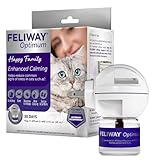
- HELPS REDUCE SIGNS OF STRESS USING A PATENTED PHEROMONE: FELIWAY Optimum is an advanced cat pheromone diffuser that helps reduce signs of stress in cats and helps ease tension between cats.*
- HELPS CATS FEEL CALM IN EVERYDAY SITUATIONS: FELIWAY Optimum is a cat calming diffuser that helps reduce stress‑related behaviors like urine spraying, scratching, hiding, and fearful reactions to change. Cat parents reported noticeable reductions in these behaviors, including a 77% reduction in urine spraying.
- SUPPORTS HARMONY IN MULTI‑CAT HOMES: Helps promote calmer interactions between cats. 72% of cat parents noticed reduced tension between their cats
- SAFE** AND NON-SEDATING: FELIWAY Optimum is not a sedative. It’s safe for use around cats, kittens, people and other pets.
- CONTINUOUS CALMING SUPPORT: This plug‑in cat pheromone diffuser provides 24/7 support when used as directed. To get started, plug into an open outlet with the vents pointed upward, allow at least 4 feet of clearance, and follow the label instructions.
Why is my cat’s back rippling?
Rippling or twitching is caused by contractions of muscles and movement of the skin. In an FHS-like episode, the cat may also react to ordinary touch as if it were painful or overwhelming. The appearance is striking, but the movement alone cannot tell you whether the trigger is skin irritation, spinal pain, abnormal nerve activity or heightened arousal.
Signs that can occur during an episode
- Visible waves, twitching or rolling of the skin over the back
- Sudden grooming, licking or biting of the back, flanks, legs or tail
- Tail chasing, vigorous tail swishing or attacking the tail
- Dilated pupils, startling easily, agitation or abrupt running
- Vocalizing, drooling, scratching, hiding or urinating
- Attempts to escape handling or a sudden change from calm to frantic behavior
Not every cat shows every sign. Similar rippling, grooming or touch reactions have also been observed in otherwise healthy cats, which is why an isolated event is not diagnostic. Record what happens before, during and after an episode rather than trying to provoke another one.
Why does my cat suddenly bite or chase its tail?
Biting or chasing can be an attempt to stop an uncomfortable sensation. A cat may be responding to itch, pain, tingling or a burst of arousal that it cannot control. Repeated attacks can create a secondary wound, which then adds pain and makes the cycle worse. Punishing the cat, grabbing the tail or repeatedly stroking the sensitive area can increase fear and escalation.
PC Slower Than It Used to Be?
A free scan shows the junk files, broken settings and background clutter dragging Windows down - then fixes them in one click.Free scan · Windows 10 & 11Crashes, No Sound, or Screen Glitches?
Random freezes, missing sound and display glitches usually trace back to one bad driver. Find and replace yours safely.Free scan · under a minuteDuring an event, keep your hands away from the cat’s back and mouth. Reduce noise, give the cat a clear route to a quiet hiding place and protect other pets and people from accidental bites. Do not restrain, chase or spray the cat. If episodes are frequent, film one from a safe distance for your veterinarian; a video can show timing and body language that are absent in the examination room.
What can cause FHS-like episodes?
There is no single confirmed cause for every cat. The main possibilities below can resemble one another, and more than one may be present.
| Possible contributor | What may fit | How a veterinarian investigates it |
|---|---|---|
| Parasites or allergic skin disease | Itching, scabs, hair loss, intense grooming, seasonal or contact pattern | Skin and coat examination, parasite control trial, skin cytology and testing for fungal disease; food-responsive disease may require a structured diet trial |
| Spinal, musculoskeletal or neuropathic pain | Pain with handling, reluctance to jump, guarding the back, altered gait or sensitivity focused in one area | Orthopedic and neurologic examination; pain assessment and radiography or other imaging when indicated |
| Focal seizure activity or another neurologic disorder | Stereotyped spells, altered awareness, unusual movements, weakness or other neurologic deficits | Neurologic examination; advanced imaging, cerebrospinal-fluid analysis or electrodiagnostic testing in selected cases |
| Arousal, frustration or anxiety | Episodes linked to conflict, unpredictable handling, environmental change or inadequate outlets, after physical causes are assessed | Detailed history, trigger pattern and behavior assessment alongside medical evaluation |
FHS should not be declared a seizure disorder, anxiety disorder or skin disease without evidence. Stress can amplify a cat’s response, but assuming “it is only stress” before checking for pain and skin problems can delay treatment.
Rank #2

- Help Your Cat Feel Safe Again: Create a calmer, more comfortable home with advanced calming pheromone technology that helps reduce common signs of stress including hiding, scratching, urine spraying, conflicts between cats, and nervous behavior. Ideal for everyday emotional support
- Continuous 120-Days Comfort: Each refill delivers calming support for up to 30 days when used continuously, package include: 2 diffusers, 4 refills. Designed to cover rooms up to approximately 750 sq ft, making it perfect for bedrooms, living rooms, and multi-cat households
- Supports Positive Everyday Behavior: Whether introducing a new pet, moving into a new home, welcoming visitors, or dealing with loud noises such as fireworks or thunderstorms, the diffuser helps cats feel more secure and adapt to changes more comfortably
- Easy Plug-In, No Daily Effort: Simply plug the diffuser into an open wall outlet and let it work around the clock. No sprays, no pills, no complicated routines—continuous calming support with minimal maintenance
- Trusted Care for Cats of Every Age: Suitable for kittens, adult cats, senior cats, and multi-cat families. Designed to support a peaceful home environment while helping strengthen the bond between cats and their owners
How do vets diagnose feline hyperesthesia?
There is no single home test or blood value that confirms FHS. The veterinarian first determines whether the pattern is episodic, persistent or progressive and whether the cat is injuring itself.
The Tool Desk
Outbyte PC Repair FREEClear out junk files and repair common Windows errorsFree Scan →Outbyte Driver Updater FREEFix the driver behind crashes, sound loss and screen glitchesFind Drivers →- Bring a precise history. Note the cat’s age, onset, episode frequency, duration, body areas involved, recent household changes, diet, parasite prevention, medications and any changes in jumping, walking, appetite or litter-box use. A safely recorded video is useful.
- Have a complete physical and skin examination. The clinician checks the coat and skin for parasites, infection, inflammation, wounds and hair loss, then evaluates the back, muscles, joints and abdomen for pain. Anal sacs may be examined when their discomfort could be contributing.
- Address common skin causes. Parasite control may be recommended even for an indoor cat. Depending on findings, the workup can include skin cytology, fungal testing or a carefully supervised diet trial for suspected food-responsive disease.
- Assess pain and neurologic function. The veterinarian looks for weakness, imbalance, abnormal reflexes, altered awareness or localized spinal pain. Radiographs and other tests are selected according to the examination, not automatically for every cat.
- Escalate testing when the pattern warrants it. Advanced imaging, cerebrospinal-fluid analysis or electrodiagnostics may be considered for neurologic deficits, severe or worsening signs, substantial self-trauma, poor response to initial treatment or concern about focal seizures or spinal disease.
A response to a medication or diet trial helps guide management but does not prove the underlying diagnosis. Improvement can occur because several contributors were addressed at once, or because symptoms naturally fluctuate.
How is FHS treated?
Treatment follows the leading differential diagnosis and the individual cat’s risks. There is no universally best drug or protocol.
| Target | Possible veterinary approach | What owners should know |
|---|---|---|
| Parasites, allergy or infection | Appropriate parasite control, treatment of infection, or a structured diet trial when indicated | Use products and diets exactly as prescribed; an incomplete trial can give a misleading result |
| Pain or neuropathic sensation | Pain-focused treatment; gabapentin or pregabalin may be considered when neuropathic pain or sensory dysregulation is suspected | These are prescription decisions. Do not start, stop or change a dose without the veterinarian |
| Neurologic activity | Further neurologic testing and medication selected for the suspected disorder | A calming effect or fewer episodes alone does not establish that seizures were the cause |
| Arousal and environmental triggers | Behavioral and environmental changes, sometimes paired with a targeted medication trial | Progress should be judged by episode frequency, intensity and self-trauma, not by one unusually quiet day |
Never give a human painkiller or another pet’s prescription. Cats process many drugs differently, and an apparently small dosing error can be dangerous. Ask what side effects require a call, how long a trial should last and how success will be measured.
Independent reader supportYour contribution helps us test, update, and keep practical guides available for everyone.What can I do at home?
Environmental management is useful whether the primary contributor turns out to be dermatologic, painful, neurologic or behavioral. Make changes gradually and track the result.
- Keep a trigger diary. Record handling, pet-to-pet conflict, visitors, noise, feeding, play and the time of each episode. Patterns can reveal preventable triggers.
- Lower conflict and frustration. Provide separate food, water, litter, sleeping and resting areas for cats that share a home. Arrange resources so one cat cannot block another’s access.
- Add safe choice and height. Cat trees, shelves, covered beds and quiet hiding places let a cat retreat without being cornered.
- Offer predictable activity. Short, regular interactive-play sessions and food-foraging opportunities can provide an outlet without creating frantic competition.
- Protect damaged skin. If licking or chewing is causing wounds, ask the veterinarian whether a recovery cone or another barrier is appropriate. A cone can prevent self-harm temporarily; it does not treat the underlying syndrome and is not necessary for every cat.
- Avoid punishment. Yelling, spraying, physical restraint or forced petting can intensify fear, anxiety and repetitive behavior.
During a spell, prioritize safety over stopping the movement. Turn down stimulation, keep children and other animals away and allow the cat to settle. Seek advice before using a barrier if the cat panics, cannot eat or drink with it, or repeatedly removes it.
Rank #3

- HELPS REDUCE COMMON SIGNS OF TENSION BETWEEN CATS: FELIWAY MultiCat, developed by the #1 vet recommended brand, helps reduce common signs of tension between cats such as: conflict, fighting, chasing, and blocking
- ENHANCED CALM AT HOME FOR MULTICAT HOUSEHOLDS: FELIWAY MultiCat plug-in diffuser uses the science of pheromones to send calming messages that mimic a mother cat’s natural pheromones to help reduce tensions & conflicts. 84% of cat owners saw significant improvement in conflict between cats when using FELIWAY MultiCat
- DRUG FREE & SAFE TO USE: FELIWAY diffusers are drug-free, non-sedating, and while cat pheromone analogs may help your cat, they won't affect humans or other pets
- PROVIDES 4 WEEKS OF CALMING SUPPORT: With just one refill, the diffuser offers up to 30 days of continuous calming benefits, helping your cat feel calmer
- COVERS LARGE LIVING SPACES: Each diffuser covers an area up to 700sqft, ensuring widespread calming support throughout your home for cats of all ages. To get started, simply plug your diffuser into an open outlet with 4+ feet of space to diffuse, with the vents pointed upward
Is there a cure?
Some cats become symptom-free; others need long-term management. The realistic objective is control of episode frequency and severity and prevention of self-trauma. Cornell reports that many cats can be managed and continue happy, active lives, but no source supports a guaranteed cure for every case.
A 2026 review in Today’s Veterinary Practice summarized a retrospective series of 28 cats treated in clinical practice. Eighty-two percent had an episode-free period of at least nine months, 93% had no clinical signs after one year, and 50% remained on pharmacotherapy. These are outcomes from a small retrospective series, not a population-wide success rate or a promise for an individual cat. The same review described seven cats with severe FHS and tail mutilation: six improved clinically and five reached remission.
Some cats relapse when medication is reduced, a skin problem returns or household stress changes. Follow-up visits help distinguish a true relapse from a new source of itch or pain and allow treatment to be adjusted safely.
Free tools Windows power users keep installed
One-click scans. No signup required.
When should a cat be seen urgently?
Arrange a prompt veterinary appointment for any recurring pattern, especially when the cat is losing hair, developing scabs or wounds, or reacting painfully to touch. Seek urgent care when there is uncontrolled bleeding, deep self-inflicted injury, inability to settle, repeated episodes close together, sudden weakness or imbalance, collapse, marked disorientation, or a rapidly worsening change in behavior.
Progressive signs, neurologic abnormalities and severe self-trauma raise the value of a more extensive workup. Even when episodes are mild, an examination is worthwhile because parasites, skin disease and pain may be treatable.
Quick Recap
What should I remember about feline hyperesthesia?
- FHS is a description of recurring signs, not a diagnosis an owner can make from one twitch.
- Skin irritation, pain, neurologic disease and behavioral factors can overlap.
- Veterinary assessment should look for physical contributors before attributing the pattern mainly to behavior.
- Medication choices, including gabapentin or pregabalin, require individualized veterinary supervision.
- Quiet routines, safe hiding and vertical space, structured play, foraging and separated resources can reduce arousal and conflict.
- Success usually means fewer or less severe episodes and less self-injury, although some cats do achieve long symptom-free periods.
Product prices and availability are accurate as of the date/time indicated and are subject to change. Any price and availability information displayed on Amazon at the time of purchase will apply.





Leave a Reply