The Tool Desk
Outbyte Driver Updater FREEFix the driver behind crashes, sound loss and screen glitchesFind Drivers →Outbyte PC Repair FREERepair Windows errors before they cause bigger problemsFix Now →Fluid therapy for a cat is a veterinary treatment plan, not a home remedy. The route, volume, and timing depend on why the cat needs fluids, how dehydrated or unstable it is, and whether it can drink or keep fluids down. Some cats can receive subcutaneous fluids at home under a veterinarian’s direction. Others need intravenous or intraosseous fluids in a clinic because home care would be unsafe. This guide explains how those decisions are made, what each route is for, and what to discuss with your veterinarian before anything is given at home.
Fluids are prescribed treatment
The American Animal Hospital Association’s 2024 Fluid Therapy Guidelines for Dogs and Cats puts the principle plainly: “Fluids are drugs that are prescribed to patients, and like any medication, they must be used in a way that achieves therapeutic goals and minimizes complications.” The guideline says fluid plans should be tailored to each patient and adjusted as the cat’s needs and response change. The same plan can be right for one cat and harmful for another, which is why no general volume or schedule can be published as a safe home protocol.
The guidelines are available from the 2024 AAHA Fluid Therapy Guidelines for Dogs and Cats overview page, which also notes endorsement by the American Association of Feline Practitioners.
Dehydration and hypovolemia are different problems
Veterinarians distinguish between two situations that owners often lump together:
#1 Best Overall

- Universal Compatibility – Designed for vented & non-vented IV fluid containers, this versatile IV set ensures seamless infusion, adapting to various medical needs for veterinarians, clinics, and pet owners.
- Veterinary-Grade Quality – Specially engineered for animal care, this IV set meets strict veterinary standards, offering precise fluid control. The piercing spike has a smooth surface that minimizes insertion risks.
- Reliable & Safe Infusion – Featuring a precision roller clamp, Luer connector, and bacteria-proof air vent, this IV set ensures accurate flow control, preventing contamination for safe, consistent fluid delivery.
- Soft & Flexible Tubing – The 72" elastic tubing provides optimal length and flexibility, reducing kinks while ensuring smooth fluid flow, making it easy to handle during veterinary procedures.
- Single-Use & Cost-Effective – Designed for one-time use, this IV set ensures hygiene and safety while remaining an affordable solution for clinics, shelters, and pet owners needing reliable fluid administration.
- Dehydration means the body has lost water and needs it replaced. According to AAHA, dehydration may be corrected through intravenous (IV), subcutaneous (SC), or enteral (by mouth or feeding tube) fluids, or a combination, depending on severity and whether the cat can take fluids orally or by feeding tube.
- Hypovolemia means the circulating blood volume is reduced, so the cat’s circulation and tissue perfusion are at risk. AAHA states that hypovolemia always requires IV or intraosseous (IO) fluid delivery.
This is the core safety point for owners. A cat that is weak, pale, collapsing, cold, or not responding normally needs a veterinary emergency assessment, not a home fluid plan. Home-based SC care is only appropriate when the veterinarian has determined that the cat is a suitable candidate.
Routes of fluid delivery and how they compare
Veterinarians choose a route based on five practical questions: how urgent and severe the fluid deficit is, whether circulation is compromised, whether the cat can take fluids by mouth or tube, how quickly and precisely fluids must be delivered, and how much monitoring the cat needs during treatment.
Rank #2

- PACK OF 10 INDIVIDUALLY SEALED SETS — STOCK YOUR SUPPLY: 10 sterile, single-use IV infusion sets ready to go straight from the pouch. Ideal for clinics, shelters, and home caregivers who need a reliable ongoing supply. At a fraction of what vets charge per set, this is the cost-effective solution for routine fluid administration — no constant reordering, no running short mid-treatment.
- CE 0197 CERTIFIED & ETHYLENE OXIDE STERILIZED — MEDICAL-GRADE SAFETY: Every set carries CE 0197 certification and is sterilized by ethylene oxide gas, confirming it meets strict medical device standards. Trusted by vet professionals and experienced home pet owners who won't compromise on hygiene.
- COMPLETE IV ADMINISTRATION SET — DRIP CHAMBER, AIR VENT & 21G NEEDLE INCLUDED: Each set includes a piercing spike, transparent drip chamber (20 drops/mL), built-in air vent, kink-resistant PVC tubing, and a 21-gauge needle at the patient end. Works with Lactated Ringer's, Normal Saline, and other standard electrolyte solutions prescribed for intravenous or subcutaneous treatment in small animals.
- TRUSTED FOR HOME SUBCUTANEOUS FLUID TREATMENTS — CHRONIC HYDRATION: The smooth-flowing tubing, precise flow wheel, and secure twist connector make at-home sessions faster and less stressful for your pet.
- UNIVERSAL FIT — VENTED & NON-VENTED BAGS, GRAVITY DRIP & PUMP COMPATIBLE: Works with both flexible IV bags and rigid vented containers. Compatible with standard gravity drip setups and most pump configurations. Disposable after a single session. Equipo de suero estéril para perros y gatos con insuficiencia renal.
| Route | Typical use according to AAHA | Key limits | Setting |
|---|---|---|---|
| Intravenous (IV) | Severe deficits, acute losses, perfusion problems, and cats with little or no fluid intake by mouth. Allows faster and more controlled delivery. | Requires a veterinary setting and active monitoring. | Veterinary clinic or hospital |
| Intraosseous (IO) | Used mainly as a bridge when IV access cannot be obtained. | Infusion rates are more limited than IV. | Veterinary clinic or hospital |
| Subcutaneous (SC) | Selected outpatient patients, or alongside other routes. AAHA identifies the SC route as preferred for outpatient therapy or for patients receiving more than one route. | Not appropriate for hypovolemia or severe deficits that need rapid IV or IO delivery. Not a universal fit for chronic kidney disease. | Clinic-taught, can be given at home when prescribed |
| Enteral (by mouth or feeding tube) | Correcting dehydration when the cat can safely take fluids orally or through a feeding tube. | Not always feasible for a sick cat. | Home or clinic, depending on the cat |
Maintenance and replacement are separate plans
Veterinarians distinguish maintenance from replacement because they do different jobs. AAHA defines maintenance therapy as a plan to preserve extracellular fluid volume and normal electrolyte balance, usually when a cat is not eating or drinking enough on its own. Maintenance is not intended to replace ongoing losses from vomiting, diarrhea, burns, or similar causes. Replacement therapy is aimed at the deficit that already exists and is planned around those losses.
The AAHA frequently asked questions give a general reference point: average physiologic requirements of about 40 to 100 mL/kg/day, depending on species and age. The guideline’s section on fluids for replacement and maintenance lists feline maintenance estimates, including one adult estimate of 40 mL/kg/day, and a pediatric factor of 2.5 times the adult maintenance estimate for kittens.
Recommended Free Tools
Rank #3

- 10-PACK INDIVIDUALLY SEALED – 5-YEAR SHELF LIFE, ISO 10993 CERTIFIED: Each of the 10 units is individually sterile-sealed with a shelf life of up to 5 years unopened, ensuring safety and sterility at point of use. Meets ISO 10993 standards. Single-use only —
- 304 STAINLESS STEEL NEEDLE WITH POLYPROPYLENE HUB: Features a precision-honed 304 stainless steel needle with a polypropylene hub for increased structural strength and reduced tissue trauma during venipuncture. Thin-wall construction allows smooth, low-resistance penetration with minimal discomfort to the animal.
- 25G BUTTERFLY NEEDLE FOR VETERINARY IV INFUSION – DOGS, CATS & SMALL ANIMALS: Designed exclusively for veterinary use in small animal fluid therapy and medication administration. The 25G gauge is ideal for fragile, shallow, or difficult-to-access veins common in cats, small dogs, rabbits, and exotic animals. Not for human use. Not FDA cleared.
- LUER LOCK ADAPTER – COMPATIBLE WITH STANDARD IV EQUIPMENT: Screw-type female Luer lock connector ensures a secure, leak-free attachment to syringes, IV extension sets, and infusion lines. Prevents accidental disconnection during fluid delivery. Compatible with standard veterinary IV administration equipment.
- WINGED BUTTERFLY DESIGN FOR STABLE, PRECISE PLACEMENT: Flexible color-coded wings provide a secure non-slip grip between thumb and index finger, stabilizing needle angle during insertion. Reduces movement after placement — especially valuable for difficult veins or high-stress veterinary procedures requiring accurate IV access.
These figures explain how a clinician starts the calculation. They are not dosing instructions for a particular cat. The guideline says total intake should count enteral water, liquid diets, and fluid carried by intravenous medications, and that requirements must be individualized. A figure taken from a general reference, applied at home, can overshoot or undershoot what a specific cat needs.
Home subcutaneous fluids: what the veterinarian decides
A veterinarian may teach an owner to give SC fluids when the cat’s condition and treatment plan suit home care. AAHA also notes that the evidence base is limited on several points: how to select the right cats for SC therapy, the best volume and frequency, and the possible adverse effects. Because of that, the guideline does not support a generalized schedule that owners can follow on their own.
Rank #4
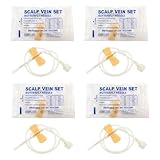
- 50 pcs per box, each with individual packaging for convenient storage and easy access in daily animal care routines
- Designed for veterinary care of pets like dogs and cats, featuring a screw luer adapter and 25G size suitable for small animal use
- Butterfly wing design enhances handling stability and simplifies operation, making it user-friendly during routine animal care procedures
- Individually sealed packaging helps maintain hygienic conditions, ensuring each piece is ready for immediate use when needed
- Made of high-quality materials with a single-use design, ensuring reliability in daily animal care applications
The treating veterinarian should specify the following before any home treatment starts:
- The fluid type and the volume per treatment, and how often it should be given
- The reassessment schedule, including when the cat must be seen again
- Whether any additives are included and who prepares them
- What to do if the cat refuses fluids, vomits them, or appears worse
- How to store the fluid and when to discard it
AAHA recommends that a new fluid administration set and fluid bag be used for each individual patient. The guideline does not establish a brand or retail product as suitable for a particular cat. Ask your veterinarian to write down the fluid and compatible supplies, including the exact product names and sizes, so that you buy what the clinic intends you to use. Veterinary fluid administration sets are sold through clinics and some pharmacies, and any purchase should follow the veterinarian’s instructions.
Best Value

- TUNING FORK SET IS SHRINK WRAPPED IN AN 8-PANEL INSTRUCTIONAL PACKAGE WITH detailed directions and photos demonstrating, featuring a lower back/sacrum treatment. Use Mid and Low Luna individually, or together as the Luna Octave. The octaves promote movement, and the Luna (New Moon) frequencies promote opening, both beneficial for healing.
- Weighted ends enable a stronger, more palpable vibration for use on the physical body. Use to help dispel excess and nourish deficiencies, thus strengthening the body’s vital energy/Qi.
- Luna Tuning Forks are recommended for conditions of fluid retention, sinus and lung congestion, arthritis and chronic joint pain. Use to help dispel excess and nourish deficiencies, and to bring balance and a return to homeostasis.
- WHAT SETS US APART: Educators and years of clinical use inform Ohm Therapeutics instructional packaging. The creator of this system, Marjorie de Muynck, M.M. in Music Education and M.Sc. in Oriental Medicine, Hon., developed two Sound Healing systems featuring applied vibration and tuning forks, and authored two textbooks on the subject.
- Made in the USA and machined from solid, lead-free aluminum bar stock, Ohm Therapeutics tuning forks are medical-grade, precision tuned, and fully guaranteed for a lifetime of use. A brand you can trust, clinically used by practitioners and educators since 2003.
Monitoring and fluid overload
Fluid therapy is not a one-time event. The AAHA guidance covers patient monitoring and the prevention of fluid overload, and it advises that route and rate be reconsidered as the cat’s condition and response change. Overload is a recognized complication the guidelines aim to prevent, so the plan should be checked and adjusted by the veterinary team. The guideline is not a complete owner-facing checklist of overload signs, so if your cat’s breathing, energy, or appetite changes after fluids, call your veterinarian rather than adjusting the plan yourself.
Ask your veterinarian how often your cat should be rechecked, what changes would prompt an earlier visit, and what results will guide any change in volume or frequency. An AAHA Trends magazine article from August 2024 summarizes the guideline’s approach to monitoring and overload prevention.
When to seek urgent veterinary care
Do not try to treat suspected shock or severe dehydration at home. Seek urgent veterinary care without waiting for a home plan if your cat:
- Is weak, collapsed, unresponsive, or has trouble standing
- Has pale, gray, or very cold gums or extremities
- Has been vomiting or has diarrhea that will not stop, or has not eaten or drunk for an extended period
- Cannot take fluids by mouth or keep them down
- Has any other sign that the veterinarian has described as an emergency
Home checks such as skin tenting or gum color can give a rough impression, but they are not a substitute for an examination. Skin that returns slowly, for example, does not by itself tell you how much fluid a cat has lost or whether its circulation is compromised.
Quick wins for a faster PC:
Clear out junk files and repair common Windows errorsFree Scan →Scan for outdated or missing drivers - takes under a minuteDriver Scan →Questions to take to your veterinarian
- Does my cat have dehydration, hypovolemia, or a need for maintenance fluids, and how do you know?
- Which route is appropriate now, and why not the others?
- If home SC fluids are an option, what fluid, what volume, what frequency, and what reassessment schedule do you want me to follow?
- What supplies do you want me to use, and where should I buy them?
- What signs should make me stop treatment and call you or come in?
- Do you want a recheck to confirm that the plan is working?
Fluid therapy works best when the owner and veterinary team agree on the goal, the plan, and the warning signs. A good plan is specific enough that you know exactly what to do, and it is reviewed regularly rather than left unchanged.
Quick Recap
Product prices and availability are accurate as of the date/time indicated and are subject to change. Any price and availability information displayed on Amazon at the time of purchase will apply.




