If a dog is nursing young puppies, fostering the mother and litter together through a shelter or rescue is a temporary way to care for them while the organization guides their veterinary care and eventual placement. Adoption is the right fit only if you are ready to take permanent responsibility and the organization approves the arrangement. Your local program’s rules, the family’s health, and your available time and space should decide between them.
Quick Recap
Best Value
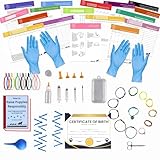
- Reduce Stress with Pregnant Dog Essentials /Supplies- Avoid complications, respond to emergencies, help momma dog produce enough milk, recognize when labor will begin, and monitor/record puppy health.
- Prepare for Beyond the Birth- Understand puppy development and learn 3 vital exercises which yield lifelong benefits for the puppies! Impress your buyers with exceptional puppy care at your home!
- Expandable Newborn Puppy Collars- Comfortable, gentle, easy, and long lasting. 2 sets of 12 whelping collars help identify all dogs, track progress, and notice if an individual puppy needs extra help.
- Responsible Dog Owners- Puppy Birthing kit designed for those who raise puppies responsibly. Join an elite team of loving and dedicated owners when you raise puppies of all breeds safely and gently.
- Professional Dog Breeding Supplies- From pregnancy on, these supplies are proven to assist with all aspects of birthing- puppy vaccines, feeding, sanitation, and more. Great for rescues!
Rank #4

- Comprehensive Whelping Supplies: The package contains 48 pieces of dog whelping supplies, including 4 puppy feeding tubes, 1 puppy feeding bottle, 1 pet medicine feeder, 6 record-keeping charts, 12 puppy rolling collars, 12 navel clips, 1 pair of medical scissors, a pack of medical cotton balls, 1 bulb aspirator, 2 pair of blue disposable gloves and 1 blue storage bag; The complete kit will meet the whelping needs of your newborn puppy
- Multiple Feeding Options: Includes 4 pet feeding tubes of different sizes with four pacifiers, made from soft silicone material for all non-teething pets to meet different stages of feeding needs
- Detailed Record Charts: The record sheet can document your new pet's birth time, gender, feeding, weight, vaccination, remarks and more to help better understand their growth and make adjustments
- Comfortable Puppy Collars: The 12 different color puppy collars are made of high-quality nylon material, which is soft and comfortable to the touch, making it easy to distinguish and document newborn pets
- Newborn Dog and Cat Bulb Suction Device: Helps clear the breathing passages of puppies and kittens; Made of high-quality rubber, it is durable and can be used repeatedly after cleaning
Rank #3

- 【𝐖𝐡𝐞𝐥𝐩𝐢𝐧𝐠 𝐒𝐮𝐩𝐩𝐥𝐢𝐞𝐬 𝐅𝐨𝐫 𝐏𝐮𝐩𝐩𝐲 𝐊𝐢𝐭𝐭𝐞𝐧】: there are all your need whelping kits in the package,the Whelping supplies including ,5 Puppy feeding tubes, 5 pacifier,1 kitten bottle feeding kit, 1 x Digital thermometer,1 pet pill syringe, 6 record keeping charts, 10 puppy whelping collars, 1 plastic scissor, 12 cord clamps, 1 pet stethoscope, 1 bulb aspirator, 2 blue disposable gloves and 1 big red storage bag,2 Small animal mucus extractor suction catheter.1 30ml tube,1 food catheter (1M)
- 【𝐅𝐞𝐞𝐝𝐢𝐧𝐠 𝐰𝐡𝐞𝐥𝐩𝐢𝐧𝐠 𝐤𝐢𝐭𝐬】: our puppy feeding tube (4pcs) come in different capacities, and are designed with a variety of pacifiers(4pcs), it is soft and safe for pets.it is great kitten bottle feeding kit and puppy bottles for nursing .the 1m food catheter,it can also help you feeding the pets who can not eat independently.they are able to help your pet in a simple emergency.
- 【𝐍𝐚𝐬𝐚𝐥 𝐀𝐬𝐩𝐢𝐫𝐚𝐭𝐨𝐫】:It is made of rubber, specially designed for small pets. you can use it to clear mucus of puppy or kitten easily. The whistle tip catheter allows efficient mucus suction. For manual or mechanical suction.
- 【𝐎𝐭𝐡𝐞𝐫 𝐰𝐡𝐞𝐥𝐩𝐢𝐧𝐠 𝐬𝐮𝐩𝐩𝐥𝐢𝐞𝐬 𝐤𝐢𝐭𝐬】: you can use the recording charts to keeping record the newbord pupplies and kittens information ,such as weight ,birth time ,etc.the blue gloves can keep you are clean when you touch the new born pets,the Digital thermometer , Stethoscope,can help you checking the pets health.whelping collars for newborn puppies are made of quality nylon material, which are soft and comfortable to touch,it will be so comfortable for new birth puppy and kitten.
- [𝐏𝐞𝐭 𝐅𝐢𝐫𝐬𝐭 𝐀𝐢𝐝 𝐊𝐢𝐭]:our whelping supplies kits ,it Suitable for puppies,kittens, goats, rabbits,Cows, and etc.For the new born little pets,it including all needs for the safe and successful birth.
Rank #2
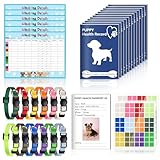
- 1.Pet Health Records: You’ll get 12 dog vaccination record books, 6 record keeping charts, 12 adjustable breakaway puppy collars in various colors, and ID stickers matching the collars’ hues. Ample in quantity, it’s the perfect set for meeting newborn puppy birthing needs.
- 2.Practical design: Puppy health record cards (approx. 5x3.5 inches) and dog whelping cards (approx. 6.6x5 inches) are portable with ample writing space. Colorful adjustable puppy collars (approx. 0.4x7.5-12.2 inches inches) fit your puppy’s actual neck size. Color stickers (approx. 12.4x13.7cm) come in 12 colors (48 total), matching the collars.
- 3.Quality guaranteed:Puppy collars, made of double-sided nylon, are soft, wear-resistant, and comfortable to wear. ID stickers, crafted from standard coated adhesive paper, have strong adhesion and stay put. Dog Health Records covers (300gsm coated paper, full-color printed with lamination) and inner pages (100gsm offset paper) are high-quality and durable. Puppy record keeping charts (300gsm coated paper, unlaminated) feature vibrant full-color printing, smooth writing, and are fold-resistant for easy use.
- 4.Practical recording and storage: Record keeping charts(single-sided, color-printed with cute designs) record details like birth date, gender, weight, and vaccinations. Adjustable puppy collars come with safety buckles that release under pressure (safe and reliable) and can be adjusted to fit a puppy’s actual neck size; paired with 12 colors of adhesive ID stickers, they make quick puppy identification easy. Dog medical record and vaccine books cover owner/puppy information, medical/hospital records, vaccination records + stickers, service providers, fecal exams/deworming, heartworm screening, prevention, and treatment—recording all key details.
- 5.Ideal for:Veterinary offices, pet owners, and breeders, this birthing kit is a great way to log key pet health info and track litters, making it easy to organize and follow crucial health data. It also works as a thoughtful gift for family or friends expecting a new pet.
#1 Best Overall

- Whelping Kit for Puppies Birth,Professional escort Reduce risks during childbirth:puppy supplies(sterile scissors/umbilical cord clip)disinfected with alcohol to avoid infection; Emergency rescue: amniotic fluid suction device solve the suffocation crisis of newborn puppies No more panic when labor starts!
- 【Pet First aid Kit】Our dog whelping supplies,it Suitable for puppies,kittens, goats, rabbits,Cows, and etc.For the new born little pets,it including all needs for the safe and successful birth.
- 【Full-Puppy Whelping Supplies Protection】 ①Water Breaking→Lay absorbent pads immediately; ②Dystocia Rescue→Cut cord swiftly for retained placenta,secure with clamp & sterile tie; ③Puppy Emergency→Clear airway in 3 sec with suction bulb; ④Post-Whelp Care→Prevent infection with alcohol disinfectant patches.
- 【Portable and Practical】Newborn puppy essentials-accurate retrieval in 3 seconds during crisis situations;Both protecting the smooth birth of puppies and facilitating feeding(puppy training kit-Needle tube milk bottle)
- 【Gifts for newborn kitten supplies】This whelping kit includes common items used by many breeders during the whelping process. Very suitable as a practical backup gift for pet breeders or novice owners.
How fostering differs from adopting
| Question | Fostering the family | Adopting the mother and litter |
|---|---|---|
| Commitment | Temporary care arranged with a shelter or rescue; the organization supports the animals’ path toward placement. [ASPCA] | Permanent responsibility for the animals the organization approves for adoption. |
| Who manages placement? | The shelter or rescue typically coordinates the animals’ next steps. Confirm the arrangement and expected timeline with the organization. | You become the adopter under the organization’s adoption process; ask whether adopting the mother and puppies together is possible. |
| Support and costs | Support varies by program. Ask who provides supplies, pays veterinary expenses, and handles emergencies. | Adoption fees and what they cover vary by organization. The ASPCA says fees may help cover veterinary care, spay/neuter, vaccinations, and food. [ASPCA adoption tips] |
| Best suited to | Someone able to provide a safe home and time for temporary care, while following the organization’s instructions. | Someone prepared for long-term care and whose household can meet the family’s needs. |
There is no universally better choice, and the available sources do not establish comparative success rates or costs. ASPCA describes fostering puppies under eight weeks and notes that nursing mothers often stay with their puppies until the group is ready to move to separate foster homes. Individual medical or behavioral needs can change that plan. [ASPCA foster-care types]
What to expect when fostering a nursing mother and puppies
Fostering is not simply taking the family home and deciding independently when the puppies are ready to leave. The shelter or rescue should explain the family’s care plan, your responsibilities, and how placement will work. ASPCA says foster arrangements can vary from days to months in a specific program; that example is not a timeline for every organization. Ask for the expected duration for this litter. [ASPCA Pawling foster program]
ASPCA’s foster-care overview describes organizations as supporting fosters and setting routines for care. Exactly what help is available depends on the local program. [ASPCA foster-care overview]
Weaning and when puppies may be separated
Weaning happens gradually, not on a single fixed day. The ASPCA says it generally begins when puppies are about three to four weeks old and is ideally complete by seven to eight weeks. During this period, puppies also learn behaviors from their mother and littermates. Ask the organization and a veterinarian about the specific litter’s feeding plan and timing; age alone does not establish that separation is appropriate. [ASPCA dog nutrition tips]
Space, setup, and daily monitoring
A nursing family needs a clean, sheltered, warm nesting area and a plan for sanitation and observation. Best Friends Animal Society describes using a clean, dry plastic kiddie pool or crate with clean pads and towels for a nursing mother’s nest; a large litter may need a larger contained area. These are possible setup approaches, not required purchases. Confirm suitable dimensions, bedding, and cleaning routines with the shelter or rescue before preparing the space. [Best Friends: newborn puppy care] [Best Friends: animal-care training]
- For newborn bedding: Best Friends warns that very young puppies can become caught in soft cloth. Its guidance describes clean packing paper or newspaper layered over a flat towel for roughly the first week, with bedding changed as puppies develop the ability to lift their heads and move. Follow the organization’s protocol rather than treating shelter guidance as individualized veterinary advice. [Best Friends: newborn puppy care]
- For weight and health: Daily weight monitoring can help identify a puppy that is not thriving. Best Friends advises prompt veterinary consultation if a puppy loses weight or fails to gain. Ask who will weigh the puppies, how results should be recorded, and whom to contact if there is a concern. [Best Friends: newborn puppy care]
- For feeding: Do not assume milk replacer is needed for a healthy nursing litter. The ASPCA says it may be needed if the mother is ill, produces insufficient milk, or the puppies are orphaned; consult a veterinarian about feeding and products. [ASPCA dog nutrition tips]
Questions to ask before you agree
Contact a nearby shelter or rescue before bringing the mother and puppies home. The ASPCA directs prospective fosters and adopters to local organizations because available animals and arrangements are local. [ASPCA: find a shelter]
- Can the mother and puppies stay together in this placement, or is there a medical or behavioral reason they should not?
- What are their known ages, health conditions, veterinary needs, and current feeding plan?
- Who supplies food, cleaning materials, and equipment, and who pays for veterinary care?
- What is the expected foster duration, and what is the schedule for checkups and vaccinations?
- Who is the emergency contact, and what should you do if a puppy is losing weight or appears unwell?
- When will puppies be separated or placed, and may you apply to adopt the mother or any puppies?
- Is foster-to-adopt available, and what conditions or timing apply?
Which option fits your situation?
- Consider fostering if you can provide temporary space and attentive care, are comfortable following the organization’s plan, and want the shelter or rescue to coordinate veterinary support and placement.
- Consider adoption if you are ready for permanent responsibility and the organization confirms that the mother, puppies, or family arrangement can be adopted by you.
- Pause and ask for guidance if you cannot accommodate the litter safely, need certainty about costs or duration, or are unsure whether your household can manage the care. The organization can explain other foster or adoption options.
Product prices and availability are accurate as of the date/time indicated and are subject to change. Any price and availability information displayed on Amazon at the time of purchase will apply.




