Free tools Windows power users keep installed
One-click scans. No signup required.
Yes—but the risk is not the same for every giraffe. The IUCN recognizes four giraffe species, and the Giraffe Conservation Foundation (GCF) reports that three are highly threatened. At the same time, several species have positive population trends. Those gains matter, but a rising total does not mean that every species or local population is safe.
Are giraffes endangered?
Giraffes face a serious conservation crisis, but it is misleading to describe all giraffes as one uniformly declining population. In its 2025 assessment, GCF says three of the four recognized species are highly threatened and reports positive trends for three species. The figures and trends are estimates, and a species-level increase does not establish that every population within that species is growing or secure.
| # | Preview | Product | Price | |
|---|---|---|---|---|
| 1 |

|
The Planet Earth Collection (DVD) | $8.99 | Buy on Amazon |
| 2 |

|
Seven Worlds, One Planet | $14.54 | Buy on Amazon |
| 3 |
|
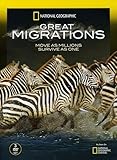
National Geographic: Great Migrations | $5.98 | Buy on Amazon |
| 4 |

|
Nature: My Life as a Turkey | $11.52 | Buy on Amazon |
| 5 |

|
Serengeti (DVD) | $8.97 | Buy on Amazon |
As an Amazon Associate I earn from qualifying purchases.
The formal IUCN Red List picture is also changing. Its 2016 assessment treated giraffes as one species, classified as Vulnerable. In August 2025, the IUCN announced recognition of four species and said the new taxonomy would guide upcoming Red List assessments. The old Vulnerable classification should not be presented as a current category assigned to each of the four species.
How many giraffes are left in the wild?
GCF estimates that there are approximately 140,000 giraffes in Africa. Its 2025 State of Giraffe report gives rounded estimates by species, adding up to about 141,000. These are estimates rather than exact census counts, and monitoring may lead to revisions.
#1 Best Overall
| Species recognized by the IUCN | GCF estimate | Included giraffe types |
|---|---|---|
| Northern giraffe (Giraffa camelopardalis) | About 7,000, GCF State of Giraffe 2025 estimate | West African, Kordofan, and Nubian giraffes |
| Reticulated giraffe (Giraffa reticulata) | About 21,000, GCF State of Giraffe 2025 estimate | Reticulated giraffe |
| Masai giraffe (Giraffa tippelskirchi) | About 44,000, GCF State of Giraffe 2025 estimate | Masai and Luangwa (Thornicroft’s) giraffes |
| Southern giraffe (Giraffa giraffa) | About 69,000, GCF State of Giraffe 2025 estimate | South African and Angolan giraffes |
GCF’s Africa-wide estimate of about 140,000 is higher than the fewer-than-100,000 figure associated with the 2016 IUCN assessment. That older assessment estimated 97,562 giraffes in 2015, when giraffes were counted as one species. GCF says the difference reflects improved surveys and data collection, alongside conservation outcomes—not a sudden population boom. The figures also differ in date and taxonomic framing, so they should not be read as a direct before-and-after census of the same units.
Why does the four-species classification matter?
The IUCN SSC Giraffe and Okapi Specialist Group recognized Northern, Reticulated, Masai, and Southern giraffes after reviewing genetic, morphological, and biogeographic evidence, including DNA studies, skeletal differences, and natural barriers that can limit interbreeding. The review was released on 21 August 2025 and is intended to inform Red List assessments and conservation policy. The group says it will continue to reassess the classification as new evidence emerges.
Rank #2
Counting giraffes as one species can hide the vulnerability of smaller or fragmented populations within a much larger total. Separating four species gives conservation assessments a more useful framework, but it does not make every population within each species equally secure. Comparisons are clearest when the date, geographic scope, taxonomic unit, and method behind a figure are kept together.
Do these 3 things before closing this tab:
1Clear out junk files and repair common Windows errors2Fix the driver behind crashes, sound loss and screen glitches3Repair Windows errors before they cause bigger problemsWhy are giraffes at risk?
The pressures vary by country and population; the available assessments do not establish that each threat is equally important everywhere.
Rank #3
- Habitat loss and fragmentation: Human land use can reduce or divide the habitat giraffes depend on.
- Illegal hunting: Hunting is identified as a pressure in historical IUCN material, though its severity differs across regions.
- Human-wildlife conflict: Conflict is another documented pressure, with local circumstances shaping its impact.
- Civil unrest: Historical IUCN material identifies unrest as a factor affecting some giraffe populations and conservation work.
The historical IUCN assessment also describes substantial regional variation in threats and population trends. It is therefore more accurate to discuss the pressures affecting a particular species or country than to assume one explanation applies across the continent.
Are giraffe populations increasing?
GCF’s 2025 assessment reports positive trends for three species, but that broad finding does not mean every local population is increasing. Nor does a positive trend alone establish that a species is secure: absolute numbers, range, fragmentation, and the distribution of animals also matter. GCF’s report gives rounded species estimates, but the available information does not specify the exact trend for each species here. Avoid assigning an increase or decline to a named species without a source that establishes it.
Rank #4
- Factory sealed DVD
What is being done to protect giraffes?
GCF describes conservation programs, improved monitoring, and translocations that can help re-establish or strengthen populations. These measures respond to different needs; moving animals, for example, cannot by itself resolve habitat loss or human-wildlife conflict. The relevant intervention depends on the pressures facing a particular population.
Recommended Free Tools
Giraffes were added to CITES Appendix II in 2019. Appendix II brings international trade under controls; it is not a general ban on trade. That trade measure is one part of conservation, not a substitute for addressing pressures on wild populations and their habitat.
Best Value
- Runtime: 300 minutes
Readers who want to support wild giraffe conservation can look into GCF’s programs and official adoption or support options through the organization’s own site. Check its current information for available programs and terms.
Quick Recap
Product prices and availability are accurate as of the date/time indicated and are subject to change. Any price and availability information displayed on Amazon at the time of purchase will apply.




