Play and enrichment can genuinely help an anxious dog. A food-filled toy or a training game gives a nervous dog something to focus on, makes a resting spot more pleasant, and makes the day more predictable. What they cannot do is resolve anxiety on their own. They work best as one part of a plan that first identifies what sets the dog off, keeps the dog from being repeatedly pushed into distress, and brings in a veterinarian when the reaction is sudden, persistent, or severe.
Start with what sets the anxiety off
Anxiety in dogs is not one problem. The right response depends on the trigger and on how intense the reaction is. Common triggers described by veterinary sources include:
- Being alone, which is usually called separation-related distress when the dog becomes upset as departures approach or once left alone.
- Noises, such as thunder, fireworks, or household sounds.
- Visitors arriving at the home or people the dog does not know well.
- Handling, such as grooming, nail trims, or examinations.
- Travel, including car rides and unfamiliar places.
Before choosing any activity, it helps to note when the behavior happens, what comes just before it, and how long it lasts. A dog that is mildly unsettled by a single noise needs a different approach from a dog that cannot settle for hours after being left alone. Veterinary guidance on behavior counseling also reminds owners that medical problems can cause or contribute to behavior changes, so a veterinary check is a sensible first step, especially when behavior changes suddenly.
See a veterinarian promptly if the behavior is new, changes quickly, or the distress is persistent or severe. Do not try to diagnose the dog from a short list of behaviors; the vet can rule out medical contributors and advise on next steps.
#1 Best Overall

- Heartbeat Toy for Medium Breeds: Plush comfort toy (12 x 8 in) sized for dogs 25-70 lbs; includes beating heart, 1 disposable heat pack, and 2 AAA batteries; also available in Junior for small breeds and Large for 70+ lb breeds
- Battery-Powered Heartbeat: Provides a rhythmic pulsing sensation designed to comfort puppies during rest, crate time, or overnight use; press button and place heart in belly pouch; batteries included; not a chew toy, remove heart before unsupervised play
- Calming Comfort for New Puppies: Designed to help your puppy settle during first nights home, crate training, and bedtime; rhythmic heartbeat and warmth create a soothing littermate-like presence; many owners use during travel, storms, and separation
- Heat Pack and Easy Care: Disposable heat pack inserts into belly pouch for up to 24 hours of warmth (single-use; replacement packs sold separately in 6-pack and 12-pack); plush toy is machine washable; remove heart unit and heat pack before washing
- Trusted by Over 1 Million Dog Owners: The original heartbeat comfort toy designed by SmartPetLove; used by breeders, shelters, and veterinary professionals; available in three sizes to fit every breed; batteries included and ready to use from day one
Where play fits in the plan
Enrichment is part of the plan, not a replacement for it. VCA’s separation-anxiety guidance describes a routine that covers the dog’s needs for social contact, exercise, play, training, toilet breaks, meals, and rest. A dog whose basic needs are met is in a better position to learn that the day is predictable. Play then adds variety and an outlet for energy and focus, while training gives the dog structured successes.
Think of play as the content of a good routine rather than the treatment. A dog that is walked, fed on a regular schedule, and given a chance to use its nose will often settle more easily, but a busy day does not undo distress that is triggered by being separated from its people.
When the dog is anxious about being alone
VCA’s current separation-related distress guidance gives a practical sequence. Work through it slowly and let the dog’s responses set the pace.
Rank #2

- 【Anxiety Relief】WEOK heartbeat puppy toy which is a simulation of the true pulsing heartbeat enables the puppy to feel the comfort. It can help puppies and cats to relief the separation anxiety, loneliness, go through the tough time and adapt the new home or other complex environment. Important tips for heartbeat device: Press and hold the switch long enough, it works; Press and hold the switch long enough, it stops.
- 【Crate Training Toy & Sleep Aid Toy】When the time comes for crate training, cuddling with WEOK heartbeat buddy will help reduce negative behaviors, such as whining and barking,which means you will get more sleep at night. It is a good behavioral training aid toy which could comfort your puppies.
- 【Suitable for all kinds of dogs and cats】Whether an older rescue dog or a new puppy, the WEOK Heartbeat Puppy Toys help your special pup through the tough times with comforting calmness from a warm, cuddly friend with a heartbeat can ease their fears and offer general anxiety relief. This heartbeat stuffed animal helps your dog find the peace and relaxation they need.
- 【Best Gift for Pet & Comfort Toy for Puppy】The WEOK plush toy with heartbeat simulate is suitable for all puppies, small, medium, large dogs, cats, helps pets reduce anxiety, tension, loneliness, behavior training, insomnia aid, soothes dogs and more, and it is a great dog birthday or festival gift.
- 【Perfect buddy for our new puppy】The WEOK heart beat dog toy for puppy can help dogs not bark, howling and make noise when they are alone, with the company of heartbeat stuffed animal toy to make dogs adapt to their kennels or dog bed, reduce the dog's sticky behavior and sleep aid at night, let the dog sleep well.
- Create a safe resting place. Choose a spot the dog already likes, away from the front door and street noise, with a comfortable bed and water.
- Make the resting place positive. Pair it with good things, such as a food-filled toy. If confinement is part of the plan, use it only if the dog can tolerate it safely. Not every dog can, and a crate is not appropriate for every dog.
- Practice being out of sight briefly. Step out of the room for a few seconds, then return calmly before the dog becomes upset.
- Try short outings. Leave for a few minutes, come back, and keep departures and returns low-key.
- Monitor with a camera. A camera lets you see whether the dog settles, paces, or becomes distressed while you are away, so you can judge the next step.
- Stop advancing if distress appears. Return to the last duration the dog handled comfortably, and consult a veterinarian.
- Avoid unplanned long absences. If a dog is in distress and no plan is in place, avoid leaving it alone for long periods. A temporary pet sitter can cover unavoidable absences while treatment is arranged.
VCA’s older separation-anxiety article describes a similar routine-based approach. It also recommends offering exploratory and chew toys, using feeding toys, rewarding relaxed settling, and gradually extending calm periods while making departure cues less predictive, for example by not following a fixed sequence of keys, coat, and shoes. Use the monitor-and-pause approach above as the working guide, and do not follow a fixed progression that ignores how the dog is responding.
Outdated Drivers Are Slowing You Down
One free scan finds every outdated or missing driver and matches the right update for your exact hardware.Free scan · exact hardware matchWindows Errors? Fix Them Before They Spread
Repair common Windows errors and clear accumulated junk for a smoother, more stable PC - no reinstall needed.Free scan · no reinstallUsing food-filled and foraging toys
Food-stuffable toys and foraging puzzles are useful for engagement and enrichment, and VCA recommends them for practicing alone time in a safe resting place. Choose a toy the individual dog can use safely. Dogs that chew aggressively may need a toy sized and built for their strength, and a dog that gulps or pulls apart rubber toys should be given an option it cannot swallow pieces from. Watch the first few sessions.
A toy is not a treatment, and it is not a reason to leave a distressed dog alone for longer. If the dog refuses to eat or cannot settle with the toy, that is useful information: pause the progression and discuss the situation with your veterinarian.
Rank #3

- Puppy Anxiety Relief Toy: Our heartbeat dog toy simulates the sound of a real heartbeat, when the heartbeat is activated, the dog or cat (or other pet) will feel regular vibrations, just like a mother's or partner's heartbeat, to relieve their anxiety and stress.
- Heartbeat Pet Toy: The heartbeat simulates a real companion environment, just like an environment accompanied by someone. After turning on the heartbeat mode, the heartbeat sound is very natural, which will calm down the dog slowly, which can effectively help the dog reduce anxiety and stress. heartbeat can work continuously for 8H , it will automatically close.
- Behavioral Training Aid Toy: When you work away from home, heartbeat stuffed toy is a great comforting, training toy, it can accompany your dog play or sleep or training, and the dog won't feel lonely, scared, even with thunder and lightning weather.
- Afety Velcro: Compared with zippers, velcro will be safer, more durable, and has a good seal, reducing the risk of dogs eating the zipper by mistake, making you more assured of stuffed animal with heartbeat to accompany your dog.
- Premium Quality: Puppy toy with heartbeat is made of high quality short plush and PP cotton, very soft, comfortable and safe.
When the trigger is noise, visitors, or another fear
For a noise or another fear, the practical starting point is a retreat area. Give the dog a quiet room or crate-free corner where it can go when a trigger appears, and reduce exposure to the trigger where you can. Thunderstorm days, for example, can be planned around by closing curtains and running a steady background sound.
Next, pair tolerable exposure with something the dog enjoys, such as food, a chew, or a game. The aim is to change how the dog feels about the trigger, not simply to keep it in view. The exposure should stay at a level the dog handles calmly. If the dog stops eating, freezes, or tries to escape, the exposure is too strong, and it should be reduced.
What’s actually slowing this PC down?
Pick the symptom - the matching free tool is one click away.
Structured desensitization and counterconditioning are the usual names for this work. More substantial fears may need a tailored plan from a veterinarian or a qualified behavior professional. VCA’s fear guidance and noise guidance describe these approaches in more detail, and a veterinarian can check for medical contributors and advise whether medication belongs in the plan.
Rank #4

- Premium Soft Chew Toys for Dogs - These adorable dog crinkle toys no stuffing ducks provide your four-legged best friend with an interactive chew toy that makes noise, keeps them engaged, and is gentler on teeth, gums, and dental health
- Cute and Colorful Duck Shape - Shaped like a real duck these dog crinkle toys for small dogs, medium dogs, and every size in between comes in 6 unique colors and provides a more puppy friendly shape that's easy to carry around
- No Fluff, No Mess Design - Unlike messy bones, ropes, or other toys for aggressive chewers these dog crinkle toys won't leave behind a mess after they're done playing. They also boast reinforced fabric and stitching to help them hold up to chewing
- Active Play, Tossing, and Retrieving - Our cute duck chew toys for dogs can be used for bonding with your puppy, reducing stress or separation anxiety, or simply giving them an active outlet for channeling aggression or intense play
- GREAT GIFT: Whether you’re looking for an exciting birthday, holiday or a just-because gift for your furbaby, you can’t go wrong with these incredibly fun dog toys. Click ‘Add to Cart’ now! Please note that our toys are not edible or meant for consumption.
Training methods to avoid
Punishment, flooding, and forcing a dog to face its trigger are not part of a sound plan. Forcing exposure tends to increase fear and can make the dog less willing to engage with play, food, and training. The Merck Veterinary Manual describes fear, anxiety, impulsivity, and aggression as usually treated by changing the dog’s emotional response to the stimulus and by replacing the unwanted response with a desirable one using reinforcement-based techniques:
“In most cases, treatment of problems related to fear, anxiety, impulsivity, and aggression focuses on changing the dog’s emotional response to the stimulus (counterconditioning) and/or replacing the undesirable response with one that is desirable by using reinforcement-based techniques (response substitution).” Merck Veterinary Manual, “Behavior Problems of Dogs”
Independent reader supportYour contribution helps us test, update, and keep practical guides available for everyone.Comparing support options
Each option addresses a different part of the problem. Use this table to see where each fits.
Best Value
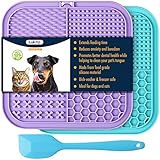
- 【77 Super Suctions】: The back of this licking mat is equipped with 77 high-strength suction cups, which can be well fixed on various walls or glass, refrigerators. It is a good distraction toy for pet bathing grooming and dog nail trimming.
- 【Slow Feeder Mat for Dogs & Cats】: Four different textured surfaces design is prefect for spreadable treats, such as cream cheese, yoghurt, peanut butter and so on. It is a peanut butter slow feeder mat for dogs to extend the feeding time and aid digestion. This lick mat is an ideal size for cats, puppies, small meduim and large dogs.
- 【Reduces anxiety, boredom and destructive behavior】: The lick pads help calm pets. It is a boredom buster for dog to suppress destructive behavio and relieves anxiety at home alone. This dog treat pad is great for stressful times such vet visits, bath time, nail clipping, injury recovery as well as thunderstorms and fireworks.
- 【Food grade silicone】 Premium food grade silicone material, very durable and tough, safe for your pets.
- 【Dish-Washer & Freezer safe 】: It is dish-washer safe, and can be hand-washed in warm soapy water; and it is also freezer safe.
| Option | What it addresses | Limits |
|---|---|---|
| Food-stuffable toy or foraging puzzle | Engagement and enrichment, and a pleasant resting place during alone-time practice | Only useful if the individual dog uses it safely; does not treat distress or justify longer absences |
| Anxiety wrap | A possible supportive measure in some situations, according to VCA’s anxiety vest guidance | Does not replace behavior work or veterinary advice; VCA does not promise that it works for every dog |
| Synthetic pheromone product | A possible supportive measure in some situations, according to VCA’s pheromone guidance | Does not replace behavior work or veterinary advice; effectiveness varies |
| Veterinary assessment | Medical contributors and whether medication belongs in the plan | Needed promptly for sudden change or persistent or severe distress |
| Behavior modification with a qualified professional | The underlying emotional response through desensitization and counterconditioning | Takes time and consistent practice; needs individualized planning |
VCA notes that in the United States, the FDA does not review non-drug health products, including supplements, for safety or effectiveness before they are sold. That is a different system from the approval process for medicines, so a product on the shelf does not show that it has been shown to help anxious dogs. Ask your veterinarian before adding any wrap, pheromone product, or supplement to a plan.
Medication and professional help
Medication is a decision for a veterinarian, usually made within a behavior modification plan. The Merck Veterinary Manual describes fluoxetine and clomipramine as approved in the United States for canine separation anxiety, to be used alongside a behavior modification plan. Medication is not a substitute for the behavior work described above.
If the problem is persistent, severe, or not improving with a sound plan, ask your veterinarian about referral to a qualified veterinary behavior professional. A reward-based trainer can help with practice at home, but a trainer should work with your veterinarian when medical questions or severe reactions are involved.
Anxiety in dogs usually improves with patient, consistent work, and the first sign of progress is often a calmer response to a small step rather than a dramatic change. Keep sessions short, keep notes on triggers and responses, and let the dog’s behavior decide when the plan moves forward.
Recommended Free Tools
Quick Recap
Product prices and availability are accurate as of the date/time indicated and are subject to change. Any price and availability information displayed on Amazon at the time of purchase will apply.




