Recommended Free Tools
Local governments make many of the decisions that shape how companion animals are housed, sheltered, and regulated, and most of those decisions are made in public meetings that anyone can attend. Best Friends Animal Society’s July 9, 2025 article “5 steps to using your power for pets” lays out a practical sequence for getting involved: research who runs things locally, attend meetings, build relationships with officials, bring other people in, and tell the community what is happening. The steps are drawn from the experience of animal advocate and legislative attorney Ledy VanKavage, whose early organizing work helped end the sale of impounded pets to research laboratories in her county.
Step 1: Find out who is responsible locally
Before you can influence a decision, you need to know who makes it. The article’s first step is to determine whether your city, your county, or a private organization oversees the local shelter, and to learn how the issues you care about affect animals in that facility. Those answers point you to the right meeting, the right officials, and the right records. A city council may control one policy while a county board or a contracted nonprofit controls another, so confirm the chain of authority rather than assuming it.




Questions to answer before you act
- Which government body or organization operates the shelter or animal-control program?
- Which body adopts the ordinances that govern pets in your area, such as breed restrictions, community-cat rules, or the sale of animals in local stores?
- Where are its agendas, minutes, and public comment rules published?
Step 2: Attend local government meetings regularly
The article’s second step is consistency. Start attending city council or county board meetings and keep going until you understand how they work: how agendas are set, how long public comment lasts, and which committees handle animal issues. A single visit rarely tells you enough. Regular attendance also makes you a familiar face, which matters for the next step.
Step 3: Build relationships with elected officials
Contact your council members or county board members by email or phone, and meet them in person when you can. The article says familiarity helps officials learn to trust advocates and to ask for their views when a decision is pending. Keep your contact short, specific, and factual, and follow up after meetings so that officials know who is paying attention to a given issue.
#1 Best Overall
Step 4: Bring other people in
Advocacy rarely succeeds alone. The article urges readers to recruit friends and other animal lovers. VanKavage recalls how she started the effort that became the Madison County Coalition Against Pound Seizure. She had learned in 1985 that impounded pets were being sold to laboratories for research, and the coalition formed within a year. In her words: “When we started the pound seizure coalition, I brought four friends along. It was just five of us for the whole county, but it made a change.”
The lesson is about scale, not size. A small group that shows up consistently can be enough to make an issue visible, and a group of five can begin the work even in a large county.
Rank #2
Step 5: Inform the community
The final step is making the issue known to people beyond your group. The article lists email, postcards, petitions, and social media as ways to reach residents. Choose the channels your community already uses, and tell people specifically what decision is coming, when it will be made, and what they can do, such as attending a meeting or contacting a member of the board. Best Friends points readers to its campaign-starting tools and to support for existing efforts at action.bestfriends.org.
What the example shows
VanKavage’s story is an organizing story rather than a legal one. It reflects her own experience and the outcome the article reports: the coalition lobbied successfully to end the practice of selling impounded pets to laboratories. The article does not claim that the same approach will produce the same result in every jurisdiction, and the steps do not guarantee a policy change. What they provide is a way to move from concern to a documented, organized presence in the places where local rules are written.
PC Slower Than It Used to Be?
A free scan shows the junk files, broken settings and background clutter dragging Windows down - then fixes them in one click.Free scan · Windows 10 & 11Crashes, No Sound, or Screen Glitches?
Random freezes, missing sound and display glitches usually trace back to one bad driver. Find and replace yours safely.Free scan · under a minuteRank #3
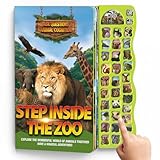
- 【Animal Busy Book with Sounds for Kids 】NEWEST VERSION Animal Busy Book 30 Species Names & Realistic Sounds Interactive Book for Boys Girls Kids 2 3 4 5 6 7 Year Old - learning toys, which helps toddlers to develop cognitive, practical ability, hand-eye coordination, color perception, memory, concentration and basic recognition.
- 【30 Animal illustrated & 6 Themes Writing Pages】Preschool Educational Animal Book covers 30 animal species and sound,which also including dinosaur stickers, maze, numbers.It helps develop hand-eye coordination, color perception, enhance memory and basic recognition.
- 【High-Quality Printing and Materials】: This book is based on large vibrant colors realistic images. The thick board book cover ensures long-lasting usage and cardboard pages prevent it from bending. specially anti-cutting edge and round corner design of every page, prevent the little hands from getting hurt. The book size is 11.8x10.3 inches, bigger than any other dinosaur sound book on the market. ·
- 【Parent-Child Interactive Teaching】Ourr book is suitable as a learning toy for kids 3-5 and playing with the family is a great opportunity to learn to take turns, share and help each other. It is useful to help them understand thinking, perceive colors, and enhance logical knowledge.
- 【Ideal Gifts 】The book is perfect for preschool kids, homeschool, kindergarten. To keep your kid busy. Can be used as birthday gifts, Dinosaur Themed Party, holiday gifts, toy prizes for carnival games. Children can experience the fun of learning in the game.
VanKavage’s advice is to persist. In the article’s words: “Above all, be tenacious. If you don’t succeed the first time, keep going back. Anybody can make changes if you just keep going and never give up.” Her favorite phrase, “Politics isn’t a spectator sport,” captures the same point.
Practical considerations for applying the steps
| Consideration | What to check | Why it matters |
|---|---|---|
| Local responsibility | Whether a city, county, or private organization oversees the shelter | Determines which officials and meetings matter |
| Meeting access | Published meeting schedules, agendas, and public comment rules | Shows when you can be heard and how often you need to attend |
| Allies | Friends, neighbors, and existing local animal groups | Lets a small group look and act like a coalition |
| Communication channels | Email, postcards, petitions, and social media | Determines how quickly residents learn about a decision |
These considerations are practical organizing points drawn from the five steps. The article does not present them as a formal comparison of policy options, and its examples come from one advocate’s experience rather than a survey of local law.
Independent reader supportYour contribution helps us test, update, and keep practical guides available for everyone.Where the source material has limits
The article does not supply statistics about pet populations or local shelter outcomes, and the dates it gives relate to VanKavage’s own history: the 1985 discovery and the coalition’s formation within a year. Treat them as a documented account from the 2025 article rather than as a broader measure of local animal policy. Rules and meeting procedures differ widely by location, so confirm current details with your own local government before you plan a campaign.
The Best Friends article is available at bestfriends.org.
Quick Recap
Best Value
Product prices and availability are accurate as of the date/time indicated and are subject to change. Any price and availability information displayed on Amazon at the time of purchase will apply.




