There is no single perfect bit for every horse. The right choice depends on the horse’s mouth and health, the bit’s fit and design, the reason for changing it, and how the horse responds. Start by identifying the concern and checking fit—not by copying the setup used on another horse.
Start with the reason you are considering a different bit
Note what prompted the change: a fit concern, a discipline requirement, difficulty accepting contact, or a behavior that appears during ridden or driven work. Describe what you actually observe rather than assuming the bit is the cause. Resistance or discomfort can have more than one explanation.
As an Amazon Associate I earn from qualifying purchases.
Hilary Vernon, identified by Horse & Hound as a bitting clinician, advises thinking about the mouthpiece before the cheekpieces and first identifying the behavior or discomfort behind the proposed change. A bit can provide a platform for clear aids, but it cannot teach those aids; that depends on the rider and training.
Outdated Drivers Are Slowing You Down
One free scan finds every outdated or missing driver and matches the right update for your exact hardware.Free scan · exact hardware matchWindows Errors? Fix Them Before They Spread
Repair common Windows errors and clear accumulated junk for a smoother, more stable PC - no reinstall needed.Free scan · no reinstallCheck mouth health and measure for fit
Before comparing designs, check that the horse’s mouth is healthy and that the current bit is correctly adjusted. A bit that is too wide or too narrow may not sit as intended. Do not choose a size from breed averages alone.
#1 Best Overall

- Low Port; 5" Mouth
- Antique Brown Cheeks
- Stainless steel
Winderen’s BitFinder says a correctly fitted bit is usually about 0.5 cm longer than the mouth width, measured between the outer edges of the lips. That is Winderen’s manufacturer guidance, not a universal clinical standard. Sprenger provides a bit measure with instructions. Use the measuring directions for the particular bit, then have the fit checked on the horse.
Sprenger’s current fitting-advice page, accessed 7 October 2026, offers a bit measure and instructions; its form is currently unavailable, and the page gives an email alternative. See Sprenger’s bit-fitting advice.
Rank #2
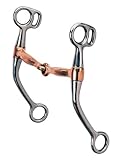
- Chrome Plated
- 5" Copper Plated Mouth
- 6-1/2" Cheeks
- Country Of Origin: China
Compare mouthpieces in the context of the horse’s mouth
Shape, jointing, and thickness are useful comparison points, but no design is established as best for all horses. Consider the oral space available and the horse’s observed acceptance of contact. Do not assume that a thicker or thinner mouthpiece is automatically gentler.
Winderen’s questionnaire asks whether a horse prefers its 18 mm or 14 mm options. The company associates thicker options with a thinner, flatter tongue or horses that are delicate in the contact and tend to hide behind it; it associates thinner options with a thicker tongue or horses that lean heavily on the bit. These are Winderen’s recommendations for its own options, not independently established rules for every horse.
Rank #3

- Handcrafted from premium harness leather
- Includes 5/8 inch x 7-1/2' roper reins
- Curb strap with 4-1/2 inch nickel plated chain
- Leather is hand Rubbed for the ultimate performance
- Bit measures 5 inch
Questions such as “mullen mouth or lozenge?” are best treated as comparisons to assess with a knowledgeable fitter, not as a universal ranking. The same applies to mouthpieces with different jointing: match the design to the horse’s mouth, the purpose, and the response you observe.
Choose cheek style and material after the mouthpiece
Once the mouthpiece and purpose are clear, compare cheek or ring style and material. Eggbutt and loose-ring designs are common points of comparison, as are stainless steel and copper alloy. The available expert guidance recommends keeping the choice simple and focused on comfort; it does not establish that one cheek style or material is superior for every horse.
Rank #4

- RUST-RESISTANT STAINLESS STEEL: Durable construction designed for daily barn use without corrosion or maintenance issues.
- SWEET IRON DOG BONE ROLLER: Encourages natural salivation and promotes bit acceptance for smoother horse response during riding.
- TRAINING AND COMPETITION VERSATILITY: Snaffle design provides clear communication across western disciplines, training, and schooling applications.
- AVAILABLE IN MULTIPLE SIZES: Offered in 4.5, 4.75, 5.5, 6, and 7 inch mouth widths to fit different horse sizes and preferences.
- PROFESSIONAL QUALITY AT ACCESSIBLE PRICING: Built with quality hardware and engineering without the premium price markup.
Limit your shortlist to bits that meet basic fit and discipline requirements. If your horse competes, check the applicable event rules before buying. Then consider whether the design offers the stability or feel you are seeking and whether the horse accepts it comfortably.
Quick wins for a faster PC:
Scan for outdated or missing drivers - takes under a minuteDriver Scan →Clear out junk files and repair common Windows errorsFree Scan →Fix the driver behind crashes, sound loss and screen glitchesFind Drivers →Observe the horse after a change
Introduce a different bit thoughtfully and pay attention to the horse’s response in the relevant work. Note whether the original concern changes and whether new signs of discomfort appear. A change in behavior alone does not prove that a bit caused or solved the problem; training, adjustment, mouth health, and the rider’s or driver’s input can also matter.
Best Value

- LONG CURVED SHANK - STRONGER LEVERAGE CONTROL: The long curved shank design increases leverage, applying controlled pressure to the mouth, chin groove, and poll for more precise communication. Suited for experienced riders who need stronger control with responsive or powerful horses
- DESIGNED FOR TRAINED HORSES & INTERMEDIATE RIDERS: Best suited for trained or semi-trained horses that already understand rein cues. Provides refined control for riders with steady hands looking to improve consistency and responsiveness in western riding or training
- COPPER MOUTHPIECE FOR SOFT ACCEPTANCE & RESPONSE: Copper center encourages salivation and relaxed mouthing, helping improve bit acceptance and reduce resistance. Supports smoother communication even with increased leverage pressure
- DURABLE CHROME-PLATED STEEL CONSTRUCTION: Built with strong chrome-plated steel to resist wear and corrosion. Smooth finish helps reduce friction and irritation for long-term comfort and reliable performance
- STANDARD 5 INCH SIZE - FOR ADULT HORSES ONLY: Designed for standard horse sizing with a 5-inch mouthpiece. Not suitable for ponies or draft horses. Always measure your horse's mouth for proper fit and comfort
If the horse remains uncomfortable or resistant and you cannot identify why, do not keep changing equipment at random. Ask an experienced instructor or qualified equine bit fitter to assess the horse and setup. A veterinarian or equine dentist can help investigate mouth-health concerns.
Independent reader supportYour contribution helps us test, update, and keep practical guides available for everyone.What a bit can—and cannot—do
In IVC Carriage, Myrna Rhinehart notes that the bit another horse uses may not suit yours. She describes choice as depending on mouth size and style, the horse’s and handler’s training, and preference. This is practical expert guidance, not the result of a controlled comparison proving one bit best.
Rhinehart also cautions that apparent bitting trouble may relate to mouth health, harness fit, training, adjustment, or driver input. A bit change is therefore not a diagnosis or a guaranteed fix for resistance. The reviewed expert and manufacturer guidance offers useful fitting considerations, but it does not establish a universally superior configuration.
A practical decision checklist
- Define the concern. Record the behavior, discomfort sign, fit issue, or discipline requirement that prompted the search.
- Check health and current fit. Consider whether mouth health or adjustment needs attention before buying another bit.
- Measure carefully. Use instructions for the particular bit or a measuring aid, and confirm fit on the horse rather than relying on a general rule alone.
- Compare mouthpieces. Consider shape, jointing, thickness, and available oral space in light of the horse’s observed response.
- Then assess cheek style and material. Keep discipline requirements and the purpose of the change in view.
- Get individual help when needed. Seek an experienced trainer or qualified fitter; involve a veterinarian or equine dentist if discomfort or mouth-health concerns remain unexplained.
Winderen’s BitFinder is a 12-question questionnaire that presents the company’s own selection guidance. It can help organize comparisons, but its recommendations should not replace individual fitting advice. View Winderen BitFinder.
Quick Recap
Product prices and availability are accurate as of the date/time indicated and are subject to change. Any price and availability information displayed on Amazon at the time of purchase will apply.




