Fish scales fossilize when conditions preserve them before decay, scavenging, transport and abrasion erase their structure. Some scales are preserved or replaced by minerals such as apatite; others retain transformed organic material. Burial starts no guarantee: the outcome depends on the remains’ chemistry and what happens to them after death.
What happens to scales after a fish dies?
Fossilization is a sequence of changes, not a single event. After death, soft tissues decay, scavengers may disturb the remains, and currents can carry or scatter them. Abrasion and chemical changes can remove details. Burial may protect remains, but it does not ensure preservation. Later, minerals may fill spaces or replace original material; recrystallization can alter it, while dissolution can erase it. Some fossils preserve an impression rather than the original scale material. The National Park Service describes these post-death processes as taphonomy.
As an Amazon Associate I earn from qualifying purchases.
How can apatite preserve fish scales?
Apatite is a calcium-phosphate mineral and one documented route to preserving fish scales. The challenge is that phosphate can be scarce in natural waters, and apatite forms only when local conditions allow it to precipitate.
In a 2024 laboratory study, Gäb and colleagues tested whether alkaline phosphatase, an enzyme, could release phosphate from organic phosphate compounds and make it available near scale tissue. Their experiments produced apatite crystals on fish scales. The crystals measured about 5–100 μm across the experiments; that is an experimental range, not a typical size for fossil crystals. The authors also reported nanoscale similarities between apatite formed in the experiments and material in fish fossils from Solnhofen and Santana. They propose enzyme-assisted phosphatization as a possible pathway, not a universal or settled explanation for fish-scale fossils. Read the 2024 study in Scientific Reports.
#1 Best Overall

- Each fossil plate measures 8-14 cm / 3-6" long, with the fish typically ranging from 4-8 cm / 1.8-3.2". Variations in shape, size, and color are natural.
- These fish fossils date back approximately 150 million years, offering a glimpse into the ecological eras of the past. Perfect for fossil enthusiasts and collectors.
- Please note: Natural fossils, each product may be different from the photo, in order to ensure the character of the product, some of the products have been hand-colored and adhesive repair, looking forward to your understanding and cooperation.
- Discover the ancient world with our real fish fossils from western Liaoning, China. Each sample features a unique fish, carefully selected for high quality.
- Explore our extensive collection of FOSSILS AND ROCKS, including REAL BUGS, INSECT SPECIMENS, and more. Perfect for fossil lovers alike.
Do fish scales need oxygen-free conditions to fossilize?
No single oxygen rule explains every case. Low-oxygen, or anoxic, conditions can limit decay in some settings, but a 2025 case study describes phosphate mineral preservation in an oxygen-elevated microenvironment.
The specimen was a 52-million-year-old Diplomystus dentatus from Wyoming, reported by Curtin University. Researchers interpret the chemistry this way: as fatty skin degraded, it released fatty acids and hydrogen ions, changing conditions close to the fish in ways that favored phosphate minerals over the carbonate deposits usually expected. This is a finding about one specimen, not evidence that oxygen has no effect on decay or preservation. Curtin University’s 13 October 2025 account explains the interpretation.
Rank #2

- Desktop Display: This fish ornament measures 3.14 x 2.75 x 0.23 inches, making it a compact Desktop Ornament for a desk, shelf, classroom, or lab display while keeping paleontology fish study materials easy to place and review
- Science Teaching: Designed as an Educational Plaything and science ornament, this specimen supports classroom demonstrations, student observation, and paleontology lessons by presenting fish details in a clear and organized way
- Safe Material: Made from resin specimen material, this offers a natural and safe handling option for teachers, students, collectors, and laboratory supplies use during appreciation research and material collection
- Study Details: the polished surface and visible anatomical structure help highlight the fish form for close viewing, making this Simulation Model useful for science education, lab reference, and collection presentation
- Gift and Decor: with one adornment included in the package, this Fish Adornment can be used as a gift for showing and displaying paleontology fish, and it also fits home, classroom, and laboratory decor needs
Can scales fossilize without becoming mineral?
Yes. Fossils do not all preserve scales by simply turning them to stone. Mineral infill or replacement is one pathway; organic-derived residues can also survive or form through chemical transformation.
Do these 3 things before closing this tab:
1Fix the driver behind crashes, sound loss and screen glitches2Repair Windows errors before they cause bigger problems3Scan for outdated or missing drivers - takes under a minuteA molecular analysis of Cretaceous fish scales from Spain’s Las Hoyas Formation found fossil material dominated by aliphatic compounds, unlike modern scales, which the study describes as largely collagenous. The authors interpret the fossil composition as probably involving in-situ polymerization of labile lipid components. This is an interpretation of molecular evidence, not a direct observation of the original preservation process. See the Las Hoyas molecular taphonomy study.
Rank #3

- ✅ Natural Lycoptera fish fossil preserved on light shale matrix, clear body and fin details visible. ✅ Great specimen for fossil collectors, geology enthusiasts, school science projects and teaching display. ✅ Unique natural stone decoration, ideal ornament for study, exhibition, home display. ✅ Every fossil is naturally formed, slight differences in texture, cracks and color are natural features, not defects. ✅ Excellent gift choice for paleontology lovers, teachers, students and mineral specimen hobbyists.
Research on fish soft tissues from the Crato Formation discusses pyritization and kerogenization as additional preservation pathways. Together, these examples show why the preserved material and its history must be considered specimen by specimen. The Crato study examines a pyritization–kerogenization gradient.
Quick Recap
Best Value
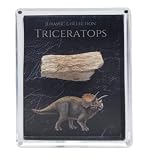
- Genuine Jurassic Gallery Fossil: Contains an authentic Triceratops bone fragment from the late Cretaceous period (approx. 67 million years old), ethically sourced from the Hell Creek Formation, Montana, USA.
- Elegant Lucite Display Case: Housed in a 4 x 3.25 x 1 inch (10.5 x 8.5 x 2.5 cm) transparent Lucite case with a magnetic lid for secure and stylish presentation.
- Unique Natural Specimen: Each bone fragment varies in shape, size, and color, reflecting the natural diversity of Triceratops fossils from the Cretaceous era.
- Distinctive Triceratops Features: Represents the Triceratops, known for its three horns, large frill, and up to 800 teeth, used for defense, foraging, and display.
- Historical Significance: From a herbivore that roamed alongside Tyrannosaurus rex, feeding on prehistoric plants like palms and cycads.
Rank #4

- Sustainable and Eco-Friendly: Sourced naturally and ethically, these fossil stones reflect a commitment to sustainability. Each piece is a reminder of our planet's rich history while promoting environmental awareness.
- Unique Decorative Accents: These fossil stones serve as stunning natural ornaments for home or office decor. Their unique shapes and textures make them eye-catching conversation pieces that add a touch of nature to any setting.
- Variety of Sizes: With fish bodies measuring between 1.18 to 3.54 inches and whole fossils spanning 2.76 to 5.91 inches, these specimens a range of sizes suitable for various applications, from educational displays to personal collections.
- Faux Fish Fossil Specimens: Each Fossil Stone features faux Wolffin fish fossils, providing a genuine glimpse into prehistoric life. Perfect for collectors and educators alike, these fossils enhance any collection with their historical significance.
- Educational: An excellent resource for paleontology and biological science education, these fossil specimens are ideal for teaching about evolution, marine life, and ecological history. Inspire curiosity and learning in students of all ages.
What determines whether a scale survives?
- Time before burial: decay, scavenging and transport can destroy or disperse remains before they are protected.
- Local chemistry: phosphate availability and conditions for mineral precipitation matter for apatite preservation; other pathways involve different chemical changes.
- What happens after burial: mineral replacement, infill, recrystallization, dissolution and organic transformation can preserve, alter or remove details.
- The particular setting: oxygen conditions matter, but the Wyoming specimen shows that an oxygen-elevated microenvironment does not rule out preservation when local chemistry is favorable.
Product prices and availability are accurate as of the date/time indicated and are subject to change. Any price and availability information displayed on Amazon at the time of purchase will apply.




