
Free tools Windows power users keep installed
One-click scans. No signup required.
Community-cat programs are coordinated services, not one-off trapping events. A shelter or municipal animal-services agency, veterinary partner, nonprofit, trained volunteers, and colony caregivers divide the work: identifying cats, arranging humane capture, providing surgery and vaccines, recovering the animals, returning them to the correct outdoor territory, and monitoring what happens next. The exact name, eligibility rules, costs, waiting time, and services depend on your local program.
The route differs according to how a cat enters the system. A cat brought to a shelter may go through return-to-field (RTF), also called shelter-neuter-return (SNR). A cat living outdoors may instead be handled through trap-neuter-vaccinate-return (TNVR), usually called TNR. Understanding that distinction helps you contact the right agency before you set a trap.
As an Amazon Associate I earn from qualifying purchases.
What happens to a community cat
Most programs follow a sequence of assessment, humane capture or intake, veterinary treatment, identification, recovery, and either return or rehoming. The cat’s health, behavior, age, nursing status, and local policy can change the sequence.
Do these 3 things before closing this tab:
1Clear out junk files and repair common Windows errors2Scan for outdated or missing drivers - takes under a minute3Repair Windows errors before they cause bigger problems- Identify the cat and its situation. A caregiver or field officer determines whether the cat is owned, lost, friendly, injured, nursing, or genuinely free-roaming. Programs may ask for photographs, location details, and information about other cats in the colony.
- Choose the correct entry route. A member of the public or field-services staff may bring a community cat to a shelter for RTF/SNR. For TNVR, a trained person arranges a live trap and captures the cat where it lives.
- Arrange a veterinary appointment or approved intake. Clinics and shelters set their own drop-off windows, paperwork, trap specifications, and capacity. A reservation or wait may be required.
- Provide veterinary care. The usual pathway includes an examination, sterilization, and vaccination in many programs. Some programs also microchip, treat medical problems, or perform other procedures when indicated.
- Mark and recover the cat. Ear tipping is a visible sign used by many programs to show that a free-roaming cat has been sterilized. Recovery takes place in an approved trap, shelter, clinic, or volunteer space until the animal is safe to release.
- Return or rehome. A healthy free-roaming cat is generally returned to the exact territory where it was trapped. A socialized cat, kitten, or cat whose medical or safety needs cannot be met outdoors may instead be placed for adoption or another form of rehoming.
- Continue colony care. Caregivers monitor the cats, arrange additional trapping, provide food and shelter where permitted, and report illness or injury.
These stages are connected: a trapper cannot safely promise a return date without a clinic appointment and recovery plan, and a clinic cannot decide where a cat belongs without accurate location information.
#1 Best Overall

- High Quality Materials:SZHLUX Live Animal Cage Trap use low carbon steel wire and medium frequency welding. In this way, the product surface is flat, the welding is firm, and it is not easy to solder off.Weather and rust resistant.
- Convenient Design: Our cat trap is foldable and can be easily loaded into the trunk of the car.It only takes 4 simple steps to set up,from nearly flat to assembled in seconds--no tools needed.
- Humane Live Animal Trap: Our raccoon trap use oblong support frame to secure the cage shape and use fixing clips to fix rear door,smoothed internal edges protect and prevent trapped animal being injured.All you need is some bait to catch and then release them back to the wild.
- User-friendly Design: The top cover guard board of the cage prevents people injured by the trapped animal's mistake.The connecting rod of the pedal mechanism is set inside the cage to prevent animals from touching the mechanism by mistake.A new tool has been designed to extend the safe distance when releasing the animal.
- Dimensions: Product Size: 32inch*10inch*12inch; Package Size: 38.2inch*11.8inch*3.15inch.Excellent choice when attempting to capture smaller animals such as stray cats, raccoons, squirrel, skunk, mole, groundhog, armadillo, rabbit and small dogs.
RTF/SNR versus community TNR
Best Friends’ 2026 handbook describes two common operating models. Return-to-field (RTF), also called shelter-neuter-return (SNR), is designed for community cats brought to a shelter by the public or field-services staff. Trap-neuter-vaccinate-return (TNVR), also called TNR, is used when cats are captured in their outdoor colony rather than transported to a shelter first.
| Feature | RTF/SNR | TNVR/TNR |
|---|---|---|
| How the cat enters | Brought to a shelter by a resident or field-services officer | Captured in the colony by a trained trapper |
| Typical veterinary pathway | Evaluation, sterilization, vaccination and, in some programs, microchipping | Evaluation, sterilization, vaccination and identification arranged through a field or clinic partner |
| Who handles transport | The person or agency delivering the cat, plus shelter staff | Volunteers, caregivers, or field staff transport the trapped cat to and from the clinic |
| Return decision | Shelter or animal-services staff assess whether return is appropriate | The trapping team plans a return to the original territory unless the program approves rehoming |
| Common constraints | Intake capacity, shelter rules, identification requirements, and appointment windows | Trap training, equipment, clinic availability, recovery space, and access to the colony |
Neither model is automatically available everywhere. Some agencies operate both, while others accept only cats meeting specific geographic, health, or behavior criteria.
Who does the work behind the scenes?
Municipal animal services and shelters
Animal-services agencies may receive cats, determine whether an animal is eligible for return, coordinate field officers, maintain records, and enforce local rules. Shelters can also provide intake space and connect residents with approved clinics or volunteer networks. A shelter-based route does not necessarily mean the shelter will keep a healthy outdoor cat for adoption.
Veterinary and humane-society partners
Partner clinics perform examinations and sterilization, administer vaccines when included, and identify conditions requiring treatment or a different outcome. Austin Animal Services, for example, sends colony cats to Austin Humane Society for spay/neuter, vaccination, and ear tipping. That arrangement is specific to Austin; another city may use a municipal clinic, private veterinarians, or a nonprofit provider.
Rank #2

- HUMANE CAPTURE: This large live animal trap safely captures raccoons, cats, possums, and other small animals with a 1-door design that allows full entry before closing, reducing escape chances for effective pest control
- HEAVY-DUTY CONSTRUCTION: Built with galvanized wire mesh and solid steel door, this raccoon trap resists rust and corrosion while providing long-lasting durability for outdoor use in all weather conditions
- SAFETY FIRST: Features smooth internal edges to prevent animal injuries and protective handle guards for safe handling, making this humane animal trap ideal for both novice and experienced users in wildlife management
- PROFESSIONAL DESIGN: Engineered with a refined trip mechanism specifically calibrated for heavier animals like bobcats and coyotes, this live trap minimizes false triggers while ensuring reliable capture performance
- VERSATILE SOLUTION: Perfect as a feral cat trap, skunk trap, or armadillo trap, this large animal cage trap handles a wide range of pest control situations effectively for comprehensive wildlife management
Nonprofits and community coalitions
Programs often depend on organizations that supply training, volunteers, recovery space, winter shelters, food, adoption support, or funds. Toronto Animal Services describes a coalition of municipal, shelter, rescue, community-cat, and animal-protection organizations. Its listed assistance includes trap rental, spay/neuter access, post-operative recovery space, winter shelters, food donations, and help placing kittens.
Trappers and transport volunteers
Trapping is a technical job, not simply putting food in a cage. Volunteers may observe feeding patterns, select a safe location, use an approved live trap, cover and label it, transport the cat, and coordinate the clinic handoff. They also arrange pickup and return. Austin Animal Services warns, “Never trap without a plan.”
Colony caregivers
Caregivers know individual cats, feeding times, newcomers, and signs of illness. Hamilton’s guidance describes trained caregivers who commit to sterilizing and vaccinating cats and to feeding, sheltering, and monitoring them. Caregivers may also educate neighbors and organize the next round of trapping.
Quick wins for a faster PC:
Fix the driver behind crashes, sound loss and screen glitchesFind Drivers →Clear out junk files and repair common Windows errorsFree Scan →A municipal workflow: what Austin’s example shows
Austin Animal Services provides a clear illustration of the handoffs. Volunteers trap and transport colony cats to a recovery unit. Austin Humane Society provides spay/neuter, vaccination, and ear tipping. After recovery, volunteers return each cat to the exact place where it was trapped.
Rank #3
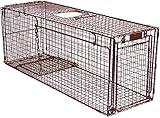
- Works for cats, skunks, rabbits, and other small animals
Austin’s program does not remove or rehome healthy free-roaming cats. That is an Austin rule, not a universal definition of TNR. Another local program may accept friendly cats for adoption, require a different intake location, or decline cats outside its service area.
Veterinary care, identification, and recovery
Assessment and surgery
A veterinary team evaluates the cat before sterilization and vaccination. The animal’s condition can change the plan: an injured or seriously ill cat may need treatment first, while a nursing mother, young kitten, or apparently owned cat may require a different decision. Ask your program what it wants you to do in these cases rather than trapping first.
Ear tipping, microchips, and tattoos
Ear tipping is a visible, distance-readable marker that helps prevent a sterilized cat from being trapped and operated on again. Austin and Hamilton use it for community cats. Singapore’s Animal and Veterinary Service (AVS) describes a broader identification pathway: released cats are microchipped and ear-tipped, while cats that are rehomed may receive an ear tattoo instead. Identification practices are not interchangeable, so follow the local clinic’s standard.
What’s actually slowing this PC down?
Pick the symptom - the matching free tool is one click away.
Post-operative recovery
The cat must remain in a secure, temperature-appropriate location until the clinic’s release criteria are met. Toronto’s post-operative guidance calls for returning the cat to the exact trapping location and supplying food, water, and shelter there while monitoring the colony. It also provides sex-specific recovery instructions and warning signs that warrant veterinary contact. Those are Toronto program directions; your clinic’s written instructions and a veterinarian’s judgment take priority.
Rank #4

- Wide Application: As urban and wilderness ecosystems intertwine, animals may disturb your life. Our cat trap is a versatile solution for various animals, including cats, raccoons, rabbits, groundhogs, armadillos, and opossums. It effectively addresses issues such as farmland invasion, release, and harassment.
- Humanized Designs: We prioritize humane care with our raccoon trap. The L-shaped lever ensures the trap won't harm animals when triggered. The dense mesh prevents escapes and protects against external attacks or stolen food. Smooth wire edges prevent animals from panicking or biting the wire, ensuring their safety.
- Sturdy and Durable: Our animal trap is built to last. It is constructed with sturdy, thickened wires that withstand animal bites and impacts without deformation or cracking. The galvanized coating provides excellent corrosion resistance, ensuring stability and durability in all weather conditions.
- Simple and User-friendly: Our live trap is designed for your convenience. It comes pre-assembled, saving you from tedious setup steps. Just unfold the cage, secure the rear door, and connect the trap mechanism to start using it quickly. This saves time and effort, allowing you to engage in capture work promptly.
- Portable and Easy to Store: Our efficient groundhog trap is portable and easy to store. It features a convenient handle for easy mobility, with an extended design that prevents accidental injuries from animals. The collapsible design allows for easy storage, freeing up space when not in use.
Return, rehoming, and ongoing monitoring
Why the exact return location matters
Free-roaming cats form strong associations with their territory, food sources, shelter, and other cats. Returning a cat to the place it was trapped preserves the information caregivers have about that colony and avoids abandoning the animal in an unfamiliar area. Volunteers should record the trap location before transport and verify it again at release.
When rehoming may be considered
Programs may rehome kittens, socialized adults, or cats whose medical or environmental needs make outdoor return unsuitable. Singapore’s TNRM model captures, microchips, sterilizes, and ear-tips cats, then either rehomes or releases them; rehomed cats may be ear-tattooed. Whether a cat qualifies for adoption depends on local capacity, behavior assessment, foster space, and the animal’s welfare.
Care after release
Return is not the end of the service. Caregivers watch for appetite changes, limping, respiratory signs, new wounds, and unfamiliar cats. They may schedule another trapping session for unsterilized cats, arrange care for kittens, and keep records of which animals have been treated. Hamilton advises that food should not be left unattended where it could attract wildlife or create a nuisance. Local ordinances may regulate feeding, shelter placement, sanitation, and property access.
Recommended Free Tools
How Singapore’s TNRM model differs
Singapore uses the term Trap-Neuter-Rehome/Release-Manage (TNRM). AVS says cats are captured, microchipped, sterilized, and ear-tipped, then rehomed or released; cats that are rehomed may be ear-tattooed. The program began on 1 September 2024 and expanded support to trapping and boarding as well as sterilization and microchipping.
Best Value

- Safe & Humane Trapping – Designed with animal welfare in mind, this live trap safely captures animals without injury, making it ideal for humane relocation.
- Durable Galvanized Steel Build – Constructed from high-strength, rust-resistant steel for long-lasting performance in any weather condition.
- Reliable Trigger Mechanism – Features a highly sensitive trip plate and spring-loaded door to ensure fast and secure captures, every time.
- Spacious & Versatile Size – Accommodates a range of medium-sized animals including raccoons, groundhogs, armadillos, and stray cats.
- Simple Assembly– Folding to save space and easy assembly with no tools required—perfect for homeowners, farmers, or pest control professionals.
AVS reports that the earlier Stray Cat Sterilisation Programme sterilized and microchipped an average of 3,500 cats annually from 2020 onward. That is a count of program activity, not a measured reduction in the overall stray-cat population or proof that the program alone caused a population change. AVS also works with animal-group partners, illustrating a public-grant and nonprofit partnership model that may not exist in your area.
Funding, access, and waiting time
There is no single national price list or eligibility standard for community-cat work. A program may be funded by municipal budgets, grants, donations, clinic subsidies, adoption fees, or a combination. Some services are free to residents in a defined area; others charge for surgery, transport, boarding, or treatment outside the basic package.
Before making plans, ask these questions:
- Does the program serve your address, and does it accept cats from private property?
- Is the route shelter intake, scheduled TNVR, or both?
- Are sterilization, vaccines, ear tipping, microchipping, medical treatment, and recovery included?
- Who supplies traps, carriers, transport, and post-operative space?
- Is training required, and are traps lent or rented?
- How long is the current wait for an appointment or clinic slot?
- What is the procedure for a sick, injured, nursing, friendly, or apparently owned cat?
Toronto lists trap rental and other practical support, while Austin specifies equipment accepted by its intake pathways. Those examples show why buying a generic trap before calling can waste money or leave you unable to use the equipment.
What to do before trapping
- Contact the local authority or established TNR group. Start with municipal animal services, a humane society, or a recognized community-cat organization.
- Describe the colony. Provide the address, number of cats, photographs if available, feeding schedule, and any signs of illness, injury, nursing, or ownership.
- Confirm the plan in writing. Obtain the intake or appointment time, clinic location, approved trap or carrier type, labeling requirements, transport instructions, and recovery rules.
- Plan for the whole timeline. Do not trap until you know where the cat will go that day, where it will recover, and who will return it.
- Prepare the release site. Make sure food, water, and shelter can be provided at the original location under local rules.
A humane live trap is part of the documented workflow, but local coalitions may lend or rent one. Use only equipment accepted by the program and never leave a set trap unattended or exposed to unsafe weather.
What the evidence can—and cannot—show
A 2019 peer-reviewed study evaluated integrated RTF and targeted TNVR programs at six municipal animal shelters. Its scope makes it relevant to coordinated programs, but the available record does not establish an effect size here, so it should not be used to promise a specific population reduction.
Toronto Animal Services states that “Trap-Neuter-Return (TNR) is the most humane and effective long-term approach to managing feral and community cat populations.” That is the City of Toronto’s stated position. Other agencies may describe their goals differently, and outcomes depend on implementation, coverage, follow-up, local ecology, and compliance with program rules.
Quick Recap
Common mistakes and safer alternatives
- Trapping without a clinic slot: Secure an appointment and recovery plan first.
- Returning to a new location: Release at the exact trapping site unless the program directs otherwise.
- Assuming every cat is unowned: Check for identification, neighbors, and signs of an owned or lost animal.
- Ignoring kittens or nursing mothers: Tell the program before trapping so it can advise on timing and reunification.
- Leaving food indefinitely: Follow local sanitation and wildlife rules; remove uneaten food when required.
- Buying equipment before checking requirements: Ask whether traps are provided, rented, or restricted to approved types.
- Expecting one surgery to solve a colony: Continue monitoring and arrange follow-up trapping for untreated cats.
Product prices and availability are accurate as of the date/time indicated and are subject to change. Any price and availability information displayed on Amazon at the time of purchase will apply.
The Tool Desk
Outbyte Driver Updater FREEScan for outdated or missing drivers - takes under a minuteDriver Scan →Outbyte PC Repair FREERepair Windows errors before they cause bigger problemsFix Now →




Leave a Reply