
Yes—some crocodile mothers carry newly hatched young in their mouths from the nest to nearby water. The behavior is documented most clearly in Nile crocodiles and estuarine crocodiles. A mother may open the nest after hearing hatching calls, collect hatchlings in her mouth or a buccal pouch, and make repeated trips to the water. Once there, the young can gather in a group called a créche and remain under maternal protection for weeks.
That does not mean every crocodilian species behaves identically, or that every mother carries the same number of young for the same distance. The best evidence comes from particular species, locations and observation methods, so the details below are identified by species and setting.
As an Amazon Associate I earn from qualifying purchases.
What the mouth-carrying behavior looks like
Hatchlings leave a nest built on land, often a mound of vegetation, soil or other plant material. Instead of dispersing immediately, a mother may help move them toward water. She takes one or more young into her mouth and transports them to the shoreline. The sources describe the mouth as a carrying space; an older account of Nile crocodiles calls it a “buccal pouch.” They do not describe the mother swallowing the babies.
What’s actually slowing this PC down?
Pick the symptom - the matching free tool is one click away.
The Queensland Government’s official estuarine-crocodile account states: “Once out of the mound, the mother may gently carry the young in her mouth to the water’s edge.” Perth Zoo describes the same stage more briefly: “She then carries them in her mouth down to the water.” Both accounts concern estuarine crocodiles, and the cautious word “may” matters: transport is a documented form of care, not a behavior that should be assigned automatically to every crocodile or every nest.
#1 Best Overall
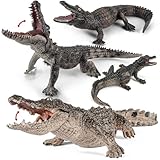
- Realistic Crocodile Toys Playset: This 4PCS set includes 2 Alligators, 1 Nile Crocodile, and 1 Caiman, providing a fun and educational way for kids to explore the safari world from home
- Ideal Preschool Gift: Perfect for boys and girls , these crocodile toys make excellent birthday or holiday gifts and work well as party favors or cake toppers
- Exquisite Hand-Painted Details: Each crocodile figure features hand-painted realistic textures and vibrant colors, engaging preschoolers in imaginative play
- Educational and Creative Play: These figures spark curiosity about wildlife and nature, perfect for educational use, creative play, party favors, and safari-themed decor
- Sturdy Materials: Made from high-quality plastic, these Alligator toys are designed to withstand hours of play while keeping their lifelike appearance
One mother can make several trips
Carrying may be a repeated process rather than a single dramatic journey. In a detailed camera-trap sequence at Lake St Lucia in South Africa, one Nile crocodile mother made 13 excursions between the nest and the water over 32.5 hours. That is an observation of one sequence, not a population-wide average or a standard timetable. It does show that moving a brood can require sustained effort over more than a day.
How a mother responds when the eggs are hatching
Crocodile hatchlings vocalize before or during hatching. Those calls can provide a signal that young are ready to emerge, allowing the mother to respond even when the eggs are still inside the nest.
A 2025 playback experiment examined this response in 12 female Nile crocodiles at Crocoparc Zoo in Agadir, Morocco. Researchers played recorded calls under different conditions. The females showed interest when they heard isolated calls. When calls played nearly continuously, the females dug at the nest. The authors suggested that a sustained pattern of calls may indicate that embryos are ready to hatch.
The Tool Desk
Outbyte PC Repair FREERepair Windows errors before they cause bigger problemsFix Now →Outbyte Driver Updater FREEFix the driver behind crashes, sound loss and screen glitchesFind Drivers →Rank #2

- 10PCS Crocodile Toys: These realistic crocodile playset include 3Nile Crocodiles, 2Caimans, 1White crocodile, 1Saltwater Crocodile, 1Boar Crocodile, 1Sarcosuchu and 1Alligator.
- Safe First: All animal figures are made from BPA-free, non-toxic and high-quality sturdy PVC. These realistic crocodile figures designed for children, teachers, collectors, and crocodile animal lovers everywhere.
- Exquisite Hand-Painted Details: Each animal figurine is hand-painted with realistic textures and vivid colors. Their sturdy designs ensure they stand upright and Kids will love spending hours exploring their lifelike features and unique details.
- Animals Educational Toy: This crocodile figurines for kids was great for education purposes, creative play, party favors, school projects, room or desktop decoration and Cake Topper. They encourage curiosity about nature and wildlife.
- Awesome Gift: These charming animal toys for boys and girls is a great birthday and holiday gift or prize for kids. It also would be a good idea to use it as the cake toppers and make a crocodile animal-themed cake for your kids.
This experiment demonstrates a possible communication link between hatching sounds and maternal behavior; it does not establish a universal rule for all crocodilians. The animals were captive Nile crocodiles at one zoo, and playback is not the same as observing a wild nest with natural sound, weather and predator conditions. It is therefore more accurate to say that calls can help coordinate hatching and maternal response than to say that a mother always hears a call and immediately digs open the nest.
What the mother does at the nest
- Hatchlings call. Sounds made before or during emergence can alert the female.
- The female investigates or opens the nest. In the 2025 study, nearly continuous calls were associated with digging by the females.
- Young emerge, sometimes with unhatched eggs still present. The 1977 captive Nile-crocodile account reports females transporting young and unhatched eggs in a buccal pouch.
- The female moves the young toward water. She may carry hatchlings directly or make multiple nest-to-water trips.
The sources do not provide a detailed biomechanical explanation of how the jaw, tongue or tissues protect each hatchling. They support the observable description—gentle carrying in the mouth or buccal pouch—without proving a particular anatomical mechanism.
Why transport the hatchlings to water?
Newly hatched crocodiles are small, vulnerable and poorly served by remaining exposed on land. Moving them to water places them in the habitat where they will spend much of their early life and allows the mother to continue guarding them after the nest has been opened.
Rank #3

- 1.COMPLETE SET: Includes 9 highly detailed animal figures - kangaroo, gorilla, grizzly bear, crocodile, leopard, polar bear, penguin, tiger, and giant panda.
- 2.NON-TOXIC & BPA FREE: Crafted with utmost consideration for child safety, our zoo animal toys are made from premium PVC plastic that is non-toxic and BPA-free. With no small removable parts, ensuring safety for children and endless hours of imaginative play. These solid, high-quality materials are drop-resistant and durable enough for both indoor and outdoor use.
- 3.EDUCATIONAL LEARNING TOY:Encourage imaginative play while enhancing vocabulary, language skills, and cognitive development. These realistic animal figures make learning fun and interactive for toddlers.
- 4.REALISTIC WILD ANIMAL TOY: Each animal is sculpted with precise attention to detail, expertly crafted to capture the unique features from the textured skin to the bold colors, making them perfect for both play and display.
- 5.PERFECT GIFT FOR ALL OCCASIONS: Ideal for birthdays, holidays, zoo-themed celebrations, classroom rewards, or party favors. These cute and durable animal figures will delight any child!
Transport itself is evidence of maternal care, but the reviewed studies do not quantify how many additional hatchlings survive because of it. A mother’s carrying behavior should not be described as a guaranteed survival advantage. Predators, temperature, water conditions, disease and competition can still affect young crocodiles after they reach the water.
Windows Errors? Fix Them Before They Spread
Repair common Windows errors and clear accumulated junk for a smoother, more stable PC - no reinstall needed.Free scan · no reinstallCrashes, No Sound, or Screen Glitches?
Random freezes, missing sound and display glitches usually trace back to one bad driver. Find and replace yours safely.Free scan · under a minuteWater is not the end of parental care
For estuarine crocodiles in the Queensland account, hatchlings form a créche—a group of young that stays together. They may remain under maternal protection for up to five weeks before dispersing. The length is a maximum reported in that account, not a promise that every brood remains together for exactly five weeks.
This post-transport stage changes the meaning of the mouth-carrying image. The mother is not merely removing young from a nest and abandoning them at the shoreline. In the estuarine-crocodile account, she can continue to protect a group of hatchlings while they are in or around the water, and the young disperse later.
Rank #4

- 🐊【LIFE CYCLE】kids can see how crocodile change and grow. Realistic crocodile life cycles details showing different stages in the development of crocodile. Which include eggs,incubation ,Cub,crocodile
- 🐊【Educational Function】 This crocodile life cycle set is a fun mode for children with an interest in insects and nature explore. And also it is a great teaching and learning tool for homeschoolers and preschoolers teaching.
- 🐊【PACKAGE INCLUDES FOUR FIGURINES】Our crocodile Life Cycle of a crocodile includes an Which include eggs,incubation ,Cub,crocodile , offering a detailed look at their fascinating growth.WARNING: Choking hazard. For children ages 3 and up.
- 🐊【PERFECT GIFT】Stunning animals’ model replicas expertly sculpted is soft and sturdy enough that it won't hurt your kids. Ideal for storytelling, teaching, daycare, pre-school, role-playing, presentations, games, party, birthday gifts, science station at school and so on.
- 🐊【BUY WITH CONFIDENCE 】 can be replaced unconditionally within 24 months,If you have any questions in using, please contact us, we are committed to provide you with better service,If you like please add to cart
What the strongest observations actually show
Accounts of crocodile maternal care come from different methods. A camera trap in the wild can record repeated journeys but cannot test what calls mean. A captive playback experiment can isolate sound, but it cannot reproduce every condition of a wild nest. Government and zoo species accounts summarize natural-history observations but do not provide the same experimental detail as a journal study.
| Species | Place and evidence type | Observation | How to interpret it |
|---|---|---|---|
| Nile crocodile (Crocodylus niloticus) | Crocoparc Zoo, Agadir, Morocco; 2025 playback experiment | 12 females responded to calls; digging occurred when calls played nearly continuously | Supports the idea that hatching calls can signal readiness, but it is a captive study at one facility |
| Nile crocodile | Lake St Lucia, South Africa; 2016 camera-trap observation | One mother made 13 nest-to-water excursions over 32.5 hours | Shows that transport can involve repeated trips; it is not a typical rate for all mothers |
| Nile crocodile | Captive observation reported in 1977 | Females transported young and unhatched eggs in a buccal pouch | Documents mouth-based carrying and the possibility that eggs and hatchlings are moved together |
| Estuarine crocodile | Queensland Government species account; Australian setting | A mother may gently carry hatchlings to the water’s edge; young can form a créche | Supports transport and continuing protection, with “may” indicating that it is not universal |
| Estuarine crocodile | Perth Zoo species account | The mother carries young in her mouth down to the water | Institutional natural-history description consistent with the Queensland account |
Because these observations use different species, locations and methods, they should not be treated as a controlled cross-species comparison. The useful conclusion is narrower: mouth-carrying and continued care are well documented in the Nile and estuarine crocodile accounts listed above.
Do crocodile mothers carry every hatchling?
There is no evidence here for a fixed number carried per trip, a universal distance, or a guaranteed response at every nest. The 13-trip sequence shows what one mother did during one observed period. The five-week figure applies to the estuarine-crocodile account and describes a possible period of protection, not a rule for Nile crocodiles or other species.
Best Value

- 1.Elegant Mini Brass Crocodiles – Add instant charm to your desk or shelf with these shiny, handcrafted brass alligator figurines. Small yet striking, they’re conversation starters for any space.
- 2.2-Pack Versatility – Includes two mini crocodiles, perfect for pairing on your office desk, bookshelf, coffee table, or mantel. Their compact size fits seamlessly anywhere.
- 3.Home & Office Style Upgrade – Bring personality and sophistication to your living room, bedroom, study, or office. Works beautifully with modern, rustic, or eclectic décor.
- 4.Perfect Gift That Impresses – Unique and thoughtful, these crocodile figurines make ideal gifts for animal lovers, collectors, coworkers, friends, or tea pet enthusiasts—perfect for birthdays, housewarmings, or holidays.
- 5.Creative Display & Functional Use – Use as paperweights, tabletop décor, bookshelf ornaments, or tea pet companions. Add a playful, artistic touch to desks, windowsills, patios, and more.
Broods can also differ in their timing. Some eggs may hatch before others, and the 1977 account specifically mentions transport of unhatched eggs as well as young. That detail is why a mother may return to the nest rather than finish the job in one visit.
Common mistakes about the behavior
- “The mother eats the babies.” No. The observations describe carrying, not swallowing. A crocodile’s open mouth can look threatening, but in this context it functions as a transport space.
- “Every crocodile does this.” The clearest evidence reviewed concerns Nile and estuarine crocodiles. Other crocodilian species should not be assumed to behave identically without species-specific evidence.
- “Thirteen trips is normal.” Thirteen excursions over 32.5 hours came from one Nile crocodile sequence at Lake St Lucia. It is not an average.
- “The mother knows the exact hatch date.” The playback study supports a response to vocal signals, especially nearly continuous calls, not a claim that females calculate a precise hatching time.
- “Reaching water guarantees survival.” Transport and protection are forms of care, but the cited evidence does not measure a guaranteed or quantified survival benefit.
How to understand the behavior in the wild
If you see a crocodile carrying young, the safest interpretation is that you are witnessing a sensitive family-care event. The mother is likely alert, and a nest or group of hatchlings may be nearby even if you cannot see them. Do not approach the shoreline, attempt to photograph from close range, call to the animals or enter the water. Follow local wildlife-agency distance rules and use a long lens from an approved viewing area.
For education and conservation work, record the species, location, date, observation method and behavior separately. “A mother carried hatchlings to water” is a transport observation. “The mother protected a créche for five weeks” is a longer-term account-level description. Keeping those claims separate prevents a single striking image from being turned into a broader statement than the evidence supports.
Free tools Windows power users keep installed
One-click scans. No signup required.
The takeaway
Crocodile hatchlings really can ride in their mother’s mouth to reach water. Nile crocodile mothers have been observed making repeated nest-to-water trips, and experiments suggest that sustained hatchling calls can help trigger digging or nest-opening behavior. Estuarine crocodile accounts add an important second stage: after transport, hatchlings may gather in a créche and remain under maternal protection for up to five weeks. The behavior is remarkable, but it is species- and context-specific; the evidence does not justify saying that every crocodilian carries young in the same way.
Quick Recap
Product prices and availability are accurate as of the date/time indicated and are subject to change. Any price and availability information displayed on Amazon at the time of purchase will apply.





Leave a Reply