Fish gills exchange gases between water and blood: water moves across thin, blood-rich gill surfaces, dissolved oxygen diffuses into the blood, and carbon dioxide diffuses into the water. In many fish, water and blood flow in opposite directions across the exchange surface, helping preserve the oxygen gradient that drives diffusion.
Gill arches support filaments bearing numerous thin lamellae. Fish ventilate these surfaces in different ways, and gills also help regulate salts and ions and excrete certain wastes.
What are the main parts of a fish gill?
Gill arches support the respiratory structures, and filaments extending from the arches bear numerous lamellae. The thin, blood-rich lamellae bring water and blood close together, allowing gases to diffuse between them.
| Gill part | What it is | What it does |
|---|---|---|
| Gill arch | A supporting structure | Supports gill structures and may bear gill rakers |
| Gill raker | A projection associated with a gill arch | Helps with feeding; it is not the primary gas-exchange surface |
| Gill filament | A branch extending from a gill arch | Bears numerous lamellae |
| Lamella | A thin exchange surface on a filament | Brings water and blood close together for gas diffusion |
How do fish gills exchange oxygen and carbon dioxide?
Fish use oxygen gas dissolved in water, not oxygen chemically bound inside water molecules. As water flows over the lamellae, oxygen diffuses across the thin surface into nearby blood. Blood carries that oxygen to the fish’s tissues. Carbon dioxide produced by the tissues travels in the blood to the gills and diffuses into the water. Washington State University’s explanation of fish breathing describes this exchange and the role of countercurrent flow.
What’s actually slowing this PC down?
Pick the symptom - the matching free tool is one click away.
#1 Best Overall
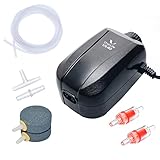
- Steady Output: Max Air Flow Rate: 64 GPH; Pressure: 0.016 MPa; Power: 4 W. Perfect for aeration in 10 - 100 gallon fresh water and marine aquariums.(The data is measured with experimental equipment and may deviate slightly from the actual data. The air volume may be insufficient due to the blocked air intake cotton. Please replace the cotton yourself if the air volume is insufficient.)
- Adjustable Air Flow: Feature a rotary knob to control the amount of air for dual outputs, allowing for your desired air flow to fully oxygenate your fish tank.
- Quiet Operation: The pump emits 25 dB sound under the “Low” mode and maximum 45 dB noise like the hum of a refrigerator under the highest air flow.
- 2 Air Stone Discs: Produce lots of dense medium bubbles bursting into the surface of water steadily. A great way to aerate your tanks and enliven the aquatic life.
- Pump Accessories: Include 2 air stones, 6.5-foot airline tubing, 2 check valves and 2 connectors. Complete accessories to build the basic aeration setup in your tank.
The path of gill respiration
- Water enters the fish’s mouth or otherwise reaches the gills, depending on the fish’s ventilation strategy.
- Water moves across the gill filaments and lamellae.
- Dissolved oxygen diffuses from the water into blood in the lamellae.
- Blood carries oxygen to the fish’s tissues.
- Blood returns carrying carbon dioxide produced by the tissues.
- Carbon dioxide diffuses from blood into water, which then flows away from the gills.
Why does blood flow opposite to water in fish gills?
In countercurrent exchange, blood and water flow in opposite directions across the lamellae. As water loses oxygen along the exchange surface, it continues to meet blood with a lower oxygen level, so oxygen can keep diffusing into the blood. This opposing flow helps maintain a gradient over more of the surface than same-direction flow would. The University of Tennessee’s countercurrent-system resource explains this gradient.
How do fish move water over their gills?
Many bony fish use buccal pumping: coordinated movements of the mouth and gill-cover chamber move water across the gills and toward the opercular opening. Some fast-swimming fish, including sharks and tunas, can use ram ventilation, in which swimming helps drive water over the gills. These are examples of different strategies, not a rule that every fish must swim continuously. The University of Hawaiʻi at Mānoa describes these fish structures and ventilation methods.
Rank #2

- Accessories Included: Come with 6.5-foot airline tubing, an air control valve, 4 suction cups, a straight and a T-shape connectors and a check valve. Air pump not included.
- Fine Sponge Filtration: The aquarium sponge filter provides mechanical and biological filtration and traps debris or wastes without sucking up your fish, keeping a crystal clear water tank.
- Mini sponge filter: It measures 2" D x 4.8" H. Fit for 5 - 10 gallon small fish tanks. Suitable for the breeding and feeding of various ornamental fish, shrimp or fry.
- Easy to Clean: The sponge filter can be easily detached for cleaning the dirt. Rinse it every 2 -4 weeks with aquarium water ONLY. Avoid washing it in tap water!
- Quiet Aeration: Air powered and causing no disturbance to your daily life. Do squeeze the sponge in the water to remove all trapped air and make the filter sink to the bottom.
What else do fish gills do besides exchange gases?
Gills also have roles in osmoregulation—the control of water and salts—and in ion balance and excretion. Freshwater and marine fish face different salt and water-regulation challenges, and species do not all use identical mechanisms. The University of Wisconsin–Madison’s explainer discusses these additional gill functions.
Independent reader supportYour contribution helps us test, update, and keep practical guides available for everyone.Frequently Asked Questions
Do fish get oxygen by breaking apart water molecules?
No. Fish use oxygen gas already dissolved in water. It diffuses across the gill lamellae into the blood.
Rank #3

- Multi-layer Fine Sponge: Provide mechanical and biological filtration and trap debris or wastes without sucking up your fish. Keep fish tanks crystal clear and healthy.
- Further Cleaning: The gravels inside absorb excess damaging substances and release trace elements. And the ceramic rings can cultivate beneficial substances. Always keep water fresh.
- For 50 Gal Tanks: Measure 3.1" R x 6" H. Fit for 20-50 gallon fish tanks. You can change the sponge sequence at will and customize the filter materials according to the breeding density of the fish.
- Quiet Aeration: Air powered and cause no disturbance to your daily life. The wide duck-billed air outlet port brings more bubbles to promote oxygen circulation.
- Easy to Clean: The filter can be easily detached for cleaning. Rinse the sponges every 2 to 4 weeks with aquarium water ONLY. Avoid soaking or washing them in tap water! Replace the white sponge every 2-3 months!
Why do fish need water to flow over their gills?
Water flow supplies dissolved oxygen to the exchange surfaces and carries away carbon dioxide. The thin lamellae and nearby blood allow the gases to diffuse between water and blood.
Do all fish breathe through their gills in the same way?
No. Many bony fish pump water with coordinated mouth and gill-cover movements, while some swimmers use ram ventilation. Ventilation strategies vary among fish.
Rank #4
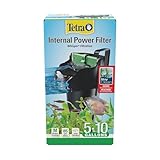
- INTERNAL POWER FILTER: Tetra Whisper Internal Power Filter for 5- to 10-gallon aquariums uses medium Whisper BioBag filter cartridges that are easy to change.
- QUIET 85 GPH MOTOR: The internal pump efficiently filters up to 85 gallons per hour.
- POWERFUL FILTRATION: Water flows through the cartridge floss, trapping debris and fish waste, while Ultra-activated carbon helps remove odor and discoloration.
- SPACE-SAVING DESIGN: Your aquarium can be 1” from the wall with the internal filter designed to clip directly on your aquarium wall and be hidden by décor.
- EASILY ADJUSTABLE: Adjustable clip allows for a variety of setups to easily adjust to high or low water levels.
What is countercurrent exchange?
It is the opposing movement of water and blood across the gill exchange surface. This arrangement helps keep an oxygen gradient available along the lamellae so oxygen can continue diffusing into the blood.
Quick Recap
Best Value
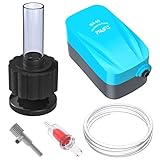
- Fine Filtration Set: Driven by 40 GPH air pump, the sponge filter (1.5" D x 3" H) produces dense bubbles to increase oxygen content. Also trap and break down impurities to keep your tank crystal clear.
- Adjustable Air Flow: The air control valve is great to be used to regulate the oxygen volume. Easy to increase or slow down the air flow by simply twisting the knob.
- Compact Air Pump: Tiny size of 3.3" L x 1.8" W x 1.6" H. Perfect for 3 - 10 gallon small fish tanks. Greatly aerate your aquarium to promote the health of aquatic lives.
- Quiet Aeration: Air powered and causing no disturbance. And the pump gives out noise less than 45 dB like the hum of a refrigerator due to the 4 shockproof rubber feet.
- Other Accessories: Include 5-foot standard airline tubing and a non-return valve. Complete accessories to build the basic aeration setup in your aquarium.
Product prices and availability are accurate as of the date/time indicated and are subject to change. Any price and availability information displayed on Amazon at the time of purchase will apply.
Free tools Windows power users keep installed
One-click scans. No signup required.




