You can’t confirm internal parasites from a fish’s appearance or poop alone. Persistent weight loss, poor appetite, lethargy, poor growth, pale or stringy feces, abdominal changes, or unexplained deaths are reasons to investigate—but several other illnesses and water problems can cause the same signs. A fresh sample examined by a veterinarian or diagnostic laboratory provides much stronger evidence than visual guesswork.
Signs that may point to internal parasites
Internal parasites can interfere with digestion or nutrient absorption, but their signs overlap with other diseases and husbandry problems. Concern rises when symptoms persist, worsen, or affect more than one fish.

- Weight loss or wasting: A fish may lose condition even while eating. Weight loss and reduced appetite are associated with some internal flagellates and metazoan parasites, but they are not specific to parasites.
- Reduced appetite, lethargy, or poor growth: These signs warrant attention, especially when ongoing, but can also result from poor water quality, nutrition problems, bacterial disease, or other pathogens.
- Pale, white, or stringy feces: This appearance can accompany intestinal irritation or parasites, but it does not prove that worms or other parasites are present.
- Abdominal changes: A swollen or otherwise abnormal abdomen can have several causes. It is not enough to identify an intestinal parasite.
- Unexplained deaths: Repeated losses are urgent evidence that something in the system needs investigation, not a parasite diagnosis on their own.
Merck Veterinary Manual describes signs across different parasite groups, including weight loss and anorexia in some internal infections. It also notes that fresh smears or biopsies containing living parasites are often diagnostic.
Does white stringy poop mean worms?
No. White or clear stringy feces are suggestive at most; appearance alone cannot tell whether a fish has worms, protozoa, intestinal irritation, or another problem. Microscopic examination of a fresh sample is more useful than judging color or shape.
Free tools Windows power users keep installed
One-click scans. No signup required.
#1 Best Overall
Timing matters. UF/IFAS Extension warns that feces left in aquarium water for even a few minutes may acquire free-living nematodes that are not parasites of the fish. Its guidance is to examine absolutely fresh feces.
Internal signs versus gill or skin signs
Flashing, excess mucus, rapid breathing, and swollen gill covers can suggest skin or gill involvement. They should not automatically be labeled internal parasites. A fish can also show more than one problem at once, so a clinician may need to examine skin, gills, feces, or tissue depending on the symptoms.
Rank #2
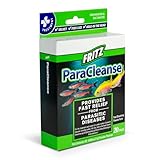
- Broad-Spectrum Parasite Treatment: Fritz ParaCleanse is expertly formulated to treat a wide range of parasitic diseases in aquarium fish, including velvet (Oodinium), hole-in-the-head disease (Hexamita & Spironucleus), fish lice, and gill & skin flukes (Dactylogyrus & Gyrodactylus), ensuring a healthy environment for your fish
- Safe for both freshwater and saltwater systems, this treatment does not, harm plants, invertebrates, or uninfected fish
- Dual Active Ingredients: Containing Metronidazole and Praziquantel, Fritz ParaCleanse is effective against a variety of common parasites in fish but also some internal bacterial infections
- User-Friendly Dosing: The pre-measured easy dosing packets simplifies the application process. Bulk jars are also available for larger systems
- Specific Treatment Indications: While highly effective against specific parasites, it is important to note that ParaCleanse does not treat Nematodes or Roundworms. For these, Fritz Expel-P is recommended
Lumps, nodules, hemorrhage, necrosis, cysts, or granulomas can occur with some nematode infections, according to UF/IFAS. These findings still need species-level diagnosis because worm-like lesions can have other causes.
How a veterinarian or lab checks for parasites
The appropriate test depends on the suspected parasite and the fish’s signs. A clinician may examine a fresh fecal wet mount, perform fecal flotation, inspect skin or gill samples, visualize a parasite directly, or examine tissue from a biopsy or necropsy.
Crashes, No Sound, or Screen Glitches?
Random freezes, missing sound and display glitches usually trace back to one bad driver. Find and replace yours safely.Free scan · under a minuteWindows Errors? Fix Them Before They Spread
Repair common Windows errors and clear accumulated junk for a smoother, more stable PC - no reinstall needed.Free scan · no reinstallRank #3

- Bulk Pack Convenience: Includes three 500ml bottles for extended care.
- Fish and Plant Safe: Ideal for use in both freshwater and marine aquariums.
- Non-Invasive Treatment: Helps maintain aquarium balance without harsh chemicals.
- Supports Aquatic Health: Assists in fostering a healthy environment for aquatic life.
Cornell’s fish health guidance describes fecal flotation as a broad test for protozoan and worm infections. It recommends individual fresh samples kept refrigerated; results are reported as parasites identified or no parasites detected. A negative result means none were detected in that sample, not that every possible cause has been ruled out.
- Contact an aquatic veterinarian or diagnostic laboratory. Ask what sample and handling method they want before collecting it, because the right test varies with the suspected organism.
- Collect feces immediately after the fish passes them. Use a clean container or follow the clinic’s collection instructions; do not scoop old material from the substrate.
- Keep samples separate by fish when possible. Cornell recommends individual fresh samples and refrigeration for fecal flotation.
- Record the fish’s signs. Note appetite, behavior, weight or body-condition trend, onset, tankmates affected, and recent changes to water or husbandry. A photograph can help document changes but does not replace testing.
For an unwell fish, do not delay urgent veterinary care just to obtain a sample. Ask the veterinarian how to proceed if a fresh sample is not readily available.
Rank #4

- Eradicates ectoparasites, fungal, bacterial, viral lesions
- Safe alternative to formalin
- For marine and freshwater use
- Parasite control
What to do while arranging diagnosis
- Check the environment first. Test ammonia and nitrite, check temperature and oxygenation, and review recent husbandry changes. Water-quality stress can mimic disease or make a sick fish worse.
- Use a cycled quarantine tank if feasible. Separating the fish can make observation and treatment easier and reduce exposure to tankmates. Avoid moving a fish into an uncycled or otherwise unsuitable setup.
- Keep equipment separate. Use dedicated nets and siphons for quarantine; disinfect and dry equipment between systems to reduce spread.
- Document and collect. Photograph the fish and any fresh feces, track appetite and condition, and arrange a fresh sample for a veterinarian or lab.
- Do not stack medications or repeat courses blindly. A wrong diagnosis, unsuitable product, or incorrect route can make treatment ineffective or harmful.
Why the treatment depends on the parasite
There is no symptom-only “best medicine.” Different parasite groups, fish species, and product labels call for different decisions. Merck lists praziquantel for susceptible cestodes (tapeworms) and monogeneans (flukes), and metronidazole for some internal flagellates in non-food fish. These are not interchangeable treatments, and neither should be chosen solely because feces look stringy.
In the United States, the FDA announced on March 6, 2026 that Prazi-Med, a praziquantel powder for immersion, was indexed for susceptible internal flukes and tapeworms in ornamental finfish, with exclusions for Callichthyidae and Clariidae catfish. The FDA described it as “the first indexed praziquantel product for use in fish.” That scope does not mean it treats every parasite or every fish; consult the current FDA information and product label for the authorized use and restrictions.
Best Value

- Prevent nasty parasites from your Discus, Angel fish and other prized aquarium fish. It is harmless to most fresh water tropical fish.
- Flubendazole is the effective main active ingredient, and works differently to other Fluke treatments by gently starving the parasite; making this product perfectly safe for regular usage.
- Wormer Plus cleverly balances out its ingredients making very little (if any) difference to PH when using wormer plus.
- Safe to use on most tropical fish and salt water fish. Will not harm plants, or chemical filtration. Can be used in conjunction with other medications. No need to remove or unplug your UV sterilizer (just remove any activated carbon for full effect).
- Effective for use against Gill Flukes, Body Flukes, Parasites, Intestinal Helminths. Including Tapeworm, Nematodes (Roundworms), Planaria (Flatworms), Capillaria, Camallanus Nematodes, Metacercaria, Sanguinicola and Intestinal Protozoa. It is also an effective in eradicating pest snails from your tank.
Before any medication, confirm the likely parasite group, species restrictions, delivery route, and whether the fish is ornamental or intended for food. Do not use a product in food fish unless specifically authorized. Ask an aquatic veterinarian for guidance when illness is severe, the fish is valuable or a fry, the tank contains multiple species, or the diagnosis is uncertain. Some parasite life stages or locations in the fish may not be reached by the same treatment route.
When to seek veterinary help promptly
Contact an aquatic veterinarian or fish diagnostic service when weight loss, appetite loss, lethargy, poor growth, abnormal feces, or deaths persist or worsen; when multiple fish are affected; or when you see lesions, hemorrhage, cysts, or severe breathing changes. Testing is especially important before treating a mixed-species tank, a food fish, or a fish with a condition that could have several causes.
Quick Recap
Product prices and availability are accurate as of the date/time indicated and are subject to change. Any price and availability information displayed on Amazon at the time of purchase will apply.




