Open-ocean fish farming grows marine fish in engineered cages or other containment systems placed in deep, exposed water. Hatcheries produce the juveniles, operators transfer them to sea pens or closed systems, and crews manage feeding, oxygen, fish health, nets, moorings, weather, waste, and harvest until the fish reach market size.
The “open-ocean” label does not describe one fixed distance from land. It generally means that the farm experiences substantial wind, waves, currents, and operational exposure, so its cages, vessels, communications, and safety procedures must work in demanding sea conditions. That exposure can improve water exchange and reduce some nearshore conflicts, but it also makes the farm more expensive, difficult to maintain, and potentially hazardous.
As an Amazon Associate I earn from qualifying purchases.
What makes a fish farm “open-ocean”?
Open-ocean fish farming is also called offshore aquaculture, offshore mariculture, or exposed aquaculture. Unlike a sheltered coastal farm, an exposed farm is designed around stronger currents, larger waves, deeper water, more variable weather, and longer travel times for workers and service vessels.
There is no universal rule that an offshore farm must be a particular number of miles from shore. A relatively nearshore site can still be considered offshore if it is highly exposed and requires offshore-grade equipment. Conversely, a distant site may not provide the same level of exposure in every direction. The site’s bathymetry, currents, wave climate, storms, and access conditions matter more than distance alone.
#1 Best Overall
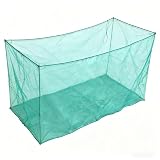
- 0.3cm Mesh Size Design: Features a tight 0.3cm mesh that prevents small fry, shrimp, and crayfish from escaping while keeping predators out. The smooth PE netting won’t damage fish fins or scales, providing a safe, secure environment for your aquatic animals
- Variety of Size Options for All Needs: Available in 6 sizes to suit different water bodies and aquaculture needs: 1x1x1m, 2x1x1m, 2x1x1.5m, 2x1x2m, 3x1x1m, and 3x1x2m. Whether you’re setting up a small backyard pond or a larger commercial farm, there’s a perfect fit for you
- Open-Top Structure: The open-top design offers unobstructed access for feeding, cleaning, and monitoring your fish without the hassle of a lid or float system
- Easy Installation: Each corner has a tie-off point for secure attachment to posts, docks, or shorelines. No tools are required—simply anchor the fish cage in place, and it will stay stable even in moderate water currents
- Collapsible and Multifunctional Use Cases: Lightweight and comfortable for easy carrying. Great for fish farming, temporarily holding caught fish, raising fry, protecting small fish from predators, or setting up aquaponics systems in ponds, lakes, and tanks.
Most farms use one of two broad containment approaches:
- Open-net cages: Netting retains the fish while seawater flows continuously through the enclosure. Feed and fish waste are managed in the surrounding marine environment.
- Closed or partially closed containment: A barrier separates the cultured water from the surrounding sea to a greater degree. These systems need additional pumping, filtration, treatment, oxygenation, or structural equipment, depending on their design.
Open-net cages are the more familiar marine finfish technology. Closed systems can address some escape, disease, and discharge concerns, but they are not simply open-net cages with a tighter cover: their water-handling and energy requirements are substantially different.
How the production cycle works
1. Broodstock and hatchery production
The process begins with broodstock, eggs, larvae, or juvenile fish. In a hatchery, operators manage spawning, egg handling, larval feeding, grading, water quality, and health protocols. Vaccination may be used where it is appropriate for the species and local production system.
The Tool Desk
Outbyte Driver Updater FREEScan for outdated or missing drivers - takes under a minuteDriver Scan →Outbyte PC Repair FREERepair Windows errors before they cause bigger problemsFix Now →The goal is to produce robust, uniform fingerlings that can survive transport and adapt to marine grow-out. Hatchery production is important because the offshore cage is primarily a grow-out environment; it is not normally where the earliest and most vulnerable life stages are raised.
2. Nursery rearing and transfer to sea
Juveniles are generally raised in a controlled nursery before being moved to the offshore farm. The transfer point depends on the species, fish size, health status, water temperature, transport capacity, and conditions at the receiving site.
Before an operator can formally develop a U.S. offshore project, permitting authorities may require information about the proposed species, business plan, gear, location, and operating methods. This information helps agencies evaluate navigation, protected resources, water quality, and other potential interactions.
3. Stocking a cage
Fish are placed in a net pen, rigid cage, flexible cage, semi-submersible structure, or another containment system. Cages may be circular or square, floating or partly submerged, and may be connected by walkways or supported by a larger service platform.
Recommended Free Tools
Stocking density has to balance production goals with fish health, oxygen availability, water exchange, behavior, waste loading, and the cage’s structural capacity. The exact number of fish a cage can hold is not universal: it depends on species, fish size, local currents, cage volume, dissolved oxygen, temperature, feed management, and permit conditions.
4. Feeding and growth
Feed may be stored in silos and blown through pipes to the cage, dispensed from a surface buoy, or delivered by a service vessel. Automatic feeders and underwater cameras can help operators determine whether fish are eating and adjust delivery.
Feeding decisions account for biomass, fish size, appetite, temperature, current speed, oxygen, and forecast weather. Overfeeding wastes feed and adds uneaten material to the water and seabed. Underfeeding can slow growth and may increase competition or welfare problems. The practical objective is to deliver enough feed for healthy growth while minimizing waste.
5. Husbandry, inspection, and monitoring
Routine operations continue throughout the grow-out period. Crews and remote systems may monitor:
Do these 3 things before closing this tab:
1Clear out junk files and repair common Windows errors2Fix the driver behind crashes, sound loss and screen glitches3Repair Windows errors before they cause bigger problems- fish behavior, appetite, growth, and mortality;
- temperature, dissolved oxygen, currents, and visibility;
- net integrity, abrasion, holes, and deformation;
- biofouling on netting and structural components;
- predators, seabirds, marine mammals, and wild-fish interactions;
- mooring loads, connectors, walkways, and buoyancy systems; and
- weather forecasts, wave conditions, and safe vessel-access windows.
Cameras, environmental sensors, remotely operated vehicles, divers, workboats, and automated alerts can support these tasks. Net inspection is a core production and environmental-control activity, not a cosmetic maintenance job. A damaged or heavily fouled net can allow escapes, restrict water exchange, stress fish, increase drag, and alter the farm’s waste footprint.
Rank #2
- 0.3cm Mesh Size Design: Features a tight 0.3cm mesh that prevents small fry, shrimp, and crayfish from escaping while keeping predators out. The smooth PE netting won’t damage fish fins or scales, providing a safe, secure environment for your aquatic animals
- Variety of Size Options for All Needs: Available in 6 sizes to suit different water bodies and aquaculture needs: 1x1x1m, 2x1x1m, 2x1x1.5m, 2x1x2m, 3x1x1m, and 3x1x2m. Whether you’re setting up a small backyard pond or a larger commercial farm, there’s a perfect fit for you
- Open-Top Structure: The open-top design offers unobstructed access for feeding, cleaning, and monitoring your fish without the hassle of a lid or float system
- Easy Installation: Each corner has a tie-off point for secure attachment to posts, docks, or shorelines. No tools are required—simply anchor the fish cage in place, and it will stay stable even in moderate water currents
- Collapsible and Multifunctional Use Cases: Lightweight and comfortable for easy carrying. Great for fish farming, temporarily holding caught fish, raising fry, protecting small fish from predators, or setting up aquaponics systems in ponds, lakes, and tanks.
6. Harvest and transport to shore
When fish reach market size, crews usually crowd them within the cage and pump or otherwise transfer them to a harvest vessel or transport system. The fish are then chilled or iced, processed, and moved through the cold chain to shore and onward to buyers.
Harvesting an exposed farm depends on more than fish size. Operators also need a suitable vessel, functioning pumps and cranes, fuel, processing or transport capacity, trained workers, and a sufficiently calm and safe weather window. A farm farther offshore has greater exposure to vessel delays, fuel costs, mechanical problems, and weather-related downtime.
Why move fish farms offshore?
More available ocean space
Nearshore waters are often crowded with fishing, shipping, tourism, recreation, conservation areas, ports, and coastal development. Moving a farm into deeper or more exposed water can reduce some direct conflicts with shoreline uses.
It does not eliminate ocean-use conflicts. Offshore farms may interact with commercial fishing, navigation routes, military activities, protected habitats, marine mammals, historic sites, and other users. Siting is therefore a process of reducing and managing conflicts, not simply moving them out of sight.
Greater water exchange
Currents can disperse dissolved and particulate wastes more effectively than poorly flushed sheltered sites. This may reduce the buildup of material immediately beneath a cage, but dilution is not the same as zero impact. The farm still adds a biological load to the receiving environment, and strong currents can transport that load farther.
Potentially favorable environmental conditions
Offshore locations may offer deeper water, better circulation, and less exposure to some forms of coastal pollution. Whether those advantages exist depends on local water temperature, oxygen, bathymetry, currents, storm patterns, seabed conditions, and the capacity of the ecosystem to assimilate waste.
A trade-off rather than an automatic sustainability upgrade
The same exposure that improves circulation can increase wave loads, mooring forces, maintenance requirements, worker risk, insurance costs, fuel use, and weather downtime. A farm can be well designed and carefully managed yet still face more severe consequences when equipment fails far from a protected harbor.
The meaningful question is not simply whether a farm is “offshore.” It is whether the species, cage, stocking level, feed system, monitoring program, waste load, and operating plan are appropriate for that particular site.
The equipment that keeps an offshore farm operating
Cages and nets
Cages can be circular, square, rigid, flexible, floating, semi-submersible, or designed to spend part of the production cycle below the surface. The net must retain the target species while allowing sufficient water exchange and resisting tearing, abrasion, ultraviolet exposure, seawater corrosion around attached components, and predator pressure.
Materials used in marine netting can include nylon, polyethylene, high-density polyethylene, and specialized predator-resistant designs. The correct choice depends on fish size and behavior, mesh requirements, site exposure, fouling pressure, inspection practices, and the consequences of a containment failure.
Moorings and anchors
Mooring lines, anchors, bridles, collars, connectors, and seabed attachments transfer wave and current loads away from the cage. Engineers must account for extreme storms as well as repeated loading over time, known as fatigue. They also have to consider how current deforms the net and changes the cage’s effective shape and drag.
What’s actually slowing this PC down?
Pick the symptom - the matching free tool is one click away.
A cage that performs adequately in a sheltered bay may be unsuitable for an exposed site. Offshore design therefore involves the complete system—cage, net, mooring, anchor, seabed, service vessel, and maintenance procedure—rather than the cage alone.
Rank #3
- 0.3cm Mesh Size Design: Features a tight 0.3cm mesh that prevents small fry, shrimp, and crayfish from escaping while keeping predators out. The smooth PE netting won’t damage fish fins or scales, providing a safe, secure environment for your aquatic animals
- Variety of Size Options for All Needs: Available in 6 sizes to suit different water bodies and aquaculture needs: 1x1x1m, 2x1x1m, 2x1x1.5m, 2x1x2m, 3x1x1m, and 3x1x2m. Whether you’re setting up a small backyard pond or a larger commercial farm, there’s a perfect fit for you
- Open-Top Structure: The open-top design offers unobstructed access for feeding, cleaning, and monitoring your fish without the hassle of a lid or float system
- Easy Installation: Each corner has a tie-off point for secure attachment to posts, docks, or shorelines. No tools are required—simply anchor the fish cage in place, and it will stay stable even in moderate water currents
- Collapsible and Multifunctional Use Cases: Lightweight and comfortable for easy carrying. Great for fish farming, temporarily holding caught fish, raising fry, protecting small fish from predators, or setting up aquaponics systems in ponds, lakes, and tanks.
Feed and service systems
A working farm may require feed blowers, silos, surface buoys, cameras, workboats, harvest pumps, cranes, generators, navigation lights, weather stations, and radio or satellite communications. Remote sites may also need backup power, redundant communications, emergency supplies, and storm procedures for securing equipment or evacuating personnel.
Distance changes the meaning of “routine.” A small failure in a sheltered farm may be fixed quickly from a nearby dock. Offshore, the same failure can require a vessel mobilization, a weather window, spare parts, and a longer period of elevated risk.
Monitoring and inspection equipment
Environmental sensors can track temperature, dissolved oxygen, currents, and other site conditions. Cameras help assess feeding and fish behavior, while divers and remotely operated vehicles can inspect net panels, moorings, anchors, and underwater structures.
Biofouling—organisms growing on nets and equipment—is a particularly important problem. Fouling can reduce water exchange, add weight, increase drag, obstruct inspection, and change the forces acting on the cage. Operators may need cleaning, net changes, antifouling strategies, or other controls permitted for the location and system.
Want a technical reference? For readers who want a technical reference on cage design and operation, Cage Aquaculture, 3rd Edition is a book recommendation rather than consumer equipment.
Which fish can be farmed offshore?
Species selection depends on water temperature, oxygen tolerance, growth rate, hatchery expertise, feed requirements, market demand, local ecological risk, and the species’ behavior in the chosen equipment.
Species discussed in offshore research and commercial development include:
Free tools Windows power users keep installed
One-click scans. No signup required.
- salmonids;
- cobia;
- barramundi;
- seabream;
- snapper; and
- other marine finfish suited to local conditions.
These examples are not interchangeable. A tropical species that grows well in warm offshore water may not tolerate a cold, storm-exposed site. Likewise, a species with strong swimming behavior or a large adult size may impose different requirements on net strength, cage volume, feeding, and moorings.
Why “tuna farming” can mean different things
Some operations described as tuna farming are more accurately called ranching or fattening. In those systems, wild-caught juvenile or immature tuna are transferred to cages and grown or fattened there. That is different from a closed-cycle aquaculture operation in which broodstock produce eggs and the entire life cycle is managed through hatchery production.
The distinction matters when evaluating sustainability. A cage can reduce some grow-out risks while still depending on wild fish inputs, so the effect on wild stocks must be considered separately from the farm’s containment performance.
Surface cages versus submerged cages
| Feature | Surface cages | Submerged cages |
|---|---|---|
| Exposure | Remain at or near the surface and experience surface waves directly. | Can be lowered below the most energetic surface conditions for some weather events. |
| Access | Generally easier for feeding, inspection, maintenance, and harvest. | Requires reliable buoyancy, lifting, communications, and procedures for raising the cage. |
| Potential advantages | Established technology and comparatively straightforward access. | May reduce exposure to some surface storms, parasites, and coastal conflicts. |
| Challenges | Higher exposure to surface storms, fouling, predators, and some coastal interactions. | More complex feeding, monitoring, oxygen management, fish welfare, and maintenance. |
Surface cages remain the dominant marine finfish technology, but submerged systems are being developed and tested. Submergence is not automatically safer or more sustainable. Fish physiology and buoyancy, oxygen conditions at depth, feeding behavior, visibility, access, and emergency recovery all have to be managed. A submerged cage may also need stronger or more sophisticated moorings and a dependable method for returning to the surface during inspection or harvest.
PC Slower Than It Used to Be?
A free scan shows the junk files, broken settings and background clutter dragging Windows down - then fixes them in one click.Free scan · Windows 10 & 11Crashes, No Sound, or Screen Glitches?
Random freezes, missing sound and display glitches usually trace back to one bad driver. Find and replace yours safely.Free scan · under a minuteWhat environmental effects can occur?
Open-ocean farms can have environmental benefits at one location and environmental costs at another. Effects depend on site conditions, species, feed, farm size, stocking, cage design, operating practices, and the number of farms in the area.
Rank #4
- 0.3cm Mesh Size Design: Features a tight 0.3cm mesh that prevents small fry, shrimp, and crayfish from escaping while keeping predators out. The smooth PE netting won’t damage fish fins or scales, providing a safe, secure environment for your aquatic animals
- Variety of Size Options for All Needs: Available in 6 sizes to suit different water bodies and aquaculture needs: 1x1x1m, 2x1x1m, 2x1x1.5m, 2x1x2m, 3x1x1m, and 3x1x2m. Whether you’re setting up a small backyard pond or a larger commercial farm, there’s a perfect fit for you
- Open-Top Structure: The open-top design offers unobstructed access for feeding, cleaning, and monitoring your fish without the hassle of a lid or float system
- Easy Installation: Each corner has a tie-off point for secure attachment to posts, docks, or shorelines. No tools are required—simply anchor the fish cage in place, and it will stay stable even in moderate water currents
- Collapsible and Multifunctional Use Cases: Lightweight and comfortable for easy carrying. Great for fish farming, temporarily holding caught fish, raising fry, protecting small fish from predators, or setting up aquaponics systems in ponds, lakes, and tanks.
Waste and seabed effects
Uneaten feed and fish feces can add suspended solids, nutrients, ammonia, and biochemical oxygen demand to the water. Some material settles beneath or near cages, where it can affect seabed chemistry and organisms. Strong currents may disperse waste, but can also distribute it over a wider area.
Responsible assessment therefore looks at the receiving environment’s assimilative capacity: how much loading it can absorb without unacceptable changes. Baseline surveys before installation and continuing monitoring after production begins help determine whether predictions are accurate. Multiple farms must also be evaluated for cumulative effects.
Medicines and chemicals
Depending on the species and local rules, aquaculture may involve pharmaceuticals, disinfectants, or antifouling chemicals. Their use, discharge, and environmental risk are regulated differently by location and product. Waste-management and discharge controls are part of the farm’s environmental plan.
Quick wins for a faster PC:
Scan for outdated or missing drivers - takes under a minuteDriver Scan →Repair Windows errors before they cause bigger problemsFix Now →Disease and parasites
Pathogens or parasites can move between farmed and wild fish. Risk management can include hatchery health controls, stocking and fallowing practices where applicable, observation of fish behavior and mortality, veterinary oversight, net hygiene, and reporting and response procedures.
Escapes
Fish can escape through torn nets, failed connectors, storm damage, handling incidents, or other equipment failures. Escapees may compete with wild fish, prey on them, transmit disease, or interbreed with related populations. The risk depends partly on the farmed species and its genetic relationship to local wild stocks.
Containment safeguards include appropriate net selection, predator-resistant designs where needed, frequent inspections, storm preparation, mooring maintenance, inventory checks, and a documented escape-response plan. A plan should identify how an operator detects, reports, contains, and recaptures escaped fish where possible.
Wildlife and marine debris
Cages can attract wild fish and interact with marine mammals, seabirds, and predators. Nets, ropes, plastic components, and damaged equipment also create marine-debris risks. Wildlife deterrence and debris-prevention measures must be designed for the species and site rather than assumed to work universally.
What’s actually slowing this PC down?
Pick the symptom - the matching free tool is one click away.
Integrated multi-trophic aquaculture
Integrated multi-trophic aquaculture, or IMTA, combines fed species such as finfish with extractive species such as shellfish or seaweed. The extractive species may use some nutrients generated by the finfish operation.
IMTA is not a universal waste-removal solution. Its performance depends on the distance between species, local hydrodynamics, species biology, farm capacity, and the scale of nutrient production. It can complement—not replace—good siting, feed control, monitoring, and discharge management.
Independent reader supportYour contribution helps us test, update, and keep practical guides available for everyone.How is open-ocean fish farming regulated in the United States?
U.S. offshore aquaculture projects may involve federal, state, territorial, and local authorities. The exact requirements depend on the location, species, structures, discharges, protected resources, and project scale.
Potential federal participants include NOAA Fisheries, the Environmental Protection Agency, the U.S. Army Corps of Engineers, and the U.S. Coast Guard, along with state or territorial agencies and other authorities. Reviews may consider:
Recommended Free Tools
- marine mammals;
- threatened and endangered species;
- essential fish habitat;
- water quality and discharges;
- historic places;
- national marine sanctuaries;
- navigation and vessel traffic; and
- cumulative environmental effects.
For projects in federal waters in the Pacific Islands region, the U.S. Exclusive Economic Zone generally begins three nautical miles from shore and extends to 200 nautical miles. That geographic description is region-specific in the permitting context; it should not be treated as a complete rule for every U.S. coast, territory, or project.
Best Value

- SPACIOUS 3D FLOATING FISH CAGE:Designed with a large three-dimensional structure, this floating fish cage provides ample space for fish and other aquatic species to swim comfortably while remaining safely contained. Ideal for temporary holding, breeding, and aquaculture applications.
- HIGH-BUOYANCY PVC FLOAT SYSTEM:HIGH-BUOYANCY PVC FLOAT SYSTEM:Equipped with durable PVC floats that keep the cage securely floating on the water surface. The elevated floating design improves water circulation and oxygen exchange, helping create a healthier environment for aquatic animals.
- DURABLE FINE-MESH CONSTRUCTION:Made from high-strength mesh material with reinforced edges, the cage effectively prevents escapes while allowing continuous water flow. The fine mesh design helps protect fish fry and small aquatic species during breeding and grow-out stages.
- CONVENIENT DOUBLE-ZIPPER ACCESS:Features smooth dual zippers on the top opening for easy feeding, inspection, harvesting, and maintenance. The secure zipper closure helps prevent fish from escaping while providing quick access whenever needed.
- VERSATILE AQUACULTURE SOLUTION:Suitable for raising and temporarily holding fish, crabs, lobsters, shrimp, loaches, turtles, bait fish, and fry. Perfect for ponds, lakes, reservoirs, docks, fish farms, backyard aquaculture systems, and outdoor breeding projects.
National Pollutant Discharge Elimination System requirements may apply to aquaculture discharges, particularly for concentrated aquatic animal production facilities. Permits and environmental reviews may also require water-quality monitoring, waste-management procedures, net and containment standards, and escape-prevention and response plans.
In practical terms, an operator cannot select a cage and begin production first, then resolve the site later. The site, species, gear, business plan, environmental setting, and potential user conflicts help determine which consultations and approvals are needed.
Is open-ocean fish farming commercially mature?
The technology is technically demonstrated and commercially practiced in selected locations, but it is not a single standardized replacement for sheltered coastal aquaculture. Offshore farms remain highly dependent on local engineering, vessel logistics, weather, regulation, and market access.
Major cost and execution challenges include:
- designing cages and moorings for extreme waves and repeated loading;
- transporting feed, equipment, and workers by vessel;
- fuel, maintenance, insurance, and replacement parts;
- weather downtime and limited safe working windows;
- worker safety during transfers, storms, and heavy maintenance;
- net cleaning, cage inspection, and mooring repairs;
- fish health, biosecurity, and escape prevention;
- environmental monitoring and regulatory compliance; and
- reliable harvest, cold-chain, processing, and market access.
A proposed project called Pacific Ocean AquaFarms illustrates the scale that has been considered in the United States. An environmental-impact statement described submersible net pens off Southern California, with projected initial production of 2.2 million pounds per year and a possible expansion to 11 million pounds after environmental monitoring. Those figures are project projections, not evidence that every offshore farm will reach those outputs or that the same design will work in another region.
Globally, aquaculture is already a major food-production sector. The Food and Agriculture Organization reported that worldwide aquaculture production of aquatic animals exceeded 100 million tonnes in 2024. That total includes inland and coastal aquaculture, however, and cannot be used as a measure of open-ocean fish-farming production alone.
What determines whether an offshore farm works?
A successful operation has to align several systems at once:
- Biology: The species must tolerate the local temperature, oxygen, currents, depth, and production cycle.
- Engineering: Cages, nets, moorings, anchors, feeders, and communications must withstand normal and extreme conditions.
- Operations: Workers need safe access, dependable vessels, spare parts, weather plans, and emergency procedures.
- Environmental management: Feed, waste, disease, escapes, wildlife interactions, and debris must be monitored and controlled.
- Regulation: The operator must satisfy the requirements tied to the site, species, structures, discharges, and protected resources.
- Economics: The resulting fish must justify the costs of feed, labor, vessels, maintenance, insurance, permitting, processing, and weather-related delays.
Failures usually occur at the boundaries between these systems. A biologically suitable species may still be a poor choice if its behavior damages nets. A strong cage may still be uneconomic if vessels cannot reach it regularly. A well-flushed site may still cause unacceptable effects if biomass and feed loading exceed the local environment’s capacity.
Frequently Asked Questions
Does offshore fish farming always happen far out at sea?
No. “Offshore” has no single universal distance-from-shore definition. It generally refers to a farm exposed to substantial waves, wind, currents, and operational demands. Some exposed sites can be relatively close to shore, while more distant sites may differ greatly in their actual conditions.
Is open-ocean fish farming automatically more sustainable than coastal fish farming?
No. Offshore water exchange can disperse wastes and reduce some nearshore conflicts, but it can also increase construction, fuel, vessel, maintenance, safety, and monitoring costs. Environmental performance depends on the species, feed, stocking level, cage, site, waste load, escapes, disease controls, and cumulative effects.
How do offshore fish farms prevent fish from escaping?
Operators use species-appropriate netting, predator-resistant designs where needed, maintained moorings and connectors, frequent net inspections, storm procedures, inventory checks, and escape-response plans. No open-net system has zero escape risk, so prevention and rapid response are both important.
Are tuna farms based on hatchery-produced fish?
Not always. Some operations called tuna farming are more accurately ranching or fattening: wild-caught juveniles are placed in cages and grown or fattened there. That differs from closed-cycle aquaculture, in which hatcheries produce the fish through the full life cycle.
The Bottom Line
Bottom line: Open-ocean fish farming combines hatchery biology with offshore engineering. Fish are raised in cages while operators manage feed, oxygen, health, waste, biofouling, weather, moorings, vessels, and harvest logistics. Offshore conditions can create more space and better flushing, but they also make every failure more difficult and expensive to correct. Its environmental and economic performance is therefore site-specific—not guaranteed by the word “offshore.”
Quick Recap
Product prices and availability are accurate as of the date/time indicated and are subject to change. Any price and availability information displayed on Amazon at the time of purchase will apply.




