
Quick wins for a faster PC:
Scan for outdated or missing drivers - takes under a minuteDriver Scan →Clear out junk files and repair common Windows errorsFree Scan →Fix the driver behind crashes, sound loss and screen glitchesFind Drivers →Yes, dung beetles can help control livestock flies. By spreading, removing, and burying manure, they make cattle pats less suitable for fly larvae; some other dung insects also eat larvae. Feed-through insecticides can work their way into manure and expose these beneficial insects. A 2022 and 2024 comparison of grazing beef farms in New York found significantly lower dung-beetle abundance and diversity, plus fewer predatory dung insects, on farms using feed-through products. The result supports monitoring-led integrated pest management—not a blanket ban on every insecticide or a universal ranking of products.
Do dung beetles really help control flies?
Many pasture flies reproduce in fresh cattle manure. A female lays eggs in a pat, larvae develop there, and adults emerge to attack livestock or disperse to another animal. Dung beetles interrupt that cycle when they work the same pat.
As an Amazon Associate I earn from qualifying purchases.
- Pat burial: Tunnelers move portions of manure below the surface, where conditions are less suitable for many fly larvae.
- Pat spreading and removal: Rollers and dwellers break up or redistribute dung, drying it faster and reducing the intact breeding mass.
- Competition: Beetle adults and larvae consume or occupy resources that fly larvae would otherwise use.
- Predation: Predatory dung insects, including some hydrophilid beetles and rove beetles (Staphylinidae), can eat fly larvae.
Government guidance also links dung burial with fewer fly-breeding sites and fewer parasite stages, while the resulting soil channels improve nutrient return, water movement, and aeration. The amount of suppression varies with beetle species, weather, manure moisture, grazing pattern, and fly species. Extension guidance cautions that population-level effects of predators and parasitoids are not conclusive in every setting, so beetles are a valuable part of a program rather than a guaranteed stand-alone treatment.
Do these 3 things before closing this tab:
1Scan for outdated or missing drivers - takes under a minute2Repair Windows errors before they cause bigger problems3Fix the driver behind crashes, sound loss and screen glitchesOne scale illustration comes from Australia’s CSIRO: a single large cow pad can produce up to 3,000 bush flies in a fortnight. The figure concerns the bush fly, Musca vetustissima, and the page does not state a year; it should not be treated as a count for every fly or farm.
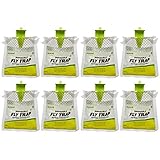
#1 Best Overall

- Eliminate Flies — This reusable fly trap catches and kills hundreds of common fly species, including house flies, stable flies, bottle flies, flesh flies, horse flies, and many more.
- Fast Results — Instead of chemicals or sprays, this trap lures flies with food-based attractant. Once inside, flies drown in the water added to the trap.
- Reusable — Reduce plastic waste by reusing this trap season after season! Simply dump the contents when full, rinse, and replace the used attractant with a refill packet to reuse this trap again and again.
- Outdoor Use Only – Once activated, these traps have a strong odor. Only use this trap outdoors, and at least 20 feet away from any living areas.
- Made in the USA – At RESCUE!, our goal is to design and manufacture the safest and most effective pest control solutions available. We proudly manufacture our products in the USA!
Do fly-control products harm dung beetles?
Feed-through insecticides are given to cattle and pass through the animal. Residues can remain in dung while beetles and other decomposers feed, tunnel, or reproduce in it. Exposure depends on the active compound, formulation, dose, how quickly it is excreted, residue persistence, beetle species and life stage, and local management.
The clearest recent evidence comes from the peer-reviewed study Feed-through insecticides for pest fly management on beef cattle pastures: impacts on dung-inhabiting Coleoptera. Researchers surveyed grazing beef farms in New York during May–September in both 2022 and 2024. They counted horn, face, and stable flies on cattle and sampled dung-inhabiting insects in pasture.
Farms using feed-through products had significantly lower abundance and diversity of dung beetles, including Onthophagus and Aphodius, than farms that did not use those products. Predatory dung insects, including Hydrophilidae and Staphylinidae, were also significantly less abundant. The abstract reports statistical significance but no percentage reduction, so there is no defensible single number for how many beetles every product eliminates.
What’s actually slowing this PC down?
Pick the symptom - the matching free tool is one click away.
This was a comparison of farms in one region and production system, not a randomized test of every insecticide, dose, cattle class, or livestock species. It shows an association under the conditions studied; it does not prove that all feed-through treatments have identical effects.
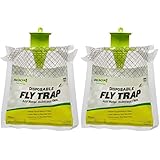
Rank #2
- DRAWS FLIES AWAY FROM YOUR SPACE - This outdoor fly trap uses a powerful attractant to lure flies away from patios, trash areas, and outdoor living spaces—helping reduce their presence where you spend time.
- EFFECTIVE ATTRACTANT FLY BAIT - Specially formulated bait activates with water and releases a scent that attracts common nuisance flies into the trap.
- EASY TO USE – JUST ADD WATER AND HANG - Open the trap, add water, and hang outdoors. This hanging fly catcher is designed for quick setup with no complicated steps.
- IDEAL FOR OUTDOOR PROBLEM AREAS - Use this outdoor fly trap around garbage cans, barns, kennels, farms, rural properties, and backyards where flies are most active.
- DISPOSABLE & MESS-FREE DESIGN - Once full, simply discard the trap—no need to handle flies or bait. Designed for convenient outdoor fly control.
What other studies add
A 2018 study record describes changes in dung-beetle functional assemblages with sustained parasiticide use in cattle farming. Another open-access 2018 study found increased adult dung-beetle mortality when beetles developed in dung containing deltamethrin compared with insecticide-free dung under the tested conditions. These findings reinforce that chemical and exposure route matter. They do not establish that every veterinary insecticide is equally harmful or that a product is safe simply because a different compound was tested.
Are feed-through fly treatments necessary for cattle?
Not automatically. Treatment should follow measured fly pressure, the fly species involved, animal health and production goals, and a locally appropriate threshold. In the New York comparison, horn flies rarely exceeded economic thresholds on farms not using feed-through products. Face flies, however, mostly exceeded thresholds even on treated farms. That pattern led the researchers to conclude that season-long feed-through use was not an integrated solution in that setting.
Those observations are not a universal prescription. Thresholds, climate, pasture layout, cattle breed, stocking rate, and neighboring herds can change pressure. A farm should not stop a treatment that is protecting animal welfare without discussing the decision with a veterinarian or extension specialist.
Free tools Windows power users keep installed
One-click scans. No signup required.
How to control pasture flies without harming beneficial insects
Use the following sequence to keep treatment proportional to the problem and reduce unnecessary manure exposure.
Rank #3
- DRAWS FLIES AWAY FROM YOUR SPACE - This outdoor fly trap uses a powerful attractant to lure flies away from patios, trash areas, and outdoor living spaces—helping reduce their presence where you spend time.
- EFFECTIVE ATTRACTANT FLY BAIT - Specially formulated bait activates with water and releases a scent that attracts common nuisance flies into the trap.
- EASY TO USE – JUST ADD WATER AND HANG - Open the trap, add water, and hang outdoors. This hanging fly catcher is designed for quick setup with no complicated steps.
- IDEAL FOR OUTDOOR PROBLEM AREAS - Use this outdoor fly trap around garbage cans, barns, kennels, farms, rural properties, and backyards where flies are most active.
- DISPOSABLE & MESS-FREE DESIGN - Once full, simply discard the trap—no need to handle flies or bait. Designed for convenient outdoor fly control.
1. Identify the fly before choosing a control
- Horn flies remain on cattle and feed repeatedly; count flies on representative animals rather than judging the whole herd from one heavily infested cow.
- Face flies gather around the eyes and face, where they can contribute to irritation and disease transmission.
- Stable flies often feed on lower legs and may be associated with feeding or resting areas.
- Bush flies and other regional species have different breeding patterns and thresholds.
Correct identification determines whether a manure-focused measure, an animal-directed application, a trap, or sanitation change is likely to address the actual source.
2. Monitor animals and manure on a schedule
- Choose a consistent group of cattle and inspect them at the same time of day.
- Record fly species, approximate numbers, irritation, bunching, reduced grazing, rubbing, or production changes.
- Inspect fresh pats for larvae and note whether beetles are tunneling or rapidly breaking pats apart.
- Compare observations with current local economic thresholds from a veterinarian or extension service.
- Treat only when pressure and animal impact justify it, then reassess whether numbers fall.
Keep records by date, pasture, weather, product, application route, and response. This prevents a calendar-based “treat all season” habit when pressure is intermittent.
3. Increase nonchemical removal of breeding habitat
Pasture management cannot eliminate every pat, but it can reduce concentrated breeding sites. Avoid creating wet, manure-rich areas around feeders and water points; move high-traffic resources when practical; and maintain grazing patterns that allow dung to dry. The goal is not to remove beetle habitat indiscriminately—beetles need dung—but to avoid conditions that produce persistent, crowded breeding patches.
Recommended Free Tools
4. Evaluate physical and biological options
Cornell coverage describes walk-through fly traps, shelter, and poultry as alternatives shared with participating farms. A walk-through trap can remove flies as cattle pass through, provided its placement and maintenance suit the herd’s movement. Shelter may alter where animals rest and where flies congregate. Poultry can disturb pats and consume larvae. Farmer Kate Marsiglio of Stony Creek Farmstead described her practice this way: “The chickens come through and scratch out the cow pies, spread them all out, and then eat the fly larvae.” That is a farm-specific example, not proof that poultry will replace treatment everywhere.
Rank #4

- For Big Fly Problems — Catch and kill up to 40,000 flies with the Big Bag Fly Trap. Perfect for outdoor areas, barns, stables, and yards where you need serious fly control.
- Fast Acting — This trap uses an attractant bait that flies can’t resist. Lured by the scent, flies enter the trap through the cap and drown in the water.
- Easy to Use — Follow the easy directions on the bag to expose the trap entrance. Add water to activate bait and hang the trap outside, at least 20 feet away from any living spaces.
- Outdoor Use Only – Once activated, these traps have a strong odor. Only use this trap outdoors, and at least 20 feet away from any living areas.
- Made in the USA – At RESCUE!, our goal is to design and manufacture the safest and most effective pest control solutions available. We proudly manufacture our products in the USA!
5. If chemicals are needed, target exposure
Ask a veterinarian or local extension specialist to match the active ingredient, label, timing, and route to the identified fly. Minnesota Extension advises considering selective insecticides, carefully chosen application locations, or foregoing insecticides when protecting beneficial insects is a priority. Cornell extension material discusses targeted equipment such as back rubbers, face rubbers, dusters, and direct application in situations where reducing residues in manure matters.
Targeting an application to the animal can reduce the amount entering manure compared with routine whole-herd feed-through use, but the actual risk depends on the label and compound. Do not assume that a topical, dust, rub, or injectable product is harmless to dung fauna. Follow withdrawal periods, dose limits, species restrictions, and disposal directions exactly.
Comparing management approaches
| Approach | Primary target | Manure exposure | What to check before use |
|---|---|---|---|
| Monitoring and threshold-based treatment | Fly pressure that is demonstrated on the farm | None by itself | Correct species identification, local threshold, animal impact, and follow-up counts |
| Walk-through trap | Adult flies moving on cattle | None | Cattle traffic, trap placement, maintenance, and whether the herd uses the route |
| Poultry disturbing pats | Larvae in manure | May reduce intact pats | Predator safety, flock management, disease precautions, and whether poultry can access the area |
| Back rubbers, face rubbers, or dusters | Flies on the animal | Potentially lower than feed-through exposure, but compound-dependent | Label directions, placement, refill or maintenance needs, and veterinary advice |
| Feed-through insecticide | Flies through an active ingredient excreted in manure | Directly relevant to dung fauna | Need for treatment, active ingredient, persistence, timing, thresholds, and local evidence |
No approach is universally best. Compare options by the fly species and pressure, whether the method acts on the animal or in manure, likely exposure of dung fauna, evidence that treatment is warranted, labor, farm layout, and legal label requirements.
Common mistakes and how to correct them
“More flies means more insecticide.”
Counts without species identification can lead to the wrong intervention. Correct the diagnosis first and use a threshold tied to animal impact.
Best Value
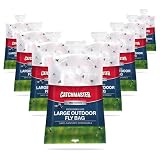
- DRAWS FLIES AWAY FROM WHERE YOU GATHER: A food-based lure pulls house flies, bottle flies, flesh flies, and blowflies toward the bag and away from your patio, deck, and doors. This is the scientifically proven food-based lure used by the Pros, for dependable Home & Family Protection.
- EXTRA-LARGE DISPOSABLE FLY BAG FOR HEAVY FLY PRESSURE: Each disposable bag holds up to 30,000 flies and is larger than comparable fly bags, so it keeps catching where smaller traps fill up fast. Great for barns, livestock, dumpsters, and trash areas.
- HANG IT 20 TO 30 FEET FROM WHERE PEOPLE GATHER: As the food-based bait activates it gives off a strong odor, and that odor is what pulls flies into the fly catcher. Place it downwind, away from where you sit, in a sunny spot for best results.
- JUST ADD WATER, THEN TOSS, WITH A NO-MESS LID: Unscrew the lid, add water to the fill line, and hang. When the bag is full of flies, close the lid and throw the whole thing away, with no emptying and no contact with flies.
- 8 Count: USE FOR LARGE YARDS AND FARMS: Ring a barn, stable, kennel, or property line and keep flies off the house at the lowest cost per bag. Great for agricultural environments. The disposable trap used by the Pros, designed with family and pets in mind.
“A feed-through product protects the herd all season.”
Season-long exposure can affect manure insects even when one target fly remains above threshold. Recheck whether the product is controlling the species causing the problem and whether pressure is seasonal.
“Dung beetles will solve the fly problem by themselves.”
Beetles work best as one component of integrated management. Weather, manure distribution, beetle activity, and fly biology can limit suppression.
“One study proves every insecticide is dangerous.”
The New York results concern farms using feed-through products, and the 2018 deltamethrin work concerns a particular compound and test conditions. Use the current product label and local veterinary or extension guidance for the decision in front of you.
The Tool Desk
Outbyte Driver Updater FREEFix the driver behind crashes, sound loss and screen glitchesFind Drivers →Outbyte PC Repair FREERepair Windows errors before they cause bigger problemsFix Now →“A lower beetle count is harmless because manure still disappears.”
Beetles contribute to decomposition, nutrient cycling, water retention, and soil aeration as well as fly suppression. Losing diversity can remove functions that are not obvious from a quick visual check.
What the New York project does—and does not—show
Cornell reported collaboration with 19 farmers in its coverage of the project in 2025. That number describes farmer participation reported by Cornell, not the sample size for every statistical analysis. The study’s results are most useful as a warning to examine local consequences of routine feed-through use: on the participating grazing beef farms, horn flies were usually below thresholds without those products, while face flies often remained above thresholds despite treatment.
Cornell’s institutional headline summarizes the concern as “Dung beetles combat flies; insecticide overuse harms beetles.” Read “overuse” as a management warning, not evidence that every application is unjustified. A justified, label-compliant treatment can still be part of responsible care when monitoring shows meaningful risk to cattle.
A practical decision checklist
- Have you identified the fly species rather than counting all flies together?
- Are numbers above a current, locally accepted economic or welfare threshold?
- Could a trap, shelter, manure-distribution change, or poultry access address the pressure?
- Would an animal-directed method meet the goal with less manure exposure than a feed-through route?
- What does the current label say about cattle class, dose, timing, withdrawal, and environmental precautions?
- Have you asked a veterinarian or extension specialist about local beetle activity and alternatives?
- Will you record fly counts and reassess after treatment instead of repeating it automatically?
The most defensible strategy is to preserve dung fauna while treating genuine fly problems: monitor, identify, target, and reassess. Dung beetles are not a substitute for veterinary care, but protecting them can improve manure breakdown and remove part of the habitat flies need.
Quick Recap
Product prices and availability are accurate as of the date/time indicated and are subject to change. Any price and availability information displayed on Amazon at the time of purchase will apply.





Leave a Reply