
Early nutrition gives a kitten the energy and nutrients needed for rapid growth, tissue building, immune development and brain and eye development. It does not determine the cat’s eventual health, behavior or intelligence by itself: genetics, environment, disease and daily care also matter. The practical goal is steady, well-monitored growth on a complete diet made for growth, with a gradual move from maternal milk to solid food.
What early nutrition does during kitten development
Kittens grow faster than adult cats and therefore need a diet with more energy, protein, fat, vitamins and minerals per unit of body weight. A suitable diet supports the formation of bone and lean tissue, maintains body temperature and activity, and supplies nutrients for an immature immune system. VCA’s Canadian Academy of Veterinary Nutrition (CAVN)-authored guidance says proper nutrition “is critical to the health and development of kittens” and directly influences immune function and body composition. The same guidance stresses that genetics and environment also influence growth.
As an Amazon Associate I earn from qualifying purchases.
Nutrition is therefore a foundation, not a guarantee. A kitten fed an appropriate diet can still become ill, grow differently because of breed or genetics, or be affected by stress and living conditions. Conversely, a calorie-dense diet cannot compensate for parasites, infection, inadequate nursing or another medical problem.
How kitten growth unfolds
Weaning and growth happen over a series of milestones rather than on one fixed day. The ages below are general ranges from veterinary guidance; individual kittens vary.
#1 Best Overall

- Fancy Feast cat food variety pack specially made for kittens
- Purina Fancy Feast wet food for kittens featuring real ocean whitefish, turkey, chicken or salmon and made without artificial colors or preservatives
- Crafted with real, high-quality ingredients to deliver 100 percent complete and balanced kitten wet food
- Delicious kitten wet food variety pack developed in partnership with our expert nutritionists to create a unique and unforgettable taste experience for your growing feline
- Canned kitten food that’s skillfully crafted in Purina’s own U.S. facilities where it undergoes regular quality and safety checks
| Developmental point | What to expect | Practical implication |
|---|---|---|
| Birth to about 3 weeks | Maternal milk is the normal food. Colostrum and milk provide calories and maternal antibodies. | Monitor nursing and weight. If milk is unavailable or inadequate, contact a veterinarian about a commercial kitten milk replacer. |
| About 3–4 weeks | VCA advises beginning the weaning process. | Offer a shallow dish of milk-replacer-and-kitten-food gruel while continuing appropriate milk feeds. |
| About 3.5–4.5 weeks | VCA places the introduction of solid food in this window. | Let the kitten investigate and lick food; do not force a rapid change. |
| About 4–6 weeks | Many kittens can eat canned or dry food with little or no added moisture. | Reduce the water or milk replacer mixed into gruel as eating skills improve. |
| About 5–8 weeks | Merck gives this as a general weaning range; VCA says complete weaning is typically around eight weeks. | By the end of this range, a healthy kitten should be eating a complete growth diet rather than relying on milk. |
| About 30 weeks | CAVN’s VCA article says a kitten may be around 80% of adult size, although growth rates vary. | Continue a growth-formulated diet and assess body condition, not just age or appetite. |
| About 40 weeks | The same article describes adult body size as reached at about this age in general terms. | Ask your veterinarian when a particular kitten should move to adult-maintenance food. |
Starting solids and being fully weaned are different milestones. A four-week-old kitten may taste gruel while still depending heavily on milk. Treating the first solid meal as the end of nursing can cause inadequate intake.
What nutrients growing kittens need
Protein for tissue and essential amino acids
Protein requirements are high during weaning because kittens use amino acids to build and maintain lean tissue and to support energy needs. Requirements generally decline as growth slows. Choose a complete growth diet rather than trying to meet protein needs by adding meat, eggs or supplements to an otherwise unbalanced recipe.
Fat for energy and fatty acids
Fat supplies concentrated energy for an active, rapidly growing body and provides essential fatty acids. It also helps the kitten absorb fat-soluble vitamins. High energy density is useful, but it makes portion control important: excess calories can produce excess body fat even when the food contains good ingredients.
The Tool Desk
Outbyte Driver Updater FREEScan for outdated or missing drivers - takes under a minuteDriver Scan →Outbyte PC Repair FREEClear out junk files and repair common Windows errorsFree Scan →Rank #2
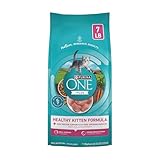
- High protein kitten food made with real chicken as the number 1 ingredient helps support her strong, growing muscles
- DHA, a nutrient found in mother’s milk helps support her vision and brain development, and four antioxidant sources support a strong immune system
- Easily digestible, SmartBlend of high-quality ingredients comes together for a chicken cat food for kittens that supplies 100 percent complete and balanced nutrition to help her thrive
- Great tasting, deliciously crunchy bites of kitten cat food kibble plus added calcium support her strong teeth and healthy gums while giving her a texture she loves
- Feline natural cat food with added vitamins, minerals and nutrients is crafted by a veterinarian-recommended brand in Purina-owned, U.S. facilities with no artificial flavors or preservatives
Calcium and phosphorus for bones
Kitten foods generally contain more calcium and phosphorus than adult-maintenance foods to support skeletal growth. More is not always better. VCA cautions that excessive calcium may contribute to growth abnormalities, so do not add bone meal, calcium powder or mineral products to a complete kitten food unless a veterinarian specifically directs it.
DHA for developing brain and eyes
VCA identifies DHA, an omega-3 fatty acid, as important for brain and eye development. A properly formulated kitten diet should provide the needed nutrient balance. Adding a separate fish-oil or DHA supplement is not automatically beneficial and can unbalance calories or nutrients; use one only under veterinary advice.
How to choose a suitable kitten food
For a weaned kitten, start with the package nutritional adequacy statement. It should say the food is complete and balanced for growth or for all life stages. Marketing phrases such as “premium,” an individual ingredient claim or a picture of meat do not establish that the food meets a kitten’s requirements.
Rank #3

- Veterinarians Recommend IAMS: Feed your favorite feline IAMS Proactive Health dry kitten food to support their whole-body health
- Discover the Proactive 5 Difference: The Proactive 5 health benefits for IAMS Proactive Health are scientifically designed to support five key areas of your kitten’s health, keeping them full of life, for more of life
- #1 Ingredient is Real Chicken: This nutrient-rich kitten food is made with real chicken, contains high-quality protein sources, and supports a growing body that loves to play
- Brain & Vision Development: IAMS Proactive Health Healthy Kitten contains Omega-3 DHA and taurine to help support your kitten’s healthy brain & vision development
- Supports a Healthy Immune System: This dry kitten food is enriched with Vitamin E to develop a strong immune system
| Check on the label | Why it matters | What to do |
|---|---|---|
| Life-stage adequacy statement | It identifies whether the food is intended for growth or all life stages rather than adult maintenance only. | Select growth or all-life-stages wording for a growing kitten. |
| Basis for adequacy | The statement may indicate that the product passed feeding trials or was formulated to meet established nutritional standards. | Read the complete statement; do not infer adequacy from the ingredient list alone. |
| Wet or dry format | Both can be suitable when complete for growth. | VCA says wet or dry kitten food is suitable by about six to eight weeks. Choose a texture the kitten eats reliably. |
| Feeding directions | Directions provide a starting point, but individual energy needs differ. | Adjust the daily portion using weight, body condition and growth with veterinary guidance. |
There is no evidence in the guidance that one commercial brand is universally best. A food that meets the life-stage statement, is tolerated by the kitten and can be fed consistently is a more useful choice than changing products for every new marketing claim.
Do these 3 things before closing this tab:
1Fix the driver behind crashes, sound loss and screen glitches2Clear out junk files and repair common Windows errors3Scan for outdated or missing drivers - takes under a minuteMoving from milk to solid food
- Begin at the appropriate age. Around three to four weeks, offer a small amount of gruel in a shallow, stable dish while allowing normal nursing or properly prepared replacement feeds to continue.
- Make the first texture easy to lap. Mix complete kitten food with kitten milk replacer, following the replacer’s directions. The mixture should be moist enough for a beginner to lick.
- Keep the process calm. Let the kitten approach voluntarily. Clean the dish and surrounding area after meals to reduce spoilage and skin irritation.
- Increase solids gradually. As the kitten eats more confidently, reduce the added moisture. By roughly four to six weeks, many kittens manage canned or dry food with little or no added moisture.
- Finish the transition, not just the first taste. Complete weaning commonly occurs between five and eight weeks. Confirm that the kitten is eating enough complete food and continuing to gain weight.
- Change products over about seven days. VCA recommends a seven-day transition between foods. Mix increasing amounts of the new food with decreasing amounts of the old, slowing the change if vomiting, diarrhea or refusal occurs.
Feeding nursing and orphaned kittens safely
Maternal nursing is the normal option because milk supplies both nutrition and maternal antibodies. If the mother cannot nurse, rejects a kitten or produces inadequate milk, veterinary guidance is needed before choosing a replacement plan. VCA’s kitten-raising guidance describes commercial kitten milk replacer as the appropriate type of substitute; it warns that goat’s milk is too low in protein and fat for kittens.
VCA gives age-specific intervals for replacement feeding: every two to four hours for kittens under two weeks, and every four to six hours from two to four weeks. These intervals are guidance, not a universal prescription. Product concentration, body weight, temperature, swallowing ability and health status affect the safe amount. Follow the replacer label and a veterinarian’s instructions, and obtain urgent help for a cold, weak, dehydrated or poorly responsive kitten.
Rank #4

- High protein kitten food made with real chicken as the number 1 ingredient helps support her strong, growing muscles
- DHA, a nutrient found in mother’s milk helps support her vision and brain development, and four antioxidant sources support a strong immune system
- Easily digestible, SmartBlend of high-quality ingredients comes together for a chicken cat food for kittens that supplies 100 percent complete and balanced nutrition to help her thrive
- Great tasting, deliciously crunchy bites of kitten cat food kibble plus added calcium support her strong teeth and healthy gums while giving her a texture she loves
- Feline natural cat food with added vitamins, minerals and nutrients is crafted by a veterinarian-recommended brand in Purina-owned, U.S. facilities with no artificial flavors or preservatives
Never improvise a homemade milk recipe or add ordinary cow’s milk as a routine solution. A kitten that is not taking enough milk, coughing during feeds, developing diarrhea or failing to gain weight needs an examination rather than repeated changes to the formula.
Independent reader supportYour contribution helps us test, update, and keep practical guides available for everyone.Portions, meal frequency and healthy growth
Rapid growth is not automatically superior growth. VCA recommends steady, optimal growth and warns that excess calories, overfeeding and free-choice feeding can encourage faster growth and excess body fat. Use the food’s directions as a starting point, then evaluate the kitten’s trend.
Most kittens do best when the daily portion is divided into three or four small meals, or more for very young kittens. Measured meals make it possible to see how much was eaten and to adjust the total when growth or body condition changes. Leave fresh water available, and account for treats or supplements in the daily intake.
Best Value
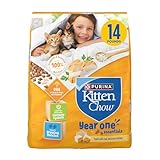
- Dry Kitten Food with Real Chicken: Purina Kitten Chow Year One Essentials dry kitten food made with real farm raised chicken
- Brain and Vision: Dry kitten food with DHA for early growth in every serving to support her brain and vision development as they grow
- Healthy Muscles: Dry kitten food for growth support made with 25 percent more protein (vs. Cat Chow Complete Adult) to support lean muscle development and a playful lifestyle
- Dry Kitten Food for Growth Support: 100 percent complete and balanced kitten food provides the building blocks for a healthy life
- Taste and Texture: Crunchy kitten kibble with a delicious flavor and crunchy texture make this dry cat food for kittens a meal that keeps kittens engaged and eating
Do not deliberately restrict a growing kitten without veterinary direction. The aim is neither maximal size nor a thin appearance; it is a gradual increase in weight and lean tissue without excessive fat. Your veterinarian can assess ribs, waist, muscle and fat coverage and tailor portions to breed, activity and health.
Monitoring weight and body condition
Routine weighing is one of the simplest ways to identify trouble early. VCA recommends weighing kittens daily to weekly, depending on age and circumstances. A frequently cited milestone from VCA is that kittens may double their birth weight in about one week, but a single measurement is not a diagnosis and normal rates vary.
Record the date, weight, food intake and any vomiting or diarrhea. A kitchen scale that measures in small increments can help with young kittens, provided it is stable and clean. Waltham Kitten Growth Charts, identified by VCA as a tracking aid, let caregivers plot weight and age against a percentile curve. Staying on a consistent curve is generally more informative than comparing one kitten with an unrelated littermate.
Recommended Free Tools
Failure to gain weight may indicate a problem and the need for veterinary care, as VCA states. Contact a veterinarian promptly if weight is static or falling, the kitten refuses several meals, has persistent diarrhea or vomiting, appears lethargic, has breathing difficulty, or feels cold and weak. Do not assume that changing brands will solve poor growth; parasites, infection, congenital disease, inadequate milk transfer and feeding technique are among the possibilities a clinician must consider.
Supplements and homemade diets: common mistakes
- Adding vitamins or minerals to complete food: An appropriate growth diet should meet requirements when fed as directed. Extra calcium, vitamin D or multivitamins can create harmful imbalances.
- Using adult-maintenance food: Adult food is not automatically adequate for a growing kitten. Check the adequacy statement rather than relying on package imagery.
- Building a recipe from internet ingredients: Meat-heavy homemade diets can be deficient or excessive in calcium, phosphorus, taurine, vitamins and energy. If a home-prepared diet is necessary, formulate it with a veterinary nutritionist.
- Free-choice feeding a calorie-dense food: Constant access can encourage excess intake and makes it difficult to measure growth-related adjustments.
- Switching abruptly: Sudden changes can cause digestive upset and make it unclear which food the kitten tolerates.
- Treating appetite as proof of adequacy: A kitten may eagerly eat an unbalanced food, while illness can suppress appetite even when the food is appropriate.
A practical decision path for caregivers
- Identify the stage. Is the kitten nursing, beginning weaning, fully weaned or approaching adult size?
- Check the food statement. For a weaned kitten, confirm “complete and balanced” wording for growth or all life stages.
- Measure and divide. Start with label directions, divide the daily amount into several meals and record intake.
- Transition slowly. Use a seven-day change between products unless a veterinarian directs otherwise.
- Track the trend. Weigh regularly and note body condition, stool quality, appetite and energy.
- Escalate early. A kitten that fails to gain, cannot nurse, or appears ill needs veterinary assessment rather than an improvised supplement or feeding schedule.
These steps support development while acknowledging the limits of nutrition alone. Genetics, environment and medical care remain part of the outcome, and a veterinarian should individualize advice for premature, orphaned, underweight or chronically ill kittens.
Quick Recap
Product prices and availability are accurate as of the date/time indicated and are subject to change. Any price and availability information displayed on Amazon at the time of purchase will apply.





Leave a Reply