Fish farming can affect water quality, seafloor habitats, wild fish and nearby ecosystems, but those effects are not automatic or identical at every farm. They depend on the species and production system, feed, location, scale and management. The most detailed evidence summarized here concerns marine finfish farms, so it should not be assumed to describe ponds, freshwater cages or shellfish farms equally.
What environmental effects can fish farms have?
Aquaculture covers many species and production systems. The Food and Agriculture Organization (FAO) identifies possible effects that include pollution from feed and waste, escaped animals, habitat changes caused by farm structures, and disease or parasite outbreaks. These are potential pathways, not a checklist of effects that every operation causes; their scale depends on factors such as facility size, species, feed and location. FAO’s aquaculture overview provides this broad taxonomy.
As an Amazon Associate I earn from qualifying purchases.
Waste can add nutrients to water and seafloor sediments
At marine finfish farms, uneaten feed and fish waste are the main sources of excess organic nutrients. They can contribute nitrogen and phosphorus, turbidity, lipids and changes in dissolved oxygen in the water. The outcome depends partly on local water movement: NOAA Fisheries says that when farms are sited in well-flushed water, enrichment in the water column is generally not detectable. That finding applies to those conditions; it is not a guarantee for every farm or receiving environment. NOAA Fisheries explains nutrient impacts at finfish farms.
The Tool Desk
Outbyte PC Repair FREERepair Windows errors before they cause bigger problemsFix Now →Outbyte Driver Updater FREEFix the driver behind crashes, sound loss and screen glitchesFind Drivers →Waste that settles faster than it decomposes can accumulate on the seafloor. Dispersive or erosional sites tend to spread and assimilate waste, while depositional sites are more prone to accumulation. These differences mean that the same type of farm may have different local effects depending on where it operates.
#1 Best Overall

- 【Why choose the water electrolyzer set】The length of electrolysis is affected by the TDS value of water quality, so use a TDS pen to test the TDS value of water quality in advance to avoid conducting electrolysis experiments without knowing the water quality.
- 【Package included】The package includes water electrolyzer and TDS tester, you could use the TDS meter to test the TDS value of water, then use the water electrolyzer to test the impurities in the water.
- 【How to operate】Test the tds value of the water firstly, electrolysis experiments can only be done when the electrolysis value is below 300. Prepare a cup of tap water, a cup of pure water, after installing the electrolytic rod, put the electrode ends of the electrolyzer into the two cups of water, plug in the power supply, turn on the switch of the electrolyzer, after about 30 seconds, turn off the switch, unplug the power supply and take out the electrolyzer.
- 【Wide application】This water electrolyzer tester set can be used in such as water purifier testing, tap water testing, aquaculture testing including plant breeding, aquaculture, etc.
- 【NOTE】Prohibit using metal containers for water experiments to avoid short circuits; After power on, it is prohibited to touch the electrolytic rod and water sample to avoid electric shock; Do not use this water tester to test sewage and automotive refrigerant, or it will be easy to burn the fuse or short-circuit; Please clean and dry the iron and aluminum rods in a timely manner after use, otherwise they may rust easily.
Feed connects some farms to wild fisheries
Some aquaculture feeds use fishmeal and fish oil made from wild fish, linking farmed seafood production to wild fisheries. Feed formulations vary, and NOAA says partial or complete replacement of fishmeal and fish oil has become the norm in commercial feeds, with plant ingredients and other alternatives among the options.
For scale, NOAA Fisheries reports that, when aquaculture is considered as a global aggregate industry, it uses about half a metric ton of wild whole fish to produce one metric ton of farmed seafood. NOAA uses this figure to support its answer that aquaculture as a whole produces more seafood than the wild whole fish it consumes. It is an aggregate figure—not a measure of every farm, species or feed—and it does not capture aquaculture’s full environmental footprint. NOAA’s overview of marine aquaculture and the environment explains the context.
Rank #2

- Rugged Engine Upgrade: Say goodbye to frustrating cold starts and rough idling with this heavy duty carburetor replacement part, designed to aggressively restore your outdoor power equipment to day one freshness and keep your daily chores on track.
- Tailored For Chainsaws: Enjoy absolute peace of mind knowing this exact engine generator carb accessory fits flawlessly for 50, 51, and 55 Rancher setups, eliminating the sheer dread of mismatched hardware and wasted daily workshop time.
- Enhanced Fuel Delivery: Tackle demanding forestry tasks and grueling ranching jobs with incredible confidence, as this expertly crafted unit seamlessly mixes fuel and air to maintain maximum cutting power during those exceptionally long work shifts.
- Built For Hard Work: Whether you are managing demanding animal husbandry duties or handling heavy duty fishery and aquaculture routines, this outstanding carb provides the consistent engine output needed to power through the absolute toughest weather.
- Robust Component Match: Keep your trusty machinery running season after season with this versatile component, highly compatible as a swap for WT 170 1, WT 170, and 503281504 parts to secure a heavy duty fix without buying a whole new tool.
Disease and parasites can affect farmed and wild fish
In marine farms, close contact among farmed fish can create opportunities for pathogens and parasites to spread. Transporting fish can also carry disease risks. Effects beyond the farm depend on the organism, local conditions and how the farm is managed; the risk should not be treated as identical across all species or systems.
Quick wins for a faster PC:
Repair Windows errors before they cause bigger problemsFix Now →Fix the driver behind crashes, sound loss and screen glitchesFind Drivers →Clear out junk files and repair common Windows errorsFree Scan →Escapes can create interactions with wild populations
Escaped farmed fish may compete with wild fish, transmit disease or reproduce with them. NOAA notes that domesticated fish often perform poorly in the wild and may become prey, which can limit the duration or likelihood of some interactions. However, reproduction with wild fish can still raise genetic concerns. The likelihood and consequences depend on the fish and the surrounding wild population. NOAA’s marine aquaculture FAQ discusses these potential interactions.
Rank #3

- Built to Last - MAX systems feature our higher horsepower pumps for increased airflow and performance. Operating temperature range of -5 to 175 Degrees Fahrenheit with a overheat protection at 290 Degrees Fahrenheit
- Everything You Need in One Kit - Includes: (1) 1HP Subsurface Compressor, Double-10" EPDM Weighted Diffuser, 100' Coil of 3/8" Weighted Black Vinyl Tubing, and All Necessary Fittings & Hardware.
- Maximum Power - PA-RP80P: Volts - 120; Amps - 7.5; Hertz - 60; CFM @ 5 PSI - 6.7. Pump has aluminum alloy body for maximum durability and copper motor for energy efficiency.
- Top Performance - Dimensions: 1HP Rocking Piston Compressor (Length x Width x Height) - 10.5" x 6" x 9.5"
- A Product You Can Trust - Backed by a 2-Year Manufacturer's Warranty
Farm structures can change habitat
Farm structures may modify habitat, as FAO notes. The nature and extent of a change depend on the system and its setting; a marine net pen, a pond and a shellfish farm are not interchangeable cases. The available sources do not establish a quantified environmental ranking of all these production methods.
Why do impacts differ between farms?
Environmental effects depend on how production meets the receiving environment. Important factors include:
Rank #4
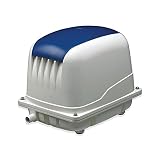
- OX-Gen Air Pumps are the best option for healthy fishponds and water gardens. These aerators provide a year-round solution without dumping harmful chemicals into your water feature.
- The OX-Gen Aerator cycles pond water, adds oxygen to the water feature, reduces thermocline, and brings debris into suspension allowing filtration systems to remove it.
- Whisper quiet operation: reliable, oil-free, and extremely energy efficient
- Optimal Depth: 2'-6' - Output: 2.5 CFM - Psi: 5.075 - Noise Rating (dBA): 35 - Volts: 120 - Watts: 65 - Frequency (Hz): 60 - Amps: 0.317
- Indoor / Outdoor Use. 2-year warranty. Ground Delivery
- Species and system: Aquaculture includes different animals and production settings, so a pathway relevant to marine finfish may not apply in the same way to ponds, freshwater cages or shellfish farms.
- Feed and feeding: Feed ingredients influence the connection to wild fisheries, while uneaten feed can contribute to organic waste.
- Location and water conditions: Water exchange affects how nutrients disperse, and seafloor conditions affect whether waste spreads or accumulates.
- Scale and management: Facility size and day-to-day practices influence the amount and handling of waste, disease risks and the chance of escapes.
These factors are why a general statement that fish farming is either harmless or uniformly damaging would be misleading. The sources describe common pathways and management approaches, not a single footprint that applies to every farm.
Free tools Windows power users keep installed
One-click scans. No signup required.
How can farms reduce environmental harm?
Management can address particular risks, but no single measure makes all impacts disappear. NOAA and the U.S. Environmental Protection Agency (EPA) describe several approaches for marine finfish and U.S. water-quality management:
Best Value

- ~RESISTANT TO TEAR: Our pond liner has excellent tear and puncture resistance, ensuring a trouble-free installation even on uneven pond bottoms or around plant roots. Prevents leaks and ensures a stable water environment.
- ~LONG LASTING: Our pond liner can withstand both sunny and wet pond conditions for a long life. Simple and easy to install, providing a lasting solution for your pond.
- ~Flexible: HDPE pond liner is the pond liner of choice for large/small fish ponds. Its flexibility makes it easy to shape and customize. Choose a liner that is larger than your pond size for easier grooming.
- ~HDPE MATERIAL: Our pond liners are made from high-density polyethylene material with excellent tensile strength, toughness and cold resistance. Create a clean, friendly environment for fish farming and plant landscaping.
- ~MULTIFUNCTIONAL GARDEN DECORATION: Suitable for all kinds of water features, large and small ponds, waterfalls, fish/koi ponds, aquaculture farms, rooftops and more. Beautify your garden with our reliable and versatile pond liner.
- Choose suitable sites. Siting farms in appropriate locations—including well-flushed waters where relevant—can help limit water-column enrichment and avoid sites more prone to seafloor accumulation.
- Use feed efficiently. Efficient feed formulations and feeding practices can reduce uneaten feed and help control solids and nutrient discharges.
- Monitor and manage waste. Monitoring water-column and benthic conditions can help identify effects on the receiving environment and whether controls are working.
- Fallow affected sites. Pausing production can give sediments time to recover. NOAA says recovery to pre-farm status usually takes months and may take a couple of years in extreme conditions; this is not a universal schedule for every location.
- Consider integrated multitrophic aquaculture (IMTA). IMTA combines species at different trophic levels. For marine fish farms, NOAA names seaweeds, oysters and mussels as species commonly selected for this approach. It is a management option, not proof of zero impact.
- Prevent and respond to escapes. Escape-prevention measures and response plans can help manage the risk of farmed fish interacting with wild populations.
- Manage disease and medicines carefully. NOAA describes vaccination as common for many farmed fish. Its account of antibiotic use is specific to certain contexts: it says antibiotics are rarely used in some settings and that, when used in the United States, they are limited to approved drugs under veterinarian supervision. This should not be generalized to antibiotic use worldwide.
NOAA’s discussion of nutrient controls and the EPA’s guide to managing aquaculture to protect water quality describe these approaches in more detail.
What rules apply in the United States?
The regulatory details below concern the United States, not a worldwide standard. NOAA says that U.S. monitoring is required for discharges to the water column and benthic environment under the Clean Water Act, with EPA effluent limitations. EPA describes National Pollutant Discharge Elimination System (NPDES) permits as a framework for setting pollution controls and checking whether they work. Depending on the permit, controls may address feed management, site suitability and escape-prevention or response plans. Requirements elsewhere may differ.
Quick Recap
Product prices and availability are accurate as of the date/time indicated and are subject to change. Any price and availability information displayed on Amazon at the time of purchase will apply.




