
Some links on this page are affiliate links: if you buy through them we may earn a commission, at no extra cost to you.
Fish hatcheries reduce disease and genetic risks by treating biosecurity and population management as one connected system. They control water and animal entry, quarantine and test broodstock, keep rearing units sanitary, watch fish closely, remove sick or dead animals quickly, investigate unusual mortality, and release only fish and water that meet health requirements. At the same time, they use representative broodstock, balanced mating, strict stock identity and, when appropriate, sterile or single-sex fish to limit genetic effects on wild populations.
No single barrier is sufficient. A filtered intake cannot compensate for careless fish transfers, and sterile fish do not prevent pathogens from moving. The exact protocol depends on species biology, facility design, disease regulations and the conservation or fishery goal.
As an Amazon Associate I earn from qualifying purchases.
What’s actually slowing this PC down?
Pick the symptom - the matching free tool is one click away.
Why hatcheries face two different risks
High densities make hatchery populations efficient to rear but can also amplify an infection. A pathogen introduced in water, equipment, wildlife or a single carrier can spread rapidly when fish share tanks or raceways. Stress from crowding, poor water quality, inadequate nutrition or handling can further reduce resistance. NOAA Fisheries describes virus management as monitoring for disease while maintaining nutrition, suitable genetics and low-stress culture conditions.
Genetic mixing is a separate problem. Hatchery fish may breed with wild fish after release or escape, and eggs, juveniles or adults moved between watersheds can introduce genes adapted to another environment. Repeated use of a small number of successful parents can also reduce effective population size even when the hatchery keeps many fish. Disease controls therefore protect individual and population health; genetic controls protect the identity and adaptive capacity of stocks.
Popular on Amazon

- Digital turbidity meter: uses the 90° scattered light principle to measure turbidity, with a measurement range of 0-1000 NTU. It can be used for turbidity measurement in drinking water treatment, beer&wine, beverage, and pharmaceutical processes, monitoring turbidity in aquaculture water (such as RAS aquaculture, ornamental fish farming, and aquaculture ponds), and maintenance of public swimming pools
- Measurement range 0-1000 NTU: An ultra-wide turbidity measurement range, ideal for measuring turbidity in sewage treatment plants, wastewater discharge, water treatment facilities, cooling tower maintenance, industrial boiler water in power plants, industrial circulating cooling water, surface water, and other water sources
- Environmental monitoring: Helps monitor turbidity changes in rivers, lakes, oceans, rainwater, spring water, etc. (typically around 10 NTU), especially important for monitoring turbidity changes after heavy rainfall; the EZTOCH turbidity meter has a measurement repeatability of <0.8% F.S. which can provides stable and consistent turbidity readings
- Packaging includes: Black carrying case: for convenient outdoor real-time turbidity measurement; 20/100/1000 NTU calibration solution: (no need to purchase separately); 8 sample vials: for multi-sample measurement; lint-free cleaning cloth; and 4 spare AAA batteries
- Easy to use: Add approximately 10ml of water sample to the sample vial, wipe the vial clean with the cleaning cloth, place the vial in the measurement chamber, and cover with the light-proof cap, Power the meter, will obtain the turbidity readings. After use, clean the sample vial with filtered water promptly
How hatcheries prevent pathogens from entering
Design and protect the water supply
Risk reduction starts before fish arrive. Facilities assess the disease profile of the species and watershed, then choose an intake that can be controlled, filtered or otherwise treated. Physical separation of clean and potentially contaminated water, dedicated drainage, backflow prevention and easily disinfected surfaces reduce opportunities for organisms to move between groups. Wildlife exclusion—such as fencing, screened inlets and bird netting—limits contact with carriers and feces.
Water treatment is not a universal guarantee. Its performance depends on flow, equipment maintenance, organism sensitivity and the quality of monitoring. Operators should document treatment settings, inspect filters and disinfection systems, and have a response plan for a loss of treatment capacity.
The Tool Desk
Outbyte PC Repair FREERepair Windows errors before they cause bigger problemsFix Now →Outbyte Driver Updater FREEFix the driver behind crashes, sound loss and screen glitchesFind Drivers →Source and quarantine incoming animals
Broodstock and other incoming fish should come from sources with known health histories and certification where available. Staff inspect shipments before unloading and keep new groups in quarantine areas with separate equipment, personnel routines and drainage. Quarantine length and tests must be set for the species and diseases of concern; a short holding period without examination is not equivalent to quarantine.
During quarantine, staff record origin, collection date, transport conditions, treatment history and any signs of illness. Fish-health personnel examine live fish and collect samples when indicated for viral, bacterial and parasitic testing. Animals that fail entry requirements remain isolated or are rejected under the facility’s regulatory plan.
Also popular on Amazon

- ADVANCED FLUORESCENT OPTICAL SENSOR, LOW MAINTENANCE: Adopts luminescence quenching principle, no electrolyte, no membrane replacement, no oxygen consumption during measurement; resistant to air bubbles, acid gas interference, stable reading in low-oxygen water; far less maintenance than traditional polarographic DO meters, long service life fluorescent cap.
- HIGH PRECISION & FULL AUTOMATIC COMPENSATION: Measuring range: 0.00~20.00mg/L (0~200% saturation), resolution 0.01mg/L, accuracy ±3%FS; built-in auto temperature compensation, manual salinity & atmospheric pressure compensation for fresh water, seawater, industrial wastewater testing; fast response ≤60s, stable continuous monitoring data.
- PORTABLE HANDHELD DESIGN & LARGE BACKLIT LCD: Compact lightweight handheld host with durable anti-slip shell; large dual-display backlit LCD shows DO value, saturation % and temperature simultaneously; independent CAL/TEST/SAVE shortcut keys, 2-point calibration support, data storage function for lab & field outdoor testing.
- IP68 FULL WATERPROOF DETACHABLE PROBE: 316 stainless steel anti-corrosion probe head, IP68 deep waterproof, pressure-resistant for deep water sampling; long flexible anti-corrosion cable, easy to clean; works for fish ponds, river/lake environmental monitoring.
- WIDE INDUSTRY APPLICATIONS & SAFE RELIABLE: Perfect for freshwater & marine aquaculture, fish farm breeding management, municipal wastewater treatment, surface water environmental detection, laboratory water analysis, water quality research; Powered by 4 AAA batteries for reliable all-day field operation.
Keep people, equipment and wildlife from bridging groups
Clean-to-dirty work flows reduce accidental transfer. Workers handle the most vulnerable or youngest groups first, use dedicated nets and containers where possible, and clean and disinfect shared equipment between units. Footbaths, hand hygiene, protective clothing and controlled visitor access are practical layers when they are maintained rather than treated as paperwork.
Feed, vehicles, tools and carcass containers need their own controls. Wildlife attraction from spilled feed or exposed mortalities can undermine otherwise sound barriers, so storage and waste areas should be secured and cleaned.
How hatcheries detect and contain disease
Monitor daily signs, not just laboratory results
Early warning comes from routine observations. Staff record feeding response, swimming and schooling behavior, appearance, water-quality readings and mortality by rearing unit. A change in appetite or behavior can precede a visible die-off. Records should identify the tank or raceway, date, number affected and actions taken so managers can see patterns rather than isolated events.
Examine broodstock and investigate mortality
Broodstock receive regular health examinations because adults can carry agents into eggs, milt or rearing water. When mortality is unusual, persistent or clustered, personnel perform a necropsy and submit appropriate samples to a qualified laboratory. Diagnosis should guide treatment and movement decisions; guessing from external appearance can waste time or select for resistance to an ineffective product.
Also popular on Amazon
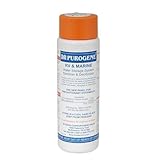
- 3R PUROGENE is a 2% solution of chlorine dioxide, ClO2 (contains no free chlorine). Chlorine dioxide is recognized safe for drinking water treatment for more than 50 years.
- Unlike some water Preservers that take hours to work and leave a bad after-taste, 3R PUROGENE makes water fresh the moment it enters the container, from a drinking glass to a plastic, metal, or fiberglass storage tank. 3R PUROGENE is non-toxic and biodegradable, presenting no harm to the environment or the user.
- Use Purogene to control build-up odor-causing elements and enhance the taste of stored drinking water. Drinking water should be treated at a rate of 1 fl oz (2 tablespoons) of 3R PUROGENE per 30 gallons of water (5 ppm ClO2 concentration)
- Pint (16 oz.) Bottle of Purogene will treat 960 gallons and makes the water safe to drink for an extended period of time.
- Use Purogene for good and natural taste in drinking water as well as good taste in prepared drinks, non-toxic and biodegradable, presenting no harm to the environment or the user NOTICE: This Consumable Product is Non-Returnable.
Remove and isolate promptly
Dead and moribund fish are removed as soon as practical and handled as potentially infectious material. Affected groups are isolated when facility design allows, and movement of fish, water, equipment and staff from those units is restricted. Disposal follows local rules so carcasses do not return pathogens to the intake, drainage or wildlife.
Use only authorized interventions
Prophylactic or therapeutic treatments, vaccines and probiotics may be appropriate for particular species and agents, but approval, dosage, withdrawal periods and environmental restrictions vary by jurisdiction. Good nutrition, stable water quality and low stress support resistance but do not replace diagnosis. Treatment success and adverse effects should be recorded for future decisions.
Do these 3 things before closing this tab:
1Fix the driver behind crashes, sound loss and screen glitches2Clear out junk files and repair common Windows errors3Scan for outdated or missing drivers - takes under a minuteManaging the release pathway
Biosecurity continues through transport and release. Managers select timing, numbers and locations that fit health certificates, receiving-water conditions and the conservation objective. Fish from an affected unit should not be released merely to empty a tank. Hatchery discharge and transport water may require filtration, disinfection or other controls to reduce transfer of pathogens to natural populations.
Post-release monitoring can include survival, return rates, disease signs and interaction with wild fish. If monitoring reveals a new risk, managers can alter release timing, location, numbers or future broodstock collection rather than repeating an unsafe practice.
Also popular on Amazon

- AQUARIUM WATER TREATMENT: Microbe-Lift Special Blend aquarium treatment is the must-have aquarium water treatment for freshwater and saltwater aquariums; It keeps your fish tank cleaner, removes odors, clears water, and reduces maintenance.
- REDUCES WASTE & NITRATES: Special Blend quickly breaks down organic waste, uneaten fish food and sludge so water stays cleaner; It acts as a gentle fish tank nitrate remover that supports clearer aquarium water and reduced ammonia and nitrites
- SAFE FOR ALL FISH: All natural Special Blend aquarium water conditioner is safe for marine tanks, freshwater. and saltwater aquariums when used as directed; Suitable for fish, invertebrates, live corals and plants as routine aquarium water treatment
- BETTER SMELLING, CLEANER AQUARIUMS: Works as a fish tank odor eliminator by targeting the organics that cause smells; Functions as an aquarium water clarifier so décor and glass stay cleaner with less frequent scrubbing
- EASY WEEKLY DOSING: Use this natural fish tank cleaner solution when starting a new aquarium after conditioning tap water with Microbe-Lift Xtreme; Use with Microbe-Lift Nite Out II and follow the recommended weekly dosage schedule for lasting results
How hatcheries prevent genetic mixing
Use an appropriate, representative source
Broodstock should generally be local to the receiving population or otherwise ecologically appropriate. A large, representative collection captures more of the source population’s variation than selecting a few conspicuous adults. Local origin is not an automatic answer: carefully justified genetic rescue may sometimes be needed for a depleted population, but it should be evaluated against mismatch and mixing risks for that species and watershed.
Maintain effective population size
The number of fish physically held is not the same as the number contributing genes. If a few males or females produce most offspring, genetic drift and inbreeding can increase. Hatcheries therefore balance male and female contributions and avoid allowing return time, spawning date, body size or another fitness-linked trait to determine which adults reproduce.
Recommended Free Tools
Use planned mating and pedigrees
Random spawning, factorial crosses or matrix mating can spread parentage across the crop. Where feasible, individual tags and pedigrees show which families contributed and help prevent repeated use of closely related fish. Managers can then set family limits, retain underrepresented lines and evaluate whether captive selection is favoring early maturation, large size or another trait that differs from the wild objective.
Keep stocks and watersheds distinct
Hatcheries label and physically separate species, stocks and year classes. Eggs, juveniles and adults are not moved between river basins unless the transfer has a documented biological and regulatory justification. Hybridization is avoided unless it is an explicit, evidence-based program goal. Periodic genetic-diversity assessments can reveal loss of variation or unexpected ancestry before it becomes difficult to correct.
Also popular on Amazon

- User-Friendly Design: Large, clear display for easy reading, 1-point calibration with included screwdriver, and automatic temperature compensation (0–50°C).
- Portable & Durable: Compact, includes a shockproof case. High Accuracy & Affordability.
- How to calibration: Clean the electrode and gently dry with paper towel. Dip the electrode into the distilled water for about 5 minutes. Turn on the unit by the ON/OFF switch, it is located on top of the unit.
- Wide Measurement Range: Accurately measures ORP (Oxidation-Reduction Potential) from -1999 to +1999 mV in 1 mV steps, suitable for testing drinking water, pools, aquariums, wastewater, and industrial applications.
- Experience the convenience of our mini-sized pH meter, carefully designed to fit in your pocket effortlessly. With its compact size, you can now take measurements anytime, anywhere. Whether you're at the pool, on a trip, at the beach, or camping, this portable pH meter is your reliable companion for accurate testing.
Make released fish identifiable
Tags and complete release records distinguish hatchery-origin fish from wild-origin fish in later surveys and broodstock collections. Identity information supports estimates of survival, helps prevent accidental use of hatchery fish as the sole replacement broodstock and allows managers to trace a problem to a particular release group.
Reduce reproduction after escape or release
Sterile, triploid or single-sex fish can reduce the chance that hatchery animals reproduce with wild fish. These approaches are tools, not universal solutions: they may change production cost, performance or welfare considerations, and they must be biologically and legally appropriate. They also do nothing to stop a pathogen from moving with fish or water.
Free tools Windows power users keep installed
One-click scans. No signup required.
A practical hatchery control cycle
- Set the risk profile. Identify species-specific pathogens, source waters, receiving waters, protected wild stocks, legal requirements and the program’s restoration or harvest objective.
- Approve sources. Verify health records and genetic origin for water, broodstock, gametes, feed and equipment. Reject or quarantine materials that lack adequate documentation.
- Quarantine and test. Hold incoming fish separately, examine them and perform required laboratory tests before they enter production areas.
- Assign identity. Tag or otherwise record stock, family, year class and origin. Keep species and watershed groups physically separate.
- Run clean production. Maintain water quality, suitable density, nutrition, low-stress handling, wildlife exclusion and clean-to-dirty workflows.
- Watch and record. Log feeding, behavior, mortality, treatments and water conditions by unit. Escalate deviations instead of waiting for a large mortality event.
- Diagnose and contain. Remove dead or moribund fish, isolate affected units, restrict movement and obtain necropsy or laboratory advice when signs are unusual.
- Manage parentage. Use balanced mating, family or pedigree information and sufficient numbers of parents. Review whether any trait-based selection is changing the population.
- Authorize release. Confirm health status, release identity, timing, numbers, transport-water controls and receiving-water conditions before shipment.
- Review outcomes. Compare health, survival, genetic-diversity and return information with objectives, then adjust sources, mating, treatment or release plans.
Trade-offs managers must make explicit
| Decision | Benefit | Cost or limitation |
|---|---|---|
| More filtration, quarantine and testing | Lower probability that pathogens enter or spread | Higher capital, labor and testing expense; treatment systems require maintenance |
| Large, representative broodstock | Greater genetic variation and lower risk that a few parents dominate | More collection, holding space, records and spawning work |
| Local broodstock | Usually reduces ecological mismatch and unintended mixing | May not solve severe depletion; a justified rescue strategy may require limited gene flow |
| Intensive captive selection | Can improve a production trait | May reduce wild fitness or alter adaptation if extreme traits are repeatedly favored |
| Sterile or single-sex production | Reduces reproductive contribution after escape or release | May affect cost, performance or program purpose and does not provide pathogen control |
| More frequent or larger releases | May increase restoration or fishery contribution | Increases exposure of wild populations to pathogens, competition and genetic effects |
Common failure modes and corrective actions
- Relying on a health certificate alone: certification reflects the scope and timing of testing. Combine it with quarantine, observation and facility-level records.
- Moving equipment between units: untreated nets, boots or buckets can spread an agent. Dedicate equipment or clean and disinfect it between groups.
- Waiting for a mass mortality: appetite and behavior changes are earlier signals. Set thresholds that trigger examination and laboratory consultation.
- Removing only visibly sick fish: asymptomatic carriers may remain. Follow the diagnostic plan for the whole affected group and control its movements.
- Using the biggest or earliest fish as parents: this can narrow genetic representation. Balance contributions and use random or planned mating tied to the conservation objective.
- Assuming sterile fish solve every risk: sterility addresses reproduction, not pathogens, competition or ecological exposure. Retain full biosecurity and monitoring.
- Losing stock identity: untagged or mixed lots cannot be traced or managed well. Keep chain-of-custody records from collection through release and later recapture.
Why protocols differ by species and jurisdiction
There is no universal stocking density, quarantine duration or test panel. A pathogen important in one species or region may be irrelevant in another, while legal treatment options and movement restrictions differ among jurisdictions. Facility managers should align written standard operating procedures with species biology, watershed boundaries, veterinary advice and the authority governing fish movement and release.
The U.S. Fish and Wildlife Service notes that declining genetic diversity reduces a species’ ability to adapt to environmental change and raises extinction risk. FAO guidance likewise calls for minimizing adverse genetic and disease effects of escaped farmed fish on wild stocks. Those principles support a conservative approach: prevent entry, detect early, contain quickly, preserve variation and release only when the expected ecological benefit outweighs the remaining risk.





Leave a Reply