There is no dependable number of hours or days that freshwater fish can safely go without a filter. The risk depends on oxygen levels, the condition of the aquarium’s beneficial bacteria, fish load, waste and existing water quality. Treat a stopped filter as an urgent water-quality problem: restore circulation or aeration, protect established filter media, and test the water.
Why a filter matters when it stops
It supports the aquarium’s biological filter
Fish waste and uneaten food release ammonia. In a mature aquarium, beneficial bacteria convert ammonia into nitrite and then nitrate. Ammonia and nitrite are toxic, and the pollution can build even when water looks clear. The Ornamental Aquatic Trade Association (OATA) says ammonia and nitrite should be zero in freshwater aquaria. OATA water-quality guidance explains the cycle and recommends routine testing.
As an Amazon Associate I earn from qualifying purchases.
It moves oxygen-rich water through the tank
Fish need oxygen, and nitrifying bacteria need it too. Bacteria grow on aquarium surfaces, but OATA says they are concentrated in the filter, where water movement and oxygenation are greater. An air pump can improve gas exchange, but it does not remove accumulated solids or replace mature biological filter media.
Quick wins for a faster PC:
Scan for outdated or missing drivers - takes under a minuteDriver Scan →Repair Windows errors before they cause bigger problemsFix Now →Fix the driver behind crashes, sound loss and screen glitchesFind Drivers →Why there is no reliable countdown
The guidance from UF/IFAS, OATA and North Carolina State University’s College of Veterinary Medicine gives outage steps and water-quality advice, not a guaranteed filterless survival duration. A lightly stocked, well-oxygenated tank with established bacteria is not equivalent to a crowded tank with poor water quality. A claim that fish can go a particular number of days without food is not evidence that they can go that long without filtration.
#1 Best Overall

- WITH ROTATING BIO-WHEEL: Patented Bio-Wheel technology provides excellent wet/dry biological filtration.
- MULTI-STAGE FILTRATION: Delivers mechanical, chemical and biological aquarium filtration to maintain a clean aquatic environment.
- MARINELAND FILTRATION PRODUCTS: Count on Marineland brand for the most reliable, technically advanced aquariums and accessories on the market.
- COMPATIBILITY: Use with Marineland Rite-Size Filter Cartridges (see individual filter for sizing recommendations).
- FIVE SIZES: Available in 75 GPH, 100 GPH, 150 GPH, 200 GPH and 350 GPH sizes.
What to do when a freshwater filter stops
- Restore circulation or add aeration. Check whether the filter has lost power, become obstructed or stopped working. During a power outage, UF/IFAS recommends a battery-operated aerator; surface agitation supports oxygen and carbon-dioxide exchange. Use alternate power for pumps or filters if available. UF/IFAS outage guidance and NCSU veterinary college guidance cover power-outage measures.
- Keep established biological media wet and oxygenated. If the filter cannot run, preserve its mature media in the tank where possible and keep water moving around it. UF/IFAS advises cleaning bio-media and placing it in the tank during an outage; nitrifying bacteria can continue cycling ammonia if dissolved oxygen remains near normal. Do not rinse biological media in untreated tap water: chlorine and chloramine can harm the bacteria. OATA explains the risk to beneficial bacteria.
- Pause feeding. Turn off automatic feeders during an acute outage. Less food means less new waste entering the system. UF/IFAS says most regularly fed fish can go without food for a week in this outage context, and NCSU also advises not feeding during a power outage; neither statement gives a safe duration without filtration. NCSU outage guidance
- Test water, not just its appearance. Check ammonia and nitrite with an aquarium test kit. Test more often than routine if the filter is down or fish behave unusually. If either reading is elevated, take situation-appropriate action, including partial water changes, while keeping replacement water conditioned and temperature-matched. Avoid applying a fixed change amount without considering the result and tank conditions.
- Watch the fish and stabilize the tank. Gasping at the surface or other unusual behavior calls for prompt action. UF/IFAS suggests adding air pumps, making a partial water change, or moving fish to an aerated holding container with treated water when behavior is abnormal. Minimize solid waste and avoid significant temperature shifts; maintain the species’ appropriate temperature.
- After power returns, check conditions before resuming normal care. UF/IFAS recommends cleaning the tank, testing water and waiting 24 hours before feeding again. Confirm that the filter is moving water and that fish are behaving normally.
How to manage water quality during the interruption
Use tests and respond to results
OATA recommends testing at least weekly in routine conditions, and more often while setting up an aquarium or when fish behave unusually. Its freshwater guidance gives a dissolved-oxygen minimum of 6 mg/L and says oxygen should be kept as high as possible. That association guidance is not a substitute for species-specific veterinary advice.
If ammonia or nitrite is above zero, partial water changes and sound husbandry can help reduce the problem. Condition replacement tap water and match its temperature before adding it. OATA describes partial changes of up to 25% weekly as routine freshwater setup guidance, but the right frequency and amount depend on species, tank size, stocking and other factors; an emergency test result calls for a situation-specific response. OATA freshwater setup guidance
Rank #2

- QUIET AQUARIUM FILTER: The Tetra Whisper IQ Power Filter with Stay Clean technology contains a sound shield for quiet filtration less than 40 dB.
- SELF PRIMING: Submerged motor starts up with no priming required.
- CAPACITY: The Tetra Whisper IQ 20 Power Filter works in filters up to 20 gallons (130 GPH).
- STAY CLEAN TECHNOLOGY: By maintaining healthy pH levels, creates easier maintenance for healthier fish.
- CARTRIDGE REFILLS: Change cartridges monthly; uses large-sized Tetra Whisper Bio-Bag Filter Cartridges (refills sold separately).
Do not assume plants make filtration optional
Plants use some waste products, but a planted aquarium still needs appropriate filtration and water changes. OATA explicitly cautions that plants do not mean a filter is unnecessary or that water changes can be skipped. OATA planted-aquarium guidance
Crashes, No Sound, or Screen Glitches?
Random freezes, missing sound and display glitches usually trace back to one bad driver. Find and replace yours safely.Free scan · under a minutePC Slower Than It Used to Be?
A free scan shows the junk files, broken settings and background clutter dragging Windows down - then fixes them in one click.Free scan · Windows 10 & 11When to seek urgent help
If fish are gasping, behaving abnormally, or water tests show ammonia or nitrite, act promptly rather than waiting for a particular number of hours to pass. Maintain oxygenation, reduce new waste, test water and use a partial water change or aerated holding container when appropriate. For species-specific care or fish that remain distressed, contact an experienced aquatic specialist or aquatic veterinarian.
Quick Recap
Best Value
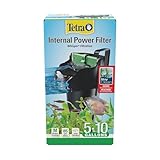
- INTERNAL POWER FILTER: Tetra Whisper Internal Power Filter for 5- to 10-gallon aquariums uses medium Whisper BioBag filter cartridges that are easy to change.
- QUIET 85 GPH MOTOR: The internal pump efficiently filters up to 85 gallons per hour.
- POWERFUL FILTRATION: Water flows through the cartridge floss, trapping debris and fish waste, while Ultra-activated carbon helps remove odor and discoloration.
- SPACE-SAVING DESIGN: Your aquarium can be 1” from the wall with the internal filter designed to clip directly on your aquarium wall and be hidden by décor.
- EASILY ADJUSTABLE: Adjustable clip allows for a variety of setups to easily adjust to high or low water levels.
Rank #4

- QUIET AQUARIUM FILTER: The Tetra Whisper IQ Power Filter with Stay Clean technology contains a sound shield for quiet filtration less than 40 dB.
- SELF PRIMING: Submerged motor starts up with no priming required.
- The Tetra Whisper IQ 60 Power Filter works in tanks up to 60 gallons (300 GPH).
- STAY CLEAN TECHNOLOGY: By maintaining healthy pH levels, creates easier maintenance for healthier fish.
- CARTRIDGE REFILLS: Change cartridges monthly; uses large-sized Tetra Whisper Bio-Bag Filter Cartridges (refills sold separately).
Rank #3

- QUIET AQUARIUM FILTER: The Tetra Whisper IQ Power Filter with Stay Clean technology contains a sound shield for quiet filtration less than 40 dB.
- SELF PRIMING: Submerged motor starts up with no priming required.
- CAPACITY: The Tetra Whisper IQ 45 Power Filter works in tanks up to 45 gallons (215 GPH).
- STAY CLEAN TECHNOLOGY: By maintaining healthy pH levels, creates easier maintenance for healthier fish.
- CARTRIDGE REFILLS: Change cartridges monthly; uses large-sized Tetra Whisper Bio-Bag Filter Cartridges (refills sold separately).
Product prices and availability are accurate as of the date/time indicated and are subject to change. Any price and availability information displayed on Amazon at the time of purchase will apply.




