The Tool Desk
Outbyte PC Repair FREERepair Windows errors before they cause bigger problemsFix Now →Outbyte Driver Updater FREEFix the driver behind crashes, sound loss and screen glitchesFind Drivers →Most pet rats live about 18 to 36 months, according to the Merck Veterinary Manual. That is an average reference range, not a promise for an individual rat. Respiratory disease, tumors, skin disorders and dental overgrowth are important concerns. Daily observation and an annual examination by a veterinarian who regularly treats rats can identify subtle illness before it becomes an emergency.
How long do pet rats live?
The Merck Veterinary Manual lists an average lifespan of 18–36 months for pet rats. Some individuals die younger and some live longer; the range should not be treated as a guaranteed minimum, maximum or personal prognosis. Genetics, early-life health, housing, diet, exposure to irritants and access to veterinary care can all affect an individual, but the available guidance does not establish one universal lifespan or a reliable way to predict it for a particular rat.
As an Amazon Associate I earn from qualifying purchases.
Because rats can deteriorate quickly and often conceal illness, age should not be the only reason to watch closely. A young rat with breathing trouble needs prompt care, just as an older rat with a new lump does.
Recommended Free Tools
What the available evidence actually shows
Different sources describe different populations. A clinic case series tells you what was diagnosed in rats brought for treatment; a welfare survey reports what participating owners observed. Neither provides a disease probability for every pet rat.
#1 Best Overall
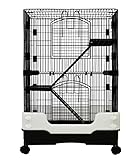
- Small Animal Cage: This 3-tier critter cage measures 25"L x 17"W x 38"H with a 0.65-inch wire spacing, perfect for housing small pet rodents such as rats (including fancy and Dumbo rats), ferrets, chinchillas, guinea pigs, and small rabbits/bunny (such as Holland Lop, Netherland Dwarf, and Lionhead)
- Anti-Spill Guard Design: The rat cage bottom features a splash guard that keeps bedding, urine, and food debris neatly contained. It helps prevent messes, reduces cleaning frequency, and keeps your home clean
- Non-Slip Ramp & Spacious Platform: The wide platform offers a comfortable resting area for your pet, while the non-slip textured ramp ensures safety. Its gentle incline prevents falls and injuries, helping your pet climb with confidence and stay active and healthy
- Easy to Clean: Equipped with detachable, paw-friendly plastic floor grates that filter out food debris and waste, keeping the habitat clean and your pet tidy. The 1-inch removable tray holds more litter, while the rounded-corner base eliminates dead spots for effortless cleaning. All parts of the chinchilla cage are fully detachable—simply release the clips and lift the wire frame to separate the base for quick, thorough maintenance
- Escape-Proof Door Lock: Features a wide front door that allows easy access for your furry friends. The upgraded two-finger locking system of ferret cage provides double protection—preventing clever escapes and keeping your pet safe from other animals, so you can stay worry-free
| Source | What it included | How to interpret it |
|---|---|---|
| Merck Veterinary Manual (page updated 2026) | Veterinary reference information, including an average lifespan of 18–36 months and common health concerns | General clinical guidance, not a prediction for an individual rat |
| Rey and colleagues (2015) | Standardized records for 375 rats seen at three veterinary centres in France over six months | A referred clinical case series; its diagnosis mix is not population prevalence |
| Rey and colleagues (2015) | The ten most common diagnoses represented 66.9% of cases in that series | The percentage applies only to those 375 clinic cases, not to all pet rats |
| UK Bristol Veterinary School welfare survey (2021) | 677 complete owner responses about pet-rat welfare and health | Survey evidence from respondents, not a controlled estimate of disease risk |
In the French case series, rhinitis, presentations judged healthy and mammary-gland tumors appeared among the majority diagnoses. An inappropriate environment was associated with respiratory disease in that group. That association is a reason to take housing and air quality seriously, not proof that one environmental factor causes every respiratory illness.
Health problems owners should know
Respiratory disease
Respiratory illness is one of the most important risks in pet rats. Chronic respiratory disease may cause sneezing, sniffling, a rough or unkempt coat, lethargy, labored breathing, weight loss, reduced appetite, head tilt and reddish-brown staining around the eyes or nose. Runny eyes or a runny nose can also occur with other infections, so appearance alone cannot identify the organism or the correct treatment.
Breathing difficulty is urgent. Contact a veterinarian promptly if a rat is working hard to breathe, becomes markedly inactive, stops eating or loses weight. A rat-savvy clinician can examine the animal and decide whether testing, medication or supportive care is appropriate. Do not select antibiotics, leftover prescriptions or human cold remedies yourself. Merck also identifies reducing ammonia in the cage as part of managing chronic respiratory disease; good ventilation and regular, appropriate cleaning are therefore relevant to treatment support as well as prevention.
Quick wins for a faster PC:
Repair Windows errors before they cause bigger problemsFix Now →Fix the driver behind crashes, sound loss and screen glitchesFind Drivers →Clear out junk files and repair common Windows errorsFree Scan →Rank #2

- Two Story Double Unit Design: Features 4-tiers durable frame cage with full middle floor and 1/2-inch wire spacing, allowing pets to access between floors with ladder and durable wrought iron construction that is easy to assemble
- Tight Horizontal Wire Spacing: Narrow 1/2-inch wire spacing recommended for a wide variety of small animal critters to prevent escape and getting stuck, while allowing pets to fulfill their instinct to climb and explore in a secure environment
- Durable Front Access Doors: Features double large hinged front doors measuring 15 inches by 18 inches with improved safety lock, top hook door for easy access from the top measuring 8 inches by 9 inches, and includes 2 easy adjustable washable solid platforms and 2 anti-slip solid ramps safe for small animals
- Large Spacious Dimensions: Measures 24-inches long, 17.5-inches wide, and 53.5-inches high when placed on the rolling stand, providing ample space for small animals to move and play
- Complete Accessories Package: Includes 1 hammock, 1 water bottle, and 1 food bowl to provide everything needed for your small pet's comfort and care
Tumors and new lumps
Tumors, or neoplasia, are common concerns in rats. Mammary tissue extends along much of the underside, so a mammary tumor can appear as a lump anywhere from the chin area toward the tail rather than only beside the nipples. A lump may be benign or malignant, and its appearance does not establish which it is.
Arrange a veterinary assessment for every new or changing lump. The clinician may discuss observation, sampling or removal based on the rat’s location of the mass, general health and likely benefit of intervention. Removal is not automatically curative: Merck notes that tumors may recur at other sites. Monitor the area for growth, ulceration, bleeding or interference with walking, grooming or eating while waiting for the appointment.
Skin disease and coat changes
Veterinary references list dermatopathies, or skin disorders, among common rat problems. Owners may notice hair loss, scabs, wounds, excessive scratching, bites, redness, a greasy or matted coat or persistent fluffed fur. These signs can result from several different problems, including parasites, irritation, infection or self-trauma. A cage mate may also create bite wounds that need attention.
Rank #3
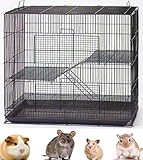
- Easy Portable Design: Cage dimensions measure 24 inches length by 16 inches width by 24 inches height, featuring all-metal construction with 3 levels, wire shelves, and ladders with tight 3/8-inch cross bar spacing
- Narrow 3/8-Inch Wire Spacing: Prevents escape and stuck incidents for baby to adult size small animals including chinchillas, ferrets, rats, dwarf hamsters, guinea pigs, rabbits, mice, gerbils, sugar gliders and other small critters
- Two Front Access Doors: Features doors measuring 6.5 inches by 11.5 inches with locking door clips for extra security, includes 1/2-inch wire spacing, metal grated floor, platforms and ladders with chew-proof construction
- Easy To Clean Design: Includes removable raised 3/8-inch bar spacing bottom grate and pull-out washable tray with animal safe epoxy coated finish for convenient maintenance
- Easy Foldable and Setup: Collapsible design folds for storage with two top side carrier handles for travel convenience, requires no tools for assembly and setup
Do not apply human creams, insecticides or essential oils without veterinary direction. Rats groom themselves and can ingest substances placed on the skin. Photographing a changing lesion and noting when it began can help the veterinarian, but it should not delay care when the rat is painful, weak or not eating.
Overgrown incisors and other dental trouble
Rat incisors grow continuously. If the teeth do not wear or align normally, overgrowth can make grasping food difficult, injure the mouth and lead to weight loss or dehydration. Signs can include dropping food, chewing slowly, dribbling, a wet chin, facial swelling or a sudden preference for soft foods.
Suspected dental overgrowth requires a veterinary examination. Attempting to clip or file incisors at home can fracture a tooth, expose the sensitive pulp or cause a mouth injury. Ask the veterinarian to check the entire mouth and to explain safe follow-up if the problem recurs.
Rank #4

- SPACIOUS 2-STORY HABITAT: Measures 36 x 24 x 63 inches with two full levels of living space. The 1/2" horizontal wire spacing safely contains rats, chinchillas, ferrets, sugar gliders and degus while allowing natural climbing behavior.
- DURABLE CONSTRUCTION: Sturdy metal wire design with a gray quartz hammertone finish, Critter Nation resists everyday wear. Complete with 2 removable base pans, 3 textured ramps with covers, and 2 full-width resting shelves.
- CUSTOMIZE YOUR HABITAT: Height-adjustable design lets you customize the perfect setup for your pet, with 2 wide expanse shelves and 2 full-width plastic pan floors to maximize play space. Compatible with a wide range of accessories.
- BUILT FOR DAILY LIFE: Full-width double doors provide maximum accessibility, with a swing-up locking ramp that lets you separate pets or section off areas during cleaning and feeding. Bottom level shelf provides storage area for pet accessories.
- BECAUSE LIFE GOES BETTER WITH PETS: A family-owned business based in Indiana, MidWest Homes for Pets brings over 100 years of pet product expertise and a commitment to quality, rigorous safety testing, and excellent US-based customer service.
Other changes that deserve attention
Merck’s owner-monitoring guidance includes loss of appetite or weight, a hunched posture, eye or nose discharge, hair loss, matted or fluffed fur, wounds, bites, limping and general dullness. The Centers for Disease Control and Prevention’s small-mammal guidance also lists sluggishness and diarrhea as illness signs. These observations are prompts to seek professional advice, not diagnoses.
Warning signs and how quickly to act
| What you notice | Why it matters | Action |
|---|---|---|
| Labored, noisy or unusually fast breathing; open-mouth breathing; severe weakness | Can indicate serious respiratory compromise | Contact a rat-experienced veterinarian immediately; treat as an emergency if breathing is difficult |
| Repeated sneezing, sniffling or discharge from the eyes or nose | May reflect respiratory disease or another infection | Arrange a prompt appointment, especially if appetite or activity has fallen |
| A new, enlarging, ulcerated or painful lump | Could be a mammary or other tumor, abscess or injury | Book a veterinary examination; do not diagnose cancer from appearance |
| Reduced appetite, weight loss, dehydration or dropping food | Can accompany respiratory, dental, systemic or painful conditions | Call promptly; a rat that stops eating can worsen quickly |
| Hunched posture, dullness, limping, wounds or bites | Suggests pain, injury or illness | Separate safely from a harmful cage mate if needed and seek veterinary advice |
| Hair loss, scabs, persistent scratching or a matted coat | Signals a skin problem, parasites, irritation or self-trauma | Arrange an examination; avoid unapproved topical products |
| Diarrhea or a sudden marked change in droppings | May cause rapid fluid loss or indicate disease | Contact a veterinarian, particularly if the rat is sluggish or not drinking |
A practical daily monitoring routine
Short, calm checks are more useful than occasional long inspections. Observe each rat individually, because a healthy cage mate can make a sick rat’s decline easy to miss.
- Watch activity and posture. Note whether the rat explores, climbs, grooms and interacts normally. Record unusual hiding, a hunched stance or a sudden drop in movement.
- Check breathing without stressing the rat. Listen for new clicking, wheezing or persistent sniffling and look for visible effort. Handling can temporarily change breathing, so observe at rest as well.
- Confirm eating and drinking. Check that food is being consumed and water is available. Dropped food, a wet chin or refusal of familiar foods can indicate dental or systemic disease.
- Feel for body-condition changes. Regular, gentle handling can reveal weight loss or a new lump. Use a scale if your veterinarian recommends it and record the date and weight so a gradual decline is not overlooked.
- Inspect eyes, nose, coat and skin. Look for reddish-brown staining, discharge, hair loss, scabs, wounds, bites, mats or persistent scratching.
- Check movement and droppings. Notice limping, weakness, head tilt, diarrhea or a change in normal stool output.
- Write down changes. A dated note or photograph gives the veterinarian a clearer timeline than memory alone. Record appetite, weight, breathing, medications prescribed and whether signs are improving.
Routine veterinary care
Merck recommends an annual examination by a veterinarian experienced with rats. The purpose is not only to treat obvious illness: a rat-savvy clinician may detect subtle changes in teeth, breathing, body condition, skin or a developing mass and can discuss prevention.
Best Value
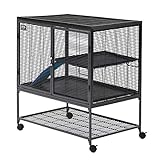
- SPACIOUS HABITAT: Measures 36 x 25 x 38.5 in. with a main level and upper shelf for comfortable living space. The 1/2" horizontal wire spacing safely contains chinchillas, rats, ferrets, sugar gliders & degus while allowing natural climbing behavior.
- DURABLE CONSTRUCTION: Sturdy metal wire design with a gray quartz hammertone finish, Critter Nation resists everyday wear. Complete with removable base pan, textured ramp with cover, and a full-width resting shelf, it's ready for years of use.
- CUSTOMIZE YOUR HABITAT: Height-adjustable design lets you customize the perfect setup for your pet, with a wide expanse shelf and full-width plastic pan floor to maximize play space. Compatible with our Add-On Unit for additional room.
- BUILT FOR DAILY LIFE: Full-width double doors provide maximum accessibility, with a swing-up locking ramp that lets you separate pets or section off areas during cleaning and feeding. Bottom level shelf provides storage area for pet accessories.
- BECAUSE LIFE GOES BETTER WITH PETS: A family-owned business based in Indiana, MidWest Homes for Pets brings over 100 years of pet product expertise and a commitment to quality, rigorous safety testing, and excellent US-based customer service.
“Rats should be examined annually by a rat-savvy veterinarian who can pick up on subtle signs of illness early and can help prevent the development of illness.”
— Merck Veterinary Manual
Find the practice before you need it, ask whether the clinician routinely treats rats and establish how the clinic handles emergencies. Bring the rat in a secure carrier with familiar bedding, along with the health log and a list of any products or medicines used. Never give an over-the-counter remedy or human medication on the assumption that a small dose is safe.
Housing and husbandry that support health
- Keep the cage safe. Remove sharp edges, unstable platforms, exposed wires and other hazards that can cause injuries. Check doors and flooring regularly.
- Control air quality. Keep the enclosure ventilated and clean it on a schedule that limits ammonia without eliminating all familiar scent at once. Ammonia reduction is specifically noted in chronic respiratory-disease management.
- Provide appropriate nutrition and water. Maintain constant access to fresh water and a nutritionally appropriate rat diet. A sudden inability to chew or refusal to eat warrants a call to the veterinarian rather than an improvised diet.
- Handle gently. Support the body, avoid squeezing the chest and minimize stressful restraint, especially when a rat is breathing abnormally.
- Inspect companions and the environment. Look for bullying, bites, damp bedding, excessive dust or other changes that could injure or irritate the animals.
These measures support welfare but cannot prevent every tumor, infection or inherited problem. They also do not replace diagnosis and treatment when warning signs appear.
What’s actually slowing this PC down?
Pick the symptom - the matching free tool is one click away.
When a rat needs urgent help
Seek immediate veterinary assistance for obvious breathing difficulty, collapse, severe weakness, uncontrolled bleeding, a serious wound or a rat that cannot eat or drink. Call promptly for less dramatic but persistent signs such as repeated sneezing, discharge, appetite loss, weight loss, a new lump or major behavior change. Rats can compensate until illness is advanced, so waiting several days to “see what happens” can reduce treatment options.
While arranging care, keep the rat warm but not overheated, minimize handling and offer normal food and water if it can take them safely. Do not force-feed, trim teeth, lance a lump or start medication unless a veterinarian has given specific instructions.
Key perspective for owners
A realistic expectation is roughly one and a half to three years, with substantial individual variation. The most useful protection is not trying to predict an exact lifespan; it is learning each rat’s normal breathing, appetite, weight, coat, movement and behavior, then acting quickly when those baselines change. Annual rat-savvy examinations, safe housing, controlled cage ammonia and careful daily observation give a veterinarian the best chance to address problems early.
Quick Recap
Product prices and availability are accurate as of the date/time indicated and are subject to change. Any price and availability information displayed on Amazon at the time of purchase will apply.
Do these 3 things before closing this tab:
1Repair Windows errors before they cause bigger problems2Fix the driver behind crashes, sound loss and screen glitches3Clear out junk files and repair common Windows errors



