The Tool Desk
Outbyte Driver Updater FREEFix the driver behind crashes, sound loss and screen glitchesFind Drivers →Outbyte PC Repair FREERepair Windows errors before they cause bigger problemsFix Now →Keep your pet physically separated from traffic, under reliable control, and out of wildlife-only areas. Near a highway, use a short leash, obey posted access rules, and never allow a dog to roam ahead. In a vehicle, secure the animal in a suitable harness, carrier, cage, or dog guard. Wildlife corridors and road crossings are built for wild-animal movement, not as pet exercise routes; give wildlife space and stay on permitted paths.
Why highways and wildlife corridors need a different safety plan
A roadside combines two hazards: fast-moving vehicles and animals that may react unpredictably. A dog can bolt after a scent, bicycle, horse, or wild animal in seconds. A cat or small pet may slip through a gate or carrier opening. Even a calm animal can panic when exposed to engine noise, headlights, or a large wild animal.
As an Amazon Associate I earn from qualifying purchases.
The scale of the road danger is substantial. The U.S. Federal Highway Administration (FHWA), summarizing congressional findings, reports more than 1,000,000 wildlife–vehicle collisions each year in the United States, with costs above $8 billion, tens of thousands of serious injuries, and hundreds of fatalities. Those figures cover wildlife–vehicle collisions broadly, not pet-specific incidents, but they show why an animal loose beside a high-speed road is an unacceptable risk. See the FHWA Wildlife Crossings Program for the agency’s context.
Free tools Windows power users keep installed
One-click scans. No signup required.
A wildlife corridor is a connected route that lets wild animals move between habitats. A crossing structure may be a bridge, underpass, culvert, or fenced passage linked to habitat on both sides of a road. FHWA explains that these structures are intended to improve habitat connectivity and reduce wildlife–vehicle collisions; species do not all respond in the same way, so a crossing is not a universal guarantee. The handbook describes generalized planning guidance, not a pet-access recommendation: Wildlife Crossing Structure Handbook, Chapter 1.
#1 Best Overall

- DURABILITY - No matter how well-trained your pup is, there’s no guarantee they won’t tug, pull, or chew on the seat belt during the ride. Our seat belts are crafted from heavy-duty nylon webbing with reinforced stitching for maximum durability. The sturdy metal components are designed to prevent unbuckling or snapping at the worst possible moment.
- ELASTIC BUFFER DESIGN - Featuring a durable elastic bungee buffer, our seat belt absorbs sudden movements and jerks while driving, reducing the risk of choking. This design allows your pet to move freely within a set space, ensuring greater comfort during the ride.
- TANGLE-FREE & ADJUSTABLE - The quick-release metal buckle easily clips into your car's seat belt receptacle. A swivel clip attachment prevents tangling and allows natural movement, providing instant security and peace of mind. The dog seat belt can be adjusted from 24 to 31 inches to suit your pet's needs. The sturdy aluminum alloy clasp rotates 360 degrees for added comfort, whether your dog wants to sit, stand, or lie down.
- EASY & UNIVERSAL MOUNTING - Ensure compatibility by checking your buckle's size before ordering. The tab on the seatbelt clip is 0.79 inches wide, designed to work with most vehicle seat belt buckles. It can easily be attached to any dog harness featuring a D-ring or similar attachment point.
- SATISFACTION GUARANTEE- You'll receive a value pack of 1 dog seat belts. Our commitment is to design premium-quality pet supplies that enhance comfort and convenience for pets and their families. Your satisfaction is our highest priority.
| Situation | Main risk | Safest default |
|---|---|---|
| Walking beside a highway | Pet enters a live lane or is startled toward traffic | Use a short leash, keep the pet beside you, and choose a barrier-separated route whenever possible |
| Walking near a wildlife corridor | Pet chases, is attacked by, or disrupts wildlife | Stay on an allowed path, keep the pet in sight and under reliable control, and give wildlife plenty of room |
| Driving near a corridor | Animal distracts the driver or is injured in sudden braking | Use a properly fitted restraint before the vehicle moves |
| Home or campsite near a road | Pet escapes through a gate, door, or damaged fence | Use two-stage door and gate habits, inspect boundaries, and keep identification current |
How to walk a dog safely beside a busy road
Use close control, not a long line
The UK Department for Transport’s Highway Code, Rule 56, says: “Do not let a dog out on the road on its own.” It recommends a short lead on a pavement, road, or path shared with cyclists or horse riders. A short leash gives you a chance to block a sudden lunge before the animal reaches the carriageway. Retractable leads and long training lines can be useful in open, legal areas, but near traffic they create a loop that can snag, lengthen unexpectedly, or leave too much distance to stop a dash.
Hold the leash so it cannot be pulled from your hand, and keep the dog on the side away from vehicles. Do not wrap the leash around your wrist or fingers; a frightened dog can cause a fall or hand injury. If your dog repeatedly pulls toward traffic, practise loose-leash walking and emergency turns in a quiet area before using a roadside route.
Pick the route before leaving
- Prefer a separated footway, trail, or park with a physical barrier between animals and vehicles.
- Avoid narrow shoulders, blind bends, slip roads, motorway entrances, and places where a hedge or parked vehicle blocks your view.
- Check signs at trailheads and road crossings. A path that allows dogs in one season or section may require leads, restrict access, or prohibit dogs elsewhere.
- Plan a turn-around point so you are not forced to continue along an unsafe shoulder if conditions change.
- In darkness, fog, heavy rain, or glare, choose a route with better separation or postpone the walk.
Cross roads deliberately
- Stop well back from the kerb and shorten the leash before approaching the crossing.
- Wait for a legal crossing point with a clear view in both directions. Never rely on a dog to judge vehicle speed.
- Ask for a sit or stand-stay if your dog knows it, but keep hold of the leash; a command is not a physical barrier.
- Cross at a steady pace without allowing sniffing or zig-zagging into the lane.
- At the far side, move away from the road before giving the dog slack or a reward.
Make the dog visible without confusing visibility with restraint
A light-coloured or reflective collar, harness, or coat can make an animal easier for a driver to notice in low light. Treat that equipment as an accessory, not as a traffic-control device: reflective material does not stop a dog entering the road. The Highway Code’s specific reflective-clothing advice concerns people and horse riders, not a dog-product performance standard. Keep the leash short and maintain physical control even when the dog is highly visible.
Rules for paths, parks, and wildlife corridors
Follow the local rule, not a general assumption
The UK Government’s Countryside Code advises keeping dogs under effective control and in sight, either on a lead or reliably responsive to recall, and ensuring they do not stray from the path or area where access is allowed. It also warns that local authorities, landowners, and conservation sites may require leads, prohibit dogs, or impose seasonal restrictions. Read the sign at the entrance and check the current local authority or land-manager notice before every visit; an old social-media post is not a substitute for a posted restriction.
Rank #2
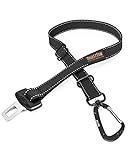
- Keep Your Pets Safe: Your dog loves car rides, but roaming dogs can lead to distractions and dangerous conditions. Keep both you and your pup secure with our car dog harness seat belt, which easily buckles into any seatbelt outlet in your vehicle.
- Premium Metal Buckle for Ultimate Protection: Our dog car leash seat belt for large dogs, medium breeds and small pets isn't just any seat belt. Its built Mighty Strong with only the high quality materials so you can travel with peace of mind.
- Aircraft-Grade Aluminum Carabiner: Built to withstand over 850 lbs of force, the durable aviation aluminum carabiner ensures maximum safety. The tangle-free swivel clip keeps your dog secure and comfortable without getting tangled!
- Adjustable Length for Perfect Fit: Made with durable nylon, our dog car seat belt adjusts from 16 to 26 inches, ensuring a comfortable fit for your pup whether they prefer to sit, stand, or lie down during the ride.
- Safety Regulations Compliance: For maximum security, pair our dog car harness seat belt with an approved vehicle dog harness. Drive with confidence and keep your furry friend safe and secure. They are perfect dog car accessories for peace of mind!
Understand what a crossing structure is—and is not
An underpass, overpass, or fenced wildlife crossing is part of a landscape-scale transport and conservation design. It is not a dog trail, shortcut, or safe place to practise off-leash recall. Fences may funnel animals toward an opening, and approaching a crossing can disturb species that are using it. If a marked public trail passes near a structure, remain on that trail and obey any closure or seasonal notice. Never climb a wildlife fence, enter an underpass marked for wildlife only, or encourage a pet to follow an animal into vegetation.
FHWA notes that wildlife responses vary by species and that crossing designs are developed for particular landscapes. Project information and current U.S. program activity are available from the FHWA Wildlife Crossings Program Activities page, updated October 20, 2025. The presence of a crossing does not mean nearby roads are free of wildlife or that a pet can safely roam.
Give wild animals more space than feels necessary
The Countryside Code says, “Give wild animals, livestock and horses plenty of space.” Wildlife can defend young, flee into traffic, or turn suddenly when cornered. Keep your dog beside you, shorten the leash, and create distance by turning around or stepping behind a solid barrier. Do not allow barking, chasing, feeding, or an attempt to photograph an animal at close range. Country roads are dangerous to people and wildlife; stand well off the carriageway while waiting for an animal to move.
Securing a pet in a car near highways
Before the vehicle moves, place the animal in its restraint and close every door or hatch. Rule 57 of the Highway Code says: “When in a vehicle make sure dogs or other animals are suitably restrained so they cannot distract you while you are driving or injure you, or themselves, if you stop quickly.” The rule gives examples—seat-belt harness, pet carrier, dog cage, or dog guard—but it does not rank products or establish crash-test ratings.
Rank #3

- DURABILITY - No matter how well-trained your pup is, there’s no guarantee they won’t tug, pull, or chew on the seat belt during the ride. Our seat belts are crafted from heavy-duty nylon webbing with reinforced stitching for maximum durability. The sturdy metal components are designed to prevent unbuckling or snapping at the worst possible moment.
- ELASTIC BUFFER DESIGN - Featuring a durable elastic bungee buffer, our seat belt absorbs sudden movements and jerks while driving, reducing the risk of choking. This design allows your pet to move freely within a set space, ensuring greater comfort during the ride.
- TANGLE-FREE & ADJUSTABLE - The quick-release metal buckle easily clips into your car's seat belt receptacle. A swivel clip attachment prevents tangling and allows natural movement, providing instant security and peace of mind. The dog seat belt can be adjusted from 24 to 31 inches to suit your pet's needs. The sturdy aluminum alloy clasp rotates 360 degrees for added comfort, whether your dog wants to sit, stand, or lie down.
- EASY & UNIVERSAL MOUNTING - Ensure compatibility by checking your buckle's size before ordering. The tab on the seatbelt clip is 0.79 inches wide, designed to work with most vehicle seat belt buckles. It can easily be attached to any dog harness featuring a D-ring or similar attachment point.
- SATISFACTION GUARANTEE- You'll receive a value pack of 2 dog seat belts and 1 collapsible water bowl. Our commitment is to design premium-quality pet supplies that enhance comfort and convenience for pets and their families. Your satisfaction is our highest priority.
| Restraint type | What to check | Important limitation |
|---|---|---|
| Seat-belt harness | Harness fits the animal’s body, attaches as the maker specifies, and leaves no loose strap that can reach the driver | Do not assume every harness has been independently crash-tested; look for product-specific safety documentation |
| Carrier | Correct size, secure closure, ventilation, and a stable position that cannot slide or tip | A carrier that is too small restricts posture; an unsecured carrier can become a projectile |
| Dog cage or crate | Appropriate dimensions, secure anchoring, and adequate airflow | Fit and anchoring depend on the vehicle and crate design; do not rely on weight alone to hold it in place |
| Dog guard | Proper installation between the passenger area and cargo space, with no escape gaps | A guard separates the dog from the driver but may not by itself prevent injury in a severe stop |
A practical pre-drive fitting check
- Read the restraint maker’s instructions for the exact attachment point and vehicle position.
- Fit the harness or carrier while parked and let the pet move, sit, and lie down without reaching the steering wheel or pedals.
- Pull firmly on each connection by hand. Check that buckles, clips, doors, and anchor points are fully closed.
- Secure loose items in the cabin so they cannot strike the animal during braking.
- Start with short, stationary sessions, then brief low-speed trips, watching for escape attempts, overheating, or distress.
- Stop only in a safe location before opening a door. Attach a leash to the pet before releasing the vehicle restraint.
Never let an animal ride on the driver’s lap, stand with its head outside a window, or travel loose in the cabin. Do not open a door or hatch at a roadside shoulder unless the pet is already connected to a leash or fully enclosed carrier.
Choosing walking and travel gear without overestimating it
Start with control and fit, then consider convenience and visibility. A product cannot compensate for an unsuitable route, an open gate, or a handler who is distracted.
| Gear decision | Questions to answer before buying | What it can and cannot do |
|---|---|---|
| Short leash | Can you keep the dog beside you without the handle slipping? Is the length practical for the route? | Supports close control; does not replace training or a legal lead requirement |
| Harness or collar | Does it fit without rubbing, backing out, or restricting breathing? Can you attach the leash securely? | Provides an attachment point; no design makes an unsupervised dog road-safe |
| Reflective accessory | Is it visible from the directions vehicles approach, and does it remain visible when wet or covered by fur? | May improve recognition in low light; does not prevent a dash into traffic |
| Vehicle harness, carrier, crate, or guard | How does it attach in this vehicle? Is there manufacturer safety documentation? Can the pet remain comfortable? | Reduces distraction and movement; the Highway Code does not certify or rank products |
Replace equipment that is frayed, cracked, stretched, or difficult to close. Recheck fit after weight changes, grooming, or growth. Test any new item away from traffic so a pet does not learn to fight it beside a road.
Recommended Free Tools
Making a home, campsite, or rental safer near a highway
Create two barriers at every exit
Use a closed interior door, porch, baby gate, or pen before opening an exterior door. At a driveway or garden gate, latch the first gate before opening a second. Ask visitors and delivery workers to wait while the pet is secured. A sign reminding people not to leave gates open helps, but a physical second barrier is more reliable.
Rank #4

- Crash-Tested Safety & Comfort: The Kurgo Enhanced Strength Tru-Fit Dog Car Harness offers a crash test-certified fit with all-steel buckles
- Fit for Walks & Travel: Designed as a daily use harness fit, it features five points of adjustment and a padded chest plate for secure comfort during rides or walks
- Durable & Travel Ready: Built with an enhanced strength build, includes a 10-inch seatbelt tether with steel carabiner, making it an ideal pet travel safety harness
- Designed for Real-World Adventures: Kurgo gear is built to solve everyday challenges with dogs, making travel, walks, and outdoor play safer, easier, and more fun for both of you
- Durable Gear, Lifetime Promise: Engineered for longevity and reliability, every Kurgo product is crafted with rugged materials and backed by our industry-leading lifetime warranty
Inspect the boundary at the pet’s eye level
- Look for gaps under gates, loose boards, damaged mesh, and places where a dog has started digging.
- Check whether a cat can climb over, squeeze through, or use a nearby object as a launch point.
- Keep bins, stacked wood, furniture, and tools away from the fence if they can be used to climb.
- After storms, road works, or landscaping, walk the entire perimeter before releasing the pet.
Prepare identification and an escape response
Keep the animal’s microchip registration, collar identification, and emergency telephone details current. Store a leash, carrier, torch, and high-value treats at each exit. Tell every household member who calls local authorities if an animal reaches a live road. Practise calling the pet indoors and rewarding a rapid response; do not punish a returned animal, because fear can make the next escape harder to stop.
What to do if a pet or wild animal approaches the road
If your pet is still under control
Stop, shorten the leash, and turn away from the road. Move behind a barrier or into a driveway only when it is safe and permitted. Use a familiar cue and reward attention; do not jerk the leash toward traffic. If your dog is too strong to hold safely, lower your centre of gravity, ask another adult for help, and call for assistance rather than stepping into a live lane.
If your pet gets loose
- Do not chase blindly into the roadway. Alert nearby people and have one person watch traffic from a safe position.
- Call the pet in a calm, familiar voice and crouch sideways rather than running directly at it.
- Use food, a toy, or an open carrier if those normally attract the animal. Keep a leash ready before reaching.
- Contact the road authority or emergency services if the animal is in an active lane or a collision is imminent. Give the exact road, direction of travel, landmarks, and traffic conditions.
- Once recovered, move well away from traffic before checking the pet. Seek veterinary care for limping, breathing changes, bleeding, collapse, or possible impact—even when external injuries look minor.
If you encounter wildlife
Keep the pet behind you or secured, increase distance, and leave the animal an unobstructed route away from you. Do not touch young wildlife, feed it, or block a crossing. If an injured animal is beside a high-speed road, report it to the relevant wildlife rescue service, road authority, or emergency number from a safe location. Never stand in a lane to help.
A repeatable safety checklist
- Before leaving: check the route, weather, signs, seasonal restrictions, leash, identification, and vehicle restraint.
- At the roadside: keep the pet on the traffic-averse side, use a short leash, and stop at crossings.
- Near wildlife: stay on the permitted path, keep the animal in sight, and retreat to create space.
- Before driving: secure the pet, close the restraint, remove cabin hazards, and confirm the animal cannot reach the controls.
- At home: use two barriers, inspect fences and gates, and maintain current identification.
- During an emergency: protect people from traffic first, call for help, and do not pursue an animal into a live lane.
Rules differ by country, council, park, and season. The Highway Code and Countryside Code cited here are UK guidance; FHWA material concerns U.S. highways and wildlife crossings. Use the principles everywhere, but follow the signs and current local authority rules where you live.
Quick Recap
Product prices and availability are accurate as of the date/time indicated and are subject to change. Any price and availability information displayed on Amazon at the time of purchase will apply.




