There is no single acclimation time for every freshwater fish. For an ordinary local purchase, follow the instructions for the fish and the method you are using: the CDC recommends floating the intact bag for about 30 minutes to an hour, while the Ornamental Aquatic Trade Association (OATA) recommends at least 10 minutes of floating, followed by gradual additions of aquarium water for up to 20 minutes. Sensitive fish or fish moving between very different water conditions may need a slower, species-specific approach. Shipped fish can require a different approach because leaving them in opened transport water for a long time may increase their exposure to toxic ammonia.
Choose the acclimation time for the fish’s situation
Acclimation helps a fish adjust to the aquarium’s temperature and water conditions. The right method and duration depend on the fish’s sensitivity, how it was transported, and the difference between the water it came from and the water in the tank. The published recommendations below describe different procedures, so they should not be combined into a universal timer.
As an Amazon Associate I earn from qualifying purchases.
| Situation | Practical guidance |
|---|---|
| Fish bought locally; ordinary conditions | The CDC advises floating the intact bag for about 30 minutes to an hour to match temperature. OATA advises at least 10 minutes of floating, then adding small amounts of aquarium water over up to 20 minutes. |
| Sensitive species or substantial water-chemistry difference | OATA describes drip acclimatisation as an option for particularly sensitive fish or when source and destination water chemistry may differ greatly. Some specialized cases, such as Discus, can take one to several hours. |
| Fish shipped for a long time | Follow the shipper’s instructions. Aquarium Co-Op cautions that a long drip after opening a shipping bag can leave fish in water where ammonia becomes more toxic as carbon dioxide escapes and pH rises. |
| Temperature differs by more than 10°C | In its fish transport and holding context, UF/IFAS says slow acclimation over two or more hours is ideal when the difference exceeds 10°C. It also notes that some species tolerate faster acclimation; this is not a household rule for every aquarium fish. |
How to acclimate a fish from a local purchase
For a routine purchase, use the method recommended by the retailer or for the species. The CDC’s method focuses on matching temperature by floating the intact bag. OATA’s freshwater-aquarium guidance adds gradual mixing of aquarium water after floating.
- Prepare the aquarium first. Make sure it is suitable for the species and ready to receive the fish.
- Float the intact bag. Keep it closed while it floats so the water inside stays separate from the aquarium water. The CDC recommends about 30 minutes to an hour; OATA says at least 10 minutes.
- If following OATA’s method, add aquarium water gradually. After the float, introduce small amounts of tank water over up to 20 minutes.
- Transfer the fish according to the retailer’s or species-specific instructions. Avoid treating any one duration as mandatory for all fish.
Floating the closed bag mainly addresses temperature; it does not by itself establish that the fish has adjusted to differences in pH, hardness, or other water conditions.
#1 Best Overall

- Contains one (1) API TAP WATER CONDITIONER Aquarium Water Conditioner 16-Ounce Bottle
- Neutralizes chlorine, chloramines and other chemicals to make tap water safe for fish
- Prevents tap water chemicals from causing gill destruction, tissue irritation and fish death
- Super strength, high concentration formula
- Use when adding or changing water and when adding new fish to freshwater and saltwater aquariums
When a slower method may be appropriate
OATA identifies drip acclimatisation as a possible approach for particularly sensitive fish or when the source and destination water chemistry are likely to differ greatly. In specialized cases, acclimation may take one to several hours. Ask the retailer or an aquatic veterinarian for species-specific directions before choosing a prolonged procedure.
A drip kit is optional equipment for this method, not a requirement for every new fish and not a way to determine the correct duration. A long drip is also not automatically safer: the fish’s transport history matters, especially if it has been shipped.
Rank #2

- POWERFUL TREATMENT: Seachem Prime is a complete and concentrated conditioner for both freshwater and saltwater fish tanks, working hard to remove chlorine and chloramine.
- REMOVER: Seachem Prime immediately and permanently removes chlorine and chloramine, successfully allowing the bio filter to remove ammonia, nitrite, and nitrate while they are detoxified for 48 hours.
- DETOXIFIER: Seachem Prime effectively detoxifies ammonia, nitrite, and heavy metals found in the tap water at typical concentration levels, providing a ideal environment for your betta, tetra, or other fish.
- USE: Use 1 capful (5 mL) of Seachem Prime for each 200 L (50 US gallons) of new or replacement water. For best results, add Seachem Prime to new water first. For exceptionally high chloramine concentrations, a double dose may be used safely. For smaller volumes, use 2 drops per gallon.
- SAFETY: In case of an emergency, the 5x dose of Seachem Prime may be used for both ammonia and nitrite. Use a ½ dose if the water temperature is > 30°C (86°F) and chlorine or ammonia levels are low.
Use a different approach for long-shipped fish
Fish transported for a long time may arrive in water containing accumulated waste. Aquarium Co-Op explains that after a shipping bag is opened, carbon dioxide can escape and the water’s pH can rise, making ammonia more toxic. In that situation, a prolonged drip in opened bag water can increase risk rather than reduce it.
Follow the shipper’s fish-specific instructions. Aquarium Co-Op’s shipped-fish advice favors a short temperature float and prompt transfer, rather than an extended acclimation in opened transport water. Do not apply the routine local-purchase procedure to a shipment without considering the seller’s guidance.
Rank #3

- Contains one (1) API STRESS COAT Aquarium Water Conditioner 16-Ounce Bottle
- Makes tap water safe and protects fish with dual-action formula
- Removes chemicals from tap water that are harmful to fish
- Replaces fish’s protective coat damaged by handling or fish fighting with healing power of Aloe Vera extract
- Use when adding or changing water, when adding new fish and when fish are sick or injured
Get the aquarium ready before acclimation
Acclimation cannot compensate for an aquarium that is unsuitable or not ready. The CDC advises preparing the aquarium and consulting a veterinarian about setup and species-specific environmental and care needs. OATA recommends checking compatibility with existing fish and confirming that ammonia and nitrite are zero.
- Confirm that the tank’s temperature and environment suit the fish.
- Check compatibility with the fish already in the aquarium.
- Check ammonia and nitrite; OATA says both should be zero.
- Consider relevant water conditions, including pH, dissolved oxygen, alkalinity, and hardness, as well as temperature and nitrogen compounds.
- Switch off aquarium lights during acclimation, as OATA advises, to reduce disturbance.
Acclimation is not quarantine
Acclimation is the adjustment to new environmental conditions; quarantine is a separate biosecurity measure. FELASA-AALAS recommendations for institutional fish colonies call for at least two weeks of observation after arrival, with longer periods possible depending on risk and setting. That professional facility guidance is not the number of minutes a home aquarium fish needs to acclimate.
Quick Recap
Best Value
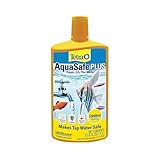
- FOR FRESHWATER AND MARINE AQUARIUMS: Tetra AquaSafe Plus works instantly to make tap water safe for fish.
- ADVANCED FORMULA: Neutralizes or removes harmful chlorine, chloramines and heavy metals.
- PROTECTS FISH: Enhances protective slime coat to help wounds heal.
- CLEAR AND HEALTHY WATER: With natural biopolymers and essential vitamins and minerals.
- WATER CONDITIONER: Use when setting up a new aquarium, with monthly partial water changes, or evaporation replacement.
Rank #4

- Contains one (1) API TAP WATER CONDITIONER Aquarium Water Conditioner 4-Ounce Bottle
- Neutralizes chlorine, chloramines and other chemicals to make tap water safe for fish
- Prevents tap water chemicals from causing gill destruction, tissue irritation and fish death
- Super strength, high concentration formula
- Use when adding or changing water and when adding new fish to freshwater and saltwater aquariums
Sources
- CDC: Fish | Healthy Pets, Healthy People
- Ornamental Aquatic Trade Association: How to set up and look after a freshwater tank / aquarium
- Aquarium Co-Op: How to acclimate new aquarium fish
- University of Florida IFAS Extension: On-Farm Transport of Ornamental Fish
- FELASA and AALAS: Recommendations for Biosecurity in an Aquatic Facility
Product prices and availability are accurate as of the date/time indicated and are subject to change. Any price and availability information displayed on Amazon at the time of purchase will apply.
Do these 3 things before closing this tab:
1Clear out junk files and repair common Windows errors2Fix the driver behind crashes, sound loss and screen glitches3Repair Windows errors before they cause bigger problems



