Quick wins for a faster PC:
Scan for outdated or missing drivers - takes under a minuteDriver Scan →Repair Windows errors before they cause bigger problemsFix Now →As of August 10, 2026, 11 people have been confirmed killed by grizzly bears inside Glacier National Park since it was established in 1910. The latest was Anthony Pollio, killed by an adult male grizzly on the Mount Brown Lookout Trail on May 3, 2026. There is no equally reliable official all-time count of every nonfatal bear attack because historical records classify and document incidents inconsistently.
The short answer: 11 confirmed grizzly-caused deaths
The answer depends on what you mean by “bear attack.” The 11 figure counts people killed, not necessarily separate encounters: Jane Ammerman and Kim Eberly died in the same Divide Creek incident on July 24, 1980. Nonfatal attacks have no authoritative, complete lifetime total.
The National Park Service’s historical fatality sheet lists 10 grizzly-related deaths before 2026. An Interagency Grizzly Bear Committee review report confirmed that an adult male grizzly killed Pollio, bringing the victim count to 11.
The 11 confirmed fatalities
The National Park Service fatality record identifies the following grizzly-related deaths inside the park. The two 1967 attacks occurred at separate campsites; the two 1980 Divide Creek deaths occurred at the same location and on the same date.
#1 Best Overall

- EPA REGISTERED TO PROTECT AGAINST 9 SPECIES: Approved by the EPA to deter Bears, Mountain Lions, Coyotes, Feral Dogs, Moose, Bison, Wild Boars, Possums & Raccoons. Maximum-strength formula with 2.0% Major Capsaicinoids and HPLC lab-tested performance
- PROTECTION FROM A SAFE DISTANCE: Powerful spray deploys a dense 6ft-wide fog with an effective range up to 40 feet (12 m), with 6-7 seconds of total spray time, giving you more time and space to react to a bear attack or deter a charging mountain lion
- FAST, RELIABLE ACCESS IN BEAR COUNTRY: Quiet quick‑draw elastic belt holster for a secure & accessible carry while hiking or camping, the glow‑in‑the‑dark safety clip helps locate the spray at night, the bell helps to warn bears that you’re in the area
- EVERY BATCH VERIFIED FOR PERFORMANCE: Manufactured in the USA and HPLC lab tested to verify strength and consistency in every batch. Features a glow-in-the-dark safety wedge for fast identification in low-light conditions
- FIELD-TESTED & ENVIRONMENTALLY RESPONSIBLE: Federal EPA and Health Canada approved. Features eco-friendly 1234ze propellant and proven bear deterrent performance, delivering trusted protection without long-term environmental impact
| Date | Victim | Location | Context |
|---|---|---|---|
| August 13, 1967 | Julie Helgeson | Granite Park backcountry campsite | One of the two “Night of the Grizzlies” deaths |
| August 13, 1967 | Michele Koons | Trout Lake backcountry campsite | The second separate fatal attack that night |
| September 23, 1976 | Mary Pat Mahoney | Many Glacier Campground | Fatality attributed to a lone bear |
| July 24, 1980 | Laurence Gordon | Elizabeth Lake backcountry campsite | Killed by an adult bear |
| July 24, 1980 | Jane Ammerman | Divide Creek | Same date and location as Kim Eberly |
| July 24, 1980 | Kim Eberly | Divide Creek | Same date and location as Jane Ammerman |
| April 25, 1987 | Charles Gibbs | Elk Mountain | Defensive response after a person approached a sow with cubs |
| September 1, 1987 | Gary Goeden | Natahki Lake/Appekunny Cirque | Found after being reported missing |
| October 3, 1992 | John Petrany | Loop Trail near Granite Park | Surprise encounter involving a sow and cub |
| May 17, 1998 | Craig Dahl | Scenic Point Trail, Two Medicine Valley | Fatality involving a food-conditioned family group |
| May 3, 2026 | Anthony Pollio | Mount Brown Lookout Trail | Adult male grizzly confirmed by DNA |
The historical entries are listed by the National Park Service fatality sheet; the Pollio classification is confirmed in the IGBC review report.
What happened to Anthony Pollio in 2026?
Pollio was hiking alone and descending the Mount Brown Lookout Trail in darkness on May 3, 2026. Investigators estimated the attack occurred at about 9:30 p.m.; poor visibility, deadfall, and a close-range surprise encounter were important factors.
DNA from bear hair and scat identified an adult male grizzly with no known history of conflict, capture, or aggression toward people. The review board classified the death as a likely defensive attack after a surprise encounter, not predation; investigators found no evidence that the bear cached or consumed Pollio.
Investigators concluded that Pollio discharged a full can of bear spray, but could not determine whether it contacted the bear. The National Park Service said it would take no management action against the animal because the behavior was judged defensive.
Free tools Windows power users keep installed
One-click scans. No signup required.
Why there is no single all-time number for bear attacks
Historical records use different definitions and are incomplete. One source may count a charge, another may reserve “attack” for physical contact, and a fatality list counts victims rather than encounters. The archived Glacier incident record warns that it is not a complete record for every incident in the period covered.
Rank #2

- EPA REGISTERED TO PROTECT AGAINST 9 SPECIES: Approved by the EPA to deter Bears, Mountain Lions, Coyotes, Feral Dogs, Moose, Bison, Wild Boars, Possums & Raccoons. Maximum-strength formula with 2.0% Major Capsaicinoids and HPLC lab-tested performance
- PROTECTION FROM A SAFE DISTANCE: Powerful spray deploys a dense 6ft-wide fog with an effective range up to 40 feet (12 m), with 6-7 seconds of total spray time, giving you more time and space to react to a bear attack or deter a charging mountain lion
- FAST, RELIABLE ACCESS IN BEAR COUNTRY: Quiet quick‑draw elastic belt holster for a secure & accessible carry while hiking or camping, the glow‑in‑the‑dark safety clip helps locate the spray at night, the bell helps to warn bears that you’re in the area
- EVERY BATCH VERIFIED FOR PERFORMANCE: Manufactured in the USA and HPLC lab tested to verify strength and consistency in every batch. Features a glow-in-the-dark safety wedge for fast identification in low-light conditions
- FIELD-TESTED & ENVIRONMENTALLY RESPONSIBLE: Federal EPA and Health Canada approved. Features eco-friendly 1234ze propellant and proven bear deterrent performance, delivering trusted protection without long-term environmental impact
These terms help distinguish the kinds of events:
| Term | Meaning |
|---|---|
| Encounter | A person and bear detect each other without aggressive behavior. |
| Charge | A bear rushes toward a person without making physical contact; some charges are bluffs. |
| Physical-contact attack | A bear bites, claws, swipes, knocks down, or otherwise makes contact with a person. |
| Fatality | A person dies as a result of the incident; this counts victims, not necessarily separate encounters. |
| Conflict | A broader management category that may include food rewards, property damage, or a trail closure; it is not automatically an attack. |
What historical research tells us
A 2002 study reconstructed grizzly-human confrontations in Glacier from park records and more than 50 years of the Hungry Horse News. It categorized events as charges, maulings, and fatalities, so its counts are useful historical context but not a modern count of people physically injured.
The study reported eight grizzly incidents during the 1960s, 32 during the 1980s, and 20 during the 1990s. For a subset of incidents occurring on or after September 7, it reported 19 attacks: three charges, 13 maulings, and two fatalities. Those categories total 18, so the 19 figure should be attributed to the study rather than treated as a precise current total. The research covers grizzly incidents, uses historical definitions, and does not extend through 2026. See the study at Kennesaw State University’s Digital Commons and its available text reproduction at doczz.net.
Recent nonfatal physical-contact incidents
This is a verified recent timeline, not an all-time census. It includes documented physical contact or injury; species certainty is listed separately because a brown-colored bear is not automatically a confirmed grizzly.
The Tool Desk
Outbyte Driver Updater FREEScan for outdated or missing drivers - takes under a minuteDriver Scan →Outbyte PC Repair FREEClear out junk files and repair common Windows errorsFree Scan →| Date | Incident | Injury or outcome | Species status |
|---|---|---|---|
| August 5, 2011 | A solo hiker on the trail from Many Glacier toward Piegan Pass encountered a sow and a subadult. | Bites to thigh and forearm; treated and transported. | Grizzly confirmed |
| September 29, 2015 | A solo hiker near Mount Henkel surprised a sow with two subadult cubs. | Puncture wounds to lower leg and hand. | Grizzly confirmed |
| September 19, 2024 | A hiker was surprised by a bear near the Grinnell Glacier Overlook trailhead on the Highline Trail. | Bite below the knee; not life-threatening. | Later determined most likely to be a grizzly |
| August 27, 2025 | A two-person party encountered a brown-colored bear with two cubs near Lake Janet; the bear swiped one woman. | Shoulder and arm injuries. | Species not positively identified |
| May 3, 2026 | Anthony Pollio was attacked while descending the Mount Brown Lookout Trail in darkness. | Fatal. | Grizzly confirmed by DNA |
| May 28, 2026 | A hiker encountered a grizzly on the Grinnell Glacier Trail. | Arm fracture; not life-threatening. | Grizzly confirmed |
The 2011 case appears in the NPS historical incident archive, and the 2015 injury is described in an NPS release. For 2024, the park’s later update said the bear was most likely a male grizzly; the initial release said the species was under investigation. The NPS described the 2025 bear as unconfirmed by species in its incident report. The 2026 Grinnell Glacier injury is covered in this NPS release.
Were all the fatal cases caused by grizzlies?
The National Park Service fatality record identifies the 11 deaths in this count as grizzly-related, with Pollio’s case confirmed through DNA. That does not mean every bear incident in Glacier involves a grizzly.
Rank #3

- Outdoor adventure self-defense: Having a sense of security in the wild, such as camping, hiking or fishing
- Regarding portability: Small in size, lightweight and easy to carry, it can be placed in the outer pocket of a backpack
- Regarding usage: Pull out the upper buckle and it will spray forward. After use, plug it back into the buckle and it can be carried
- Pepper Spray: Simple and compact, a safety spray that focuses on functionality. The designed system is easy to use, even for women
The NPS historical incident archive states that no human fatality has been associated with a black bear in Glacier since the park was created. It also documents a serious black-bear injury near Two Medicine in 2000. This is a statement about the historical record, not evidence that black bears are harmless.
Slim Links is excluded from the 11-person count because he died before Glacier National Park was established. The NPS fatality sheet describes his death as an accidental gunshot followed by opportunistic feeding by a grizzly, rather than a conventional bear attack.
What’s actually slowing this PC down?
Pick the symptom - the matching free tool is one click away.
Why do bear attacks happen?
The documented cases are dominated by surprise encounters, not bears routinely hunting people. A hiker may round a blind corner, enter dense vegetation, approach a carcass, or encounter a bear hidden by rushing water, wind, fog, darkness, or deadfall.
- Close-range surprise: The bear and person become aware of each other too late to avoid a reaction.
- Sows with cubs: A mother may respond defensively when a person approaches her cubs.
- Food or carcasses: Bears may defend food, carrion, or another valuable resource.
- Solitude: Many documented incidents involved people hiking alone.
- Low visibility or noisy terrain: Darkness, brush, blind corners, streams, wind, and fog can make it harder to detect one another.
The 2026 review identified darkness, deadfall, and a close-range surprise encounter as central factors in Pollio’s death, and classified the attack as defensive rather than predatory. A defensive bear reacts to a perceived threat; a food-conditioned bear or one approaching people for food presents a different management problem.
How rare is an attack in Glacier?
Dangerous bear incidents are uncommon relative to the park’s large visitor population, and most visitors will never have a dangerous encounter. Glacier provides habitat for nearly 1,000 bears, but the National Park Service says most bears avoid people.
Rank #4

- LONG RANGE PROTECTION: This Mace bear deterrent spray protects from a safe distance with a powerful fogger pattern, giving you more time to react to a charging bear with up to 9 seconds of total spray time.
- MAX STRENGTH FORMULA: Made with 20% OC wildlife safe formula for maximum heat and potency, helping deter attacks and giving you time to retreat to safety.
- ALWAYS BE PREPARED: Essential for hiking, camping, and hunting. Its potent formula and long range spray coverage offers reliable protection so you can always be prepared for wildlife encounters.
- EASY TO USE: Designed with a finger loop handle for easy carrying and quick deployment in critical moments. To use, pull off the orange safety wedge and press down on the actuator.
- INCLUDES HOLSTER: Durable, heavy-duty nylon spray holster keeps your bear deterrent canister secure and within reach. Hook-and-loop closure allows for quick and easy access.
A precise personal probability cannot be calculated responsibly from the available records. A useful denominator would need to distinguish visitor-days, hiking, backcountry nights, trail miles, and other kinds of exposure. The risk is best described as low but real; backcountry travel, solitude, poor visibility, and food-storage mistakes can increase exposure.
Outdated Drivers Are Slowing You Down
One free scan finds every outdated or missing driver and matches the right update for your exact hardware.Free scan · exact hardware matchPC Slower Than It Used to Be?
A free scan shows the junk files, broken settings and background clutter dragging Windows down - then fixes them in one click.Free scan · Windows 10 & 11Glacier’s current safety page says there have been no reported attacks on groups of four or more. That is a historical observation, not a guarantee: a group can still surprise a bear, approach cubs, or mishandle food.
Independent reader supportYour contribution helps us test, update, and keep practical guides available for everyone.How to reduce the risk of a dangerous encounter
Glacier’s official bear guidance recommends the following precautions.
Before and during the hike
- Hike in a group when possible, especially in the backcountry.
- Make human noise by talking, singing, or clapping near streams, dense vegetation, blind corners, and in fog or other poor visibility.
- Do not rely on bear bells; the NPS says they are not adequate or effective for preventing encounters.
- Carry bear spray where it is immediately accessible and learn how to use it. Wind, distance, temperature, rain, product age, and accessibility can affect performance.
- Avoid hiking very early, very late, or after dark when visibility is reduced.
- Keep at least 100 yards from bears. Intentionally approaching or viewing a bear within that distance is prohibited.
Manage food and scents
- Secure food, garbage, cookware, toiletries, and other scented items.
- Never leave an unattended backpack or food pack on the ground.
- Do not reward a bear with food or allow it to obtain food from a campsite, vehicle, or pack.
If a bear is close or charges
- Do not run; give the bear space and follow the park’s current instructions.
- If a defensive charge appears likely to make contact, protect your head, neck, chest, and abdomen.
- If the attack becomes prolonged, fight back.
Check current closures, warnings, and park rules before a trip. Bear spray is a tool, not a guarantee; it is useful only if accessible and the hiker knows how to deploy it.
What should not be counted as a bear attack?
- A bear sighting: Seeing a bear without aggressive behavior is an encounter, not an attack.
- A bluff charge without contact: It may appear in a historical confrontation study, but should not be included in an injury or fatality total.
- A food or property conflict: A bear entering a vehicle, obtaining food, damaging property, approaching a campsite, or causing a trail closure is not automatically an attack.
- An incident outside the park: The 2016 fatal grizzly attack on a bicyclist occurred in Flathead National Forest near Glacier, not inside Glacier National Park.
- The Slim Links case: This pre-1910 death involved an accidental gunshot and subsequent opportunistic feeding, not a conventional bear attack inside the established park.
Keeping these categories separate avoids both inflating the number with every bear-related management incident and understating risk by ignoring documented physical-contact cases.
Best Value
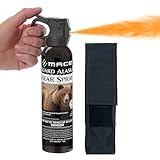
- LONG RANGE PROTECTION: This Mace bear deterrent spray protects from a safe distance with a powerful fogger pattern, giving you more time to react to a charging bear with up to 9 seconds of total spray time.
- MAX STRENGTH FORMULA: Made with 20% OC wildlife safe formula for maximum heat and potency, helping deter attacks and giving you time to retreat to safety.
- ALWAYS BE PREPARED: Essential for hiking, camping, and hunting. Its potent formula and long range spray coverage offers reliable protection so you can always be prepared for wildlife encounters.
- EASY TO USE: Designed with a finger loop handle for easy carrying and quick deployment in critical moments. To use, pull off the orange safety wedge and press down on the actuator.
- INCLUDES HOLSTER: Durable, heavy-duty nylon spray holster keeps your bear deterrent canister secure and within reach. Hook-and-loop closure allows for quick and easy access.
Bottom line
As of August 10, 2026, 11 people have been confirmed killed by grizzly bears inside Glacier National Park since 1910. There is no equally authoritative all-time total for nonfatal attacks because the historical record is incomplete and uses inconsistent definitions. Most bears avoid people, but surprise encounters remain a real backcountry hazard: hike in groups, make noise where visibility is poor, secure food, carry accessible bear spray, maintain distance, and do not run if you encounter a bear.
FAQ
Does 11 mean Glacier National Park has had 11 separate bear attacks?
No. It means 11 confirmed human victims killed by grizzly bears since 1910. The 1980 Divide Creek incident involved two victims, so the number of fatal encounters is lower than the victim count.
How many of the 1967 Night of the Grizzlies attacks were fatal?
Two separate fatal grizzly attacks occurred on August 13, 1967. Julie Helgeson was killed at the Granite Park backcountry campsite, and Michele Koons was killed at the Trout Lake backcountry campsite.
Have black bears killed anyone in Glacier National Park?
The NPS historical incident archive states that no human fatality has been associated with a black bear in Glacier since the park was created. The archive documents a serious black-bear injury near Two Medicine in 2000, so black bears should not be treated as harmless.
Do these 3 things before closing this tab:
1Fix the driver behind crashes, sound loss and screen glitches2Clear out junk files and repair common Windows errors3Scan for outdated or missing drivers - takes under a minuteWas the 2025 injured hiker attacked by a grizzly?
The species was not positively identified. The NPS described a medium brown-colored bear with two cubs, but color alone cannot establish that it was a grizzly. It is more accurate to call this a bear-injury incident than a confirmed grizzly attack.
Quick Recap
Product prices and availability are accurate as of the date/time indicated and are subject to change. Any price and availability information displayed on Amazon at the time of purchase will apply.




