The Tool Desk
Outbyte PC Repair FREERepair Windows errors before they cause bigger problemsFix Now →Outbyte Driver Updater FREEFix the driver behind crashes, sound loss and screen glitchesFind Drivers →A healthy adult American Bulldog generally needs one to two hours of exercise a day, according to PetMD’s breed-care guidance, updated September 14, 2026. That range is a starting point, not a prescription for every dog. For American Bullies, the United Kennel Club describes the breed as active and agile but does not set a daily exercise duration. For either breed, the right routine depends on the individual dog’s age, fitness, health, build, breathing, and ability to recover comfortably.
How much exercise does each breed need?
American Bulldogs
PetMD’s general recommendation for a healthy adult American Bulldog is one to two hours of exercise daily. The time can come from a mix of walks, play, and structured activities; it need not be one continuous outing. The American Kennel Club also describes the breed as athletic and says adults need frequent exercise and stimulation. Neither description means every American Bulldog should be pushed to the upper end of the range: a dog’s conditioning, body condition, age, and health affect what is appropriate. PetMD’s American Bulldog guide and the AKC breed page provide the general breed guidance.
As an Amazon Associate I earn from qualifying purchases.
If you are asking, “How long should I walk my American Bulldog?”, the answer is not necessarily one walk lasting an hour or more. Daily exercise can be divided among walks, play, and activities that suit the dog. Consider the complete day’s activity and how your dog responds rather than treating a single walk as a test of endurance. A dog that is returning to exercise, carrying extra weight, or showing reduced mobility may need a slower build-up and a veterinarian’s advice before you increase the workload.
American Bullies
There is no established daily time target in the researched official American Bully standard. The United Kennel Club recognizes Pocket, Standard/Classic, and XL varieties, and its standard, effective January 1, 2025, says: “Although quite muscular, it is active and agile.” That is a functional breed description, not a number of minutes or hours to exercise. Do not apply the American Bulldog’s one-to-two-hour guidance to an American Bully as though it were a breed-specific recommendation. Instead, have a veterinarian help set an individual routine that accounts for the dog’s age, fitness, build, breathing, and recovery. Read the UKC American Bully standard.
#1 Best Overall

- 【PRODUCT SIZE】10 inch*10 inch*1.3 inch.
- 【3 WAYS TO PLAY, UPGRADE SLOW FEEDER】Our dog mental stimulation toys have a unique squeak button in the middle, which make it easier to attract the attention of dogs and cats. Three different difficulty designs and the 16-hole dog treat dispenser design maximize slow feeding time, even beyond 20 minutes.
- 【FUNNY STIMULATING TOYS】All kinds of dogs and cats love the puzzle game of Spin & Slide and the Seek & Hide with their smell sense and paw skills to find food. Combining circular orbit sliding game and linear orbit sliding game, smart dog and cat must move the slider correctly to get the food reward hidden in the maze.
- 【NON-REMOVABLE PARTS DOG PUZZLE】Our dog treat puzzle is made of non-toxic materials, very durable and suitable for pets to play for a long time. This dog toy has no removable parts because the design has built-in play parts that fold tightly and won't fall off easily.
- 【ANTI-SLIP & EASY TO CLEAN】: The four corners of the bottom are equipped with four anti-skid pads, which can be well fixed during the dog's slow food process; It is easy to clean, also dishwasher safe.
For the question “How much exercise does an American Bully need each day?”, the most accurate answer is that the official standard does not provide a breed-wide duration. Variety alone is not a validated time-based rule: two dogs of the same variety can differ in fitness, build, health, breathing, and comfort with activity. Ask your veterinarian to assess your dog rather than selecting a daily number based only on Pocket, Standard/Classic, or XL classification.
How to build an appropriate routine
Think of exercise as a combination of movement, play, and activities that engage the dog’s attention. For a healthy adult American Bulldog, build gradually toward the general daily range rather than abruptly adding strenuous activity. For an American Bully, begin with what the dog comfortably manages and use veterinary guidance to adjust duration and intensity. The breed label—or an American Bully’s variety by itself—does not establish an individual dog’s safe workload.
Choose activities to suit the dog
For American Bulldogs, activities named in breed guidance include jogging, hiking, tug, and training exercises. PetMD also lists nose work, agility, dock diving, lure coursing, obedience, swimming, and play. These options vary in impact and intensity, so select them according to the dog’s fitness and physical comfort rather than trying to fit every activity into a routine. Training and nose work can add mental engagement alongside movement. Puzzle toys or a snuffle mat can make mealtimes more engaging, but they are enrichment, not a replacement for physical activity. AKC breed guidance and PetMD describe these activity options.
Free tools Windows power users keep installed
One-click scans. No signup required.
Compare possible activities by impact, intensity, and the dog’s current ability, not just by how energetic they seem. A walk, a training session, and a game of tug place different demands on a dog. A growing puppy needs low-impact options; a dog with joint concerns may need an adjusted plan; and any dog with breathing difficulty should not be pushed into strenuous exertion. Mental engagement can be part of the day’s routine, but do not count a puzzle feeder or snuffle mat as a substitute for the movement the dog can safely do.
Rank #2

- SLOW DOWN CHOW TIME — Fine-tune the food flow to turn a rushed meal into a rewarding 5-60 minute routine.
- MORE THAN A MAZE BOWL — Patented spin-to-release play lets dogs nudge, think, and earn every bite.
- BEAT BOREDOM AT DINNER — Sniffing, spinning, and searching keep one dog happily busy while another eats in peace.
- KEEPS SMART DOGS ENGAGED — Start easy, then slow the flow to keep clever pups challenged meal after meal.
- ROOM FOR A REAL MEAL — The 4-cup chamber holds generous portions for dogs big or small, not just a handful of treats.
Increase activity in manageable steps
If a dog is currently less active, do not treat the suggested adult range as a quota to reach in one day. Increase activity gradually and observe how the dog responds during the outing and afterward. Scale back if the dog shows discomfort, unusual fatigue, or difficulty breathing. If the dog has a medical condition or a history of mobility or breathing trouble, ask a veterinarian to recommend suitable activities and intensity before increasing exercise.
Pay attention to recovery as well as performance in the moment. If an outing or game leaves a dog unusually tired or uncomfortable, make the next session easier and discuss a repeated or concerning response with a veterinarian. Keep the routine flexible: the same dog may manage a familiar activity differently as fitness, health, or weather changes. Avoid making up for a missed session with an unusually long or strenuous outing.
How needs change with age and health
Puppies
Puppies benefit from several short walks or play sessions spread through the day rather than one long walk. American Bulldog puppies should have non-impact exercise to reduce the possibility of bone and joint damage. Keep activity appropriate to the puppy’s growth and ask a veterinarian or breeder about the needs of that individual puppy; an adult’s daily target is not a puppy prescription. AKC exercise guidance recommends shorter sessions and individualized advice, while its American Bulldog page addresses non-impact exercise for puppies.
Several brief opportunities let a puppy move and play without relying on a single prolonged outing. Keep play and walks appropriate to the puppy’s stage of growth, and ask for individualized advice rather than applying the healthy-adult American Bulldog range. The same general need to tailor activity applies to an American Bully puppy; the UKC standard does not set a puppy exercise duration.
Rank #3

- 2 Levels in 1 Toy: start your pups off with a level 1 puzzle, add some treats in the base compartments and watch your dogs get their tasty reward by nudging the lids. For dogs who have mastered level 1, for added challenge in level 2, just put some treats in the top compartments, teach your dogs to press the top cover to dispense treats down into the base compartments and finally enjoy their reward
- Slow Feeder: The large capacity top transparent granary saves you the hassle to refill dog food frequently. The product can also be used as a slow feeder utensil for your dogs, which promotes healthy ingestion by slowing down eating speed by over 10x. Great for large and small dogs
- Not Easy to Tip Over: 4 non-slip rubber mats and weighted base hold the dog puzzle toy firmly in place when dogs eat and nudge and prevent the toy from tipping over
- We Prioritize Safety: the dog puzzle toys are designed with your pet’s health in mind, made of durable food-grade PP materials. Non-removeable parts make it safe and easy to clean. And you can give puzzles toy to your dog or directly out of the box, just no assembly!!
- Trains Dog’s Intelligence: interactive treat puzzle game challenges your puppies to get their reward of treats, works your dog's mind while reducing boredom and destructive behavior like chewing, digging and excessive barking. Size: 4.2 inch height
Adult dogs
For a healthy adult American Bulldog, use the one-to-two-hour daily range as a general point of reference and tailor the mix of activities to the dog’s conditioning and comfort. Adult American Bullies need an individual plan rather than a number borrowed from another breed. In both cases, a routine that is manageable and consistent is more useful than judging exercise only by how long a single walk lasts.
Seniors and dogs with health limitations
Older dogs can still benefit from regular movement, but their activity should be adjusted to what they can comfortably manage. Joint, heart, and respiratory problems are reasons to seek veterinary guidance on an appropriate routine. American Bulldogs can have hip and elbow problems; VCA advises weight management and monitoring mobility. Notice changes in how a dog moves or recovers, and discuss them with a veterinarian rather than trying to exercise through discomfort. VCA’s American Bulldog overview discusses orthopedic concerns and mobility monitoring.
For an older dog or one with a known limitation, ask the veterinarian not only how much activity is suitable but also what kind of movement is appropriate and what signs mean the plan should change. A routine for a dog with joint, heart, or respiratory concerns should be based on that dog’s assessment, not on a general breed description. Weight management and observation of mobility are particularly relevant for American Bulldogs with orthopedic concerns.
What’s actually slowing this PC down?
Pick the symptom - the matching free tool is one click away.
Heat, breathing, and signs to stop
Some individual dogs have short-nosed anatomy or respiratory problems that make exertion and hot, humid conditions more concerning. Do not assume every American Bulldog or American Bully has a breathing disorder; risk depends on the individual dog’s conformation and health. Short-nosed dogs can have difficulty cooling themselves through panting in heat. UC Davis advises preventing overexertion, avoiding hot environments, and watching breathing and body temperature during activity. Choose cooler conditions for exercise when needed, and make shade and fresh water available. UC Davis guidance on short-nosed dogs explains these precautions.
Rank #4

- Four Challenges & Levels 1-3: Multiple games with a flip game and a linear track sliding game, all requiring dogs to learn steps and find treats. This puzzle is designed to be more fun and difficult, with more unique ways to play. It can enhance your dog's IQ and train their sense of smell
- Prolong the Feeding Time: The 14-hole food storage slow feeder has four ways to play, which is effective in slowing down the dog's eating speed. It is also beneficial to the dog's physical and mental health by increasing the time and difficulty of acquiring food, thus avoiding gastrointestinal issues caused by indigestion
- Safe Materials & Cleanable: Furry friends can safely play with this toy, which is made of food-safe and long-lasting materials. Additionally, it is easy to clean with warm water and soap after use
- Six Silicone Anti-Slip Pads: Six silicone anti-slip pads with high resistance ensure a firm grip and prevent the item from sliding to one side during feeding
- Warm Tips: When playing with the puzzle, please keep your dog with you to prevent any possible destruction of the toy. The toy has a tight design of built-in game components, so you don't need to worry about them being easily dislodged and swallowed by your dog
Stop activity if a dog develops noisy or labored breathing, unusual exercise intolerance, or collapse, and contact a veterinarian about concerning signs. The American College of Veterinary Surgeons lists exercise intolerance and occasional collapse among signs associated with brachycephalic syndrome. A dog with breathing difficulty should not be encouraged to continue in the hope that it will simply become fitter. ACVS information on brachycephalic syndrome describes signs that warrant attention.
Heat is a serious risk beyond these two breeds. The UK Brachycephalic Working Group’s 2021 consensus statement reports that exercise triggered 74.2% of the heat-related illness events in the UK data it cites. This is not a statistic specific to American Bulldogs or American Bullies. The group advises reducing exercise during the hottest part of the day and in hot, humid conditions. For dogs with brachycephalic breathing risk, it also advises considering a walking harness rather than attaching the lead directly to the collar, because collar pressure can worsen breathing difficulties. Whether a harness is suitable depends on the individual dog and its fit. Read the UK Brachycephalic Working Group’s 2021 heat-related illness statement.
In warm weather, plan around conditions rather than expecting a dog to complete the same outing at any cost. Reduce exercise during the hottest part of the day and in hot, humid weather, and ensure access to shade and fresh water. Watch breathing and body temperature, and prevent overexertion. If your dog has short-nosed anatomy or a history of respiratory signs, ask your veterinarian how to adapt outings. In that context, a walking harness may be worth considering instead of attaching the lead directly to a collar; correct fit and the individual dog’s needs matter.
Questions to use when planning exercise
When deciding whether a walk, game, or training activity is appropriate, assess the dog in front of you rather than relying on breed or size alone. These checks can help you prepare for a conversation with your veterinarian and adjust everyday activity:
Best Value
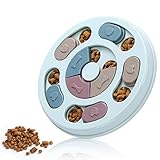
- 【Size】: L9.44" * W9.44"* H1.14" suitable for cats, puppies and small dogs.
- 【Interactive Dog Toys】This is a interactive puppy puzzle , which can easily become the closest companion and toy for your puppies and cats, and will release pressure for dogs. Find food by sliding parts to improve eating pleasure and IQ.
- 【Slow Feed Bowl】This encourages pets to eat at a slower speed, helps to slow down the feeding time to help the dog digest, and can provide your dog with a variety of healthy snacks.
- 【Slow Feede toys】 Use this educational game toy to exercise the dog’s brain, which will help meet the dog’s instinct needs, train the pet’s sense of smell, and let the dog enjoy feeding when using the nose or paw to move the slider, while providing spirit stimulate.
- 【Dog toys】No toy is indestructible. Do not leave toys with unsupervised pets. Remove and replace toy if damaged.
- Age and growth stage: Is the dog a growing puppy, a healthy adult, or a senior whose comfortable capacity has changed?
- Health and mobility: Has a veterinarian identified joint, heart, respiratory, or other concerns? Does the dog move comfortably during and after activity?
- Breathing and weather: Does the dog breathe comfortably while active, and are heat or humidity making the outing harder?
- Intensity and impact: Does the activity match the dog’s present conditioning, and is a lower-impact option more appropriate?
- Engagement and recovery: Does the routine include attention and training as well as movement, and does the dog recover without unusual fatigue?
For American Bullies, also tell the veterinarian the dog’s variety and describe its build and breathing. The UKC standard’s activity description reinforces the importance of functional movement, but it does not convert variety or conformation into a validated time-based exercise rule. General veterinary exercise guidance also emphasizes individual needs rather than a single duration that suits every dog. AKC guidance on how much exercise dogs need covers these individual considerations.
Frequently Asked Questions
How long should I walk my American Bulldog?
PetMD gives one to two hours of exercise a day as general guidance for a healthy adult American Bulldog, but that does not mean one walk should last that long. Exercise can be divided among walks, play, and structured activities. Build gradually and adjust for age, fitness, health, weather, and how the dog responds.
How much exercise does an American Bully need each day?
The UKC American Bully standard describes the breed as active and agile but does not set a daily duration. There is no supported universal number for Pocket, Standard/Classic, or XL American Bullies. Ask a veterinarian to help set a plan for the individual dog’s age, build, fitness, breathing, and recovery.
Quick wins for a faster PC:
Fix the driver behind crashes, sound loss and screen glitchesFind Drivers →Clear out junk files and repair common Windows errorsFree Scan →Can American Bullies go running?
The available breed standard does not provide a running recommendation or a time target. Whether running is suitable depends on the individual dog’s fitness, health, build, breathing, and conditioning. Ask a veterinarian before introducing strenuous activity, build up gradually if advised, and stop if the dog shows unusual fatigue, discomfort, or breathing difficulty.
Do American Bulldog puppies need the same exercise as adults?
No. AKC guidance recommends several short walks or play sessions through the day rather than one long outing. American Bulldog puppies should have non-impact exercise to reduce possible bone and joint damage. Ask a veterinarian or breeder about the needs of the individual puppy rather than using an adult daily range.
Should I exercise my dog in hot weather?
Short-nosed dogs may have more difficulty cooling themselves through panting. Avoid hot environments and reduce exercise during the hottest part of the day and in hot, humid conditions; provide shade and fresh water, and monitor breathing and body temperature. Stop for noisy or labored breathing, exercise intolerance, or collapse and contact a veterinarian about concerning signs.
The Bottom Line
A healthy adult American Bulldog generally needs one to two hours of exercise daily, built up and tailored to the dog. The UKC standard does not set a daily time target for American Bullies, so use an individual veterinary plan rather than borrowing the Bulldog figure. For both breeds, adjust activity for age, health, fitness, breathing, recovery, and weather; puppies need shorter, low-impact opportunities, and heat or breathing signs call for caution.
Quick Recap
Product prices and availability are accurate as of the date/time indicated and are subject to change. Any price and availability information displayed on Amazon at the time of purchase will apply.




