A healthy, full-grown Border Collie typically needs about two hours of exercise each day. That figure, given by Battersea Dogs & Cats Home (page updated 25 September 2026), is a practical starting point rather than a mandatory quota. The right amount depends on your dog’s age, health, fitness, temperament and ability to recover. Plan for substantial physical activity plus daily mental work, then adjust the routine with your veterinarian’s advice when your dog is a puppy, senior or has a medical condition.
What two hours of exercise really means
Two hours does not mean two hours of nonstop running. It is a total daily activity target that can include walks, free movement, play, training and suitable dog sports. A Border Collie may spend part of that time sniffing on a long walk, learning a behavior, playing fetch or working through a food puzzle. Lower-intensity activities and rest breaks are useful; forcing a dog to exercise continuously can create unnecessary fatigue.
As an Amazon Associate I earn from qualifying purchases.
The American Kennel Club describes the breed as highly energetic and says it needs daily exercise beyond a walk around the block or a quick romp in the yard. In its breed guidance, the AKC calls the Border Collie “extremely energetic” and says daily exercise must go beyond those brief outings. VCA Animal Hospitals likewise says Border Collies need significant daily exercise that combines physical and mental activity. A short toilet walk or brief yard play by itself is therefore unlikely to meet the needs of a healthy adult.
Treat the two-hour figure as a starting estimate for a healthy adult, not a universal minimum. Some dogs will be satisfied with less on a quiet day; others may need more varied engagement. Increase or decrease activity gradually and judge the plan by your dog’s condition, enthusiasm, ability to settle and recovery rather than by the clock alone. Spreading the total across morning, midday and evening sessions is often more practical than trying to complete it in one long outing.
#1 Best Overall

- 【PRODUCT SIZE】10 inch*10 inch*1.3 inch.
- 【3 WAYS TO PLAY, UPGRADE SLOW FEEDER】Our dog mental stimulation toys have a unique squeak button in the middle, which make it easier to attract the attention of dogs and cats. Three different difficulty designs and the 16-hole dog treat dispenser design maximize slow feeding time, even beyond 20 minutes.
- 【FUNNY STIMULATING TOYS】All kinds of dogs and cats love the puzzle game of Spin & Slide and the Seek & Hide with their smell sense and paw skills to find food. Combining circular orbit sliding game and linear orbit sliding game, smart dog and cat must move the slider correctly to get the food reward hidden in the maze.
- 【NON-REMOVABLE PARTS DOG PUZZLE】Our dog treat puzzle is made of non-toxic materials, very durable and suitable for pets to play for a long time. This dog toy has no removable parts because the design has built-in play parts that fold tightly and won't fall off easily.
- 【ANTI-SLIP & EASY TO CLEAN】: The four corners of the bottom are equipped with four anti-skid pads, which can be well fixed during the dog's slow food process; It is easy to clean, also dishwasher safe.
Why Border Collies need both movement and mental work
Border Collies were developed for demanding, responsive work. Their athletic bodies need regular movement, while their problem-solving ability needs an outlet. VCA specifically recommends activities such as running, training exercises and problem-solving. Mental enrichment complements exercise; it does not automatically replace time spent moving.
- Physical work: longer walks, running with a fit adult, retrieving, tug, free play and other controlled movement.
- Skill work: obedience practice, trick training, nose games, shaping exercises and learning useful behaviors.
- Problem-solving: food puzzles, search games and supervised tasks that make the dog think.
- Structured sports: agility, flyball, disc, tracking and herding are examples named in breed guidance. They are options, not requirements.
Varying the activities helps prevent every session from becoming the same repetitive drill. Choose activities that match your dog’s coordination, training, physical condition and the safety of the setting. A dog that enjoys a quiet scent search may be getting valuable cognitive work even when the physical portion of that session is gentle. Conversely, a puzzle or training game should be viewed as an addition to, not a substitute for, the day’s movement.
A practical two-hour adult routine
The schedule below is an illustration of how an adult’s daily total might be divided. It is not a prescription and does not mean every session must occur at these exact times or intensities.
Quick wins for a faster PC:
Scan for outdated or missing drivers - takes under a minuteDriver Scan →Clear out junk files and repair common Windows errorsFree Scan →| Part of day | Example activity | What it provides |
|---|---|---|
| Morning | 45-minute walk with time to sniff, plus a few recall or focus exercises | Steady movement and short bursts of training |
| Midday | 15 minutes of trick practice or a supervised search game | Mental engagement without prolonged exertion |
| Afternoon | 15 minutes with a food puzzle or scatter-feeding game | Indoor problem-solving; an adjunct, not a substitute for exercise |
| Evening | 45 minutes of play, running, a longer walk or a suitable class | Another substantial physical session |
This example totals two hours, but the balance can change. A dog recovering from a busy day may need calmer enrichment and more rest, while a fit adult accustomed to sport may spend some of the total in a supervised training session. Keep a record for several days if you are unsure how much activity your dog is actually receiving. Note the type of exercise, intensity, weather or surface, and how quickly the dog returns to normal afterward. That record gives your veterinarian useful context if the dog’s stamina or behavior changes.
Rank #2

- SLOW DOWN CHOW TIME — Fine-tune the food flow to turn a rushed meal into a rewarding 5-60 minute routine.
- MORE THAN A MAZE BOWL — Patented spin-to-release play lets dogs nudge, think, and earn every bite.
- BEAT BOREDOM AT DINNER — Sniffing, spinning, and searching keep one dog happily busy while another eats in peace.
- KEEPS SMART DOGS ENGAGED — Start easy, then slow the flow to keep clever pups challenged meal after meal.
- ROOM FOR A REAL MEAL — The 4-cup chamber holds generous portions for dogs big or small, not just a handful of treats.
How to build the routine step by step
- Assess the starting point. Write down your dog’s age, current fitness, health restrictions and what activity it already handles comfortably.
- Set a broad daily framework. For a healthy, full-grown dog, use roughly two hours as the initial total, combining movement and mental engagement.
- Divide the work. Use several sessions so the dog can rest, drink and cool down between activities. A long walk and a short training game are not equivalent in intensity, so do not measure only minutes.
- Add variety. Rotate sniffing walks, play, training, searching and, if appropriate, a qualified class or sport. No Border Collie needs to participate in every listed activity.
- Progress slowly. If the dog has been inactive, increase duration or intensity in small steps rather than beginning with hard running, repeated jumping or long retrieving sessions.
- Review the response. Look for comfortable movement, interest in activities, normal rest and an expected recovery period. Change the plan or seek veterinary advice when those patterns deteriorate.
This approach avoids two common mistakes: assuming that a single number fits every dog, and assuming that a very tired dog has necessarily had an appropriate workout. The objective is sustainable fitness and engagement, not exhaustion.
Adjusting exercise for age and health
Puppies
There is no validated Border Collie puppy-minute formula established in the guidance cited here. Puppies are still developing, so use age-appropriate, self-paced play and brief training rather than trying to reach the adult two-hour figure. Avoid turning a young puppy’s enthusiasm into forced, repetitive or high-impact exercise. Because growth, vaccination status, joints and individual development vary, ask your veterinarian to outline suitable duration, surfaces and progression for your puppy. Do not present the often-repeated “five minutes per month of age” rule as a proven veterinary standard.
Healthy adults
For a fully grown, healthy dog, begin around the published two-hour daily estimate and divide it into manageable sessions. Build fitness gradually if the dog has been inactive. A dog that is new to running, agility or intense retrieving should not jump straight into long or repetitive sessions; increase workload in small steps and allow recovery between demanding days.
Seniors
Older Border Collies still benefit from regular movement and mental activity, but their safe amount may change as joints, vision, heart or stamina change. The available guidance does not establish a standard senior duration. Let your veterinarian assess the dog and tailor exercise, surfaces, pace and rest periods to its health. Lower-impact walks, gentle training and scent games may be useful components when a clinician approves them.
Rank #3

- 2 Levels in 1 Toy: start your pups off with a level 1 puzzle, add some treats in the base compartments and watch your dogs get their tasty reward by nudging the lids. For dogs who have mastered level 1, for added challenge in level 2, just put some treats in the top compartments, teach your dogs to press the top cover to dispense treats down into the base compartments and finally enjoy their reward
- Slow Feeder: The large capacity top transparent granary saves you the hassle to refill dog food frequently. The product can also be used as a slow feeder utensil for your dogs, which promotes healthy ingestion by slowing down eating speed by over 10x. Great for large and small dogs
- Not Easy to Tip Over: 4 non-slip rubber mats and weighted base hold the dog puzzle toy firmly in place when dogs eat and nudge and prevent the toy from tipping over
- We Prioritize Safety: the dog puzzle toys are designed with your pet’s health in mind, made of durable food-grade PP materials. Non-removeable parts make it safe and easy to clean. And you can give puzzles toy to your dog or directly out of the box, just no assembly!!
- Trains Dog’s Intelligence: interactive treat puzzle game challenges your puppies to get their reward of treats, works your dog's mind while reducing boredom and destructive behavior like chewing, digging and excessive barking. Size: 4.2 inch height
Dogs with medical conditions
Texas A&M’s veterinary college advises tailoring exercise to the individual pet. A diagnosed condition, unexplained exercise intolerance, pain or a major change in stamina warrants veterinary advice before you alter the routine. Do not use the two-hour estimate as a target for a dog whose clinician has set different limits.
Choosing activities that fit your dog
| Activity choice | Best use | Points to check |
|---|---|---|
| Long walk | Reliable daily movement with opportunities to sniff and practice cues | Distance, terrain and pace should match fitness and weather; allow breaks. |
| Running or fast play | Higher-intensity work for a conditioned adult | Introduce gradually and stop if the dog cannot recover comfortably. |
| Training and tricks | Short, focused mental sessions | Use reward-based teaching and finish before attention collapses. |
| Agility, flyball, disc, tracking or herding | Structured outlets for athletic and working behaviors | Instruction, safe equipment and an appropriate level are important; no sport is compulsory. |
| Food puzzle or search game | Indoor enrichment and problem-solving | Supervise use and count it as enrichment alongside, not instead of, physical exercise. |
PDSA guidance describes puzzle feeders as a way to provide indoor mental stimulation. Select a puzzle appropriate to your dog’s skill and supervise the first sessions. A puzzle feeder can occupy the brain on a wet day or while you are busy, but it does not turn a sedentary day into two hours of physical exercise.
How to tell whether the routine is appropriate
Look at patterns over several days rather than reacting to one energetic afternoon. A suitable routine leaves the dog interested in activities, able to rest between sessions and comfortable during normal movement. If your dog is unusually reluctant, repeatedly unable to settle after activity, or takes longer than expected to recover, reduce intensity and contact your veterinarian for advice. Those observations are clues to investigate, not proof that the dog simply needs more exercise.
What’s actually slowing this PC down?
Pick the symptom - the matching free tool is one click away.
Behavior changes can have many causes, including stress, pain, illness, inadequate sleep or an activity plan that is too demanding. Do not respond to every restless behavior by adding strenuous exercise. Review the dog’s complete day: physical work, training, food, sleep, social environment and opportunities to disengage. A sudden change from the dog’s usual pattern is more important than whether it appears to fall short of an exact minute target.
Rank #4

- Four Challenges & Levels 1-3: Multiple games with a flip game and a linear track sliding game, all requiring dogs to learn steps and find treats. This puzzle is designed to be more fun and difficult, with more unique ways to play. It can enhance your dog's IQ and train their sense of smell
- Prolong the Feeding Time: The 14-hole food storage slow feeder has four ways to play, which is effective in slowing down the dog's eating speed. It is also beneficial to the dog's physical and mental health by increasing the time and difficulty of acquiring food, thus avoiding gastrointestinal issues caused by indigestion
- Safe Materials & Cleanable: Furry friends can safely play with this toy, which is made of food-safe and long-lasting materials. Additionally, it is easy to clean with warm water and soap after use
- Six Silicone Anti-Slip Pads: Six silicone anti-slip pads with high resistance ensure a firm grip and prevent the item from sliding to one side during feeding
- Warm Tips: When playing with the puzzle, please keep your dog with you to prevent any possible destruction of the toy. The toy has a tight design of built-in game components, so you don't need to worry about them being easily dislodged and swallowed by your dog
Border Collie collapse: an important safety exception
The University of Minnesota College of Veterinary Medicine describes Border Collie collapse as an episodic nervous-system disorder triggered by strenuous exercise. The page does not establish how common it is, and it does not suggest that ordinary daily exercise should be avoided by every Border Collie. It does mean that an individual dog with collapse episodes or other concerning symptoms needs veterinary assessment and an individualized activity plan.
If an episode occurs, stop the activity, keep the dog in a safe place and seek veterinary guidance. Do not attempt to diagnose the cause from an online description or assume that increasing fitness will solve it. Until a veterinarian advises you, avoid repeating the strenuous activity that preceded the episode.
Independent reader supportYour contribution helps us test, update, and keep practical guides available for everyone.A weekly planning checklist
- Start with approximately two hours of total daily activity for a healthy, full-grown dog, then adjust to the individual.
- Include both physical movement and deliberate mental work every day.
- Split activity into sessions so the dog can rest and you can observe recovery.
- Rotate walks, training, games and, when suitable, structured sports rather than repeating one exhausting exercise.
- Increase duration or intensity gradually, especially after inactivity.
- Use puzzle feeders and indoor games as enrichment, not as a replacement for movement.
- Ask a veterinarian for a puppy, senior or medical-condition plan instead of applying an internet formula.
- Stop and seek professional advice for collapse, pain, marked exercise intolerance or a persistent change in behavior.
Bottom line for owners
Plan on about two hours of varied activity each day for a healthy adult Border Collie, with physical exercise and mental challenges sharing the schedule. The number is a practical baseline from Battersea, not a pass-or-fail test. Your dog’s life stage, health, conditioning and recovery determine the safe routine, so use the estimate as a starting framework and involve your veterinarian whenever those factors are uncertain.
Do these 3 things before closing this tab:
1Scan for outdated or missing drivers - takes under a minute2Clear out junk files and repair common Windows errors3Fix the driver behind crashes, sound loss and screen glitchesFrequently Asked Questions
Is two hours a strict minimum for every Border Collie?
No. Battersea’s two-hour figure is a typical estimate for a healthy, full-grown dog. Use it as a starting framework and adjust for age, health, fitness, intensity and recovery rather than treating it as a pass-or-fail quota.
Best Value
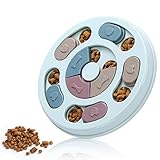
- 【Size】: L9.44" * W9.44"* H1.14" suitable for cats, puppies and small dogs.
- 【Interactive Dog Toys】This is a interactive puppy puzzle , which can easily become the closest companion and toy for your puppies and cats, and will release pressure for dogs. Find food by sliding parts to improve eating pleasure and IQ.
- 【Slow Feed Bowl】This encourages pets to eat at a slower speed, helps to slow down the feeding time to help the dog digest, and can provide your dog with a variety of healthy snacks.
- 【Slow Feede toys】 Use this educational game toy to exercise the dog’s brain, which will help meet the dog’s instinct needs, train the pet’s sense of smell, and let the dog enjoy feeding when using the nose or paw to move the slider, while providing spirit stimulate.
- 【Dog toys】No toy is indestructible. Do not leave toys with unsupervised pets. Remove and replace toy if damaged.
Does a Border Collie need two hours of running?
No. The daily total can combine walks, sniffing, play, training, problem-solving and suitable sports. Two hours of nonstop or high-impact running would be inappropriate for many dogs.
Can training or a puzzle feeder replace exercise?
Mental work is essential but complements physical activity. PDSA identifies puzzle feeders as indoor mental stimulation, while VCA recommends both physical and mental activity. A puzzle does not replace the movement a healthy adult needs.
How much exercise does a Border Collie puppy need?
The cited guidance does not establish a validated puppy-minute formula. Use brief, self-paced, age-appropriate play and training, avoid forced repetitive or high-impact work, and ask your veterinarian for an individual plan.
Crashes, No Sound, or Screen Glitches?
Random freezes, missing sound and display glitches usually trace back to one bad driver. Find and replace yours safely.Free scan · under a minutePC Slower Than It Used to Be?
A free scan shows the junk files, broken settings and background clutter dragging Windows down - then fixes them in one click.Free scan · Windows 10 & 11How should exercise change for an older Border Collie?
There is no standard senior duration in the cited guidance. Keep regular movement and mental engagement, but have your veterinarian tailor pace, surfaces, intensity and rest to joint, heart, vision and stamina changes.
What if my Border Collie collapses during exercise?
Stop the activity, keep the dog safe and contact a veterinarian. The University of Minnesota describes Border Collie collapse as an episodic nervous-system disorder associated with strenuous exercise; do not self-diagnose or simply increase conditioning.
What activities are good for a Border Collie?
Long walks, running for a conditioned adult, retrieving, training, search games, agility, flyball, disc, tracking and herding are examples in breed guidance. Choose only activities suited to your dog and setting; no sport is mandatory.
The Bottom Line
A healthy adult Border Collie generally needs about two hours of varied daily activity, combining movement with mental work. Start there, divide sessions through the day, progress gradually and adjust for your dog’s age, health and recovery. Seek veterinary guidance for puppies, seniors, medical conditions or any collapse, pain or unusual exercise intolerance.
The Tool Desk
Outbyte Driver Updater FREEFix the driver behind crashes, sound loss and screen glitchesFind Drivers →Outbyte PC Repair FREEClear out junk files and repair common Windows errorsFree Scan →Quick Recap
Product prices and availability are accurate as of the date/time indicated and are subject to change. Any price and availability information displayed on Amazon at the time of purchase will apply.




