Breathing trouble in a senior dog can become an emergency quickly. If breathing is visibly labored, the gums or tongue look pale, blue, or gray, or your dog collapses, becomes markedly weak, cannot settle, or is unresponsive, seek emergency veterinary care immediately. Home measures are temporary support while you contact a veterinarian; they do not treat the underlying disease.
Keep your dog quiet, cool, and minimally handled, allow the position that makes breathing easiest, and arrange veterinary assessment promptly. New or worsening breathing difficulty can result from airway disease, heart or lung disease, infection, pain, anemia, or other conditions that require a diagnosis.
As an Amazon Associate I earn from qualifying purchases.
Decide whether this is an emergency
Call a veterinary hospital before you leave if possible, describe the breathing pattern, and follow its transport instructions. Do not wait for a resting-rate measurement if your dog is visibly struggling.
What’s actually slowing this PC down?
Pick the symptom - the matching free tool is one click away.
Go to an emergency hospital now when you see these signs
- Strong abdominal effort, heaving, or obvious work to draw each breath
- Rapid breathing that does not settle, open-mouth breathing, or markedly increased breathing sounds such as wheezing or whistling
- An extended head and neck, inability to lie comfortably, or repeated attempts to change position
- Pale, blue-tinged, gray, or otherwise abnormal gums or tongue
- Weakness, collapse, confusion, unresponsiveness, or inability to stand
- Breathing difficulty that is worsening or persists while your dog is resting
Cornell University College of Veterinary Medicine describes respiratory distress as a serious medical emergency requiring immediate attention. A dog may look better briefly and still have a dangerous problem, so temporary improvement is not a reason to postpone care.
#1 Best Overall
](https://m.media-amazon.com/images/I/41ji4lsxEIL._SL160_.jpg)
- [UPDATED VESION, EASY TO PUT ON & TAKE OFF] This dog harness has 3 buckles( One is on the neck with Lockable, two are on the chest), NO NEED go through dog’s head. This will let your dog loves to wear harness!
- [NO PULL WITH 2 HOOK LOOPS] There are 2 sturdy metal hook loops for leash attachment. If you use the front hook on the chest, it will reduce the pulling a lot and make going for a walk more enjoyable. As usual, most people like to use the back hook.
- [REFLECTIVE MATERIAL] The reflective material will be really nice when it gets dark. Also, your dog will be saw easily. This reflective material can make drivers have long time to react, which ensure your dog’s safety!
- [USEFUL & SOFT HANDLES] You will like this handle on the back,it is helpful in controlling dogs a bit closer to you when they are trying to lunge at something. Also, it is convenient to assist dogs into the car.
- [100% BEST CUSTOMER SERVICE] If any products quality really exits, a refund or replacement will be available.
What to do while calling for help
- Move your dog only as much as necessary. Keep your voice low, avoid excitement, and stop any walking or play.
- Place the dog in a cool, well-ventilated room away from smoke, heat, humidity, and other pets.
- Let the dog choose whether to sit, stand, lie on its chest, or rest with the head elevated. Never force a distressed dog flat or wrestle it into a pose.
- Call your veterinarian or the nearest emergency hospital and report the onset, breathing effort, gum color, cough, known diagnoses, medications, and any possible exposure or trauma.
- Do not give food, water, sedatives, cough medicine, painkillers, or any human medication unless a veterinarian specifically instructs you to do so.
Make the home environment easier for breathing
Keep the dog calm and still
Excitement and exertion increase oxygen demand and can intensify panting. Close doors or curtains if outside activity triggers barking, use nonslip flooring so your dog does not struggle to stand, and keep necessary supplies within reach. Ask family members to give the dog space. Pick up or carry a small dog only if doing so does not increase distress; support the body without compressing the chest or neck.
Animal Trust’s UK guidance, published in May 2026, states: “Keep your dog or cat as calm and quiet as possible.” The advice is attributed to Gill Burkhill, Veterinary Surgeon, Animal Trust Vets CIC, and is not a substitute for veterinary care.
Control heat and air quality
Use air conditioning or a fan that circulates room air without blowing forcefully into the face. Keep the room cool and well ventilated, but avoid chilling a weak dog. Do not use fireplaces, stoves, hair dryers, aerosol sprays, smoke, scented oils, or dusty bedding nearby. Heat can worsen panting, particularly in dogs with obstructed upper airways.
Allow the most comfortable position
Many dogs breathe more easily while standing or sitting with the head and neck extended. Others rest on the chest with the front legs positioned forward. Offer a familiar, easily accessible resting surface, but do not assume a particular mattress, bolster, pillow, or incline improves oxygenation. The useful rule is to let the dog choose and avoid repeatedly repositioning it.
The first few minutes at home
When you notice a change, pause and observe before attempting to move your dog. Look at the chest and abdomen, listen for new noises, and check the gum or tongue color only if your dog accepts the handling. Note whether the dog can settle in one position, stand without falling, and respond normally to you. These observations help the veterinary team triage the call, but they should not delay it.
Remove obvious stressors such as stairs, toys, visitors, barking pets, and outdoor heat. Keep a clear path to the door and place a leash, carrier, and medication list nearby for transport. Do not test improvement by asking the dog to walk, climb, eat, drink, or play. Even a short burst of activity can increase respiratory effort.
Rank #2

- Large Dog Harness - Recommended Breeds: Medium to Large Dogs, such as Siberian Husky, Labrador, German Shepherd, Akita, Chow Chow, Schnauzer Giant,American Pit Bull Terrier, etc. Please measure your dog's neck and check girth carefully before purchasing this present for your puppy. Make your puppy stand out with this Classic Black Harness!
- No Pull, No Choke - Our non-pulling dog harness is specially designed with 2 metal leash rings for safer dog walks. Use the chest attachment clip to stop your dog from pulling on walks, perfect for dog training or dogs who tend to pull. The back one is great for casual walks, jogging, hiking, etc
- Easy to Use - This hassle-free overhead harness is easy to put on and take off with its 2 fast-release buckles. Slide the harness over your dog's head, buckle it up, adjust the straps, and here you go! Grab the top handle for additional control. Lightweight and easy to clean
- Fully Adjustable - This adjustable harness features 4 easy adjusting straps around the body. You can use its 2 neck straps and 2 chest straps to create a perfect fit for your dog with some room of growth. No worries about slipping out or choking
- Safe and Comfortable - Your dog will enjoy the daily walk in this comfort dog harness! Made of sturdy polyester oxford and padded with soft cushion to protect your dog's skin. Breathable air mesh keeps your dog cool during outdoor activities. Super bright reflective strips ensure a safe walk both day and night
If a dog is too weak to stand, Cornell advises placing it on its stomach with a pillow beneath the chin and the neck extended. Use that position only if it can be achieved gently. A distressed dog may breathe best sitting or standing, and struggling to force a “correct” posture can make the episode worse.
Quick wins for a faster PC:
Fix the driver behind crashes, sound loss and screen glitchesFind Drivers →Repair Windows errors before they cause bigger problemsFix Now →Measure breathing only when your dog is resting
A resting count gives your veterinarian useful context, but it cannot diagnose the cause and must never override visible distress. Count when the dog is asleep or quietly resting, not after exercise, excitement, heat exposure, barking, or a stressful examination.
How to count
- Watch the chest or abdomen. One rise followed by one fall equals one breath.
- Count for 30 seconds and multiply by two, or count for a full 60 seconds if the rhythm is irregular.
- Write down the time, rate, effort, posture, cough, gum color, and whether the dog was asleep or awake.
- Repeat at roughly the same calm time each day only if your veterinarian wants home monitoring.
| Reference | Resting respiratory rate | How to interpret it |
|---|---|---|
| Cornell University College of Veterinary Medicine (page accessed 2026) | 12–30 breaths per minute | Described as a normal dog rate at rest, when breathing is slower and deeper. |
| American Animal Hospital Association (2023) | 15–30 breaths per minute | Described as a normal resting range. |
| AAHA article quoting emergency specialist David Meola, DVM, MS, DACVECC (2023) | Usually over 40 breaths per minute at rest or asleep | Can indicate distress; a rate continuously over 40–60 is concerning. These are warning ranges, not a diagnosis. |
Contact a veterinarian about a sustained increase from your dog’s usual rate, any increased effort, or a combination of faster breathing and weakness, cough, abnormal gum color, or inability to settle. Smartphone respiratory-rate apps are optional; a simple written record is sufficient and avoids letting an app delay care.
Why one number is not enough
A sleeping rate can fluctuate with dreams, temperature, pain, or anxiety. Conversely, a dog with severe obstruction may have a rate that is not dramatically high but is working hard with each breath. Compare the rate with effort, posture, sound, gum color, alertness, and the trend from your dog’s normal baseline. AAHA’s senior-pet monitoring guidance also flags abdominal effort, cold feet or limbs, pale or blue gums, and becoming quickly exhausted or collapsing during exercise as reasons to contact a veterinarian. Record those changes rather than relying on a threshold alone.
Why senior dogs develop breathing problems
Age itself is not a diagnosis. A veterinarian may need a physical examination, chest imaging, blood tests, airway assessment, or cardiac evaluation to distinguish among several possibilities.
Airway and lung conditions
- Laryngeal paralysis or other upper-airway obstruction
- Tracheal collapse
- Brachycephalic obstructive airway syndrome (BOAS)
- Bronchitis and other inflammatory airway disease
- Pneumonia or other infection
- Air or fluid around the lungs
- Pulmonary edema
- Parasites or cancer
Heart disease and non-respiratory mimics
Heart disease can cause coughing, rapid breathing, or fluid accumulation. Pain, anxiety, anemia, and some neuromuscular or blood-chemistry disorders can look like respiratory disease. Because the treatments differ, do not select a medication or home device based only on the breathing pattern.
Rank #3
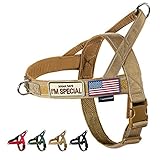
- [Premium No Pull Dog Harness] The wider soft padded inner is comfortable and friendly for dog's neck without dog's fur hurting. The back strap and chest strap inner is made of soft and breathable material that is comfortable for the dogs. And the front strap is better to prevent the dog from rushing forward. This design is maintain a long-time comfortable for walking,jogging,running,training,etc.
- [Reflective Strip] Reflective stitching along polyester webbing is not only add a sense of design to the safe for walking dog harness,but also increase a better visibility at dark under the light that it can keep the dog safe while walking.
- [Two Rings Design] The O-ring and D-ring is convenient and flexible to hang,they not only can connect well with dog leash,but also can hang ID tags,key,poop bag,etc.
- [Choose the Suitable Dog Harness] The no pull dog harness have FIVE sizes,XS is design 1 inch wide / S M L XL are design 1.5 inches wide for the small & medium and large dogs. PLEASE measure the size of the dog and refer the dimension chart to select the right one before buying.
- [Come with TWO Patches] There has a velcro area on the dog walking harness,and come with 2 patches, you can put the patches "MAMA SAY I'M SPECIAL" or the flag on the dog harness velcro area to make your dog unique.
What the veterinary visit may clarify
The clinician will use your history and examination to decide whether the problem is primarily in the upper airway, lungs, heart, blood, or another system. Chest imaging can help identify fluid, pneumonia, edema, or masses; blood testing can reveal anemia or chemistry abnormalities; and an airway or cardiac assessment may be needed for obstruction or heart disease. The exact tests depend on how stable your dog is. A video and written timeline can be useful, but obtaining them is never more important than getting a struggling dog treated.
Special case: diagnosed BOAS
In dogs already diagnosed with BOAS, Cornell notes that signs may increase with age. Veterinary management can include maintaining a healthy weight, minimizing panting, avoiding excessive heat and humidity, controlling activity and stress, and using a harness rather than a neck collar. More severe cases may need surgical assessment. These measures are specific to BOAS and should not be generalized to every senior dog with breathing difficulty.
Transport a distressed dog safely
- Phone the emergency hospital while preparing to leave so staff can be ready and can advise on the best route and handling.
- Cool the car with air conditioning before loading. Keep the cabin quiet and do not allow heat buildup.
- Use a carrier only if your dog can enter without struggling and the carrier allows adequate airflow. Otherwise, follow the hospital’s handling instructions.
- Have another person drive when possible so one person can observe without restraining the dog.
- Keep the neck and chest free of pressure. Do not pull on a collar or force the mouth closed.
Cornell advises that, if a weak dog cannot stand, it may be placed on its stomach with a pillow beneath the chin and the neck extended. Do not fight to arrange this position if handling increases panic or breathing effort; the safest position is the one the dog tolerates while you travel for care.
Home oxygen is veterinary-directed treatment
The 2026 RECOVER Guidelines: First Aid for Dogs and Cats, published in the Journal of Veterinary Emergency and Critical Care, state: “We recommend administering supplemental oxygen to dogs and cats in respiratory distress in the out-of-hospital setting and during transport for definitive veterinary care.” The same guideline explains that veterinarians may prescribe medical oxygen at home for animals with chronic respiratory conditions.
This does not mean a caregiver should buy, improvise, or start an oxygen enclosure for an undiagnosed episode. Oxygen concentration, flow, duration, monitoring, fire safety, and the underlying cause all matter. Enclosed oxygen spaces require adequate ventilation and temperature control, and a poorly designed enclosure can overheat or restrict air exchange. Use home oxygen only after a veterinarian has prescribed it and taught you how to monitor your dog.
Choose accessories for the actual task
| Item | When it may help | Evidence limit and safety point |
|---|---|---|
| Harness | Routine, low-stress handling for a dog with veterinarian-diagnosed BOAS or another condition where neck pressure is undesirable. | It is not treatment and should never be used to exercise a dog currently struggling to breathe. Fit it so it does not compress the chest or restrict shoulder movement. |
| Familiar bed or accessible resting surface | Provides a stable place to rest without climbing stairs or jumping. | No particular bed design has been shown to improve breathing. Keep the dog’s preferred position and easy access as the priorities. |
During an active episode, avoid walks, stairs, games, and any product that requires fitting, lifting, or repeated handling. A harness can reduce neck pressure during ordinary, veterinarian-approved outings; it cannot make exertion safe during respiratory distress.
Rank #4

- Effective No-Pull Solution: The PetSafe Easy Walk Harness helps create pull-free walks by using a martingale loop design that applies gentle, gradual pressure to reduce lunging
- Designed for Comfort & Fit: Features adjustable comfort straps and a breathable harness design with less coverage, keeping dogs cool, secure, and comfortable on every walk
- Simple to Use & Trainer Recommended: Includes an easy color-coded fit and quick-snap shoulder buckles for fast on-and-off application, trusted by vets and trainers since 2004
- Global Mission, Local Care: With U.S. roots and worldwide reach, PetSafe delivers vet- and trainer-recommended solutions and exceptional customer support to create fields of joy for pets
- 25 Years of Trust: Since 1998, PetSafe has created safe, innovative, and trusted products that bring joy, enhance pet lives, and support the lifelong bond between pets and their families
Avoid common mistakes
- Do not wait for the rate to reach a particular number when breathing effort or gum color is abnormal.
- Do not force a dog to lie flat, hold the mouth closed, or repeatedly change posture.
- Do not use a neck collar for a dog whose veterinarian has identified BOAS or another neck-sensitive airway problem.
- Do not give leftover prescriptions, over-the-counter human drugs, essential oils, supplements, or cough remedies without veterinary direction.
- Do not assume a humidifier, nebulizer, air purifier, consumer oxygen machine, or cooling product treats the cause.
- Do not exercise a dog to “test” whether breathing has improved.
- Do not postpone an examination because the dog settles temporarily in a cool room.
Plan follow-up after the immediate episode
Record what the veterinarian will need
Note when the episode began, what your dog was doing, resting rates, posture, cough or gagging, breathing sounds, gum color, appetite, fainting or collapse, heat exposure, medications, and how quickly signs changed. A short video recorded from a distance can help if it does not delay care or disturb the dog.
The Tool Desk
Outbyte PC Repair FREERepair Windows errors before they cause bigger problemsFix Now →Outbyte Driver Updater FREEFix the driver behind crashes, sound loss and screen glitchesFind Drivers →Ask for a written home plan
For a diagnosed condition, ask which resting rate or symptom requires a same-day call, which signs require emergency care, how to give each medication, whether activity restrictions apply, and whether oxygen is appropriate. Clarify how often weight, respiratory rate, gum color, cough, and exercise tolerance should be checked. Senior dogs may have more than one problem, so report new signs rather than attributing every change to an existing diagnosis.
Use a simple escalation framework
| Situation | Action |
|---|---|
| Visible effort, abnormal gum or tongue color, collapse, marked weakness, inability to settle, or unresponsiveness | Emergency veterinary care immediately; call ahead and keep the dog cool and quiet during transport. |
| Breathing is faster than usual at rest, a new cough appears, or exercise tolerance falls, but there is no obvious severe effort | Contact your veterinarian promptly for advice and examination. Record the resting rate and other signs. |
| Stable, diagnosed chronic disease with a veterinarian-provided monitoring plan | Follow that plan, avoid heat and overexertion, and report deviations from the dog’s established baseline. |
The safest way to keep a senior dog comfortable at home is supportive care alongside timely veterinary assessment: calm handling, cool clean air, freedom to choose a breathing-friendly position, and careful observation without delaying treatment.
Frequently Asked Questions
How can I tell if my senior dog is struggling to breathe?
Look for abdominal effort, open-mouth or persistently rapid breathing, wheezing or whistling, an extended head and neck, inability to settle, abnormal gum or tongue color, marked weakness, or collapse. These signs require emergency veterinary care; do not wait for a respiratory-rate count.
What is a normal resting breathing rate for a dog?
Published veterinary references describe roughly 12–30 or 15–30 breaths per minute at rest. A rate usually over 40 while asleep or resting, especially one continuously over 40–60, is concerning. The rate is only context: increased effort or abnormal gum color is urgent at any number.
Do these 3 things before closing this tab:
1Clear out junk files and repair common Windows errors2Fix the driver behind crashes, sound loss and screen glitches3Repair Windows errors before they cause bigger problemsShould I make my dog lie down during a breathing episode?
No. Let your dog choose whether to stand, sit, or rest on the chest with the head and neck extended. Forcing a flat position or repeatedly repositioning a distressed dog can increase panic and breathing effort.
Best Value

- 【No Pull & No Choke Design】: This harness simply goes through the dog's head, snaps on the belly and that's the end of it. Besides, the D-ring on the chest strap is used for no pull dog training and guiding direction, and the O-ring on the back is used for daily dog walking. The triangular design on both sides of this no pull harness helps to distribute the pulling force, so you don't have to worry about the dog choking when suddenly pulling.
- 【Soft Velvet Padded & Durable】: With soft thicken and wider fleece pads used beneath the strap of neck, back and handle atop, this dog harness could reduce friction from movement and protect the health of the dog's skin. It also uses superior nylon material to ensure long-lasting use.
- 【Leash Double Handle & Elastic Band】: You can use the top handle for casual dog walking, and the center handle for controlling the direction of the dog, easily guiding it through crowded areas and preventing storming in case of accidents. And the springy design of the leash really absorbs the pull from large strong dogs without tugging on your wrist and shoulder.
- 【Neck & Chest Adjustable】: SlowTon dog harness is equipped with adjustable loop for both neck and chest girth, and the quick-release buckle allows for quick donning. No matter what kind of breed and shape, it provides proper length after adjusting to fit your dog's neck and chest, which is perfectly designed for walking, jogging, running, hiking and training.
- 【Tangle-free Leash & Reflective】: The heavy-duty 360°swivel metal hook ensures no tangle. Plus, it has an elastic bungee and 2 padded handles, which is great for walking training of city dogs, or wandering off in country. Furthermore, its super bright reflective strips ensure a safe walk both day and night. And it comes with 2 hook and loop straps, a regular one Support Dog and the reflective one DO NOT PET.
Can I use home oxygen for my dog?
Only under veterinary direction. RECOVER recommends supplemental oxygen for respiratory distress outside the hospital and during transport, and veterinarians may prescribe it for chronic disease. Oxygen enclosures require ventilation, temperature control, correct flow, monitoring, and fire safety.
Is a harness better than a collar?
Cornell specifically recommends a harness for dogs diagnosed with BOAS, along with weight control and avoiding heat, humidity, stress, and excessive panting. A harness is for low-stress routine handling, not treatment, and should never be used to exercise a dog actively struggling to breathe.
Can a cool room make breathing problems go away?
Cooling and quiet may reduce stress or panting temporarily, but they do not treat airway, heart, lung, infectious, blood, or pain-related disease. Contact a veterinarian even if your dog appears better after resting in a cool room.
Free tools Windows power users keep installed
One-click scans. No signup required.
What should I do if my dog is too weak to stand for the car ride?
Call the emergency hospital for handling instructions. Cornell advises that a weak dog may be placed on its stomach with a pillow beneath the chin and the neck extended, but do not fight to arrange that posture if handling increases distress. Keep the car cool and the neck and chest free of pressure.
Should I use a humidifier, nebulizer, air purifier, or human medicine?
Do not start these as treatment without veterinary direction. Do not give human medication, leftover prescriptions, supplements, essential oils, cough remedies, or sedatives unless a veterinarian specifically instructs you.
The Bottom Line
Keep a senior dog with breathing difficulty calm, cool, still, and free to choose a comfortable position while you contact a veterinarian. Visible effort, abnormal gum color, collapse, severe weakness, or inability to settle means emergency care now. Resting-rate notes can help the veterinary team, but no accessory or home oxygen device replaces diagnosis and professional treatment.
Quick Recap
Product prices and availability are accurate as of the date/time indicated and are subject to change. Any price and availability information displayed on Amazon at the time of purchase will apply.
Recommended Free Tools




