Free tools Windows power users keep installed
One-click scans. No signup required.
Effective animal advocacy starts with one specific problem in one specific place, and with a clear idea of who has the power to fix it. Wanting to help animals in general is a good motive, but it doesn’t tell you what to do on Monday. This guide covers how to choose an issue, build a simple campaign, use the evidence that exists, and avoid claims the evidence can’t support. It focuses mainly on dogs and cats in your community, and it flags where findings come from other kinds of advocacy.
Step one: understand your local situation
Best Friends Animal Society puts it this way: “The first step in saving the lives of homeless pets is understanding the progress being made in your community and knowing how you can help.” Its effective advocate page points readers to a pet lifesaving dashboard, so you can see how your area is doing before you pick a fight. These are Best Friends’ own recommendations and tools, not independent evaluations of their results.


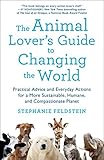

Once you know the picture, choose one issue. Best Friends offers issue-specific resources on:
- puppy mills
- community cats
- pet-friendly housing
- breed-restrictive legislation
It also provides policy guides, how-to videos, toolkits, legislative alerts, petitions and a local action team. The page describes the action team as a way to hear about further opportunities, and it recommends working with others rather than alone.
#1 Best Overall
Step two: define the change and who can make it
A vague goal such as “fewer animals in shelters” has no one to ask. A workable goal names an action and a decision-maker: a city council amending an ordinance, a landlord group changing a pet policy, or a shelter board adopting a new practice.
The International Companion Animal Management Coalition’s Advocacy Toolkit organizes campaigns around six elements:
Rank #2
- Objectives: the specific change you want.
- Decision-makers: the people or bodies who can grant it.
- Persuasive messages: what will move those decision-makers.
- Messengers: who should deliver the message, since some voices carry more weight with a given audience.
- Communication channels: meetings, letters, media, social platforms, or direct contact.
- Evaluation: how you will tell whether it worked.
The toolkit is scoped to free-roaming dogs and cats. Its structure is still a useful template for other local campaigns, but check that its specific advice fits your issue.
Know the range of targets
Advocacy isn’t only about pets. The ASPCA’s public policy page lists priorities including commercial dog breeding, enforcement of cruelty laws, pet-care resources, horse protection, humane farming and disaster preparedness. That list shows its priorities, not a ranking of which policies work best. It’s useful mainly for seeing how many different decision points exist: legislatures, enforcement agencies, local governments, and emergency planners.
Recommended Free Tools
Rank #3
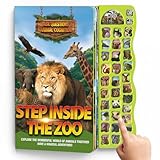
- 【Animal Busy Book with Sounds for Kids 】NEWEST VERSION Animal Busy Book 30 Species Names & Realistic Sounds Interactive Book for Boys Girls Kids 2 3 4 5 6 7 Year Old - learning toys, which helps toddlers to develop cognitive, practical ability, hand-eye coordination, color perception, memory, concentration and basic recognition.
- 【30 Animal illustrated & 6 Themes Writing Pages】Preschool Educational Animal Book covers 30 animal species and sound,which also including dinosaur stickers, maze, numbers.It helps develop hand-eye coordination, color perception, enhance memory and basic recognition.
- 【High-Quality Printing and Materials】: This book is based on large vibrant colors realistic images. The thick board book cover ensures long-lasting usage and cardboard pages prevent it from bending. specially anti-cutting edge and round corner design of every page, prevent the little hands from getting hurt. The book size is 11.8x10.3 inches, bigger than any other dinosaur sound book on the market. ·
- 【Parent-Child Interactive Teaching】Ourr book is suitable as a learning toy for kids 3-5 and playing with the family is a great opportunity to learn to take turns, share and help each other. It is useful to help them understand thinking, perceive colors, and enhance logical knowledge.
- 【Ideal Gifts 】The book is perfect for preschool kids, homeschool, kindergarten. To keep your kid busy. Can be used as birthday gifts, Dinosaur Themed Party, holiday gifts, toy prizes for carnival games. Children can experience the fun of learning in the game.
A five-question check before you commit
Run any plan through these questions. This is a practical synthesis of the organizations’ guidance, not a validated scoring tool.
- Which animals and which issue are you targeting?
- Who can actually make the requested change?
- What evidence suggests the intervention works?
- Does the tactic fit your local context and audience?
- How will you measure progress, and what will you change if it stalls?
What the evidence says, and where it runs out
Animal Charity Evaluators (ACE) maintains Better for Animals, a living resource that synthesizes academic research, movement reports and expert input across advocacy interventions. It looks at what evidence suggests, where gaps remain, and how context shapes effectiveness. ACE says: “We hope this resource serves as a useful starting point for researchers, advocates, and funders—best used alongside on-the-ground knowledge of how these approaches function in specific contexts.” Because the resource is updated and adds intervention spotlights (see its recap, 27 August 2026), check the current entry before relying on any detail about a tactic.
The material reviewed doesn’t establish any one intervention as universally the most effective. It also contains no current, independently validated estimate of how many animal lives a single person’s advocacy will save. Be wary of anyone who promises one.
Independent reader supportYour contribution helps us test, update, and keep practical guides available for everyone.Lessons from consumer-campaign research
The Vegan Society’s 2019 guide to effective animal campaigning summarizes studies by several advocacy research groups. It covers persuading individuals to eat fewer animal products. Its findings don’t automatically carry over to shelter policy, legislation, or other animal advocacy. They are also older secondary summaries, so the study year and publisher matter. The figures below are as the guide attributes them.
Best Value
| Finding | Original study (as summarized by The Vegan Society, 2019) |
|---|---|
| Readers of an animal-cruelty leaflet were credited with sparing 3.27 animals on average, versus 2.94 for a health-message leaflet | Humane League Labs, 2014a |
| Intent to reduce animal-product consumption: 27% after a “purity” message, 41% after an environmental message, 51% after an animal-cruelty message | Humane League Labs, 2015a |
| In a survey of mostly vegetarian and vegan respondents, 66% named animal welfare, 50% health and 44% the environment as a primary concern | Humane League Labs, 2014b |
| 73% of the public supported using media to reach people with animal-protection messages | Faunalytics, 2018a |
| About 2% of recipients of one vegan leaflet reported becoming vegetarian or pescatarian as a result; other leafleting findings were mixed | Humane League Labs, 2017b |
| Influential resources for starting to cut animal products: documentaries/movies 45%, books 36%; conversation 35%, thinking of it themselves 36% | Humane League Labs, 2014b |
How to read these numbers
- Cruelty-focused messages did better on aggregate in some studies, but the guide notes that health or environmental arguments may persuade some people more.
- Evidence on leafleting and online advertising was mixed.
- People may avoid graphic cruelty content, so the most shocking material isn’t automatically the most effective.
- Stated intentions and self-reports aren’t the same as lasting behavior change.
Putting it into practice
Community and shelter work
Check your local lifesaving data, pick one issue (for example community cats or housing restrictions), and join or form a group so your voice isn’t a single email. Use the issue resources and policy guides to learn what changes others have asked for. Sign up for legislative alerts so you can act when a relevant bill moves.
Policy work
Name the body that votes or decides, and tailor your message and messenger to it. Residents, veterinarians and local rescuers often speak with more credibility than outsiders. Decide up front what counts as progress, such as a hearing scheduled, a draft amended, or a vote won, so you can adjust.
Public outreach
If you try to change what people do or buy, treat the consumer-messaging studies as hypotheses to test with your own audience. Start small, compare approaches, and drop what doesn’t land.
Learning more
Books and documentaries were commonly cited influences in one survey, but they are no substitute for local knowledge. If you pick up a book on campaigning, check that it is current and relevant to your species and setting.
Quick Recap
Product prices and availability are accurate as of the date/time indicated and are subject to change. Any price and availability information displayed on Amazon at the time of purchase will apply.




