
Some links on this page are affiliate links: if you buy through them we may earn a commission, at no extra cost to you.
A predictable dog-feeding routine uses repeatable meal windows, measured portions, the same calm preparation and release cues, and a quiet place where your dog can eat without competition. Start with the amount and frequency that fit your dog’s life stage, activity, body condition, health and medication plan; your veterinarian can help set those variables. Then reserve part of the measured daily ration for training or a food puzzle, and treat any guarding or persistent appetite change as a safety or medical issue rather than a discipline problem.
The goal is not to make your dog wait indefinitely or to force a particular clock time. It is to make the sequence reliable: food is prepared, a simple behavior is requested, the meal arrives, and the dog can eat undisturbed. That consistency gives you better calorie control and gives your dog clearer information about what happens next.
As an Amazon Associate I earn from qualifying purchases.
What makes a feeding routine positive and predictable?
VCA describes a consistent routine as a way to provide predictability, and notes that feeding adult dogs at regular times can provide the security of a routine. Predictability comes from repeating the pattern, not from demanding perfect obedience or using hunger to control behavior.
Use repeatable meal windows
Choose meal windows that your household can maintain on workdays, weekends and ordinary schedule changes. The exact clock time can be adjusted to your dog’s needs. A repeatable pattern—such as a morning window and an evening window, or another veterinarian-approved arrangement—is the important cue. If the schedule must change, shift it calmly rather than compensating with a much larger meal.
Popular on Amazon

- [Treat Distribution] Our food dispenser has differently sized spheres at both ends. As dogs push the toy, it moves within a fixed area, allowing dogs to continuously chase and play with it. During movement, food is dispensed from the food holes on both sides of the toy.
- [Adjustable Switch] Each of the two spheres with a food dispensing switch, making it suitable for various sizes and types of pet dry food or snack. The switch can be adjusted according to the different sizes of dog food. It also allows control over the amount of food dispensed, extending or shortening the time it takes for pets to obtain food. It is more conducive to a healthy dog diet.
- [Increase Pet Intelligence] This dog treat puzzle toy combines intellectual training with food rewards. When pets push this toy, it will not only be to get delicious food, but it will also stimulate their intelligence and hunting instinct. This design not only meets the needs of pets but also encourages them to learn and grow in the game.
- [Prolonged Play] The dog enrichment toy is designed to limit the amount of treats your dog gets while encouraging more extended playtime. This is intended for effective playtime for dogs and is NOT a chewed toy. It is also dog boredom buster toys and best dog gift to keep them busy when dogs are left home alone, relief anxiety.
- [Attract Dogs' Attention] With barbell shaped design and bright color, the dog puzzle toy ball can attract your dog's attention, stimulate their curiosity and drive them crazy to roll it. Size: 6.1*3.44*3.44in/15.5*8.7*8.7cm.
Measure the whole day’s ration
Measure the amount your dog is meant to receive for the entire day before serving the first meal. ASPCA describes portion-control feeding as measuring food and providing it in one or more meals. A measuring cup or, for greater precision, a kitchen scale prevents “just a little extra” additions from accumulating. Put the portion for each meal in a container, and remove the amount you plan to use for training or enrichment before the day begins.
Keep preparation and release cues consistent
Use the same short sequence each time: prepare the food in a low-traffic area, ask for one easy behavior your dog already knows, place the bowl or enrichment item down, and release the dog. “Sit” or standing calmly may be appropriate if those behaviors are already fluent. Do not turn a hungry dog’s meal into a long series of commands; the cue should make the routine clearer, not create frustration.
Make the eating location quiet
Feed away from doorways, running children, busy appliances and other pets. In a multi-dog home, separate dogs with distance, gates, crates or different rooms when competition is likely. A dog that can eat without being watched, touched or challenged learns that the bowl is a safe, predictable resource.
How many meals should your dog have?
There is no single meal count that suits every dog. Frequency and portion size depend on life stage, body condition, activity, medical conditions, medications, the food’s calorie density and how your dog responds between meals. FDA’s summary of American Animal Hospital Association guidance says nutritional screening should be part of every routine physical examination and should cover the pet, diet, feeding management, environment, body-condition score and muscle-condition score. Use that assessment, rather than a generic schedule, to set the plan.
Adult dogs
For a healthy adult dog, choose one or more regular meal windows that fit the dog and household, then keep them consistent. VCA specifically identifies regular feeding times as a source of security and predictability. Your veterinarian may recommend a different arrangement for a dog with a disease, unusual activity level, medication timing requirement, weight-management goal or digestive problem.
Also popular on Amazon
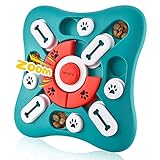
- 【PRODUCT SIZE】10 inch*10 inch*1.3 inch.
- 【3 WAYS TO PLAY, UPGRADE SLOW FEEDER】Our dog mental stimulation toys have a unique squeak button in the middle, which make it easier to attract the attention of dogs and cats. Three different difficulty designs and the 16-hole dog treat dispenser design maximize slow feeding time, even beyond 20 minutes.
- 【FUNNY STIMULATING TOYS】All kinds of dogs and cats love the puzzle game of Spin & Slide and the Seek & Hide with their smell sense and paw skills to find food. Combining circular orbit sliding game and linear orbit sliding game, smart dog and cat must move the slider correctly to get the food reward hidden in the maze.
- 【NON-REMOVABLE PARTS DOG PUZZLE】Our dog treat puzzle is made of non-toxic materials, very durable and suitable for pets to play for a long time. This dog toy has no removable parts because the design has built-in play parts that fold tightly and won't fall off easily.
- 【ANTI-SLIP & EASY TO CLEAN】: The four corners of the bottom are equipped with four anti-skid pads, which can be well fixed during the dog's slow food process; It is easy to clean, also dishwasher safe.
Puppies, seniors and dogs with medical needs
Puppies, older dogs and dogs with conditions such as diabetes, gastrointestinal disease or dental problems may need a schedule and food format tailored to them. Medication can also change when or how much a dog should eat. Ask your veterinarian for the number of meals, portion size, food texture and timing that fit your dog; do not copy an adult schedule automatically.
Use body condition, not begging, to adjust portions
Begging, rapid eating or an empty bowl does not prove that more food is needed. Track body condition and muscle condition, weigh your dog when advised, and discuss changes with the veterinary team. A portion that was appropriate after adoption, neutering, a growth period or a change in exercise may later be too much or too little.
A step-by-step routine you can start today
- Choose realistic meal windows. Write down the windows you can maintain and the person responsible for each meal. Keep the pattern stable even when the exact minute varies.
- Measure the daily food. Measure the full daily ration before the first meal. Divide it among the planned meals and set aside the amount for treats, training and enrichment.
- Prepare in a low-traffic area. Assemble the bowl, puzzle toy or snuffle mat where other pets and children cannot crowd the preparation area. Close a gate or use separate rooms if needed.
- Invite one calm behavior. Ask for a previously learned sit, stand or pause. If your dog is frantic, shorten the pause and make the setup easier; the meal is not a test of endurance.
- Place the food down and release. Use the same brief release word or gesture. Put the bowl down before the dog becomes more agitated, then allow access.
- Leave the dog undisturbed. Do not touch the bowl, pet the dog, reach toward the food or take the meal away as a “test.” Predictability includes knowing that eating will not be interrupted.
- Use enrichment when appropriate. Replace part of the bowl meal with a solvable food puzzle or snuffle mat. Start with an easy version and supervise the first uses.
- Record meaningful changes. Note food left behind, a sudden increase in hunger, vomiting, diarrhea, unusual thirst, difficulty chewing or a change in eating speed. Contact your veterinarian when an appetite change persists or is accompanied by other symptoms.
Should you use a puzzle feeder or snuffle mat?
Yes, when the item is safe, the difficulty is appropriate and the food comes from the measured daily ration. VCA recommends snuffle mats and food-puzzle toys as positive enrichment, and Merck includes exploratory play with food and food-dispensing toys in a daily routine. Enrichment adds searching, sniffing or manipulation without requiring extra calories.
Choose the format by the dog’s response
| Option | Predictability | Calorie control | Safety and frustration checks | Best use |
|---|---|---|---|---|
| Measured bowl meal | Clearest time and location cue | Easy to track when portioned | Use a stable bowl; feed separately when competition exists | Core meals and dogs that become frustrated by puzzles |
| Snuffle mat | Preserves the same meal window while adding sniffing | Accurate if filled from the measured ration | Supervise; stop if the dog chews fabric, becomes distressed or guards the mat | Gentle exploratory enrichment for dogs that enjoy searching |
| Food-puzzle toy | Meal timing stays predictable, but eating takes longer | Accurate if the filled amount is measured | Begin with an easy puzzle; inspect for broken or detachable pieces | Dogs that can solve the toy without escalating frustration |
| Slow-feeder bowl | Maintains the normal meal cue | Portion remains measurable | Optional tool, not a universal cure; choose a design the dog can use comfortably | Controlled access for a dog that gulps, provided the dog is relaxed using it |
| Free access to food | Weakest time cue | Harder to quantify intake | May hide appetite changes and encourage competition in multi-dog homes | Only when specifically suitable for the individual dog and approved by the veterinary team |
Introduce enrichment without creating a new problem
Put only part of one meal into the toy at first, and watch your dog work. If the dog cannot obtain food, abandons the item, paws or bites frantically, vocalizes, or shows guarding behavior, make the puzzle easier or return to a bowl while you seek advice. A puzzle should produce engaged, successful exploration—not distress.
Clean the item according to its material and the manufacturer’s directions. Replace it if it cracks, sheds pieces or becomes difficult to sanitize. Children should not handle a food-filled toy while a dog is using it.
Free tools Windows power users keep installed
One-click scans. No signup required.
Also popular on Amazon

- 2 Levels in 1 Toy: start your pups off with a level 1 puzzle, add some treats in the base compartments and watch your dogs get their tasty reward by nudging the lids. For dogs who have mastered level 1, for added challenge in level 2, just put some treats in the top compartments, teach your dogs to press the top cover to dispense treats down into the base compartments and finally enjoy their reward
- Slow Feeder: The large capacity top transparent granary saves you the hassle to refill dog food frequently. The product can also be used as a slow feeder utensil for your dogs, which promotes healthy ingestion by slowing down eating speed by over 10x. Great for large and small dogs
- Not Easy to Tip Over: 4 non-slip rubber mats and weighted base hold the dog puzzle toy firmly in place when dogs eat and nudge and prevent the toy from tipping over
- We Prioritize Safety: the dog puzzle toys are designed with your pet’s health in mind, made of durable food-grade PP materials. Non-removeable parts make it safe and easy to clean. And you can give puzzles toy to your dog or directly out of the box, just no assembly!!
- Trains Dog’s Intelligence: interactive treat puzzle game challenges your puppies to get their reward of treats, works your dog's mind while reducing boredom and destructive behavior like chewing, digging and excessive barking. Size: 4.2 inch height
How to slow rushing without creating fear
Rapid eating can result from excitement, competition or a learned expectation that food will disappear. Start with management rather than confrontation: feed in a quiet area, separate pets and use measured portions. A slow-feeder bowl can be an optional controlled-access tool if your dog can use it comfortably. Do not hold the bowl away, repeatedly remove it or deliberately interrupt eating.
Keep the pre-meal sequence short
Long waits and repeated commands can increase arousal. Ask for one familiar behavior, place the food down and step away. Reinforce calmness by making the routine reliable, not by adding more obstacles between the dog and the meal.
Check for medical contributors
A sudden change from a normal eating pace to frantic eating, especially with weight change, increased thirst, vomiting, diarrhea or medication changes, merits veterinary discussion. Behavior and appetite can change together when a medical problem is developing.
Food guarding: prevention and response
Food guarding can range from running away with food or stiffening over the bowl to growling, snapping, chasing or biting. ASPCA explains that a guarding dog may react as if an approaching person intends to take the food away. This is a safety concern, not disobedience.
The Tool Desk
Outbyte PC Repair FREERepair Windows errors before they cause bigger problemsFix Now →Outbyte Driver Updater FREEFix the driver behind crashes, sound loss and screen glitchesFind Drivers →What not to do
- Do not punish, intimidate, yell at or physically confront the dog.
- Do not use “dominance” exercises or forcibly remove the bowl.
- Do not allow children or visitors to approach a dog that is eating.
- Do not test tolerance by repeatedly touching the food, reaching into the bowl or taking it away.
ASPCA warns that punishment and intimidation can worsen guarding and damage the relationship. Management prevents rehearsal while you arrange qualified help.
Also popular on Amazon
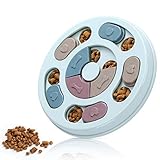
- 【Size】: L9.44" * W9.44"* H1.14" suitable for cats, puppies and small dogs.
- 【Interactive Dog Toys】This is a interactive puppy puzzle , which can easily become the closest companion and toy for your puppies and cats, and will release pressure for dogs. Find food by sliding parts to improve eating pleasure and IQ.
- 【Slow Feed Bowl】This encourages pets to eat at a slower speed, helps to slow down the feeding time to help the dog digest, and can provide your dog with a variety of healthy snacks.
- 【Slow Feede toys】 Use this educational game toy to exercise the dog’s brain, which will help meet the dog’s instinct needs, train the pet’s sense of smell, and let the dog enjoy feeding when using the nose or paw to move the slider, while providing spirit stimulate.
- 【Dog toys】No toy is indestructible. Do not leave toys with unsupervised pets. Remove and replace toy if damaged.
Prevention for a dog showing no guarding signs
For a dog that remains relaxed around food, ASPCA describes pairing a person’s approach from a distance with a high-value treat, then gradually reducing the distance only while the dog stays comfortable. This is counterconditioning, not a tolerance test.
- Begin far enough away that the dog notices you without stiffening, freezing, accelerating eating or changing posture.
- Approach only enough to toss a valuable treat, then leave. The dog should learn that a person appearing predicts an addition, not a loss.
- Repeat on separate occasions and reduce distance in very small increments only when the dog remains loose and relaxed.
- Stop immediately if the dog freezes, stiffens, gulps, growls, snaps, moves toward you or stops eating. Increase distance at the next meal.
Do not start this exercise if guarding is already present or if you are unsure how to read the dog’s body language.
When guarding is already present
Feed the dog behind a closed door, gate or other secure separation, and keep people and animals away until the meal is finished. Arrange help from a Certified Applied Animal Behaviorist, a board-certified veterinary behaviorist or a qualified Certified Professional Dog Trainer with aggression experience, as ASPCA recommends. Tell the professional exactly what happens, including the distance at which the dog reacts and whether children or other pets are involved.
Quick wins for a faster PC:
Repair Windows errors before they cause bigger problemsFix Now →Scan for outdated or missing drivers - takes under a minuteDriver Scan →How to count treats and enrichment calories
Treats are part of the daily intake. ASPCA advises giving treats in moderation and keeping them to five percent or less of the dog’s daily food intake. Remove that amount from the measured daily ration when possible, or use pieces of the dog’s regular food for training.
Make one person responsible for recording treats in homes where several people feed the dog. Include food used in puzzles, snuffle mats, medication delivery and practice sessions. If training requires more rewards than the daily allowance permits, ask your veterinarian about adjusting meals or selecting a lower-calorie option.
Also popular on Amazon

- 【Product Size】10 inch*10 inch*1.2 inch.
- 【Interactive Dog Puzzle Toys 】This is a fun interactive puzzle toy,which can encourage and train your dogs or cats to seek foods by sliding the slider, helping pets to increase IQ by learning sequential steps and the challenging play.
- 【Squeaky Dog Toys】This dog puzzle toys is designed with a sounding device in the middle of the toy,which is to attract the pet's attention.Also,you would enjoy the fun of dog squeak puzzle toy with your pets, greatly improve relations with your pets and get fun during interactive dog games.
- 【Mental Excecise&Boredom Buster】Our memory training puzzle toy can keep smart dogs busy and engaged in more thinking and activities.Therefore,clot stimulation toys are great for reducing dogs’boredom,anxiety and destructive behaviors.
- 【Food-Safe PP Material】This dog treat puzzle is made with toxic-free, food-grade PP material. It is durable for interactive play and mental enrichment but not designed as a chew toy. Always supervise your pet during use.Easily washable with water or in the dishwasher.Note: No toy is indestructible. Remove and replace the toy if damaged.
Handling leftovers, skipped meals and appetite changes
Follow your veterinarian’s and the product’s guidance for how long food should remain available, especially for moist or perishable diets. Record whether your dog leaves all or part of a meal, because VCA notes that leaving food can signal that something is wrong and warrants a veterinary appointment.
Contact a veterinarian promptly when
- A dog that normally eats well repeatedly leaves meals or refuses food.
- Appetite changes occur with vomiting, diarrhea, lethargy, pain, unusual thirst, weight change or trouble chewing.
- A puppy, senior dog or dog with a diagnosed disease misses food or cannot follow the prescribed schedule.
- Eating changes after a medication starts, stops or changes dose.
Do not mask a persistent change by adding increasingly attractive toppers or treats; that can obscure how much the dog is eating and delay assessment.
Do these 3 things before closing this tab:
1Clear out junk files and repair common Windows errors2Scan for outdated or missing drivers - takes under a minute3Repair Windows errors before they cause bigger problemsTroubleshooting common routine failures
“My dog starts begging before the meal window.”
Check that the daily portion is appropriate and that treats have been counted. Keep the meal window consistent, redirect the dog to a calm activity and avoid feeding in response to escalating demands. If the hunger is new or extreme, ask your veterinarian about medical causes.
“The puzzle makes my dog frustrated.”
Use a simpler toy, make the food easier to obtain, reduce the amount of time required or serve the meal in a bowl. Enrichment is optional; a calm, successful bowl meal is better than a difficult puzzle that produces distress.
“My dogs compete over food.”
Feed in separate rooms or behind barriers, prepare meals out of sight of the dogs and release each dog individually. Pick up equipment only after every dog has finished and the area is clear. If either dog guards, obtain behavior help before attempting shared feeding.
“Our schedule changes every week.”
Choose a repeatable sequence rather than relying on an exact minute: preparation location, one brief cue, meal, undisturbed eating and cleanup. Use written instructions so every caregiver measures the same daily amount and records treats.
What’s actually slowing this PC down?
Pick the symptom - the matching free tool is one click away.
“My dog will not eat from the new feeder.”
Return to the familiar bowl, inspect the feeder for uncomfortable edges or movement and introduce the new item with a small portion. A feeder is not required for a positive routine. Persistent refusal should be treated as an appetite change, not a training challenge.
Quick Recap
A practical household checklist
- Meal windows are written down and realistic for every caregiver.
- The full daily ration is measured before food is served.
- Training, puzzle and medication food comes from that ration.
- Treats remain at five percent or less of daily intake under ASPCA guidance.
- The feeding area is quiet, and dogs are separated when competition is possible.
- The release cue is brief and already familiar.
- The dog can eat without people touching or removing the bowl.
- Puzzle difficulty is low enough for successful, relaxed use.
- Guarding signs have a management plan and professional referral.
- Appetite and meaningful changes are recorded for veterinary conversations.





Leave a Reply