Recommended Free Tools
A sustainable animal rescue transport program depends on more than finding a destination for an animal: source and receiving organizations need an ongoing partnership, clear responsibilities, shared information, and a plan that benefits both communities. In Best Friends Animal Society’s December 23, 2021, podcast episode, “How to establish and grow your animal rescue transport partnerships,” American Pets Alive!’s Clare Callison discusses finding and cultivating partners for effective transport programs.
What makes a transport partnership sustainable?
Transport moves animals from communities facing greater shelter pressure to places with more adopter demand. But a recurring program is not simply a vehicle, a route, and a receiving shelter. It is a working relationship between organizations that agree on which animals can travel, how their needs will be assessed, who makes decisions, and how the transfer will be managed.
As an Amazon Associate I earn from qualifying purchases.
That distinction matters because a transfer that works once may not be safe or practical to repeat. Best Friends’ partnership resources emphasize developing relationships that can grow beyond a one-time transfer into longer-term collaboration. The arrangement should also support the source community, rather than treating it only as a place from which animals are removed.
Quick wins for a faster PC:
Fix the driver behind crashes, sound loss and screen glitchesFind Drivers →Clear out junk files and repair common Windows errorsFree Scan →How should you choose a potential partner?
Look for a partner whose care practices and operating capacity match the needs of the animals and the goals of the program. Best Friends’ volunteer playbook points organizations toward humane-care alignment, medical and behavioral protocols, destination demand and capacity, logistics, source-community impact, and clear communication.
#1 Best Overall

- FIRST-CLASS COMFORT FOR PETS: The Petmate Sky Kennel meets IATA requirements for live animal transport and meets most airline cargo specifications, providing secure air travel for pets; it includes 360-degree ventilation and tie-down strap holes
- EASY TRAVEL PREPARATION: The Sky Kennel is a travel dog crate that comes with essentials including two 'LIVE ANIMAL' stickers, a food and water cup, ID stickers, and an absorbent pad to provide a great travel experience for you and your pet
- SPACIOUS INTERIOR FOR LARGE DOGS: Ideal for Australian Shepherds or similar, this large dog kennel accommodates pets 50-70 lbs, offering enough room to walk and rest comfortably during travel, with interior dimensions of 32.5" L x 22" W x 26" H
- DURABLE BUILD QUALITY: Made in the USA from EcoTEC Plastic with a minimum of 90% pre-consumer recycled material, this big dog crate features an easy-squeeze latch door with interlocks and a folding top handle for added security
- PET WELL-BEING: With over 60 years of experience, Petmate designs reliable pet products to improve the lives of pets and their owners by creating high-quality products
| What to assess | Questions to resolve |
|---|---|
| Humane-care and program alignment | Do both organizations share expectations for animal welfare, handling, and the purpose of transport? |
| Receiving demand and capacity | Is there adopter demand for the animals being considered, and can the receiving organization care for them without exceeding its capacity? |
| Medical and behavioral practices | What evaluations and records are needed, and how will health or behavior needs affect eligibility and placement? |
| Geography and logistics | Can the route, timing, vehicle arrangements, and staffing be managed reliably? |
| Source-community benefit | How does the arrangement support the source organization and community, as well as the receiving organization? |
| Communication and commitments | Are decision-makers identified, timelines understood, and responsibilities documented in writing? |
Use these questions in conversations with prospective partners before agreeing to a regular schedule. A receiving organization’s interest alone does not establish that it has the capacity or adopter demand for a particular group of animals.
What should partners agree on before the first transport?
Set the operating rules before animals are selected. Best Friends’ playbook recommends that source and receiving organizations establish a working relationship, align on medical and behavioral evaluations, and agree on an approval protocol and timeline. Put the terms in a transfer agreement before transports begin.
Rank #2

- IATA AIRLINE COMPLIANT TRAVEL CRATE: Designed to comply with the standards specified in the 51st Edition of the IATA Live Animal Regulations for safe, secure air travel. AIRLINE ACCEPTANCE REQUIREMENTS VARY by carrier, aircraft, route, destination, and pet specifications. Please confirm your airline's current pet travel and kennel requirements before booking or traveling.
- SECURE & RELIABLE AIR TRAVEL DESIGN: Durable hard-sided plastic construction provides strength and protection, while built-in ventilation promotes steady airflow and visibility. Features an accident moat to help keep pets dry, airline-required tie-down holes for added security, reinforced metal hardware, and a strong locking door latch to help keep dogs and cats safely contained during travel.
- EASY TRANSPORT FOR AIRPORT TRAVEL: Designed for easy airport navigation, with smooth-rolling wheels for effortless airport transport and two built-in top carry handles for quick lifting through terminals, security checkpoints, loading areas, and in & out of the car—making it a convenient dog travel kennel and airline pet carrier for stress-free pet travel.
- TRAVEL READY ACCESSORIES: Includes 2 sturdy food/water dishes, 4 “Live Animal” labels to alert handlers, and metal bolts and nuts for assembly, making this kennel ideal for safe pet transport or comfortable use at home, hotels, or vacation stays.
- COLLAPSIBLE & EASY TO CLEAN: Conveniently separate the kennel into two pieces for compact storage when not in use. Cleanup is simple—wipe down with mild soap and water, or hose out for a thorough clean, keeping your pet’s travel crate fresh and hygienic.
- Eligibility and selection: Define which animals may be considered and what information the receiving organization needs to approve them.
- Assessments and records: Agree on the medical and behavioral evaluations to share, how needs will be described, and how records will reach the receiving partner.
- Approvals and timing: Set who approves an animal, how decisions are communicated, and the expected timeline for selections and changes.
- Responsibilities: Record what each organization handles, including coordination, preparation, transfer documentation, and communication when plans change.
- Written terms: Sign a transfer agreement before the first transport and revisit the agreement as the program or its procedures change.
Sharing photos, biographies, and records in advance helps the receiving organization review animals before a trip is underway. The partners should also agree on a manifest process so the people coordinating the trip have a common, current account of which animals are traveling.
How should day-to-day coordination work?
Name one coordinator at each organization. The source-side and receiving-side coordinators organize timing and animal selection, assess health and behavior needs, and keep communication moving. Having a named contact at both ends makes it clearer who is responsible for decisions and updates.
Rank #3
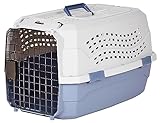
- Hard sided pet carrier with 2 doors for front and top entry; suitable for cat or medium size dog weighing 12 - 20 pounds
- Durable plastic construction with steel wire doors; screws keep the top and bottom sections securely connected
- Spring load latches ensure easy one-handed door opening and closing; top door swings open to the left or right and includes a top carry handle
- Plenty of air ventilation on the sides, top, and back of the carrier
- Note: Be sure to measure the size of the pet when choosing carrier size
- Build the proposed group: The source coordinator gathers the agreed-upon animal information and sends it to the receiving coordinator for review.
- Confirm approvals: Follow the agreed protocol and timeline; do not treat an animal as approved until the receiving organization has confirmed its decision.
- Prepare shared records: Provide photos, biographies, health and behavior records, and a manifest in the format the partners agreed to use.
- Confirm readiness and logistics: Coordinators check timing, animal needs, and the practical arrangements for the trip, and communicate any changes to one another.
- Keep the process connected: Maintain communication between organizations as animals are selected and transferred, rather than relying on informal assumptions.
Best Friends’ transport materials include sample manifests, volunteer procedures, vehicle checklists, and supply lists. These can help organizations turn an agreed process into repeatable tasks. A transport kennel or other appropriate equipment should be treated as part of safe preparation, not as a substitute for coordination or animal-specific planning.
How do you protect animal welfare and comply with transport requirements?
Plan around public health and safety, humane standards, applicable laws, destination capacity, and the effects on both communities. The Best Friends Animal Transport Volunteer Playbook advises that interstate animals travel with valid health certificates, vaccination records, and health and behavior records. Requirements can change, so organizations should confirm current rules with relevant authorities before a trip.
Rank #4

- IATA AIRLINE COMPLIANT TRAVEL CRATE: Compliant with the standards specified in the 51st Edition of the IATA Live Animal Regulation for safe, secure air travel—The Kennel features a durable hard-sided exterior plastic shell, steady airflow and visibility built-in, accident moat pulls spills away from your pet’s body, airline-required tie-down holes for added security, reinforced metal hardware, and a strong secure door latch to keep dogs and cats safely contained during air travel.
- EASY TRANSPORT FOR AIR TRAVEL: Designed for easy airport navigation, with smooth-rolling wheels for effortless airport transport and a built-in top carry handle for quick lifting through terminals, security checkpoints, loading areas, and in & out of the car—making it a convenient dog travel kennel and airline pet carrier for stress-free pet travel.
- TRAVEL READY ACCESSORIES: Includes 2 sturdy food/water dishes, 4 “Live Animal” labels to alert handlers, and metal bolts and nuts for assembly, making this kennel ideal for safe pet transport or comfortable use at home, hotels, or vacation stays.
- COLLAPSIBLE & EASY TO CLEAN: Conveniently separate the kennel into two pieces for compact storage when not in use. Cleanup is simple—wipe down with mild soap and water, or hose out for a thorough clean, keeping your pet’s travel crate fresh and hygienic.
- FITS MEDIUM DOGS: Designed for pets up to 23”L x 15”H; interior crate dimensions measure 24.25”L x 18”W x 17”H—ideal for medium breeds like a French Bulldog to stand, turn, and rest comfortably while traveling.
This is operational guidance, not legal advice for every jurisdiction. Requirements may differ depending on where animals originate, where they are going, and the circumstances of the transfer. Confirm the rules that apply to the specific route and animals with the appropriate authorities rather than assuming a previous trip’s paperwork remains sufficient.
What’s actually slowing this PC down?
Pick the symptom - the matching free tool is one click away.
How can a program grow without outpacing its capacity?
Grow the relationship and its procedures together. A transport arrangement should reflect actual adopter demand and the receiving organization’s ability to care for incoming animals, while also advancing the source community’s needs. A larger or more frequent transport is not automatically a better program if capacity, coordination, or animal welfare standards cannot keep pace.
Best Value

- Hard sided pet carrier with 1 door for front entry; suitable for a cat, dog, or other small pet
- Durable molded plastic construction; locking door mechanism for secure closure
- Top handle for easy carrying
- Metal wire door and side panels provide ventilation
- Product Dimensions: 23.6 x 15.7 x 13 inches (LxWxH)
Best Friends’ resources include rescue-program introductions, transfer partner MOUs, transport playbooks, training, sample manifests, vehicle checklists, and supply lists. Organizations can use these materials to clarify expectations, prepare volunteers, and make recurring work more consistent. Review written agreements and procedures as the partnership changes so responsibilities and operating expectations remain clear.
Where can organizations learn more?
The Best Friends podcast episode points listeners to the organization’s “Lifesaving through Transport Programs” online course and its Transport Connection Map. Best Friends also provides a partnership resource page and an animal transport volunteer playbook. Together, these resources offer starting points for learning about transport, identifying potential partners, and organizing the practical work of a program.
Quick Recap
Product prices and availability are accurate as of the date/time indicated and are subject to change. Any price and availability information displayed on Amazon at the time of purchase will apply.




