Recommended Free Tools
After bladder-tumor treatment, the safest home-care plan is the one on your dog’s discharge sheet. “Bladder tumor surgery” can mean a partial cystectomy, a urinary diversion, or another procedure; some dogs instead receive ultrasound-guided laser ablation, which does not involve surgery and has a short recovery. The incision, urine route, catheter or diversion, medications, and activity limits can therefore differ substantially.
Keep your dog quiet indoors, take only the toilet walks your veterinary team permits, protect any incision, give medicines exactly as prescribed, and watch urine output. Inability to pass urine or suspected obstruction is an emergency. Dribbling, blood, pain, straining, or new changes in flow should be discussed with the surgical team rather than declared normal from a generic article.
As an Amazon Associate I earn from qualifying purchases.
Start by identifying exactly what was done
Read the discharge paperwork before making a home-care schedule. If it is unclear, call the operating hospital and ask for the procedure name, the expected route of urine, whether a catheter or diversion is present, the activity restriction, and the follow-up date.
Canine transitional cell carcinoma (TCC), also called urothelial carcinoma, commonly affects the bladder and sometimes the urethra. Texas A&M Veterinary Medical Teaching Hospital notes that removing a typical TCC surgically is rarely helpful; tumor location influences treatment choices, and North Carolina State University notes that prognosis varies among patients. That is why another dog’s recovery story cannot substitute for your surgeon’s instructions.
#1 Best Overall

- GREAT PROTECTION FOR YOUR PETS: The dog cone collar is a safe and good method of preventing your pet from aggravating a healing wound or injury. Helps to overcome lick-bite, Itch-scratch cycle. Ending self-Inflicted wound aggravation or mutilation, prevent your pet bite others in the dermatology / Beauty / surgical procedure.
- PERFECT FIT: Suitable for different ages or sizes dogs and cats, Meet your different needs. Please refer to our size chart before ordering, if your pet's measurement is close to the maximum please order the next size up.
- CONVENIENT TO USE: Hook & Loop design easy to tighten or loosen. This soft pet cone with above design can keep the collar secure in place and keep it from being pulled off or from falling off.
- HIGH QUALITY MATERIAL: Made of high quality PVC material, extra soft fabric edge provides your pet additional comfort and protection, durable and healthy, this pet recovery collar is light enough which never make your lovely pets get tired. And it's easy to clean!
- Warm Reminder: Some dogs may initially feel uncomfortable with the dog head cone. To prevent them from licking their wounds, we encourage you to comfort your dog and accompany them through this challenging recovery period. If you have any questions, please contact us. Size for L: Depth: 9.8 in, Neck Girth: 14.0-17.0in
| Possible treatment context | What it means for home care | What to confirm with the team |
|---|---|---|
| Partial cystectomy or another bladder operation | There may be an abdominal incision and the normal urinary route may remain in use. Restrictions and incision care are procedure-specific. | How long to restrict activity, how to inspect the incision, and when normal urination should be expected. |
| Urinary diversion | Urine may leave through a surgically created route rather than entirely through the usual urethra. Leakage, skin protection, toileting access, and ongoing hygiene can become part of daily care. | Expected leakage, cleaning instructions, whether diapers are appropriate, and the signs of a diversion complication. |
| Catheter or temporary urinary support | The hospital may give special instructions for the device, urine collection, or removal. Do not pull, reposition, or flush anything unless specifically taught. | Who to call if the device moves, stops draining, becomes contaminated, or bothers the dog. |
| Ultrasound-guided laser ablation | This is not surgical tumor removal. Texas A&M describes it as noncurative and says it does not require surgery and has a very short recovery. | Which restrictions, medicines, and urine-monitoring instructions apply to this treatment. |
The table describes questions to ask, not a substitute protocol. Your dog’s anatomy, tumor location, other illnesses, and operative findings determine the actual plan.
Set up the first night at home
Prepare the recovery area before bringing your dog inside. Choose a quiet, comfortable indoor space away from stairs, rough play, and other pets that may encourage running. Put water within easy reach and use bedding that is clean, dry, and simple to change. If urine leakage is possible, place washable layers over the bed so you can replace damp fabric without moving the dog unnecessarily.
VCA’s general postoperative guidance says, “Your dog should remain indoors overnight, going outside only for short leash walks as needed to urinate and defecate.” That is broad advice for many operations, not a bladder-cancer-specific rule, so follow a different instruction from the surgical team.
Free tools Windows power users keep installed
One-click scans. No signup required.
- Keep the arrival calm. Bring the dog directly to the prepared room and avoid greetings that trigger jumping or excitement.
- Use controlled toilet trips. Take the dog out on a short leash, stay nearby, and return indoors after toileting. Do not allow free running in the yard unless the surgeon explicitly permits it.
- Supervise transfers. Support a weak or sleepy dog on steps and slippery floors. Ask the hospital how to lift your dog if an abdominal incision or diversion makes handling painful.
- Record the basics. Note the time of arrival, first drink, first meal if allowed, each urine passage, bowel movement, and every medication dose. A written log helps the team interpret a change.
- Separate other animals if needed. A crate, pen, or closed room can prevent chasing and protect an incision or urinary appliance.
Restrict activity for the period your surgeon gives you
Running, jumping, rough play, stairs, and off-leash exercise can stress an incision or a healing urinary repair. VCA gives seven to ten days as a usual example for activity restriction after many procedures, but that range is not a universal bladder-tumor-surgery timetable. A larger operation, urinary diversion, complication, or a surgeon’s concern may require a different period.
Ask whether your dog may use stairs, climb onto furniture, ride in the car, or attend rehabilitation. Until you receive an answer, choose the more controlled option: floor-level rest, a short leash, and direct supervision. Do not use apparent energy as permission to increase exercise; some dogs feel better before internal tissues have healed.
What controlled activity looks like
- Leash walks only for urination and defecation, at the length specified by the hospital.
- No wrestling, chasing, fetch, swimming, or jumping onto beds and sofas.
- A quiet food puzzle or calm interaction only if it does not cause twisting, stretching, or excitement.
- Gradual return to normal exercise only after the veterinary team clears it.
Protect and inspect the incision
Check the incision as often as the discharge sheet directs and compare it with the description you were given. Keep the area clean and dry according to the hospital’s instructions. Do not apply creams, disinfectants, powders, or home remedies unless the surgeon prescribed them. Do not bathe or swim your dog until the team says it is safe; no single bathing schedule applies to every bladder procedure.
Rank #2

- SCRATCH & BITE RESISTANT - This inflatable dog donut collar is a perfect cone for dogs after surgery. Inflated dog neck donut works like a plump barrier around your canine's neck, can effectively prevent your pets from biting and licking injured area or surgical site. With this collar on, the unique and cute donut shape makes it like a pet ornament instead of a dog surgery collar, your pet must be a million times happier with this.
- NON-STICK FABRIC - Unlike other common velvet inflatable dog collars for after surgery donut, the outside of this dog soft cone is made of upgraded non-stick fabric, then you won't have to keep cleaning pet's hair frequently. Also it is easy to clean if needed, just unzip to take off the outer cloth. Soft cones for dogs after surgery keeps your dog comfortable, can even act as a neck pillow which helps him/her fall asleep quickly and forget the pain of the wound.
- NO STRESS - We all know how pets hate the cumbersome cone, poor dogs and cats would keep tripping on it and could not get around. This inflatable cone e collar for dogs WON'T let that happen, the inner air bag provides full support for the neck while keeping it lightweight. It does not block dog’s vision like traditional Elizabethan collar, which allows your doggie chase butterflies, hummers and grass hoppers all with wearing its collar.
- ADJUSTABLE &PERFECT FIT - In case you are concerned of the dog neck pillow from slipping down or getting taken off, we designed a fixed position on the inner part of the dog head cone, just thread your pet's everyday collar through the strips to fix it. Furthermore, a velcro strap is equipped on the opening of the collar, which can allow you to adjust the the tightness to ensure a perfect neck fit. Please remember to put the strap side at the back of your dog’s neck in case of biting.
- WARM PROMPT - If your pet wants to escape when he/she put on the collar for the first time, we hope you can work with your dog to acclimate him/her. And due to differences in dog breeds, body sizes, and growing environments, this blow up dog cone collar may not be suitable for dogs with long noses, long legs, long tails, and long bodies. Any more questions, we are here to assist you, we sincerely wish your pet a speedy recovery.
Licking and chewing can damage the incision and introduce contamination. VCA identifies an Elizabethan collar, commonly called a cone, or a recovery suit as ways to prevent interference. Use one if the team recommends it or your dog is trying to reach the site, and check that it does not obstruct eating, drinking, breathing, or a urinary diversion.
Do these 3 things before closing this tab:
1Clear out junk files and repair common Windows errors2Scan for outdated or missing drivers - takes under a minute3Repair Windows errors before they cause bigger problemsCall about an incision problem
Contact the surgical hospital if the incision opens, becomes increasingly swollen, develops discharge or a strong odor, bleeds persistently, or your dog repeatedly defeats the protective device. A photograph can help the team triage a concern, but do not delay a call when the change is substantial or rapidly worsening.
Give medicines and food exactly as prescribed
Postoperative medicines vary with the patient and procedure. Use the label and discharge instructions for the dose, timing, route, and duration. Do not skip, double, crush, substitute, or stop a medicine because a generic website suggests a different approach. Never give a human pain reliever unless the veterinarian specifically prescribed it for your dog.
If a dose is vomited, spit out, delayed, or accidentally repeated, call the prescribing team for instructions rather than guessing. Report unexpected sleepiness, agitation, vomiting, diarrhea, refusal of food, or any other reaction that concerns you. The appropriate response depends on the drug, amount, timing, and your dog’s health.
Feed only what the discharge sheet recommends. Some dogs receive a temporary diet or staged meals; others return to their usual food. There is no universal bladder-tumor-surgery feeding schedule established in the available guidance. Keep fresh water available unless your veterinarian gave a fluid restriction, and ask before adding supplements or changing diets.
Monitor urine, because output matters more than assumptions
At every toilet trip, observe whether urine is actually passing, how much appears, and whether the flow is similar to what the team described. Write down straining, repeated attempts, a changed stream, blood, pain, accidents, or leakage and report the pattern. A single observation may be less informative than a trend, but inability to urinate is urgent at once.
Rank #3
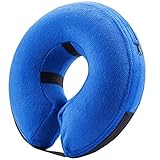
- PROTECTIVE AND GENTLE CARING - Bencmate dog cone collar is a perfect dog cone alternative after surgery. Inflated dog donut collar works like a plump barrier around your canine's neck, The dog cone collar after surgery is designed to protect your pets from injuries, rashes, and post-surgery wounds, it prevents your pets from biting and licking their injured area or surgical site and promote recovery from surgery or wounds. The soft material also provides gentle caring for your pets.
- UPGRADED FABRICS &COMFORTABLE — We offer two fabric options to choose from. One is a plush, soft-touch fabric for extra comfort (solid colors option), and the other is an anti-stick, scratch-resistant, and stretchy fabric (colorful option). Cleaning is also very convenient and simply unzip to remove the outer cover. After surgery, dogs can wear this soft dog cone for a comfortable fit, and it also doubles as a neck pillow to help them fall asleep quickly and relieve wound pain.
- FREEDOM FROM RESTRAINT — Pets wearing traditional Elizabethan collars often stumble and trip because their vision is blocked. With the Bencmate dog donut collar with inner air bag provides full neck support, and the soft outer material keeps your pet supremely comfortable without obstructing their sight. Unlike conventional E-collars that block a dog's vision, this collar allows them to eat, drink, sleep, and play with ease while staying fully protected.
- ADJUSTABLE AND EASY STORING - Designed fixation straps on the inside of the dog cone collar. Simply thread your dog collar through the strap to secure it in place. The dog cone collar features scratch & bite-resistant non-stick fabric and a clean hook-and-loop closure, making it slightly easier to put on and take off., allowing you to easily adjust the tightness for a perfect, please put the closure at the back of dog’s neck to prevent biting. Deflating and storing is also handy, store it in a small space for space-saving, and there is a zipper opening on one side.
- BENCMATE sincerely recommends you measure your pet’s neck circumference before purchasing to get a perfect size. ②If the collar is a bit large for your dog and easily falls off, please try to loop the daily collar with the recovery collar, it would be helpful to prevent the collar from falling off.
Dribbling or leakage
Owners sometimes describe a male dog “dribbling urine” after TCC surgery. That phrase is a concern to report, not proof of a normal recovery. Leakage can occur in some extensive urinary diversion cases, while other dogs have no incontinence. Whether dribbling is expected depends on the route urine now takes, the operation, swelling, catheter status, and the surgeon’s examination.
Do not restrict water to reduce accidents. Ask the team whether to use absorbent pads, washable bedding, a diaper, or another method. Diapers can be useful for selected dogs after diversion, but they are not routine for every dog after bladder-tumor treatment. If the team approves one, ask how often to change it, how to keep skin dry, and whether the diversion needs unrestricted access.
Blood, pain, or straining
Do not decide from this article that blood-tinged urine, frequent attempts, painful urination, or straining is harmless. These signs can have different meanings after different procedures. Call the surgical team promptly and describe when the sign began, whether urine is passing, and whether it is worsening.
Unable to urinate
Inability to pass urine or suspected urinary obstruction requires immediate veterinary care. Do not wait for office hours, give extra medication, massage the abdomen, or attempt to remove a device yourself. If your regular hospital is closed, use the emergency service recommended in your discharge paperwork or the nearest veterinary emergency facility.
Extra care after urinary diversion
A diversion changes both the route of urine and the practical cleaning routine. Published reports describe leakage and postoperative complications in some diversion settings, but an individual plan depends on the anatomy and technique used.
- Ask where urine should appear. Make sure every household member can identify the intended opening or route and knows what the surgeon considers normal.
- Clarify skin care. Urine on skin can cause irritation. Use only the cleanser, barrier product, drying method, or dressing approved by the team.
- Plan access. Keep the route unobstructed during toileting and prevent bedding, clothing, or a diaper from pressing on it unless the surgeon specifically recommends that setup.
- Check leakage patterns. Record when wetness occurs, how much, and whether it is accompanied by straining, discomfort, odor, blood, or a reduced intended flow.
- Know the device plan. If a catheter, stent, bag, or dressing is present, obtain written instructions for emptying, securing, cleaning, and emergency replacement.
Call promptly for worsening leakage, a blocked or displaced device, skin damage, a sudden change in the intended urine route, or any inability to pass urine.
Rank #4

- Upgraded Double-Layer Design: WinWeal Dog Cone features an upgraded two-tier design. The inner part with Soft Mesh Material, it provides your pet with additional comfort and protection without burden. The outer part with Waterproof Transparent PVC, it promotes clear vision and makes it easier for your pet to eat, drink, and play.
- Perfect Fit:Neck Girth: 15.4''-17.3'', Depth: 11.6''. Sufficient depth helps to prevent a dog from scratching or licking at a hot spot, surgical incision, or other irritation. Please measure the size of your pet before purchasing, if you have any trouble feel free contact us.
- No Choke & Not Falling off: Is your dog still choking and uncomfortable after putting on a dog cone collar? Getting rid of the traditional single design, this dog cone collar has an adjustable drawstring stopper that can be tightened and loosened to fit the dog's neck better, no need to worry about the pet will choke after putting on this soft cone, and make sure the cone will not slip down or take off even the dog tries to take it off. In addition, there's an elastic band at the base for threading through your pet’s collar to keep the pet cone in place.
- Soft Protective Edge: This soft dog cone for dogs has a soft protective fabric around the neck to protect your dog's cervical spine, ensuring they have a pleasant experience. The waterproof surface of this dog cone is incredibly easy to clean. You simply need a paper towel to wipe it clean, unlike other dog cones that are difficult to wash. Just get it for your lovely pet.
- Safe & Secure: Pet cone collar has a fluorescent strip in the outer rings for safe. Reflective straps keep your dog safe all the time while out for a walk. Not just one or two neck girth, the recovery cone includes a large vèl-cro strips for closure, enable you adjust the neck girth in wide range.
Know which signs need emergency care
| Situation | Action |
|---|---|
| No urine is passing, or you suspect a urinary blockage | Seek immediate veterinary care. Treat this as an emergency. |
| New or worsening difficulty urinating, a substantial change in flow, or repeated painful attempts | Contact the surgical team promptly; if urine stops, go to emergency care immediately. |
| Incision opens, bleeds persistently, develops concerning discharge, or the dog cannot stop licking it | Call the hospital for same-day instructions; use the prescribed protective device. |
| Unexpected medication effect, a missed or repeated dose, or vomiting after medication | Call the prescribing team for drug-specific advice rather than changing the regimen yourself. |
| Small accident or occasional leakage after a diversion, with the dog otherwise comfortable and urine flowing | Record it and ask the diversion team what frequency and skin-care plan they expect; do not assume it is universal or harmless. |
If your dog is collapsed, extremely weak, or in severe distress, transport to emergency care while someone calls ahead. Bring the medication list, discharge sheet, and urine log.
Questions to ask before discharge
A short conversation at pickup can prevent dangerous uncertainty. Ask the nurse or surgeon to write the answers down.
- What is the exact name of the procedure, and where does urine leave the body now?
- Was a catheter, stent, diversion, or other device placed, and who manages it?
- What amount and frequency of urination should prompt a call?
- How long are leash-only activity and indoor rest required?
- How should the incision or diversion be inspected and cleaned?
- Should my dog wear a cone or recovery suit, and when may it be removed?
- What are the medication names, doses, schedules, missed-dose instructions, and important adverse effects?
- What food and water instructions apply tonight?
- When is the recheck, and which number is available after hours?
- What leakage, blood, discomfort, or straining is expected for this specific operation?
Build a practical recovery kit
Gather supplies that match the written plan rather than buying for every possible complication.
- A properly fitted Elizabethan collar or recovery suit if the team recommends incision protection.
- A short leash and secure harness or collar for controlled toilet trips.
- Washable bedding and absorbent layers for easy cleaning.
- Prescribed medicines, a dosing chart, and a phone alarm.
- A thermometer only if the veterinary team has taught you whether and how to use it; do not interpret a reading without their guidance.
- For an approved diversion-care plan, the specified cleanser, dressings, skin barrier, or diaper supplies.
- A notebook or phone log for urine, medication, food, bowel movements, leakage, and questions.
Dog diapers and washable bedding are optional tools for selected dogs with leakage or incontinence after urinary diversion. They are not routine requirements after every bladder-tumor operation. A pet-care or veterinary-supply retailer may carry these products, but the surgeon’s fit and hygiene instructions matter more than the brand.
Common home scenarios and the safest response
“My dog is sleepy after coming home.”
Keep the dog indoors and supervised, follow the medication schedule, and ask the hospital how much drowsiness is expected from the drugs used. Worsening weakness, inability to rouse, or another alarming change warrants a call or emergency assessment.
What’s actually slowing this PC down?
Pick the symptom - the matching free tool is one click away.
“My dog keeps asking to go out.”
Use the prescribed short leash trips and note whether urine actually passes. Repeated attempts with little or no urine are not a reason to increase unsupervised outdoor time; report them to the surgical team.
Best Value

- 🛡️ 【STOP LICKING & SCRATCHING】 Designed to help prevent dogs and cats from licking, biting, or scratching wounds, stitches, hot spots, rashes, and surgical areas. Ideal for post-surgery recovery, skin conditions, grooming care, and injury protection.
- 🐕 【XL SIZE – 1 CONE】 This XL size includes 1 recovery cone designed specifically for large dogs. Please carefully measure your dog’s neck and refer to the size chart before purchasing for a secure and comfortable fit.
- ☁️ 【SOFT & COMFORTABLE】 Soft fabric edges help reduce rubbing and discomfort around your dog’s neck compared with traditional hard plastic cones. Lightweight design helps pets recover more comfortably during daily wear.
- 👀 【CLEAR VISION】 The transparent dog cone helps maintain your pet’s field of vision, allowing dogs to eat, drink, sleep, walk, and rest more naturally during recovery without fully blocking their surroundings.
- 💗 【LESS STRESSFUL RECOVERY】 Designed to be lightweight and less restrictive, helping some pets feel calmer and more comfortable while recovering at home after surgery or skin treatment.
“There is a wet patch on the bedding.”
Check whether the dog is comfortable and whether urine is flowing through the intended route. Record the timing and amount, protect the skin and bedding as instructed, and call for diversion-specific advice. If no urine is passing, seek emergency care.
“My dog licked the incision once.”
Prevent further access with the recommended cone or recovery suit and inspect the site. Contact the hospital if the incision has opened, is bleeding, looks increasingly abnormal, or the dog will not leave it alone.
“The instructions I found online conflict with the discharge sheet.”
Use the discharge sheet and ask the operating team to reconcile the difference. General guidance, including a seven-to-ten-day restriction example, cannot override a plan written for your dog’s exact operation.
Quick wins for a faster PC:
Fix the driver behind crashes, sound loss and screen glitchesFind Drivers →Clear out junk files and repair common Windows errorsFree Scan →Recovery does not answer the cancer question by itself
Healing at home and managing the tumor are related but separate decisions. TCC treatment choices depend heavily on location, and prognosis varies among dogs. A short recovery after a less invasive treatment does not mean the treatment was curative; Texas A&M specifically describes ultrasound-guided laser ablation as noncurative. Conversely, a longer restriction after an operation does not by itself predict the eventual cancer outcome.
At follow-up, ask what the pathology or imaging showed, what monitoring is planned, which urinary changes should be reported between visits, and whether additional treatment is being considered. Keep every report and medication list together so the oncology and primary-care teams have the same information.
When to call, in one sentence
Call the veterinary team for any new or worsening urinary difficulty, substantial change in urine flow, incision concern, or unexpected medication effect; seek immediate care if urine cannot pass or obstruction is suspected. The operating veterinarian’s instructions remain the controlling plan because no single recovery timetable applies to every bladder-tumor procedure.
Quick Recap
Product prices and availability are accurate as of the date/time indicated and are subject to change. Any price and availability information displayed on Amazon at the time of purchase will apply.




