To care for a pet parakeet properly, provide a spacious, horizontally oriented cage; a balanced, veterinarian-approved diet; fresh water; daily social interaction and enrichment; supervised exercise; a quiet, predictable sleep routine; and prompt care from an avian veterinarian when anything changes. The most urgent household rule is to keep the bird away from cooking fumes, overheated nonstick coatings, smoke, aerosols, and other airborne contaminants.
In the United States, “parakeet” usually means the budgerigar, or budgie (Melopsittacus undulatus). Budgies are small parrots, but they are not low-maintenance decorations: they fly, forage, climb, chew, vocalize, and depend on daily interaction. Plan for a commitment of roughly 5–15 years, with many veterinary references commonly describing 7–15 years under appropriate care.
As an Amazon Associate I earn from qualifying purchases.
Before bringing a parakeet home
Have the basic setup ready before the bird arrives:
- A large, secure cage with narrow, species-appropriate bar spacing
- Several stable perches with different diameters and textures
- Food and water dishes that are easy to remove and clean
- A balanced formulated diet, plus suitable fresh foods
- Safe shredding, climbing, swinging, and foraging enrichment
- A small-bird carrier for veterinary visits
- A gram scale, if the bird can be trained to perch on it calmly
- The name and telephone number of an avian veterinarian and an emergency clinic that accepts birds
Keep the first days calm. Let a new bird observe the household at its own pace, while monitoring whether it is eating, drinking, perching, breathing normally, and producing normal droppings. Arrange an avian-veterinary examination soon after acquisition rather than waiting for the bird to appear ill.
#1 Best Overall

- Spacious Bird Cage for Small/Medium Birds: With dimensions of 24"L x 12"W x 46"H and 1/2″ bar spacing, this upgraded encrypted parakeet cage is expertly crafted from sturdy powder-coated metal with hammered paint finish, ensuring enhanced strength, durability and excellent water resistance, making this bird cages a secure and cozy home for parakeets, parrot, lovebirds, cockatiels, cockatoo, conure, canary, budgerigar, finches, myna, pigeon and other feathered friend.
- Detachable Design For Easy Cleaning:VISCOO bird cage is equipped with a plastic slide-out tray at the bottom of this parrot cage that can be removed for easy cleaning, and with removable panels for better convenience, so as to keep a clean and tidy environment. Our birdcage can also be easily assembled with our hammer but no other tools required. Spend less time scrubbing or assemble, but more time interacting with your pets.
- Easy to Move as a Whole Smoothly: 6pcs universal 360-degree caster wheels with locks are equipped, so you can effortlessly relocate the cockatiel cage quickly and safely, it provides portability for outdoor use for fresh air and sunshine.
- Thoughtful Accessories Included: Our bird cage includes 4 wooden perches, 1 plastic food box and 1 water bottle which can be fixed outside the parakeet cage, so you can add the food without disturbing your bird friends, especially for shy or sensitive birds. Provide a cozy home where your birds can perch, snack, and play.
- Ideal for Bird Lovers: Designed for small to medium-sized birds, the flight cage with 2 doors enable close interaction and door locks prevent escapign while maintaining ventilation. Its spacious design and convenient features make it an ideal choice for home, pet stores and pet hospitals. This bird cages for parakeets provides a comfortable and secure living environment.
Choose a wide, safe cage
The cage should be the largest safe model your home can accommodate. A budgie needs enough room to turn around, stretch both wings, flap, climb, and move between perches without striking the bars, toys, or furnishings. A wider flight-oriented cage is generally more useful than a narrow, tall cage because horizontal movement matters to a flying bird.
Veterinary guidance sometimes gives approximately 1 foot × 1 foot × 2 feet (30 × 30 × 60 cm) as a lower guideline for a finch, canary, or budgerigar cage. Treat that measurement as a minimum reference, not an ideal target. More space is better, particularly when the cage must also hold multiple perches, toys, feeding stations, and foraging opportunities without becoming crowded. When comparing a parakeet flight cage, check the actual interior dimensions rather than relying on a product’s marketing description.
What to look for in a cage
- Shape: A rectangular cage is usually easier to furnish and clean than an ornamental cage with cramped corners or a rounded top.
- Construction: Powder-coated metal or stainless steel is generally preferable. Avoid peeling coatings, damaged metal, unknown hardware, and materials that the bird can easily chew.
- Bar spacing: The bird must not be able to get its head or body trapped. Safe spacing depends on the individual bird and the cage design, so verify the manufacturer’s specification and ask an avian veterinarian if you are uncertain.
- Doors and latches: Every door should close securely. Curious parrots can learn to manipulate simple closures.
- Cleaning access: A removable tray and an easy-to-wash cage floor make daily hygiene more realistic.
- Interior layout: Leave clear flight paths. Do not fill the entire cage with toys, bowls, and perches.
A safe parakeet cage setup has perches positioned so droppings do not fall into food or water, dishes that cannot be tipped easily, and enough open space for movement. Inspect all new equipment before use; a product intended for birds is not automatically safe if it has loose fibers, sharp edges, unsafe metal, or a damaged coating.
The Tool Desk
Outbyte PC Repair FREEClear out junk files and repair common Windows errorsFree Scan →Outbyte Driver Updater FREEScan for outdated or missing drivers - takes under a minuteDriver Scan →Perches and toys
Use several perches of different diameters and textures. A single smooth dowel can place repetitive pressure on the same areas of the feet. Natural branches may be useful when they are known to be bird-safe, clean, free of pesticides and chemicals, and securely installed. If you buy natural perches for budgies, inspect them regularly for splinters, contamination, instability, or excessive wear.
Do not use abrasive sandpaper perch covers. They can irritate or injure the feet. Replace any perch that becomes frayed, cracked, contaminated, or unstable.
Offer enrichment that lets the bird perform natural behaviors: chewing, shredding, climbing, swinging, and foraging. Rotate toys or rearrange safe enrichment periodically to reduce boredom. VCA describes monthly rotation as one practical approach, but dirty or damaged toys should be cleaned or removed immediately rather than waiting for a schedule.
Inspect toys frequently. Remove anything with loose fibers that could wrap around toes, sharp or broken parts, unsafe metal, peeling surfaces, or small pieces the bird could swallow. Bird-safe parakeet toys should be treated as equipment that requires inspection, not as permanently safe objects. Mirrors are not automatically harmless: some birds become stressed or develop obsessive attachment to them, so observe your bird’s behavior and remove a mirror if it causes fixation, aggression, or distress.
Place the cage away from hazards
Put the cage where the bird can participate in normal household life without being overwhelmed by constant noise or traffic. A socially active room is often preferable to an isolated corner, but the cage should not be exposed to drafts, air-conditioning vents, direct heat, or major temperature swings.
Rank #2

- 【Ample Space】Measuring 29.9"L x 18.1"W x 17.9"H, with a 0.4'' grid spacing, this bird flight cage offers a roomy, comfortable living space for your pet birds to move freely, rest, and stretch their wings. Allow them to enjoy free and comfortable movement within a limited area.
- 【Sturdy Construction】Crafted from high-strength carbon steel, this bird cage boasts high strength and rigidity, providing a solid structural support that enhances stability. This is crucial for maintaining the shape and structure of the bird cage and preventing deformation or damage.
- 【Secure Door Design】The secure door makes the flight cage convenient for caregivers to open and close the cage, add food, water, or clean the enclosure. Additionally, the door prevents birds from accidentally escaping or flying out of the cage. It also allows for interaction, contact, and training with the birds, enhancing the fun of mutual engagement.
- 【Easy to Clean and Maintain】The parrot cage features a detachable slide-out tray for easy cleaning. The mesh grating prevents pets from walking directly on waste but also prevents bird droppings from accumulating at the bottom. This ensures the birds' well-being and providing a convenient way to simplify maintenance.
- 【Convenient Thoughtful Details】This cockatiel cage includes multiple perches for pet birds to perch and rest. The transparent feeding box allows caregivers to monitor food levels, enabling timely food and water replenishment. The portable handle on the side for easy lifting and cage adjustment. The cage is convenient for stacking to make the most of space.
Do not keep a parakeet in the kitchen or near likely fume sources. Cooking fumes can be dangerous even when the bird is not in the same room as the appliance. Keep the cage away from open flames, heating elements, smoke, and appliances that may release fumes.
Feed a balanced diet, not a seed-only diet
A seed-only diet is not nutritionally adequate for most pet parakeets. Predominantly seed-based feeding can provide too much fat while failing to supply appropriate amounts of vitamins, minerals, and protein. Formulated pellets or another veterinarian-approved balanced food should form the nutritional foundation, supplemented with suitable fresh foods.
One veterinary guide gives approximately 60–80% pellets and no more than 20–25% fruits and vegetables as a general starting point. The Association of Avian Veterinarians also notes that small parrots such as budgerigars may need some daily seed alongside free-choice pellets. These figures are not a universal prescription. The appropriate balance depends on the bird’s age, health, body condition, activity, reproductive status, molt, and existing diet. Ask an avian veterinarian to help set the plan.
What’s actually slowing this PC down?
Pick the symptom - the matching free tool is one click away.
When shopping for parakeet pellets or other formulated food, choose a product appropriate for a small parrot and discuss the selection with your veterinarian. Do not assume that one brand, pellet size, or formula is right for every bird. A specialist retailer offering formulated food for budgies may be useful for comparing options, but the feeding decision should still be based on the individual bird rather than a label alone.
How to transition from seeds to pellets
Never abruptly remove all familiar food to force a parakeet to eat pellets. Small birds have high metabolic demands and can become dangerously undernourished if they stop eating. Instead:
- Have the bird examined and weighed, especially if it has been eating a seed-heavy diet.
- Introduce the new food gradually while continuing to provide enough familiar food.
- Offer pellets in a clean, accessible dish and observe whether the bird is actually swallowing them rather than merely scattering or playing with them.
- Monitor body weight, appetite, droppings, and activity. A gram scale can identify a concerning downward trend before weight loss is obvious by sight.
- Adjust the conversion plan with an avian veterinarian if the bird refuses the new food, loses weight, becomes quiet, or produces fewer droppings.
Do not deliberately deprive a parakeet of food during conversion. A veterinarian may recommend a particular schedule based on the bird’s weight and health.
Fresh foods and treats
Wash suitable vegetables and other fresh foods, cut them into bird-sized pieces, and offer controlled portions. Remove perishable produce after a short period, especially in warm conditions. Fresh food should complement—not displace—the balanced dietary foundation.
Never offer avocado, chocolate, alcohol, caffeine, or highly salted foods. Commercial honey sticks, seed bars, and similar treats are not equivalent to a balanced diet; many are concentrated sources of seed, fat, sugar, or carbohydrate. Keep treats small and occasional unless your veterinarian recommends otherwise.
Rank #3

- Spacious Space: Measuring 31.5 x 20.5 x 37.6 in with 0.6 in bar spacing, this bird cage accommodates 3–4 medium birds (conures, lovebirds, budgies, monk parakeets, long-tailed parakeets). It provides ample space for them to jump and stretch their wings
- Stable & Reliable: Crafted from wrought iron with a powder-coated finish, our bird flight cage ensures water and rust resistance. Its stable frame structure, thickened tubes, and fences withstand deformation, while a secure lock keeps birds from escaping
- Fully Functional: The cockatiel cage features plastic feeders to reduce beak damage. Its multiple perches and horizontal wires provide ample standing and resting space and firm grip support. It comes with a shelf for storing bird food and other sundries
- Easy Mobility: Equipped with four 360° swivel casters, the parrot cage moves smoothly to any spot. Whether moving from the living room to the balcony or indoors to outdoors, it moves easily, letting your birds enjoy fresh air and sunlight anytime
- Easy to Clean: Our large bird cage provides a slide-out tray at the bottom, allowing you to pull it out for easy cleaning. The bottom metal grate separates birds from droppings, avoiding direct contact of birds with pollutants to ensure the tidiness
Water and supplements
Provide fresh, clean water at all times. Wash water dishes or bottles daily with soap and hot water, then rinse thoroughly so no cleaning residue remains. Food dishes should also be cleaned frequently, and should be cleaned immediately if they become soiled with droppings or wet food.
Do not routinely add vitamins, supplements, juice, or medication to drinking water unless a veterinarian specifically directs you to do so. Additives can encourage bacterial growth, change the water’s taste, or result in inaccurate dosing. A bird that needs supplementation or medication should receive a plan designed for that bird.
Provide companionship, exercise, and enrichment
Budgies are social, active parrots. They need daily interaction, mental stimulation, and opportunities to move. A single bird needs regular, positive human interaction—not only a cage placed in a busy room. Talk to it, offer training based on rewards, and allow it to participate safely in household routines.
A second budgie may provide companionship, but another bird is not an automatic solution. Compatibility is not guaranteed, and a new bird can introduce infectious disease. Newly acquired birds should be screened by an avian veterinarian and quarantined according to veterinary advice before introduction to an existing bird or flock. Introduce birds gradually and under supervision; separate them immediately if they fight or one bird is being bullied.
Supervised out-of-cage time
Out-of-cage exercise is valuable, but a parakeet should never be allowed to fly loose without supervision. Before opening the cage:
- Close windows and doors.
- Turn off ceiling fans and other moving equipment.
- Make windows and mirrors visible with curtains, decals, or other visual barriers.
- Cover toilets, sinks, aquariums, buckets, and other open water.
- Extinguish candles, fireplaces, burners, and other flames.
- Secure electrical cords and remove objects that can be chewed, swallowed, or knocked over.
- Move toxic plants, medicines, cleaning products, and small objects out of reach.
- Keep other pets away unless an adult is directly controlling the situation; even a friendly dog or cat can injure a bird in seconds.
Offer a safe play area with stable perches and supervised activities. Parakeet foraging toys can encourage natural food-seeking behavior, but begin with simple, easily observed activities and remove any toy that has loose parts or creates frustration.
Sleep
Give the bird a predictable, quiet, dark period for sleep. Avoid presenting one exact number of hours as a universal medical rule: household routines, individual birds, age, health, and seasonal light patterns vary. A consistent bedtime and a location protected from late-night noise and bright lights are more important than forcing an arbitrary schedule. If your bird’s sleep pattern changes substantially, or it begins sleeping much more than usual during the day, contact an avian veterinarian.
Recommended Free Tools
Clean the cage without exposing the bird to fumes
Replace soiled cage liner material frequently and spot-clean droppings and wet food each day. Wash food and water containers daily. Clean cage surfaces, perches, and toys when dirty or contaminated, and replace damaged equipment.
Rank #4
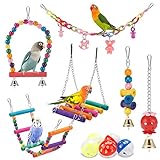
- 11 PIECES BIRD TOYS: The bird toys include 11Pieces parrot toys to meet most bird's needs.Crisp bells' sounds and colorful wooden toys will catch the attention of your birds,they will spend most time to play with their interesting new toys. they are suitable for bird sports,standing,climbing, playing, chewing, resting,etc. It's the perfect gift for your bird friends.
- FOR VARIOUS BIRDS:Our bird toys provide your birds a good elevated place to meet your birds' natural needs; Make most birds do exercise ,strengthen their muscles, exactly suit for small parakeets, cockatiels, conures, macaws, parrots, love birds, Mynahs, finches ,pineapples ect.
- SAFE: These small interesting Bird toys are made of natural wood that dyed with edible color,which ensure the health and safety of your pet birds. They are completely handmade, very durable and bite-resistant. They can easily draw the attention of your pet parrots in a short time,climbbing and exploring.
- EASY TO INSTALL: All bird cage toys come with an hook which can attaches to the top of the bird cage easily.With these interesting bird toys attached in their cage,saving space and decorating the cage, your birds will have fun every day.
- GUARANTEE: If you are not satisfied with our products, just return it and a refund will do; we provide 24 hours customer services, please feel free to contact us.
Move the bird away from cleaning fumes and provide good ventilation. Never use aerosolized cleaners, perfumes, air fresheners, hairspray, sprays, or harsh chemical products near a parakeet. Birds have highly sensitive respiratory systems, and a product that seems mild to a person can be dangerous to a bird.
Use only cleaning products known to be safe around birds, follow the product instructions, and allow surfaces to dry and air out before returning the bird. Avoid unknown or damaged metal, galvanized components, peeling coatings, and questionable toy hardware. Lead and zinc exposure can come from cage hardware, toys, curtain weights, jewelry, household metal, and other objects a curious parrot may chew.
Make the entire home bird-safe
Airborne contaminants are among the most serious risks to a parakeet. Keep the bird away from:
Do these 3 things before closing this tab:
1Scan for outdated or missing drivers - takes under a minute2Clear out junk files and repair common Windows errors3Fix the driver behind crashes, sound loss and screen glitches- Overheated PTFE and other nonstick-coated cookware
- Self-cleaning ovens and heating elements
- Air fryers, toaster ovens, waffle irons, irons, and heat lamps that may release fumes
- Tobacco smoke and vaping aerosols
- Perfume, hairspray, nail products, paint, glue, pesticides, and cleaning chemicals
- Burning or melting plastic
Overheated nonstick coatings can release fumes that cause acute respiratory distress, neurologic signs, or sudden death, sometimes with little warning. The bird should not live in or near the kitchen. Ventilation or moving the cage farther away is not a reliable substitute for eliminating the exposure.
Keep medicines, cleaners, pesticides, toxic plants, small chewable objects, and unsafe metals inaccessible. Avocado is specifically toxic to birds and should not be available anywhere the parakeet can reach it.
Independent reader supportYour contribution helps us test, update, and keep practical guides available for everyone.Arrange preventive veterinary care
Schedule an examination with an avian veterinarian soon after acquiring the bird. A first visit can establish baseline weight, body condition, physical findings, diet, droppings, and any appropriate testing. It also gives you a chance to discuss diet conversion, nail or beak concerns, housing, behavior, and emergency preparation.
Annual examinations are a common general recommendation, but the best interval depends on the bird’s age, health, history, and risk factors. Newly acquired birds may need screening before they are introduced to an existing flock. To find an avian veterinarian, use a reputable veterinary directory or referral service and confirm that the clinic treats birds, accepts emergency cases, and has current availability. Directory coverage, consultation options, geography, and fees vary.
Quick wins for a faster PC:
Fix the driver behind crashes, sound loss and screen glitchesFind Drivers →Clear out junk files and repair common Windows errorsFree Scan →A gram scale for birds is useful for routine monitoring if the parakeet can be trained to use it without stress. A small bird carrier makes transport safer than carrying the bird loose or in an improvised container. Stainless-steel food and water dishes can also simplify hygienic daily care, although none of these supplies replaces a veterinary examination.
Best Value

- Convenient Top Access: The bird cage boosts interaction with your birds and expands their play area, while simplifying daily cleaning and care.
- All-in-One Accessories: Our bird flight cage comes with four feeders, four perches, and a swing, offering everything your feathered friends need for a happy life.
- Spacious Design: Measures 17.95x13.98x36.42 in / 457x355x925 mm; with the top open, it reaches 40.94 in / 1040 mm. The 0.4-inch bar spacing is ideal for budgies, cockatiels, lovebirds, and other small to medium birds.
- Security First: Our bird flight cage is equipped with two secure doors and a robust locking system, plus four feeding doors for easy access to food and water.
- Sturdy Build: Constructed from premium iron wire and PP material, the parrot cage features a thickened wire diameter of 2.6 mm / 0.1 in, coated with anti-corrosive paint.
Know the warning signs of illness
Birds often hide illness, so a subtle change can be important. Contact an avian veterinarian promptly if you notice:
- Reduced appetite or a failure to eat
- Weight loss or a concerning trend on the gram scale
- Decreased activity, unusual sleepiness, weakness, or persistent fluffing
- Changes in droppings
- Sneezing, nasal discharge, or discharge from the eyes
- Regurgitation or other abnormal digestive signs
- Abnormal posture or inability to perch
- Open-mouth breathing or labored breathing
- Seizures, collapse, or sudden severe weakness
Breathing difficulty, suspected poisoning, trauma, collapse, or sudden severe weakness is an emergency. Call an emergency clinic that accepts birds and follow its instructions. If the bird has inhaled fumes, move it away from the source to fresh air immediately and contact an avian veterinarian or emergency clinic. Do not delay care while trying home remedies.
Never give human medicine, leftover veterinary medicine, or an unprescribed supplement. Do not force food or liquid into a weak bird that cannot swallow, because it may aspirate the material into its lungs.
Windows Errors? Fix Them Before They Spread
Repair common Windows errors and clear accumulated junk for a smoother, more stable PC - no reinstall needed.Free scan · no reinstallOutdated Drivers Are Slowing You Down
One free scan finds every outdated or missing driver and matches the right update for your exact hardware.Free scan · exact hardware matchA practical parakeet-care schedule
Every day
- Provide fresh water and wash the water container.
- Offer the planned balanced diet and suitable fresh foods.
- Remove spoiled produce and heavily soiled food.
- Observe appetite, activity, breathing, posture, vocalization, and droppings.
- Spot-clean the cage and replace soiled liner material.
- Check doors, bowls, perches, and toys for security and damage.
- Provide positive social interaction and, when the room is safe, supervised exercise.
- Give the bird a consistent quiet, dark sleep period.
Several times a week or when needed
- Wash cage surfaces, food dishes, perches, and toys as appropriate.
- Inspect for frayed rope, sharp metal, loose parts, peeling coatings, and contamination.
- Rotate or rearrange safe enrichment when the bird loses interest.
- Replace worn or damaged equipment rather than repairing it with questionable materials.
Regularly
- Weigh the bird if it tolerates the process and record the results.
- Review diet, body condition, and behavior with an avian veterinarian.
- Replace worn cage equipment and update the bird-proofing checklist.
- Confirm the emergency clinic’s telephone number and that it accepts birds.
- Arrange preventive examinations according to the veterinarian’s recommended schedule.
Common care mistakes to avoid
- Buying the smallest cage that fits the bird: A lower guideline is not an ideal living space; prioritize usable horizontal room.
- Feeding only seeds: Seeds can be part of some individualized budgie diets, but a seed-only diet is not a balanced default.
- Changing food overnight: Transition gradually and confirm that the bird is eating the new food.
- Adding vitamins to water without veterinary direction: This can affect taste, hygiene, and dosing.
- Using sandpaper perches: They can damage the feet.
- Assuming toys are safe forever: Inspect them every time and remove damaged or frayed items.
- Allowing unsupervised flight: Fans, windows, mirrors, water, flames, cords, and other pets can cause fatal accidents.
- Cleaning around the bird: Aerosols, fumes, and residues can harm its respiratory system.
- Waiting for obvious illness: Birds may deteriorate quickly after showing only subtle changes.
- Assuming a companion bird is automatically appropriate: Quarantine, health screening, gradual introductions, and compatibility all matter.
This guide supports everyday husbandry but cannot diagnose illness or replace an avian veterinarian. Because parakeets can conceal disease and are unusually vulnerable to fumes, prevention, observation, and a prepared emergency plan are central parts of responsible ownership.
Frequently Asked Questions
How long do pet parakeets live?
Smaller birds such as budgerigars are commonly described as living about 5–15 years, with 7–15 years often cited for budgies. Lifespan depends on genetics, nutrition, housing, preventive care, accidents, and exposure to hazards.
Can a parakeet live alone?
A single parakeet can live with a human household, but it needs regular positive interaction, exercise, and enrichment. A second bird may provide companionship, but it requires veterinary screening, quarantine, gradual introduction, and careful observation because birds may be incompatible or fight.
What is the best diet for a parakeet?
A balanced formulated diet, such as appropriately sized pellets, should generally form the nutritional foundation, with suitable fresh foods and an individualized amount of seed where recommended. Veterinary guidance varies, so transition gradually and monitor weight and food intake rather than imposing one universal percentage.
Free tools Windows power users keep installed
One-click scans. No signup required.
What should I do if my parakeet is exposed to nonstick-cookware fumes?
Move the bird away from the source to fresh air immediately, then contact an avian veterinarian or emergency clinic that treats birds. Breathing difficulty, weakness, collapse, neurologic signs, or suspected poisoning is an emergency. Do not give home remedies or force food or liquid into a weak bird.
The Bottom Line
Bottom line: A healthy parakeet needs more than seed, a small cage, and occasional attention. Give it horizontal space, safe perches and enrichment, a balanced diet introduced gradually, clean water, supervised flight, predictable sleep, a fume-free home, and routine observation backed by an avian veterinarian.
Quick Recap
Product prices and availability are accurate as of the date/time indicated and are subject to change. Any price and availability information displayed on Amazon at the time of purchase will apply.




