Free tools Windows power users keep installed
One-click scans. No signup required.
Short answer: USDA still requires premovement bird-flu testing for many lactating dairy cattle traveling across state lines, but not every cow and not in every state. As of August 12, 2026, cattle originating in states with National Milk Testing Strategy (NMTS) Unaffected State Status can move interstate without individual premovement H5N1 testing. Cattle from Affected or Provisionally Unaffected states generally remain subject to the federal testing rule.
The requirement began with an April 24, 2024 Federal Order from USDA’s Animal and Plant Health Inspection Service (APHIS). An April 27, 2026 guidance update created the state-status-based exemption. The rule concerns animal movement, disease surveillance, reporting, and traceability—not a finding that the commercial pasteurized milk supply is unsafe.
As an Amazon Associate I earn from qualifying purchases.
The rule in one sentence
Unless a specific exception applies, a lactating dairy cow moving across state lines from an Affected or Provisionally Unaffected state must have a negative, approved Influenza A test collected no more than seven days before movement and must travel with the required veterinary paperwork and official identification.
PC Slower Than It Used to Be?
A free scan shows the junk files, broken settings and background clutter dragging Windows down - then fixes them in one click.Free scan · Windows 10 & 11Outdated Drivers Are Slowing You Down
One free scan finds every outdated or missing driver and matches the right update for your exact hardware.Free scan · exact hardware matchThe word lactating matters. APHIS defines the covered animals as dairy cattle currently in an early, middle, or late lactation phase. The federal premovement-testing requirement does not currently apply in the same way to nonlactating dairy cattle, including heifers, dry cows, and bull calves. State animal-health rules may be stricter.
#1 Best Overall
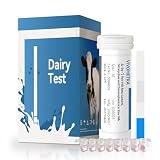
- SEE WHAT APPEARANCE CANNOT SHOW — Milk can look and smell normal while residue questions remain. This 4-in-1 strip screens one sample for four antibiotic-residue groups: beta-lactams, tetracyclines, sulfonamides, and ceftiofur, giving dairy users an on-site first check before milk moves forward.
- Universal Dairy Compatibility: Specifically formulated for a wide range of dairy matrices. Highly effective for raw cow milk, goat milk, sheep milk, camel milk, and even reconstituted milk powder. Ideal for dairy collectors, small-scale producers, and routine quality monitoring.
- Precision Screening Technology: Features industry-leading sensitivity, especially for Ceftiofur (5-10 ppb). This kit uses the Gold Immunochromatography Assay (GICA) to ensure your dairy meets your personal or facility’s quality standards.
- Fast & Simple Process: No complex laboratory equipment or specialized environment required. Get clear, visual results in just 6-10 minutes. A time-saving essential for routine dairy intake screening and pre-processing checks.
- 8-Test Value Pack: Includes 8 individually sealed test strips and 8 reagent microwells. Each strip offers multi-target screening, providing a cost-effective way to monitor the quality of your dairy supply.
Who has to test—and who does not?
| Animal or movement | Federal premovement test | Important conditions |
|---|---|---|
| Lactating dairy cattle from an Affected state | Generally required | Negative approved test, generally collected within seven days of movement, plus a Certificate of Veterinary Inspection and official identification. |
| Lactating dairy cattle from a Provisionally Unaffected state | Generally required | The provisional designation does not provide the April 2026 testing exemption. |
| Lactating dairy cattle from an NMTS Unaffected state | Not required under the federal premovement rule | The exemption is based on the state’s current status. CVIs, identification, and state-specific requirements can still apply. |
| Nonlactating dairy cattle, such as heifers, dry cows, and bull calves | Not currently required by this federal rule | State and destination requirements may still apply. |
| Nonclinical lactating cattle going directly to slaughter | Not required before that movement | The cattle still need a CVI or other documentation approved by the sending and receiving state animal-health officials. |
| Lactating cattle showing clinical signs | Testing does not make the movement eligible | Clinically ill lactating cattle are ineligible for interstate movement and for movement to slaughter. |
This is why the shorthand statement that “USDA requires every dairy cow to be tested before transport” is misleading. The federal order is focused on covered lactating cattle making covered interstate movements, and the April 2026 update makes the requirement dependent on the originating state’s NMTS status.
How the required test works
Use an approved laboratory and assay
The result must come from an approved laboratory in the National Animal Health Laboratory Network (NAHLN). APHIS guidance identifies NAHLN-approved PCR testing that includes an Influenza A matrix target and an H5 target. Testing for clade 2.3.4.4b may also be included.
Although this is commonly described as a “H5N1” or “bird-flu” test, the operational requirement is a negative approved Influenza A test meeting APHIS’s assay and laboratory requirements. An unapproved rapid test or an informal farm screening result should not be treated as a substitute for the required NAHLN result.
The Tool Desk
Outbyte PC Repair FREERepair Windows errors before they cause bigger problemsFix Now →Outbyte Driver Updater FREEScan for outdated or missing drivers - takes under a minuteDriver Scan →For a shipment, producers should arrange NAHLN laboratory testing through an accredited veterinarian, the state animal-health authority, or an approved laboratory. The current rules and state procedures should be confirmed before samples are collected because requirements and state classifications can change.
Meet the seven-day collection window
Samples must be collected no more than seven days before the cattle move. A result outside that window generally will not satisfy the federal premovement requirement, even if the test was negative.
Know how many animals to sample
- Lots of 30 or fewer lactating dairy cattle: every animal in the lot must be tested.
- Lots larger than 30: 30 animals must be tested.
For this purpose, a lot is the group of covered cattle moving as part of the shipment. The sampling rule does not mean that a producer can combine samples from multiple cows and submit one unidentified mixture.
Understand the milk-sample procedure
Milk or udder-secretions samples are collected from each individual animal. Each quarter is sampled, and the material from that animal is combined into one submission of approximately 3 to 10 milliliters per animal. Any laboratory pooling occurs at the laboratory, not on the farm.
Do these 3 things before closing this tab:
1Scan for outdated or missing drivers - takes under a minute2Clear out junk files and repair common Windows errors3Fix the driver behind crashes, sound loss and screen glitchesSamples may be collected by:
- an accredited veterinarian;
- a state-licensed veterinarian;
- a sample collector approved by the relevant State Animal Health Official; or
- designated production-site personnel when they have been trained and are supervised as required by the state.
Who pays?
APHIS reimburses NAHLN laboratories for the laboratory testing itself, so the current program provides the testing at no cost to the producer or submitter. APHIS’s guidance does not provide reimbursement for sample collection or shipping. Producers may therefore still incur veterinary, labor, packaging, or transportation expenses.
Rank #2

- Fast 5–10 Minute Results: Visual interpretation for rapid decision-making in dairy operations.
- High Sensitivity: Detects critical β-lactam antibiotics at or below industry safety thresholds.
- Multi-Analyte Coverage: Targets penicillin, cephalosporins , and other β-lactams.
- Food Safety Use Only: Intended exclusively for raw milk screening—not for medical or human diagnostic purposes.
- High Concordance (98.6%) with ELISA: Trusted accuracy for professional testing environments.
The April 2026 exemption: what “Unaffected” means
On April 27, 2026, APHIS updated its implementation guidance to exempt lactating dairy cattle originating in states with NMTS Unaffected State Status from individual premovement H5N1 testing. This was not a nationwide repeal of the 2024 Federal Order. It is a conditional exemption tied to the disease status of the state of origin.
The NMTS uses three state classifications:
- Affected: surveillance demonstrates the presence of H5 in the state’s dairy cattle.
- Provisionally Unaffected: a state is phasing into the program and has met the applicable interim conditions, but it does not yet have the full Unaffected designation.
- Unaffected: ongoing testing and surveillance demonstrate the absence of H5 in the state’s dairy cattle.
A state’s status is not necessarily permanent. A Provisionally Unaffected state may lose that designation if a new dairy-cattle case is confirmed within the previous 30 days or if the testing needed to demonstrate disease absence has not been completed. A state can also change status as surveillance produces new evidence.
Before shipment, the producer, veterinarian, and receiving party should check the originating state’s current NMTS classification and both states’ movement rules. The relevant question is not simply whether the cow tested negative at some earlier point; it is whether the movement qualifies under the rules in force on the date it occurs.
Paperwork and identification still matter
All interstate movement of lactating dairy cattle must be accompanied by a Certificate of Veterinary Inspection (CVI) under 9 CFR Part 86, along with the cattle’s individual official identification recorded on the certificate. The CVI must state that the animals are free from, and have not been exposed to, a known contagious and infectious disease.
The Unaffected-state exemption removes the federal individual premovement-testing requirement. It does not automatically remove the CVI, identification, health-attestation, destination, or state-specific requirements.
A veterinarian or provider of livestock movement compliance services may help organize certificates, identification records, testing documentation, and shipping details. Such assistance cannot replace the authority of the sending and receiving State Animal Health Officials, and it cannot authorize a movement that APHIS or a state prohibits.
Special movement situations
Direct movement to slaughter
Nonclinical lactating dairy cattle moving interstate directly to slaughter do not need the federal premovement test. They must still move under a CVI or other documentation approved by the sending and receiving state animal-health officials.
Rank #3

- SIMPLE 4-STEP PROCESS: Follow the easy visual guide to test lactose intolerance at home or on-the-go in just minutes.
- HIGH ACCURACY & SAFETY: Utilizes biochemical enzymatic reactions for precise results, surpassing traditional chemical methods in both safety and reliability.
- FAST RESULTS: Obtain your testing outcomes in just 5 minutes at adequate room temperatures.
- MULTILINGUAL MANUAL: Comes with a comprehensive guide in six languages, making it user-friendly for a global audience.
- STORAGE FLEXIBILITY: Store at room conditions or refrigerate for up to a year with our advanced stabilization technology.
This exception does not apply to cattle with clinical signs. APHIS says lactating dairy cattle showing clinical signs are ineligible for interstate movement and are also ineligible for movement to slaughter.
Shows, exhibitions, and sales
Movement to a show, exhibition, or sale remains subject to the applicable testing and certificate requirements. APHIS says cattle moving interstate for one of these purposes must have a negative result from samples collected within seven days of movement.
The same result may be used for the return trip if the event does not last more than 10 days. Longer events or changed circumstances may require new testing or additional documentation, so the exhibitor should confirm the return requirements before leaving the event.
What’s actually slowing this PC down?
Pick the symptom - the matching free tool is one click away.
Positive results and herd restrictions
If a herd has a positive Influenza A result, lactating dairy cattle from that herd generally cannot move interstate for 30 days from the most recent collection of a positive sample from any individual animal in the herd.
After the 30-day period, cattle must be tested again before movement under the applicable requirements. An exceptional cross-state movement involving test-positive cattle requires agreement from the relevant State Animal Health Officials and APHIS. A positive result should therefore be handled through the herd veterinarian and animal-health officials rather than by attempting to ship cattle under an ordinary negative-test certificate.
A negative result is an important movement-control measure, but it is not a guarantee that an animal is permanently free of infection. The test reflects the sample and timing, which is why APHIS combines testing with movement controls, reporting, herd investigations, and ongoing surveillance.
Why USDA adopted the requirement
APHIS describes highly pathogenic avian influenza H5N1 as an emerging disease of cattle. Genetic and epidemiologic analyses indicate that most livestock outbreaks were associated with spillover from wild birds to dairy cattle, with some subsequent dairy-to-dairy and dairy-to-poultry spread.
Recommended Free Tools
The virus can be shed in milk at high concentrations. Contaminated milk, milking equipment, vehicles, animals, and other materials can provide opportunities for spread between premises. Premovement testing is intended to reduce the chance that infected cattle silently travel to another state and to improve traceability when a positive result is found.
Rank #4

- Efficient Detection: This Cow Mastitis Tester utilizes advanced technology for quick and accurate mastitis identification, enabling breeders to address issues promptly. Its user-friendly design ensures ease of use, making it an essential tool for Livestock Care and Dairy Farming. Keep your herd healthy with reliable testing and maintain optimal milk quality.
- Accurate Diagnosis: This Mammary Gland Detector provides reliable detection to identify sick cows, helping to prevent illness spread. Enhance your herd's health with this essential tool for Livestock Management, ensuring timely intervention and improved overall productivity. A must-have for Dairy Farm operations seeking efficiency and care.
- Enhance your shopping experience with our premium Products designed for quality and durability. Enjoy the perfect blend of functionality and style in each item. Our dedicated Customer Service team is here to assist you with any inquiries. Reach out anytime, and we will respond within 24 hours to ensure your satisfaction. Shop with confidence today!
- REAL TIME MONIT: Providing clear display and continuous monitoring, this detector tracks the cow mammary gland status to maintain cow vitality effectively.
- Service: We attach great importance to our customers' shopping experience. If you have any questions, please feel free to contact us; we will reply as soon as possible within 24 hours.
APHIS’s movement order rests on the federal authority provided by the Animal Health Protection Act, which allows the agency to restrict or prohibit animal movement in commerce when necessary to protect animal health. The Congressional Research Service has summarized the same central operating features: use of an approved NAHLN laboratory, the seven-day collection window, testing every animal in lots of 30 or fewer, and testing 30 animals in larger lots.
How this fits into USDA’s broader response
The cattle-movement rule is one part of a larger federal response. In December 2024, USDA issued an additional Federal Order requiring entities that send or hold raw milk for pasteurization to provide samples for Influenza A testing when requested. Laboratories and state veterinarians must report positive results under that order.
The National Milk Testing Strategy uses several kinds of evidence, including:
- monitoring milk at processing-plant silos;
- assigning and updating state status;
- detecting and responding to disease in affected states;
- demonstrating the absence of H5 in states seeking Unaffected status; and
- working toward evidence of long-term H5 freedom in the national dairy herd.
USDA describes the NMTS as a staged program intended to continue until all states reach the final stage and the United States can demonstrate freedom from H5 in the national dairy herd. That long-term goal explains why the rules emphasize both individual movement decisions and population-level surveillance.
Independent reader supportYour contribution helps us test, update, and keep practical guides available for everyone.Does the rule mean pasteurized milk is unsafe?
No. The premovement rule is an animal-health and disease-control measure. It is not a declaration that the commercial pasteurized milk supply is unsafe.
APHIS says milk from affected animals is diverted or destroyed before entering the food supply, and that pasteurization effectively inactivates H5N1 virus. The FDA’s assessments continue to support the effectiveness of pasteurization against infectious H5N1 in dairy milk. FDA also reports that its retail testing has not detected infectious virus in the sampled pasteurized dairy products.
The advice about raw milk is different. FDA continues to advise against consuming raw milk because it can contain disease-causing pathogens and because the safety of raw milk from infected cows is not established. Pasteurization is the key distinction; consumers should not assume that raw milk has the same safety profile as pasteurized milk.
CDC characterizes the current public-health risk as low while continuing to monitor occupational exposures and sporadic infections among people who have been exposed to infected animals. Farmworkers and others who handle potentially infected cattle or materials should follow workplace, veterinary, and public-health guidance.
Best Value

- Early & Accurate Pregnancy Detection: Reliably identify pregnancy in dairy and beef cows 18-90 days after breeding. This rapid test accurately measures estrogen levels in urine using a qualitative immunochromatographic assay, providing trustworthy results for effective herd management decisions
- Fast & Simple Farm Operation: Achieve clear results within just 5-15 minutes. The procedure requires only 3 drops of urine and no veterinary expertise or complex equipment, making it ideal for convenient on-site and at-home use directly on your farm
- Safe & Non-Invasive for Cattle: This test uses a harmless urine sample, ensuring complete safety for both the cow and unborn calf. The non-invasive process is entirely stress-free, supporting animal welfare while delivering dependable diagnostic information
- Complete & Portable Testing Kit: Everything needed is included: sealed test devices, disposable droppers, and a detailed manual. The compact kit is stable at room temperature, requires no refrigeration, and is designed for easy storage and portability across farm locations
- Clear & Trusted Visual Results: Easily interpret outcomes with distinct visual lines displayed within 15 minutes. A straightforward positive or negative result enables quick, confident decision-making for breeding schedules and herd health management
What producers should verify before shipping
- Confirm the animal category. Is the animal currently lactating, or is it a heifer, dry cow, or bull calf?
- Confirm the route. Is the movement crossing a state line? If it is a direct movement to slaughter, confirm that the cattle are nonclinical and that the states accept the required documentation.
- Check the originating state’s NMTS status on the shipment date. Unaffected status may remove the federal individual-testing requirement; Affected and Provisionally Unaffected status generally do not.
- Check both states’ requirements. State rules can add requirements even when federal testing is not required.
- Arrange the correct sample collection. Use an authorized collector, sample each quarter, and submit the required 3–10 mL combined sample for each animal.
- Use an approved NAHLN laboratory and assay. Confirm that the test includes the required Influenza A matrix and H5 targets.
- Time the collection correctly. Samples must be collected no more than seven days before movement.
- Apply the lot-size rule. Test every animal in a lot of 30 or fewer, or 30 animals in a larger lot.
- Prepare the CVI and identification records. Individual official identification must be recorded, and the certificate must include the required health statement.
- Do not ship clinical or restricted cattle. Address positive results and clinical signs with the herd veterinarian, State Animal Health Official, and APHIS.
For a real shipment, current APHIS guidance and the sending and receiving states’ animal-health offices should control the final decision. NMTS classifications, testing guidance, and movement requirements are subject to change.
What pet owners need to know
This is a cattle-movement rule, not a new testing requirement for household dogs or cats. For the general public, the most important distinction is between disease-control measures on farms and the safety of pasteurized dairy products. Consumers should choose pasteurized milk and dairy products and avoid raw milk, while people who work around dairy cattle should take occupational-exposure precautions seriously.
Frequently Asked Questions
Does every dairy cow need a bird-flu test before transport?
No. The federal requirement generally applies to lactating dairy cattle moving interstate from Affected or Provisionally Unaffected states. Cattle originating in an NMTS Unaffected state are exempt from individual premovement H5N1 testing under the April 2026 update. Nonlactating cattle are not currently covered by the same federal testing requirement, although state rules may apply.
How recent must the dairy-cow test be?
The sample must be collected no more than seven days before the animal moves. For show, exhibition, and sale movements, the negative result may be used for the return trip if the event lasts no more than 10 days.
Who pays for the required test?
APHIS reimburses NAHLN laboratories for the laboratory testing, so the test itself is currently completed at no cost to the producer or submitter. APHIS does not currently reimburse sample collection or shipping costs.
Can a sick lactating cow be shipped if it tests negative?
No. Lactating dairy cattle with clinical signs are ineligible for interstate movement and for movement to slaughter. A negative test does not override that restriction.
Does the USDA rule mean pasteurized milk is unsafe?
No. The rule is aimed at animal movement and disease control. USDA says milk from affected animals is diverted or destroyed, and FDA continues to find that pasteurization effectively inactivates H5N1 in dairy milk. FDA advises against consuming raw milk.
Quick wins for a faster PC:
Clear out junk files and repair common Windows errorsFree Scan →Scan for outdated or missing drivers - takes under a minuteDriver Scan →Repair Windows errors before they cause bigger problemsFix Now →Does a negative result prove that a cow is not infected?
No test provides a permanent guarantee. A negative result reflects the sample and collection date. That is why APHIS combines premovement testing with surveillance, reporting, movement controls, herd investigations, and biosecurity.
The Bottom Line
Bottom line: As of August 12, 2026, USDA’s dairy-cattle bird-flu testing mandate remains in place, but it is conditional. Lactating cattle moving interstate from Affected or Provisionally Unaffected states generally need a negative approved test collected within seven days, while cattle from NMTS Unaffected states do not need individual premovement H5N1 testing under the federal rule. CVIs, official identification, state requirements, slaughter exceptions, and restrictions involving clinical or positive cattle still matter.
Quick Recap
Product prices and availability are accurate as of the date/time indicated and are subject to change. Any price and availability information displayed on Amazon at the time of purchase will apply.




