
Free tools Windows power users keep installed
One-click scans. No signup required.
Arrange a veterinary examination as soon as possible. A rescued puppy’s age, previous care, nutrition, parasite exposure and illnesses may be unknown, so a veterinarian should set the plan for testing, food, parasite control, vaccinations and follow-up. Seek emergency care immediately if the puppy shows serious warning signs such as difficulty standing, seizures or pale gums.
What to do first
Keep the puppy somewhere quiet and safe while you arrange veterinary care. A rescue puppy may look settled while still having an illness, injury or nutritional need that is not obvious. Avoid making major changes to its food or giving medication before a clinician has assessed its age and condition. A puppy that has been neglected may need medical attention as well as time to feel secure; the right care depends on its individual health and history.
As an Amazon Associate I earn from qualifying purchases.
- Call a veterinary clinic. Explain that the puppy was rescued from neglect or may be unwell, describe any symptoms you have noticed, and ask how soon it should be seen. If emergency signs are present, contact an emergency veterinary service rather than waiting for a routine appointment. If you are unsure whether a symptom is urgent, describe it to the clinic and follow its instructions.
- Collect what history you can. Write down when and where the puppy was found, its estimated age, what it has been eating, whether it is eating and drinking, and any changes in stool or urination. Include known treatments, vaccination or deworming records, and behavior you have observed. If details are unknown, say so rather than guessing.
- Follow the clinic’s instructions. The veterinarian will decide what examination and tests are appropriate and how to manage food, parasites, vaccinations and follow-up. The AVMA advises arranging an examination for a new dog as soon as possible and bringing available vaccination and deworming history.
Do not wait for a complete history before making the appointment. Unknown age or prior care is a reason to let the veterinarian assess the puppy, not a reason to postpone care. If a rescue organization or previous caregiver has records, ask for them and pass them along; if there are no records, the veterinary team can plan around that uncertainty.
What to tell the veterinarian
Useful notes include the puppy’s approximate age, the date and circumstances of rescue, the food it has been offered, and whether it has eaten or drunk. Record what you have noticed about its stool and urine, as well as any known medicine, treatment, vaccination or deworming. Note changes in energy, sleep, appetite, movement or response to handling. These observations do not diagnose a problem, but they can help the veterinarian decide what to examine and whether further testing is appropriate.
#1 Best Overall
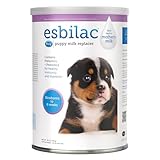
- PUPPY MILK REPLACEMENT — When mom can’t nourish them, Esbilac can. Scientifically the next best to mother’s milk, Esbilac provides all the nutritional elements necessary for puppies, newborn to six weeks old.
- COMPLETE, BALANCED NUTRITION — Our formula is closest to mother's milk in protein, fat, and carbohydrates. We’ve also added vitamins, minerals, and trace nutrients; plus prebiotics and probiotics to support healthy immunity and digestion.
- EASY TO DIGEST — Esbilac is highly palatable and formulated with a special fiber blend for easy digestion and improved gut health.
- EASY-TO-MIX FORMULA — Whisk or shake 1 part powdered Esbilac into 2 parts warm water. Do not mix more Esbilac than can be consumed in 24 hours. Do not use a blender. Must be kept refrigerated after reconstituting.
- ABOUT US — PetAg is a trusted leader in pet wellness, with science-backed formulas in our milk replacers, health supplements, and grooming products helping pet owners to proactively enhance the lives of their pets, for more healthy years together.
Bring any paperwork that is available, including vaccination and deworming history. Do not try to fill gaps by estimating a treatment date or assuming that a puppy has received routine care. Clearly separating what you know from what is uncertain gives the veterinarian a more useful starting point.
When is it an emergency?
Some signs can indicate that a dog needs emergency veterinary attention. ASPCA emergency guidance includes the following warning signs:
- Pale gums
- Rapid breathing, or a weak or rapid pulse
- A noticeable change in body temperature
- Difficulty standing or apparent paralysis
- Loss of consciousness or seizures
- Excessive bleeding
These signs do not identify a specific diagnosis, but they warrant urgent assessment. Call an emergency veterinary service and follow its instructions. Do not wait to see whether a serious sign passes, and do not delay professional care to try a home remedy. If the puppy is already under a clinic’s care, contact the clinic or its recommended emergency service for direction.
During transport, keep the puppy quiet and limit movement. VCA also advises keeping a dog warm during an emergency except when heatstroke is suspected. Follow the emergency team’s instructions about handling and transport, particularly if the puppy is struggling to stand, appears paralyzed, has lost consciousness or is bleeding. A calm, minimal-movement approach is safer than repeated handling or attempts to examine the puppy yourself.
Emergency signs call for urgent care rather than a routine appointment. If none are present, the puppy still needs a prompt veterinary assessment because its age, health and past care may be unclear. The absence of a listed warning sign does not establish that a puppy is healthy.
What happens at the first veterinary visit?
The veterinarian can assess the puppy’s condition and decide whether it needs an examination, stool testing or other diagnostics. The appropriate evaluation depends on the individual puppy; there is no single test list that applies to every rescued animal. Share your notes and records, then ask what the veterinarian recommends, what signs to monitor and when to return.
Puppies commonly have intestinal parasites, and a fecal examination can help identify them. That does not mean every puppy has the same parasite or needs the same treatment. Let the clinician decide which testing is useful and how to interpret the result. Do not use a dewormer simply because the puppy is a rescue, because it looks unwell, or because a product was used for another dog.
The Tool Desk
Outbyte PC Repair FREEClear out junk files and repair common Windows errorsFree Scan →Outbyte Driver Updater FREEScan for outdated or missing drivers - takes under a minuteDriver Scan →Parasites and flea products
Do not select a dewormer or flea product by guesswork. Some products that are safe for adult dogs are not safe for young puppies, and the appropriate choice depends on the puppy’s age and circumstances. Ask the veterinarian what, if anything, to use and when. If the puppy has already received a product, tell the clinic what it was and when it was given, if you know.
Parasite control is one part of an individualized care plan, not a reason to apply multiple products or repeat a dose without guidance. The veterinarian can take the puppy’s age, condition and any available history into account. If you cannot identify a product previously used, say so; do not guess at its name or timing.
Vaccinations and preventive care
VCA says most puppies should see a veterinarian at six to eight weeks for an examination and to begin vaccinations and parasite preventives. That is general guidance, not a schedule to apply automatically to a rescued puppy. Age, health and available history affect the plan, so ask the veterinarian to set the timing and follow-up for this puppy.
If the puppy’s age is uncertain or vaccination records are missing, the clinic can determine how to proceed. Do not assume that an uncertain history means the puppy has had no care, or that it means the puppy is already protected. The clinician should use the information available to make a case-specific plan. Ask which vaccinations or preventives are recommended, when they should be given, and whether any follow-up is needed.
What’s actually slowing this PC down?
Pick the symptom - the matching free tool is one click away.
Keep a simple care record
After the visit, record the instructions you receive and note changes in appetite, drinking, stool, urination and behavior. Include the date of the appointment and any medicines or preventive products the clinic directs you to use. This gives the veterinary team useful information at follow-up and can help you notice a change that merits a call.
Use the clinic’s recommended schedule rather than assuming a fixed recovery or vaccination timeline. If something changes or you are uncertain whether an instruction applies, contact the veterinary team instead of adjusting treatment on your own. The rescue organization may also need the care plan or records, especially if it is coordinating the puppy’s ongoing care.
Rank #2

- NUTRITIONAL SUPPLEMENT - Esbilac Healthy Development supports healthy growth and development with high-quality protein for dogs weaning to 6 years.
- SUPPORTS COGNITIVE DEVELOPMENT – With DHA (Omega 3 fatty acids) and Vitamin E, our formula supports visual & cognitive development.
- CONTAINS OMEGA 6 FATTY ACIDS - Our powder contains Omega 6 fatty acids to support a healthy skin and coat.
- GREAT TASTE - Esbilac Healthy Development is formulated with a great taste dogs love. Supports transition to solid foods for weaning puppies.
- ABOUT US − PetAg is a trusted leader in pet wellness, with science-backed formulas in our milk replacers, health supplements, and grooming products helping pet owners to proactively enhance the lives of their pets, for more healthy years together.
Feeding depends on age and condition
There is no single feeding plan for every puppy rescued from poor health. Have a veterinarian assess the puppy’s age, body condition, current diet and medical risks before making substantial changes. Do not assume that a food or feeding schedule suitable for one puppy is right for another. A plan for an older puppy should not be confused with guidance for a newborn orphan.
Tell the veterinarian what the puppy has been eating and whether it has been eating and drinking. If the amount or type of food is unknown, explain that too. Avoid trying to compensate for suspected poor nutrition by making a large change or offering a feeding method intended for a different age group. The clinician can decide what is appropriate for this puppy and how to follow its condition.
Do these 3 things before closing this tab:
1Clear out junk files and repair common Windows errors2Fix the driver behind crashes, sound loss and screen glitches3Repair Windows errors before they cause bigger problemsIf the puppy is a newborn orphan
For the narrower situation of a newborn orphan when a foster dog cannot be found, VCA identifies commercial canine milk replacer as the preferred feeding method and says cow’s and goat’s milk are inadequate. This advice applies to newborn orphans; it is not a general recommendation to give milk replacer to every rescued puppy. Confirm with a veterinarian that this guidance applies to the puppy in your care.
VCA also advises regular veterinary visits and weight monitoring for orphaned puppies. This is important to keep within the newborn-orphan context: it should not be treated as a substitute for veterinary assessment or as a complete care protocol for all rescued puppies. Ask the veterinarian how to monitor the puppy and what changes should prompt a call.
If a very young puppy is weak or cold
In very young orphaned puppies, hypothermia, dehydration and low blood sugar (hypoglycemia) can occur together. VCA warns that rapidly rewarming a puppy with a low body temperature can cause serious complications or death. A young puppy that is weak, cold, unresponsive or feeding poorly needs prompt veterinary guidance; do not try to manage these problems with an improvised feeding or warming plan.
This is a reason to seek professional direction promptly, not to attempt to identify which of the linked problems is present at home. If the puppy is unresponsive or has another emergency warning sign, contact an emergency veterinary service. If it is weak, cold or feeding poorly without those signs, call a veterinarian promptly and follow the instructions you are given.
Outdated Drivers Are Slowing You Down
One free scan finds every outdated or missing driver and matches the right update for your exact hardware.Free scan · exact hardware matchWindows Errors? Fix Them Before They Spread
Repair common Windows errors and clear accumulated junk for a smoother, more stable PC - no reinstall needed.Free scan · no reinstallHelp the puppy feel safe without forcing contact
Neglect can leave physical and psychological needs. ASPCA describes dogs recovering from abuse and neglect as potentially experiencing injuries, illness, malnutrition, intense fear, sensitivity to handling and severe stress. A puppy that flinches, withdraws or resists handling may be frightened or uncomfortable; those reactions alone do not establish why it is behaving that way.
Medical and behavioral needs can overlap, so do not treat fear as proof that a puppy is simply adjusting or assume that every behavior is caused by its past. ASPCA’s Recovery & Rehabilitation Center describes an approach combining stress-reducing housing, medical intervention and behavioral care: “The R&R Center offers them the chance to heal in an environment that prioritizes each animal’s unique needs through a combination of stress-reducing housing, medical intervention and behavioral care.” The practical takeaway is to individualize care rather than expecting one approach to suit every puppy.
Set up a quiet place to rest
Provide a safe, calm area and let the puppy settle at its own pace. Keep supervision calm and avoid forcing handling, interactions or introductions. Follow veterinary advice, especially if the puppy reacts fearfully or defensively. A puppy that has not had consistent, gentle care may need space and predictable handling rather than pressure to interact.
VCA describes a crate as one option for appropriate, supervised confinement when a puppy is unattended. A crate is not medical treatment, and it is not automatically suitable for every rescued puppy. Consider it only as a general puppy-safety option and follow the advice of the veterinarian or rescue team about what is appropriate for this animal. Do not treat confinement as a substitute for assessing illness, fear or other needs.
Recommended Free Tools
Expect behavior to vary as the surroundings change
ASPCA notes that fostering can give a dog a chance to decompress outside a shelter, and that some shelter behaviors, such as reduced appetite or disrupted sleep, may change in a stable home. These observations do not guarantee that a particular puppy’s behavior will change, or explain why it is eating or sleeping differently. Keep monitoring the puppy and discuss concerning changes with its care team rather than assuming that any behavior will resolve on its own.
A calm environment can support settling in, but it does not replace medical follow-up. Keep the veterinary team informed about behavior as well as physical signs, particularly if the puppy is not eating, is unusually sensitive to handling or seems to become more fearful. If an urgent medical sign appears, prioritize emergency care.
Ask for specialist support when needed
If severe fear, handling sensitivity or other behavior problems persist, ask the veterinarian or rescue organization about a qualified behavior professional or specialist program. ASPCA’s Behavioral Rehabilitation Center works with severely fearful, under-socialized dogs, including dogs rescued from puppy-mill and hoarding situations. Not every puppy needs specialist behavioral care, but severe or ongoing difficulties are a reason to ask for help.
Rank #3

- MILK REPLACER WITH PROBIOTICS: Suitable for up to 9 young animal species including puppies, kittens, calves, lambs, goats, foals, piglets, llamas, and crias; providing probiotics and balanced nutrition to support healthy growth and development.
- MADE WITH PROTEIN AND FAT: Contains 24% protein and 24% fat; supporting fast, healthy growth, strong muscle development, and overall vitality for young animals during critical early stages of life.
- ALL MILK FORMULA WITH PROBIOTICS: Made with high-quality all-milk protein; supporting healthy growth, proper development, and overall performance for young animals during critical early stages of life.
- SUPPORTS HEALTHY DIGESTION FOR YOUNG ANIMALS: Powered by Opti-Gut probiotics; promoting gut health, nutrient absorption, and digestive balance to support overall growth, vitality, and wellbeing for young animals.
- EASY TO MIX FORMULA: Designed for quick and convenient preparation; ensuring fast mixing, effortless feeding, and optimal consumption so young animals receive balanced nutrition efficiently for healthy growth and development.
There is no universal timetable for behavioral recovery in the guidance described here. Avoid measuring progress against another dog or expecting a certain behavior to disappear by a set date. The veterinarian, rescue team and any qualified behavior professional can help determine what support fits the puppy’s needs and whether a change merits further evaluation.
How care branches differ
The useful distinction is not between a single “rescue puppy” treatment and ordinary puppy care. Needs branch according to age and condition. A puppy that is not in immediate distress still needs a prompt assessment and a tailored plan. A puppy with emergency warning signs needs urgent presentation, quiet handling and limited movement while transport is arranged. A newborn orphan without a foster dog has a narrower feeding context, for which VCA identifies commercial canine milk replacer rather than cow’s or goat’s milk. Severe or persistent fear may call for qualified behavioral help in addition to medical care.
These branches should not be combined into one universal protocol. For example, newborn orphan advice is not a feeding recommendation for every rescued puppy, and an emergency transport recommendation is not a substitute for routine follow-up. The veterinarian can determine which circumstances apply and how the care plan should change as the puppy is assessed.
Keep recovery case-specific
A puppy’s needs depend on factors such as age, health, nutrition and behavioral history. The guidance from AVMA, VCA and ASPCA does not establish one universal treatment sequence or recovery timeline for puppies rescued from neglect. Work with the veterinarian and rescue team on a plan for this puppy, including when to return, what changes to monitor and whom to contact if its condition worsens.
There is no general cost estimate or single set of tests that can be applied to every case: the veterinarian must decide what assessment and follow-up are appropriate for the individual puppy. Ask the clinic to explain the recommended next steps and the timing of follow-up. Do not postpone an emergency visit to seek a routine appointment, and do not let uncertainty about history prevent an initial veterinary assessment.
Frequently Asked Questions
What should I do first after rescuing a neglected puppy?
Call a veterinary clinic and arrange an examination as soon as possible. Keep the puppy somewhere quiet and safe, collect any available history—including estimated age, current food, symptoms, and vaccination or deworming records—and follow the clinic’s instructions. Do not wait for a complete history before booking.
When is a rescued puppy’s condition an emergency?
ASPCA emergency warning signs include pale gums, rapid breathing, a weak or rapid pulse, a noticeable body-temperature change, difficulty standing, apparent paralysis, loss of consciousness, seizures and excessive bleeding. Contact an emergency veterinary service if these occur. Keep the puppy quiet, limit movement during transport and do not delay care to try a home remedy.
What if I do not know the puppy’s age or vaccination history?
Tell the veterinarian what is known and what is uncertain, and bring any records you can find. The veterinarian can assess the puppy and set an age- and condition-appropriate plan. VCA’s general guidance is that most puppies visit at six to eight weeks to begin examination, vaccinations and parasite preventives, but a rescued puppy’s schedule should be determined by its clinician.
Can I give a rescued puppy cow’s milk or goat’s milk?
VCA says cow’s and goat’s milk are inadequate for newborn orphaned puppies when a foster dog cannot be found; commercial canine milk replacer is its preferred method in that specific situation. This is not a general recommendation for every rescued puppy. Ask a veterinarian to assess the puppy’s age and feeding needs before changing its diet.
Should I give a dewormer or flea treatment right away?
Do not choose a product by guesswork. Intestinal parasites are common in puppies, and a fecal examination can help identify them. Some flea products safe for adult dogs are not safe for young puppies, so ask the veterinarian what, if anything, is appropriate for this puppy.
How can I help a frightened puppy settle in?
Offer a quiet, safe place to rest and let the puppy settle at its own pace. Avoid forcing handling, interactions or introductions, and follow veterinary advice if it reacts fearfully or defensively. If severe fear, handling sensitivity or other behavior problems persist, ask the veterinarian or rescue organization about a qualified behavior professional or specialist program.
How long does recovery take?
There is no universal recovery timeline in the guidance described here. Age, health, nutrition and behavioral history vary, so work with the veterinarian and rescue team on follow-up and on what changes to monitor.
The Bottom Line
Arrange a veterinary examination promptly, bring whatever history is available and let the clinician set an individualized plan. Treat emergency warning signs as urgent, use feeding guidance only when it fits the puppy’s age and circumstances, and support recovery with calm care that does not force contact.
Quick wins for a faster PC:
Fix the driver behind crashes, sound loss and screen glitchesFind Drivers →Clear out junk files and repair common Windows errorsFree Scan →Quick Recap
Product prices and availability are accurate as of the date/time indicated and are subject to change. Any price and availability information displayed on Amazon at the time of purchase will apply.





Leave a Reply