To help a blind dog stay safe and confident, arrange a veterinary assessment, make the home predictable, block hazards, and teach useful verbal and touch cues with rewards. Many dogs can keep enjoying walks, play, and familiar activities, but the right support and adjustment pace depend on the individual dog.
Start with a veterinary assessment
New vision changes deserve a veterinary examination, not an assumption that they are simply part of aging. A veterinarian can look for the cause, discuss treatment or monitoring, and decide whether referral to a veterinary ophthalmologist is appropriate. Seek prompt advice if your dog is squinting, rubbing an eye, has increased eye discharge or another new eye change, bumps into objects, or seems disoriented. AAHA’s senior-care guidance, ACVO’s vision-loss guidance, and AKC’s advice on living with a blind dog all recommend veterinary evaluation when vision or eye health changes.

As an Amazon Associate I earn from qualifying purchases.
Follow-up may still matter when vision loss is permanent. Additional eye problems, including irritation or infection, can arise, so ask your veterinarian what signs to watch for and when to schedule rechecks. The plan depends on the diagnosis and your dog’s overall health.
Recommended Free Tools
Make home navigation predictable and safe
Keep familiar routes consistent
Where practical, keep furniture, food and water bowls, bedding, and the route between them in stable places. A dog can learn a familiar layout through repetition. If you need to rearrange a room or enter a new space, guide your dog calmly through it and give them time to explore. Consistency should not mean keeping a dangerous setup: remove unstable or hazardous items, then let the dog learn the safer arrangement.
#1 Best Overall
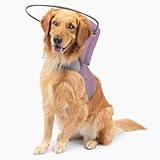
- Proper Fit Guidance: Measure your dog’s chest girth and nose distance before selecting size. Elastic rear strap offers flexible adjustment.
- Navigation Assistance Aid: Designed to help blind dogs detect obstacles earlier during everyday movement.
- Head & Face Protection: Halo structure surrounds the head area to help reduce accidental bumps into walls or furniture.
- Breathable Padded Material: Soft cushioned fabric supports comfort and helps minimize rubbing during movement.
- Secure Vest Construction: Adjustable harness design distributes pressure evenly while keeping the halo securely in place.
Some dogs use tactile landmarks, such as a rug near a transition or a change in floor texture, to recognize parts of a route. Scent landmarks may also help, but use them consistently and avoid substances that could irritate or harm your dog.
Block hazards and improve footing
Use gates to restrict access to stairs, pools, steep drops, or other unsafe areas. Do not leave a blind dog unattended near water or a steep edge. In slippery areas, use non-slip flooring or mats that stay firmly in place; a loose runner can itself become a trip hazard. Cushioning sharp furniture edges may help in rooms where collisions are likely. Colorado State University’s veterinary teaching hospital discusses these types of home adjustments.
Use extra care outdoors and in unfamiliar places
Keep your dog on leash when walking outdoors, especially somewhere unfamiliar, and use a securely contained area for off-leash time. A startled dog may run and have trouble finding the way back. A small fenced potty area can make routine outdoor breaks easier. In new places, stay close and guide your dog rather than expecting them to navigate an unfamiliar layout independently.
Communicate before touching and teach useful cues
Speak in a normal, calm voice before approaching or touching your dog. Unexpected contact can startle them, even if they are usually friendly. Use a consistent voice and gentle touch to help your dog understand where you are and what you are asking.
With positive reinforcement, teach practical safety cues such as “wait,” “stop,” and “step up.” Begin in a familiar, safe area, reward the response, and add distractions or new settings gradually. A gentle, consistent touch can supplement a spoken cue once your dog has learned what that touch predicts. Do not rely on a cue near a hazard until your dog responds reliably in easier situations.
Dogs vary in what they learn and how quickly they become comfortable. Keep sessions short and encouraging, and reward behaviors you want to see. If fear, anxiety, or navigation difficulties persist, ask your veterinarian whether a qualified trainer or behavior professional would be appropriate. There is no single training protocol that suits every blind dog.
Rank #3

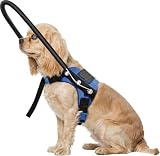
- 【Size Guidelines】Avoid sizing mistakes by measuring your pet's nose length and chest girth. Size XXS is designed for chest girths of (5"-10") XS of (10"-14"). For larger pups, check out M of (20"-24") M with reflective features.
- 【Instant Crash Protection】 Specially engineered for blind and visually impaired dogs, this protective halo acts as an early-warning buffer against walls and daily obstacles, effectively preventing painful head impacts and facial bruising.
- 【No-Slip No-Choke Vest Structure】 Unlike traditional neck collars, our secure dual-buckle vest design wraps comfortably around the torso. It guarantees the protective ring remains steady during active movement while preventing any neck choking.
- 【Premium Comfort】 Crafted from soft, lightweight, and breathable materials to minimize discomfort and ensure hassle-free extended daily wear.
- 【Daily Mobility Support】 Boosts confidence and provides crucial assistance for blind dogs during walking, exploring, and daily activities.
Keep walks, play, and enrichment in the routine
Blindness does not automatically mean giving up walks, play, or activities your dog already enjoys. Adjust the pace and setting to your dog’s health and confidence, and supervise where obstacles or hazards may be present. Toys that make a sound can help a dog find them. Scent work is another possible activity that uses a sense other than sight; choose activities that fit your dog’s interests and physical abilities.
There is no universal adjustment deadline. ACVO notes that some pets may take weeks to feel comfortable navigating, while others seem to adapt quickly. Let your dog’s behavior guide how quickly you add new routes, rooms, and activities.
Independent reader supportYour contribution helps us test, update, and keep practical guides available for everyone.Decide whether a halo or other aid fits your dog
A halo or bumper device may help protect a dog’s face from obstacles, but it is optional—not a substitute for supervision, a safe layout, or veterinary care. It may be worth discussing with your veterinarian if your dog frequently bumps into objects. Comfort and willingness to wear it matter, and a device that interferes with movement or causes distress may not suit that dog.
A 2020 study by K. M. Bedard, K. E. Myrna, and K. A. Diehl tested 12 chronically and irreversibly blind dogs in maze tasks using BlindSight echolocation and Muffin’s Halo physical barrier devices. Dogs had fewer collisions while wearing the halo than at baseline, but other navigation outcomes varied by device and dog weight. Owner surveys did not show noticeable improvement in home navigation or quality of life with either device. The small study does not establish that a halo will help every dog or improve daily life at home. The study was published in the Journal of Small Animal Practice.
Match any aid to the specific problem it is meant to solve. A gate can block access to stairs, a stable non-slip mat can improve traction, and a sound-making toy can support play. Treats can reward training. These are options to consider for your home and dog, not required purchases.
The Tool Desk
Outbyte Driver Updater FREEScan for outdated or missing drivers - takes under a minuteDriver Scan →Outbyte PC Repair FREEClear out junk files and repair common Windows errorsFree Scan →Frequently asked questions
Can a blind dog still go for walks?
Often, yes. Keep your dog on leash, choose a manageable route, and adjust the pace to their confidence and health. Take extra care in unfamiliar places.
Should I move furniture to make my home safer?
Remove hazards and unstable objects even if that changes the layout. Once you have made the safer arrangement, keep it as consistent as you can and guide your dog through any changed areas.
Will a blind dog adjust in a set amount of time?
No fixed timeline is established. Some dogs become comfortable navigating quickly; others need more time and support. Follow your dog’s cues and introduce changes gradually.
Quick Recap
Product prices and availability are accurate as of the date/time indicated and are subject to change. Any price and availability information displayed on Amazon at the time of purchase will apply.
What’s actually slowing this PC down?
Pick the symptom - the matching free tool is one click away.




