
What’s actually slowing this PC down?
Pick the symptom - the matching free tool is one click away.
Emperor tetras (Nematobrycon palmeri) are small, peaceful freshwater schooling fish that do best when you plan around a proper group, stable warm water, subdued cover and appropriately sized companions. Keep at least five together, use a community aquarium of at least 30 gallons (with an 80 cm minimum length listed by FishBase’s field guide), and treat published water figures as practical ranges rather than a single proven optimum.
What is an emperor tetra?
The emperor tetra is the common name for Nematobrycon palmeri, a freshwater species described by Eigenmann in 1911. FishBase places it in the Atrato and San Juan river basins of South America and records a pelagic, tropical ecology. In practical terms, that means an aquarium should provide warm water, open swimming room and the security of vegetation or other cover.
As an Amazon Associate I earn from qualifying purchases.
Size descriptions use different measurement methods. FishBase lists a maximum standard length of 4.2 cm, while Aquarium Source describes typical aquarium adults as around two inches. Standard length is measured without the caudal-fin extension, and an aquarium “average adult” description is not necessarily a database maximum, so these figures should not be treated as contradictory conversions.
How do you care for emperor tetras?
Build the aquarium around four priorities: a stable tropical temperature, water chemistry within a sensible published range, a group of at least five fish and peaceful tank mates of comparable size. Aquarium Source recommends a minimum 30-gallon community aquarium, while FishBase’s Field Guide lists a minimum aquarium length of 80 cm. The length recommendation matters because a long footprint gives a shoal more horizontal swimming space than a tall, narrow tank of similar volume.
#1 Best Overall

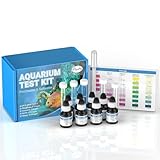
- 𝗛𝗼𝗺𝗲 𝗔𝗾𝘂𝗮𝗿𝗶𝘂𝗺 𝗪𝗮𝘁𝗲𝗿 𝗧𝗲𝘀𝘁 𝗞𝗶𝘁 - Ensure the health of your fish with aquarium water testing kit & ammonia test strips for fish tank. This complete freshwater & saltwater tank test kit provides a reliable water tester for ammonia, pH, iron, chlorine, total hardness (GH), carbonate, nitrate, nitrite, total alkalinity, copper, and temperature, allowing you to have a complete understanding of your aquarium water quality. Trusted by fish enthusiasts, it adapts to your needs, making it an essential tool for aquarium care.
- 𝗔𝗰𝗰𝘂𝗿𝗮𝘁𝗲 & 𝗙𝗮𝘀𝘁 𝗧𝗲𝘀𝘁𝗶𝗻𝗴 𝗥𝗲𝘀𝘂𝗹𝘁𝘀 - Our aquarium water test strips deliver reliable results. Each fish tank water testing kit comes with easy-to-read color charts. This fish tank test strips are highly sensitive, detecting low levels of impurities and foreign substances in aquarium water. Our aquarium water quality tester helps prevent any invisible water problems.
- 𝗜𝗻𝘀𝘁𝗮𝗻𝘁 𝗛𝗼𝗺𝗲 𝗧𝗲𝘀𝘁𝗶𝗻𝗴—𝗡𝗼 𝗧𝗿𝗶𝗽𝘀 𝘁𝗼 𝘁𝗵𝗲 𝗦𝘁𝗼𝗿𝗲 - Testing 11 key parameters in your aquarium is easier than ever with just one kit. Just dip the strip in water and use the provided color chart for instant, reliable results. Say goodbye to frequent trips to pet stores because now you have our home water test kit with the ability to monitor your aquarium's water quality in the comfort of your own home.
- 𝗧𝗲𝘀𝘁 𝗦𝗺𝗮𝗿𝘁𝗲𝗿 𝘄𝗶𝘁𝗵 𝗘𝘅𝘁𝗲𝗻𝗱𝗲𝗱 𝗦𝗵𝗲𝗹𝗳 𝗟𝗶𝗳𝗲 𝗦𝘁𝗿𝗶𝗽𝘀 - Our aquarium test kit contains 150 test strips for aquarium fish tank: 50 strips in a bottle and 100 in a separate bags to maintain freshness. Once opened, it's recommended to use the strips within 3 months for maximum accuracy of the fish water testing kit. These water testing strips allow regular water quality checks without using all water test strips at once.
- 𝗩𝗲𝗿𝘀𝗮t𝗶𝗹𝗲 𝗪𝗮𝘁𝗲𝗿 𝗧𝗲𝘀𝘁𝗶𝗻𝗴 𝗞𝗶𝘁 𝗳𝗼𝗿 𝗔𝗹𝗹 𝗔𝗾𝘂𝗮𝘁𝗶𝗰 𝗡𝗲𝗲𝗱𝘀 - Our Aquarium water quality test kit is designed to cater to a wide range of aquariums including saltwater aquariums, freshwater fish tanks, betta fish tank, and fish ponds. Our hard water test kit can be used to test the water quality effectively, which ensures that you can maintain optimal water conditions in different aquarium setups.
- Choose the footprint first. Use a community aquarium of at least 30 gallons and aim for at least 80 cm of length where possible. Leave a clear central swimming lane rather than filling every area with décor.
- Provide planted cover. Aquarium Source describes the natural setting as slow-moving, warm water with vegetation and recommends subdued lighting and hiding places. Live plants, silk plants, wood and shaded corners can all break up direct light and give fish a retreat.
- Establish filtration before adding fish. Effective filtration and regular water changes are recommended to keep ammonia low. The filter should create circulation without turning the aquarium into a high-flow channel; the species is associated with slower-moving habitat.
- Stabilize temperature and chemistry. Set the heater and confirm the aquarium remains steady over time. Do not chase a changing test result with abrupt corrections when the fish are otherwise healthy; stability is the central husbandry goal in Aquarium Source’s guidance.
- Add the shoal together when practical. A group of five or six gives the species social security and lets normal display behavior occur. Quarantine and acclimate new fish according to your established aquarium routine before release into the community.
- Keep lighting and décor compatible with observation. Use shaded areas but retain enough open water to monitor appetite, breathing, swimming and body condition. A heavily decorated aquarium is useful only if you can still inspect every fish.
What water parameters do emperor tetras need?
There is no single experimentally established target in the available references. FishBase’s broad species record and Aquarium Source’s current care guide give overlapping but not identical values, especially for hardness. The figures below must therefore be read as attributed ranges, not merged into a new consensus number.
| Reference | Temperature | pH | Hardness | Other guidance |
|---|---|---|---|---|
| FishBase species record | 23–27°C | 5.0–8.0 | 5–19 dH | Broad species database values |
| FishBase Field Guide | Not stated in the field-guide entry cited here | Not stated in the field-guide entry cited here | Not stated in the field-guide entry cited here | At least five fish; minimum aquarium length 80 cm |
| Alison Yang, Aquarium Source, September 27, 2026 | 73–81°F | 5.0–7.8 | 3–8 dKH | Stable conditions, regular water changes and effective filtration |
The hardness ranges are expressed in different units—dH in the FishBase record and dKH in Aquarium Source’s guide—so they are not directly interchangeable without conversion. Do not average them or present one converted figure as a proven ideal. Instead, keep the aquarium stable within the range appropriate to your source water and livestock plan, and avoid sudden swings in pH, temperature or hardness.
Aquarium Source’s temperature recommendation of 73–81°F and pH recommendation of 5.0–7.8 are care-guide recommendations. FishBase’s 23–27°C and pH 5–8 are broad species fields. Both support warm, mildly acidic to near-neutral conditions, but neither establishes that every emperor tetra requires one exact set point.
Do these 3 things before closing this tab:
1Fix the driver behind crashes, sound loss and screen glitches2Clear out junk files and repair common Windows errors3Scan for outdated or missing drivers - takes under a minuteHow should you interpret a test result?
Use the numbers as a decision framework rather than a reason to make constant adjustments. First test consistently, using the same method and recording results around maintenance or livestock changes. If your established water sits comfortably inside one of the cited ranges and the fish are behaving normally, preserving that stability is usually more sensible than repeatedly altering it to match a different figure. When your source water is very different, plan the aquarium around livestock that suits it or make any change gradually and deliberately; a rapid correction can be more disruptive than a stable reading that is not exactly centered in a table.
How many emperor tetras should be kept together?
Keep at least five emperor tetras. FishBase’s Field Guide gives five or more as its group guidance, and Aquarium Source recommends five or six. A larger group can make social behavior easier to observe, provided the aquarium has enough swimming room and filtration capacity for the additional bioload.
Male competition
Aquarium Source cautions that males may compete for dominance, particularly in smaller tanks. Give the group visual breaks with plants or wood, avoid crowding, and watch for one fish being persistently excluded from food or hiding in a corner. Displays and short chases are different from continuous harassment; intervene when a fish is losing condition, unable to feed or sustaining damage.
Why a group is better than a pair
Emperor tetras are social schooling fish, so a pair does not meet the minimum group guidance from either cited reference. A proper shoal distributes attention and allows the fish to use the aquarium’s open space instead of concentrating all interactions on one tank mate.
The Tool Desk
Outbyte Driver Updater FREEScan for outdated or missing drivers - takes under a minuteDriver Scan →Outbyte PC Repair FREERepair Windows errors before they cause bigger problemsFix Now →Rank #2

- Professional Quality Testing Kit: The AAwipes Aquarium test kit (50 strips) is developed by experts for fish enthusiasts. It offers 8-in-1 testing capabilities, made with high-quality fiber paper and non-bleeding colors. The kit measures key parameters like Free Chlorine, Nitrate, Nitrite, Hardness, Sodium Chloride, Total Alkalinity, pH and Ammonia nitrogen. By identifying potential issues, our fish tank testing kit helps prevent hidden water problems and ensures the safety and well-being of your fish.
- Versatile Use for Freshwater and Ponds: This aquarium water test kit is versatile and suitable for both freshwater and saltwater environments. It can be used in various aquariums, fish tanks, ponds, pools, and shrimp tanks, making it easy to monitor water quality and ensure your filter functions properly. Experts recommend testing your aquarium water at least twice a week to maintain optimal water quality.
- Fast and Accurate Results: Get accurate results in minutes with just 3 steps: 1) Dip the test strip into water for 2 seconds for pads 1-7; dip pad 8 (Ammonia nitrogen) separately for 5 seconds. 2) Remove the strip without shaking off excess water. Hold horizontally for 30 seconds for pads 1-7, wait 180 seconds to read Pad 8 (Ammonia nitrogen). 3) Compare the colors to the chart for up to 99% accuracy and take necessary action.
- Extended Shelf Life: The test strips are packaged in a well-sealed bottle to ensure they remain effective over time. This protects the strips from moisture and other environmental factors, ensuring you have reliable testing materials on hand when needed.
- Convenient Use: With this kit, you can test your aquarium water at home without the need to send samples to a lab, saving you both time and money. Enjoy peace of mind knowing your aquarium water is balanced and safe without the stress or extra expense.
What normal group behavior looks like
Because the species is pelagic, expect the fish to use the middle and open portions of the aquarium rather than remain fixed to the substrate. Brief displays, position changes and short chases can occur as the group establishes a hierarchy. Cover should not eliminate open water: the best layout lets fish retreat from direct light or a rival and then resume swimming where you can observe them. Persistent isolation, loss of appetite or repeated fin damage changes the issue from ordinary social behavior to a husbandry problem.
Which tank mates work with emperor tetras?
Select peaceful, similarly sized fish. Aquarium Source names ember tetras, Cory catfish, pencilfish and some gouramis as examples, but those examples come from one care guide and are not blanket compatibility guarantees. Temperament varies by individual fish, aquarium layout and available space.
- Look for: peaceful community species that will not treat a small tetra as prey and that tolerate the same warm-water conditions.
- Check behavior after introduction: confirm that emperor tetras can reach food and are not being chased from cover.
- Avoid obvious size and predation mismatches: larger predatory fish can injure or consume them, even when water parameters appear compatible.
- Match activity levels: extremely boisterous tank mates can prevent a small shoal from using open water normally.
Bottom-dwelling Cory catfish, for example, occupy a different part of the aquarium than emperor tetras, while small schooling species such as ember tetras can share the midwater only when the aquarium is large enough to prevent crowding. “Compatible” should always mean compatible in your actual tank, not merely listed together in a stocking chart.
Introduce companions only after considering the total group size and swimming footprint. Adding several active species to a tank that barely meets the minimum can remove the open space the emperor tetra shoal needs. Recheck feeding after every addition: a fish that was thriving alone may become thin if faster companions intercept every flake. Plants and wood can create separate sight lines, but they do not compensate for a fundamentally undersized aquarium or an aggressive species.
Quick wins for a faster PC:
Clear out junk files and repair common Windows errorsFree Scan →Fix the driver behind crashes, sound loss and screen glitchesFind Drivers →What do emperor tetras eat?
They are omnivorous and generally accept commercial tropical fish flakes or small pellets. Aquarium Source says wild foods include worms, larvae and tiny crustaceans, and lists daphnia, brine shrimp, freeze-dried bloodworms and Tubifex as possible animal-based supplements.
Building a practical diet
- Staple: use a quality tropical flake or small pellet that the fish can swallow easily.
- Variety: rotate in suitable animal-based foods such as daphnia, brine shrimp, freeze-dried bloodworms or Tubifex, all listed by Aquarium Source.
- Observation: offer only what the group can consume before food settles into the substrate. Remove uneaten food if it accumulates, because decaying food works against the low-ammonia conditions the care guide recommends.
- Competition check: spread food across the surface or use more than one feeding point if faster tank mates monopolize it.
The cited source material does not establish a tested portion size or feeding frequency. Use the food manufacturer’s directions as a starting point, adjust to body condition and activity, and judge success by steady appetite, normal swimming and clean water rather than by a fixed schedule.
Small particles are easier for a small tetra to take, and a mixed diet can help keep feeding interest high without requiring a complicated menu. Thaw frozen or freeze-dried foods appropriately and watch where they settle. If food repeatedly reaches the substrate uneaten, reduce the amount or change the delivery method rather than allowing leftovers to degrade water quality.
Rank #3
- 5-in-1 Master Test Kit: Monitor all 5 critical water parameters – pH, nitrite, nitrate, ammonia, and phosphate – in one comprehensive aquarium test kit. The rigorous analysis helps you maintain an ideal haven for your aquatic friends
- Freshwater & Saltwater Application: This aquarium water master test kit works perfectly for both freshwater and marine fish tanks. Precise color-matching charts are included – simply compare your water’s hue to the color swatches for instant results
- Enhanced Accuracy: Using professional liquid reagents, the aquarium water test kit delivers high accuracy that far exceeds traditional test strips. Get laboratory-quality results every time, safeguarding a stable and enjoyable fish tank environment
- Regular Testing: Complete with 265 measurements across all parameters – pH (100), nitrite (45), nitrate (50), ammonia (30), phosphate (40). This fish tank water testing kit supports months of consistent monitoring to keep your aquarium perfectly balanced
- Essential Fish Care: Your trusted solution to prevent fish loss from fatal ammonia, nitrite buildup, or pH imbalances! Proper water quality maintenance ensures your aquatic pets stay healthy and your plants thrive in optimal conditions
How do you set up an emperor tetra aquarium?
Tank size and layout
Start with at least 30 gallons for a community aquarium, as recommended by Aquarium Source, and consider the FishBase Field Guide’s 80 cm minimum length. Arrange plants and hardscape along the sides and rear, leaving an open lane through the middle. This gives the shoal room to move while preserving shaded refuges.
Light and cover
Subdued lighting and hiding places are recommended because the species is associated with vegetated, slow-moving water. Floating plants or tall stems can soften the light; caves, wood and dense plant clumps provide additional visual barriers. Keep some open areas so you can count fish and inspect them.
Filtration and maintenance
Use effective filtration and perform regular water changes, with the goal of keeping ammonia low and conditions stable. Clean mechanical media when needed without destroying all biological media at once, and test after maintenance or livestock changes. The goal is consistency, not constant adjustment toward a supposedly perfect number.
Before adding fish
- Confirm the heater holds the selected temperature steadily.
- Confirm pH and hardness are stable in the prepared aquarium.
- Verify the filter is running and the water is clear enough to observe fish.
- Ensure the tank has enough open length for the planned group.
- Prepare a quarantine or acclimation procedure before purchase day.
Planning equipment and running costs
The core purchases are a tank with an adequate footprint, a heater, effective filtration, lighting that can be subdued, cover or plants, a test method and a suitable tropical staple food. A sponge filter is especially useful if you later set up a dedicated breeding tank. A breeding mop is an optional alternative to dense plants for protecting eggs. Ongoing costs come from electricity for heating and filtration, replacement food and routine water-care supplies; the exact amount depends on tank size, room temperature and local prices, so no universal budget should be assumed.
How do you breed emperor tetras?
Breeding is best attempted in a separate setup so eggs and fry can be managed without competition from community fish. Aquarium Source recommends a breeding tank around 80–82°F with softer water near pH 7 and sponge filtration to reduce risk to fry.
- Prepare the breeding tank. Use the separate tank, set the temperature around 80–82°F and provide softer water near pH 7, following Aquarium Source’s recommendation.
- Install gentle filtration. Use a sponge filter so the current is less likely to endanger newly hatched fry.
- Add egg protection. Cover the bottom or provide dense plants, or use a breeding mop. Aquarium Source notes that adults may eat eggs, so an exposed spawning surface can result in losses.
- Introduce a conditioned pair or breeding group. Observe spawning behavior and remove adults after spawning if eggs are accessible to them.
- Monitor the eggs. Aquarium Source reports that a female may lay 50–100 eggs and that eggs hatch in about two or three days. These are the guide’s figures, not independently corroborated breeding statistics.
- Feed free-swimming fry appropriately. The guide recommends infusoria for early free-swimming fry, followed later by powdered fry food or baby brine shrimp.
What to watch for during spawning
Keep the breeding tank calm and shaded, and avoid strong flow around the egg area. Remove parents when practical because egg predation is a documented risk in Aquarium Source’s account. Once fry are free-swimming, feed the smallest suitable food first; larger powdered foods or baby brine shrimp are described as later steps rather than first foods.
Separate breeding equipment also makes observation easier. You can see whether eggs remain intact, whether fry become free-swimming and whether food is reaching them without competing adults or community fish obscuring the view. Keep the fry setup stable while they develop, and avoid assuming that every spawning will produce the same number of eggs or surviving young.
Rank #4

- Professional Quality Testing Kit: The AAwipes Aquarium test kit (25 strips) is developed by experts for fish enthusiasts. It offers 8-in-1 testing capabilities, made with high-quality fiber paper and non-bleeding colors. The kit measures key parameters like Free Chlorine, Nitrate, Nitrite, Hardness, Sodium Chloride, Total Alkalinity, pH and Ammonia nitrogen
- Versatile Use for Freshwater and Ponds: This aquarium water test kit is versatile and suitable for both freshwater and saltwater environments. It can be used in various aquariums, fish tanks, ponds, pools, and shrimp tanks, making it easy to monitor water quality and ensure your filter functions properly. Experts recommend testing your aquarium water at least twice a week to maintain optimal water quality
- Fast and Accurate Results: Get accurate results in minutes with just 3 steps: 1) Dip the test strip into water for 2 seconds for pads 1-7; dip pad 8 (Ammonia nitrogen) separately for 5 seconds. 2) Remove the strip without shaking off excess water. Hold horizontally for 30 seconds for pads 1-7, wait 180 seconds to read Pad 8 (Ammonia nitrogen). 3) Compare the colors to the chart for up to 99% accuracy and take necessary action
- Extended Shelf Life: The test strips are packaged in a well-sealed bottle to ensure they remain effective over time. This protects the strips from moisture and other environmental factors, ensuring you have reliable testing materials on hand when needed
- Convenient Use: With this kit, you can test your aquarium water at home without the need to send samples to a lab, saving you both time and money. Enjoy peace of mind knowing your aquarium water is balanced and safe without the stress or extra expense. By identifying potential issues, our fish tank testing kit helps prevent hidden water problems and ensures the safety and well-being of your fish
Common emperor tetra problems and decisions
The fish hide constantly
Check whether lighting is too intense, the group is too small, or larger tank mates are pressuring them. Add shaded cover and visual breaks, then verify that every fish can reach food. A newly introduced shoal may need time to settle, but persistent hiding paired with weight loss or rapid breathing warrants a water-quality and compatibility check.
One male is chasing others
Male competition is more likely to become troublesome in a smaller tank. Increase visual barriers, review the group’s available swimming length and remove an aggressor only after confirming that the behavior is continuous and harmful rather than brief display behavior.
Outdated Drivers Are Slowing You Down
One free scan finds every outdated or missing driver and matches the right update for your exact hardware.Free scan · exact hardware matchPC Slower Than It Used to Be?
A free scan shows the junk files, broken settings and background clutter dragging Windows down - then fixes them in one click.Free scan · Windows 10 & 11Water tests keep changing
Prioritize stability. Check heater operation, filtration, source-water consistency and maintenance technique before making a large chemical correction. The published ranges are broad enough that an abrupt swing toward a target can be more stressful than a stable value that is not centered in the range.
Food disappears but a fish remains thin
Observe feeding from several angles. Fast community fish may intercept flakes or pellets before an emperor tetra eats. Spread food, use appropriately small particles and consider one of the animal-based supplements listed by Aquarium Source while checking for bullying or illness.
The aquarium seems suitable but the fish still decline
Review the entire system instead of focusing on one number. Confirm the group size, swimming length, cover, flow, temperature stability, ammonia control and access to food. A tank can match a listed pH while still failing because fish are crowded, exposed to constant chasing or unable to feed. Correct the most obvious environmental stressor first and make changes gradually.
Emperor tetra care: the essential checklist
- Species: Nematobrycon palmeri, from the Atrato and San Juan river basins.
- Group: at least five; Aquarium Source recommends five or six.
- Tank: at least 30 gallons for a community aquarium; FishBase’s Field Guide lists 80 cm minimum length.
- Temperature: FishBase 23–27°C; Aquarium Source 73–81°F.
- pH: FishBase 5.0–8.0; Aquarium Source 5.0–7.8.
- Hardness: FishBase 5–19 dH; Aquarium Source 3–8 dKH. These units and ranges should not be merged.
- Environment: subdued lighting, vegetation or other hiding places, open swimming space and effective filtration.
- Food: commercial flakes or pellets, supplemented with daphnia, brine shrimp, freeze-dried bloodworms or Tubifex.
- Breeding: separate tank, around 80–82°F, softer water near pH 7, sponge filtration and plant cover or a breeding mop.
These choices reflect the cited FishBase records and Aquarium Source’s September 27, 2026 care guide. They are practical reference points, not the result of a controlled husbandry trial; stable conditions, adequate space and close observation remain more important than forcing every aquarium to one exact number.
Frequently Asked Questions
How many emperor tetras should be kept together?
Keep at least five. Aquarium Source recommends five or six, while the FishBase Field Guide says five or more. Provide enough length and filtration for the full group, and watch for harmful male competition in a cramped aquarium.
Best Value

- Professional Quality Testing Kit: The AAwipes Aquarium test kit (100 strips) is developed by experts for fish enthusiasts. It offers 8-in-1 testing capabilities, made with high-quality fiber paper and non-bleeding colors. The kit measures key parameters like Free Chlorine, Nitrate, Nitrite, Hardness, Sodium Chloride, Total Alkalinity, pH and Ammonia nitrogen.
- Versatile Use for Freshwater and Ponds: This aquarium water test kit is versatile and suitable for both freshwater and saltwater environments. It can be used in various aquariums, fish tanks, ponds, pools, and shrimp tanks, making it easy to monitor water quality and ensure your filter functions properly. Experts recommend testing your aquarium water at least twice a week to maintain optimal water quality.
- Fast and Accurate Results: Get accurate results in minutes with just 3 steps: 1) Dip the test strip into water for 2 seconds for pads 1-7; dip pad 8 (Ammonia nitrogen) separately for 5 seconds. 2) Remove the strip without shaking off excess water. Hold horizontally for 30 seconds for pads 1-7, wait 180 seconds to read Pad 8 (Ammonia nitrogen). 3) Compare the colors to the chart for up to 99% accuracy and take necessary action.
- Extended Shelf Life: The test strips are packaged in a well-sealed bottle to ensure they remain effective over time. This protects the strips from moisture and other environmental factors, ensuring you have reliable testing materials on hand when needed.
- Convenient Use: With this kit, you can test your aquarium water at home without the need to send samples to a lab, saving you both time and money. Enjoy peace of mind knowing your aquarium water is balanced and safe without the stress or extra expense. By identifying potential issues, our fish tank testing kit helps prevent hidden water problems and ensures the safety and well-being of your fish.
What water parameters do emperor tetras need?
FishBase lists 23–27°C, pH 5–8 and hardness of 5–19 dH. Aquarium Source recommends 73–81°F, pH 5.0–7.8 and 3–8 dKH. Because the hardness units and ranges differ, use a stable range suited to your source water rather than treating one number as a universal optimum.
What size tank do emperor tetras need?
Aquarium Source recommends at least 30 gallons for a community aquarium. FishBase’s Field Guide lists a minimum aquarium length of 80 cm. Prioritize a long footprint with open swimming space over a tall, narrow design.
What do emperor tetras eat?
They accept commercial tropical flakes or small pellets. Suitable supplements listed by Aquarium Source include daphnia, brine shrimp, freeze-dried bloodworms and Tubifex. The cited guide does not establish a tested portion size or feeding frequency.
Recommended Free Tools
Are emperor tetras peaceful community fish?
They are generally suited to peaceful, similarly sized companions. Aquarium Source names ember tetras, Cory catfish, pencilfish and some gouramis, but compatibility depends on individual temperament, space, flow and whether companions prevent the emperor tetras from feeding.
How do you breed emperor tetras?
Use a separate breeding tank around 80–82°F with softer water near pH 7 and sponge filtration. Provide dense plants or a breeding mop because adults may eat eggs. Aquarium Source reports 50–100 eggs per female, hatching in about two or three days, with infusoria for early free-swimming fry followed later by powdered fry food or baby brine shrimp.
How large do emperor tetras get?
FishBase reports a maximum standard length of 4.2 cm. Aquarium Source describes typical aquarium adults as around two inches. These descriptions use different wording and measurement bases, so they should not be treated as a direct conversion.
Do emperor tetras need strong water flow?
No strong-flow requirement is given. Aquarium Source describes slow-moving, warm habitat and recommends effective filtration, so provide circulation that keeps ammonia low without turning the aquarium into a forceful channel. A sponge filter is specifically recommended for the fry setup.
The Bottom Line
Keep emperor tetras in groups of at least five in a long, covered community aquarium of about 30 gallons or more. Maintain stable warm water within the published ranges, use subdued light and effective filtration, feed a varied flake-or-pellet diet with suitable animal supplements, and choose peaceful companions. For breeding, move the fish to a separate warm, softly filtered tank with plant cover or a breeding mop so eggs and fry are protected.
Quick Recap
Product prices and availability are accurate as of the date/time indicated and are subject to change. Any price and availability information displayed on Amazon at the time of purchase will apply.





Leave a Reply