
To “crate-train” a cat, teach them that a secure carrier is a familiar, rewarding place they can enter voluntarily—not a box that appears only before a stressful trip. Leave the carrier accessible, shape the behavior in tiny steps with rewards your cat actually values, and practice handling before you need to travel.
Veterinary guidance supports gradual acclimation and positive reinforcement, but no fixed number of days or sessions works for every cat. Your cat’s body language sets the pace. The goal, in the words of the 2011 AAFP/ISFM Feline-Friendly Handling Guideline, is for “the cat to enter the carrier voluntarily.”
As an Amazon Associate I earn from qualifying purchases.
What “crate training” means for a cat
For veterinary visits, moves and other journeys, the relevant equipment is a secure cat carrier. Cats generally do not learn this skill through prolonged confinement or forced repetition. They learn it by forming a predictable, positive association with the carrier and by retaining control over whether to approach and enter during training.
Do these 3 things before closing this tab:
1Clear out junk files and repair common Windows errors2Scan for outdated or missing drivers - takes under a minute3Repair Windows errors before they cause bigger problemsThe 2022 AAFP/ISFM interaction guideline identifies longer-term positive-reinforcement training as the preferred preparation. That means rewarding behavior you want to see, breaking the task into manageable pieces and stopping before fear overwhelms your cat. Some cats work for food; others respond better to play, catnip, a clicker or a calm verbal cue. A reward is useful only if it motivates that individual cat.
#1 Best Overall

- Pet Carrier: 17.5” L x 11” W x 11” H, Recommended max load of 16 lbs cats small dogs. Please do not choose your carrier based on weight--please reference your pet's length and height in selecting a pet carrier size.
- Fits for under-seat dimensions of most airlines. Every airline has a specific set of rules and regulations, please contact with airline before flying with your cats small dogs.
- Mesh windows for ventilation, top and side entry with locking zippers for safety. Carrying handles, adjustable shoulder strap which can also be used as seatbelt, and back strap can fasten the pet carrier to your luggage.
- Pet carrier comes with a removable base insert, which creates a solid surface for your pet to stand on, along with a removable & hand washable cozy fleece pet bed, which offers a cozy sleeping space for your traveling cats small dogs.
- "Toys for pets, of textile materials". Mostly used as a Toy of Fabric Pet Home for pets playing and relaxing.
Training can make loading and examination easier, but it cannot guarantee that every cat will enjoy travel or that fear will disappear. A cat with a painful history, severe anxiety or a frightening previous journey may need a slower plan and veterinary support.
Before the first session
Choose a carrier that supports safety and handling
Use a carrier that is appropriate for your cat’s size and condition: the cat should be able to turn around and settle without being cramped, while the carrier remains stable enough to carry and secure. Look for adequate ventilation, reliable fasteners and an opening that lets you handle the cat without unnecessary wrestling. A removable top can make veterinary examinations easier, but the design must remain secure when closed.
The sources do not establish one universally best carrier material or brand. Selection should balance size, comfort, access, hiding opportunity and how the carrier can be positioned safely in your vehicle. Never assume a carrier is crash-tested. The 2025 FelineVMA position statement says a seat belt should be used only with a carrier that is specifically crash-test certified.
Free tools Windows power users keep installed
One-click scans. No signup required.
| Decision factor | What to check | Why it matters |
|---|---|---|
| Size | Enough room to turn, sit and lie down without excessive unused space | Supports comfort while limiting sliding during movement |
| Access | Front and/or top opening; removable top if useful for examinations | Lets you load or handle the cat with less force |
| Construction | Rigid or flexible material with secure closures and ventilation | Must remain intact and provide airflow throughout the journey |
| Hiding option | Space for familiar bedding or a partial cover without blocking vents | Gives the cat visual refuge during transport |
| Vehicle use | Stable placement on the floor behind a front seat; crash certification if using a seat belt | Reduces movement and follows current transport guidance |
Set up a low-pressure training area
Put the carrier in a quiet part of the home where your cat already spends time. Secure doors open or remove the top if that makes the first approaches easier. Add soft, familiar bedding; avoid strong new scents that could make the carrier seem unfamiliar. Do not place the carrier in a narrow passage where the cat can feel cornered.
Have rewards ready before you begin. Use small pieces of a favored food only if your cat will eat while relaxed. For a cat that ignores food around the carrier, try a toy, a brief play session, catnip or a clicker-and-verbal cue instead. Keep sessions short enough that the carrier remains associated with calm experiences.
Rank #2
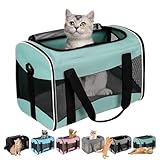
- [PRODUCT DIMENSIONS] Pet travel carrier size : 17x11x11 inches, recommended up to 15 lb pets, it is suitable for large, medium cats and small dogs. Please don't choose your airline cat carrying case based on weight, please refer to your pet's length and height when choosing a pet carrier size.
- [AIRLINE APPROVED] This cat carrier is designed with airline approved, it can fit comfortably under most flight seats, we can take our pets wherever we want. Dog travel carrier offers two attachment loop handles that can be used as a dual harness or as a luggage strap for balanced carry and secure transport.
- [EXCELLENT MATERIAL] Collapsible cat carrier is made of polyester fabric, supported by a steel ring, washable, wear-resistant and durable. The three sides and the top of this pet carrier are nylon mesh, scratch-resistant and not easy to damage, it can not only check your pet in real time, but also ensure enough air circulation.
- [SAFE AND COMFORTABLE] Dog travel bag has metal zippers on the top and side entrances, durable and not easy to deform, it allows your pets to enter and exit easily. The cat carrying case is equipped with an anti-escape safety buckle, which can effectively prevent pets from accidentally falling. It is suitable for car rides and vet rides.
- [PORTABLE AND FOLDABLE] Pet travel carrier comes with a detachable and hand washable wool pet bed, it can provide a comfortable sleeping space for your traveling pet. The cat travel case comes with an adjustable shoulder strap and handle for easy portability. When not in use, you can fold it up for storage.
Eight vet-approved tips for carrier training
1. Start well before a trip is imminent
Keep the carrier out between veterinary visits rather than storing it away until the day of travel. A carrier that appears only when a cat is about to leave home can become a reliable warning signal for stress. The 2022 AAFP/ISFM guidelines favor ongoing positive-reinforcement preparation, so everyday access is part of the training rather than an optional extra.
Do not begin with a rushed loading exercise on the morning of an appointment. If an appointment is already scheduled, do what you safely can, then continue acclimation afterward so future visits are easier.
2. Make the carrier a comfortable part of the home
Leave the entrance open and let your cat investigate, pass by or rest near it without interference. Place familiar bedding inside and, if your cat likes enclosed spaces, use the carrier as an optional nap or hiding spot. You can move it gradually closer to a favorite resting area, but there is no need to push the cat toward it.
Never shove, drag or hold your cat inside during this stage. The purpose is to change what the carrier predicts: ordinary rest and good experiences instead of an immediate departure.
3. Reward small, voluntary steps
Begin where your cat is comfortable. Offer a favored treat near the carrier, then progressively closer to the opening. If the cat remains relaxed, place the reward just inside, then farther in. Toys, catnip or a clicker may be better choices for a cat that does not eat in a new situation.
Rank #3

- High Quality Design:Sturdy steel cage structure and wooden support board maintain good spatial stability and shape. Breathable mesh windows on four sides,which can ensure good air circulation and views,make pets have a comfortable and safe travel.It can also be easy for you to check on your pets.There is a front pocket to store pet toys,treats,etc.
- Dimension and Weight:Made of durable tear-resistant fabric.Four easy entrances for pets. Dimensions: 17 inch x 11 inch x 11 inch (L*W*H), suitable for pets up to 16 lbs.Please don't choose your carrier based on weight only,consider your pet's length and height when choosing a carrier.
- Airline Approved & Safty:Can be placed under the seats of most airplanes(Four non-slip feet on the bottom to prevent movement), and comfortably on the seat next to you in a car or bus.It has a adjustable shoulder strap.Can also be fastened to the car seat with a safety belt or shoulder strap to keep your pet safe.
- Easy to Clean :You can clean the stains and dirt on the surface with a soft cloth.Soft mat inside the pet carrier is removable and washable.You can take it out and wash it easily to solve all stains.
- Easy to Collapsible & Lightweight:When not in use,fold it into a flat,space saving and easy to store.Only 2.2lbs,it's easier to carry around.It can also used as a toy of pet house,allowing pets to play in a safe space to relax and rest.
Deliver the reward immediately after the behavior you want—looking toward the carrier, approaching, sniffing or placing one paw inside. If your cat backs away, do not follow with the reward or move it closer; return to the last distance at which the cat stayed calm.
4. Build the behavior in a gradual sequence
A practical shaping sequence is:
- Looking at or approaching the carrier.
- Sniffing the entrance or resting nearby.
- Putting one or more paws inside.
- Walking fully inside to retrieve a reward.
- Remaining inside briefly while the entrance stays open.
This sequence is an application of gradual positive-reinforcement principles, not a clinical timetable. Some cats move through several stages quickly; others need repeated easy sessions. Advance only when the current step produces relaxed behavior consistently, and occasionally reward an earlier step so the cat does not feel pressured to perform more.
5. Let your cat set the pace
Watch the whole body, not just whether the cat technically enters. Flattened ears, crouching, frantic scanning, tail lashing, vocalizing, panting, attempts to flee or refusal of a normally valued reward indicate that the step is too difficult. Stop, open the carrier if it is safe to do so, and return later at an easier level.
Do not turn every practice session into an unexpected trip. If entering always leads immediately to being carried away, the positive association will weaken. Mix training with sessions in which nothing else happens: the cat enters, receives a reward and leaves by choice.
6. Practice calm handling around the carrier
After your cat enters comfortably, introduce the door in tiny increments. Touch it, reward calm behavior and release it. Close it briefly, reward and open it again. Gradually increase the time only while your cat remains settled. Then practice lifting the carrier a few inches, setting it down, taking a few steps and returning it to the same safe place.
Quick wins for a faster PC:
Fix the driver behind crashes, sound loss and screen glitchesFind Drivers →Clear out junk files and repair common Windows errorsFree Scan →Scan for outdated or missing drivers - takes under a minuteDriver Scan →Rank #4
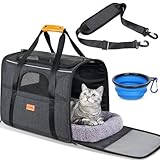
- 【 Spacious & Comfortable Cat Carrier 】The large cat carrier provides ample space for your feline friend to move, turn, and stretch during travel. Measuring 17.3 x 12.2 x 13.4 inches, it is wider and taller than most cat carriers, ensuring your pet feels comfortable and at ease while on the go.
- 【Balanced Mesh Design】Unlike other cat carrier hard, our cat carrier soft strikes the perfect balance with 40% mesh surface area. This ensures your pet can observe the surroundings and breathe easily while feeling safe and secure at the same time. The cat carrier large is suitable for pets in all kinds of situations.
- 【Built-in Dual-Sided Cushion】The detachable pad offers two distinct comforts: a cool side for summer and a super-soft, warm side for winter. You can easily flip it to match the season, providing the perfect temperature for your pet in any weather.
- 【Includes Foldable Bowl】Designed for on-the-go use, our foldable bowl carries 410g of food or 20oz of water. After use, simply collapse it and attach it directly to your pet's collar or leash, perfect for keeping your pet fueled and hydrated anywhere.
- 【Safe & Durable】Safety is our top priority, and the pet carrier for cat is equipped with a secure buckle to prevent your pet from escaping. The cat carrier soft is made of reinforced snow silk fabric and hard mesh material, ensuring durability and preventing any tearing during long-distance travel.
Keep movements smooth and sessions short. If distress appears, immediately return to the last easy action—such as touching the door without closing it or standing beside the carrier without lifting. This gradual progression is practical guidance, not a duration prescribed by the cited veterinary statements.
7. Prepare for the actual journey
Training and transport safety are inseparable. The 2025 FelineVMA position statement recommends an appropriate carrier, an opportunity for the cat to hide and securing the carrier on the vehicle floor behind a front seat. The 2022 AAFP/ISFM environment guidance also advises keeping the carrier covered and stable during transport. A cover should reduce visual stimulation without restricting ventilation or allowing the carrier to overheat.
Use a seat belt only when the carrier manufacturer documents crash-test certification, as recommended by the FelineVMA statement. A regular carrier should not be treated as crash-protected simply because a belt can be threaded around it. Before leaving, check that all latches are closed, bedding cannot block airflow and the carrier cannot tip or slide.
8. Ask the veterinary team for help when needed
If your cat has a history of severe distress, cannot remain safely in the carrier or becomes inconsolable despite a gradual plan, contact the veterinary team before the next visit. The 2022 AAFP/ISFM interaction guideline includes medication among options to discuss for cats with difficult prior experiences or substantial distress. Medication must be individualized by a veterinarian; do not give a human drug or use someone else’s prescription.
Windows Errors? Fix Them Before They Spread
Repair common Windows errors and clear accumulated junk for a smoother, more stable PC - no reinstall needed.Free scan · no reinstallCrashes, No Sound, or Screen Glitches?
Random freezes, missing sound and display glitches usually trace back to one bad driver. Find and replace yours safely.Free scan · under a minuteThe same guideline describes synthetic feline pheromones as a possible adjunct. It suggests applying the product to the carrier, bedding or cover 15 minutes before a veterinary visit. This may help some cats become familiar with the carrier, but it is not a substitute for acclimation and is not guaranteed to eliminate anxiety.
Best Value
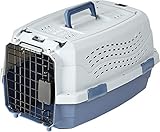
- Hard sided pet carrier with 2 doors for front and top entry; suitable for cat or extra-small dog breeds, such as chihuahuas and toy poodles (up to 11 pounds)
- Durable plastic construction with steel wire front door; screws keep the top and bottom sections securely connected
- Top door can swing open to the left or right for easy access and convenience
- Plenty of ventilation on sides, top, and back of the carrier
- Note: Be sure to measure the size of the pet when choosing carrier size
How to practice without creating a setback
Use a repeatable, low-pressure routine
- Open the carrier and confirm that the room is quiet and escape routes are safe.
- Invite an approach with a reward, toy or cue your cat values.
- Reward the smallest relaxed behavior currently available.
- End while your cat is still calm, allowing voluntary exit when possible.
- Record what worked so the next session starts at the same or an easier level.
Training is more productive when the cat can decline. If you must load the cat for an urgent appointment, prioritize safe containment rather than forcing the cat through a long lesson. Resume positive practice later at a level that does not reproduce the emergency struggle.
Separate training from unavoidable handling
Routine carrier practice should not always include nail trimming, injections or a car ride. Those events may be necessary, but combining every carrier entry with an unpleasant procedure teaches the cat that entering predicts loss of control. Give the carrier many neutral and rewarding uses at home.
Transport-day checklist
- Confirm the carrier is intact, latched and large enough for your cat to settle comfortably.
- Place familiar bedding inside and provide a hiding opportunity without covering vents.
- Apply any veterinarian-approved synthetic pheromone to the bedding or cover 15 minutes before departure if you choose to use that adjunct.
- Load the cat in a quiet room with doors and windows closed so an escape is less likely.
- Cover the carrier partially while preserving airflow and a comfortable temperature.
- Secure it on the vehicle floor behind a front seat, following the FelineVMA recommendation.
- Use a seat belt only with a carrier documented as crash-test certified.
- Drive smoothly, keep noise low and avoid opening the carrier outside a securely enclosed area.
Signs that the training step is too hard
| What you observe | What it means for the next session |
|---|---|
| Cat approaches, sniffs and accepts a reward | Maintain or very gradually increase the challenge. |
| Cat stops taking a normally valued reward or retreats | Increase distance from the carrier or return to an easier behavior. |
| Ears flatten, body crouches, tail lashes or vocalization increases | End the step, restore calm and avoid repeating the same intensity. |
| Frantic escape attempts, panting or prolonged distress | Stop training and contact your veterinary team for a safer individualized plan. |
Stress signals can have medical causes, especially when they are new or unusually intense. A veterinarian can help distinguish fear from pain or illness and decide whether pre-visit medication or another handling plan is appropriate.
What to expect from different cats
Kittens, adults and older cats can all learn carrier skills, but their history matters more than their age alone. A cat that has lived with an open carrier may progress quickly; a cat associated with repeated painful visits may need many easy repetitions. There is no evidence in the cited guidance for a universal number of days, sessions or a guaranteed success rate.
Progress also varies by reward. Food is not a requirement, and withholding meals to make a cat accept treats can create additional stress. Use whatever reward keeps the cat engaged while relaxed, and stop if the cat is too frightened to respond.
When to involve your veterinarian
Seek professional help before the next planned journey if your cat cannot be moved safely, injures themselves trying to escape, shows extreme distress every time the carrier appears or has a prior traumatic transport experience. Ask specifically about a pre-visit plan, carrier handling, medication options and how to bring the cat in with the least restraint.
Bring a description of what happens at home, including the earliest stress signals and which rewards still work. That information lets the veterinary team tailor the plan instead of assuming that more force or longer confinement will solve the problem.
Recommended Free Tools
Quick Recap
The essential principles
- Keep the carrier familiar between trips.
- Reward voluntary approaches and entries in tiny, manageable steps.
- Let behavior—not a calendar—determine when to progress.
- Practice door closure, lifting and movement before the real journey.
- Use a suitable, stable carrier and transport it safely.
- Discuss persistent or severe distress with the veterinary team.
Product prices and availability are accurate as of the date/time indicated and are subject to change. Any price and availability information displayed on Amazon at the time of purchase will apply.





Leave a Reply