
The safest way to carry a dog on a hike depends on why the dog needs carrying. A purpose-built backpack carrier can give a tired but otherwise comfortable dog occasional rides. A compact sling can help evacuate an injured dog. A regular walking harness and leash provide control but are not, by themselves, carrying equipment. Match the carrier to your dog’s size, health, the trail, and the length of the carry; ask your veterinarian about individual concerns and check the trail’s pet rules before you leave.
Choose the carrying method for the situation
There is no universal best carrier, and no independent clinical standard establishes one posture or style as suitable for every dog. The two products documented for this purpose serve different jobs: Ruffwear describes its Hitch Hiker as a backpack for occasional assistance during an outing, while Trail Magik describes its carrier as an emergency evacuation plan for an injured dog. Treat those roles as distinct.
As an Amazon Associate I earn from qualifying purchases.
| Option | Best use | Checks before a hike | Important limit |
|---|---|---|---|
| Dog backpack carrier | Short, planned rides for a dog that needs help but is not in an emergency | Exact girth and weight range, integrated restraint, ventilation, fit for the person carrying it, and a plan for breaks | Model-specific limits apply; it does not make an unsuitable hike safe |
| Emergency dog sling or carrier | Compact evacuation when a dog is injured or suddenly cannot walk | Support for the dog’s body, clear airway, unpinched limbs, secure attachment to your pack, and your ability to support the dog while moving | Designed for emergency use, not an all-day ride |
| Walking harness and leash | Keeping a dog under control while it walks | Correct fit, durable hardware, appropriate leash length, identification, and local rules | Do not call it a carrier unless that exact product is designed and documented for carrying |
A dog backpack that lets the dog carry its own food or water is also different from a carrier backpack in which the human carries the dog. Confusing those designs can lead to poor fit, excess heat, or an unsafe load.
Make sure your dog is ready for the hike
Carrying equipment cannot compensate for a route that exceeds your dog’s physical ability. Zoetis veterinary guidance recommends assessing whether the dog is capable of the planned hike and discussing readiness with a veterinarian. That conversation is particularly important for puppies, senior dogs, dogs with joint, spine, heart, or breathing concerns, and short-nosed breeds.
#1 Best Overall

- EASY LOADING AND UNLOADING. Dual locking zippers open the pack wide to get your pup settled in. This dog backpack carrier for small dogs accommodates pups up to 40 lbs.
- FIND THE RIGHT FIT WITH EASE. Not sure which size to choose? Check out our sizing chart image and how-to-fit video to help you measure your dog correctly. A proper fit means more comfort, control, and confidence on every adventure.
- COMFORT TAILORED FOR YOUR DOG. Integrated adjustable harness and cinch straps keep your pup secure. Spacious interior with plush EVA foam padding adds comfort, while air mesh side panels at the base boost airflow for temperature management.
- COMFORTABLE FOR HUMANS, TOO. External grab handle to easily lift and shoulder the pack. The pack distributes weight evenly, with padded shoulder straps, breathable back panel, adjustable torso length, and a supportive hipbelt for all-day comfort.
- ROOM FOR THE ESSENTIALS. Pockets on the hip belt give quick access to pick-up bags, treats, and most phones. Stash a soft flask, packable bowl, or extra layer in the external zippered stretch pocket.
Puppies
Growing bones and joints can be vulnerable to excessive or repetitive exertion. A veterinarian can help you choose an appropriate distance, terrain, and amount of time walking versus riding. Heat is another concern: a young dog may become overheated before showing obvious fatigue.
Senior dogs
Age-related arthritis, reduced stamina, vision changes, or heart disease may make a route inappropriate even if a carrier is available. Ask whether the dog can safely be lifted, supported, and carried in the posture required by the specific product.
Short-nosed and medically fragile dogs
Short-nosed breeds can be prone to exhaustion and heat stroke. A carrier may restrict airflow or trap heat around the body, so veterinary advice and conservative route planning are essential. Do not diagnose a breathing or orthopedic problem from a dog’s behavior on the trail; stop and seek professional guidance when health is in doubt.
The Tool Desk
Outbyte Driver Updater FREEScan for outdated or missing drivers - takes under a minuteDriver Scan →Outbyte PC Repair FREEClear out junk files and repair common Windows errorsFree Scan →Before departure, consider the weather, elevation, surface, water availability, shade, and the distance to an exit. A dog that is comfortable on a flat neighborhood walk may not be ready for steep, hot, rocky terrain.
When a backpack carrier is the right choice
Ruffwear describes the Hitch Hiker Dog Backpack Carrier as a lightweight technical carrier for occasional assistance. Its documented features include an integrated harness, dual-locking zippers, cinch straps, and air-mesh side panels. The integrated restraint is intended to keep the dog connected inside the carrier; it is not a substitute for checking every closure before moving.
Rank #2
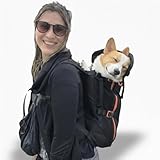
- PLEASE MEASURE YOUR DOG & CHECK OUR SIZE GUIDE: Max back length 14"-19'', chest girth 19"-30''. Ensure your dog fits within the sizing guidelines before purchasing.
- DON'T GUESS YOUR DOG'S SIZE - Recommended for breeds similzar in size to Cocker Spaniels, Beagles, Shiba Inus, Mini Schnauzers and Small Terriers.
- The Maxine One medium dog carrier includes rigid construction that is specifically designed to keep you and your Chonk’s back straighter.
- Tubular grab handles on all four sides so you can load-in and load-out with ease. There is even a Tail Port so you can let your fur flag fly!
- Soft reinforced neck collar, with reflective detail, attaches to your dog’s neck collar. It is made out of elastane to protect your dog’s neck movements.
Model-specific size and weight guidance
| Product information | What the maker states | How to use the figure |
|---|---|---|
| Hitch Hiker sizing | XXS, XS, and S; sizing is based on the dog’s girth | Measure the dog and compare with the current size chart for the exact model, rather than choosing by breed name |
| Hitch Hiker weight | Up to 40 lb, according to Ruffwear’s product information accessed in 2026 | Treat 40 lb as that model’s stated maximum, not a universal backpack limit |
| Introductory use | Ruffwear suggests 15–30 minute initial sessions | Use short practice sessions at home and on easy ground before a long trail |
| Break guidance | Ruffwear gives 30–45 minutes as a general interval for breaks | This is a manufacturer recommendation, not an independent veterinary standard |
What to check in the fit
- The dog’s girth matches the size chart, with room for normal breathing and movement.
- The integrated harness and all zippers are fully closed and locked.
- Air-mesh panels remain open and are not pressed against the dog’s face.
- No strap, seam, or zipper edge rubs the neck, armpits, abdomen, or legs.
- The carrier sits securely on the wearer without shifting when the wearer bends, steps up, or turns.
Practice loading and unloading indoors first. Then try the carrier for a few minutes while you stand still, followed by a short walk. Increase duration only when the dog remains relaxed, breathes normally, and can be removed without a struggle. If the dog resists, pants heavily, vocalizes, or repeatedly tries to escape, end the session and reassess the fit and the plan.
When an emergency sling is appropriate
Trail Magik describes its carrier as an emergency evacuation plan for injured dogs. Its product guidance says it works best for small to upper-medium-sized dogs, with an ideal range of about 10–43 lb. Those figures apply to that carrier only and should not be transferred to another sling.
Do these 3 things before closing this tab:
1Clear out junk files and repair common Windows errors2Fix the driver behind crashes, sound loss and screen glitches3Repair Windows errors before they cause bigger problemsThe purpose is to get an injured dog to safety, not to provide a comfortable day-long ride. An injury can worsen when a dog is allowed to scramble, jump, or bear weight, so keep movements deliberate and choose the shortest safe route to help.
Loading and supporting the dog
- Move the dog as little as possible and secure the area before attempting to lift.
- Attach the carrier to your backpack straps as directed by Trail Magik’s instructions.
- Place the dog in the carrier while keeping the airway clear. Check that the head and neck are not forced into a position that restricts breathing.
- Inspect every limb and paw for pinching. Reposition fabric or straps before taking a step.
- Keep your arms supporting the dog’s upper body as instructed, avoiding excess pressure on the stomach or chest.
- Walk slowly, use assistance when available, and stop frequently to reassess breathing, pain, circulation, and the security of the attachment.
Do not use an emergency sling as an excuse to continue deeper into the backcountry. Call or send for help when the dog’s condition is serious, the terrain is difficult, or you cannot carry safely.
Use a harness and leash for trail control
A well-fitted walking harness can reduce pressure on the neck and give you a secure point for a leash, but it is supporting gear rather than a lifting device. American Hiking Society guidance lists a harness or collar, leash, identification, water, a bowl, waste bags, and a first-aid kit among basic dog-hiking supplies. Appalachian Trail Conservancy guidance recommends keeping dogs leashed as a courtesy to other hikers and to reduce stress on wildlife, regardless of whether a particular section formally requires a leash.
Rank #3
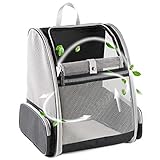
- Pet Backpack Dimensions: 12.6" L x 11.4" W x 16.5" H. Perfect for dogs up to 15-pounds, or cats up to 18-pounds. Easily fits cats, small dogs, and most other small/medium-sized pets! Please make sure your pet sits within 14.5 inches overall height and 12 inches wide
- Breathable & Perspective: Three side was made of PVC mesh for the carriers. Well ventilated design for optimal airflow and checking on pet
- Reduce shoulder weight: This cat carrier backpack comes with chest buckles which helps to reduce the burden and keeps the shoulder straps from slipping while pet moving
- Keep your pet comfortable: Removable cosy mat for easier cleaning and let your pet enjoy it inside
- Last Long Using and Easy Storage: Our premium pet carrier is quite scratch-resistant and sturdy for long lasting use. You can also rest assured that it is strong enough to stand up to the scratches or gnawing of your pets
Check the rules for the exact national park, state park, forest, or trail segment. The American Kennel Club notes that restrictions differ among national parks, state parks, and local forests. Some areas prohibit dogs altogether, while others specify leash length or permit dogs only on certain trails.
Free tools Windows power users keep installed
One-click scans. No signup required.
Harness checks
- Two fingers should fit beneath straps without allowing the dog to back out.
- Hardware should be free of cracks, corrosion, or loose stitching.
- The leash connection should sit where the maker designed it, not on a decorative handle.
- Remove dangling tags or accessories that could catch on brush.
- Carry identification even if the dog is microchipped; a visible tag speeds reunification.
Prepare and fit the carrier step by step
- Measure and weigh. Record girth at the widest part of the rib cage and the dog’s current weight. Compare both with the exact carrier’s instructions.
- Inspect the carrier. Check seams, buckles, zippers, cinch straps, attachment points, and mesh for damage. Test every lock before loading the dog.
- Condition the dog. Leave the carrier open at home, reward calm investigation, and practice entering and exiting without forcing the dog.
- Secure the restraint. Connect the integrated harness or internal attachment exactly as instructed. It should prevent escape without tightening around the throat.
- Check posture and breathing. The dog should have a clear airway, an uncompressed chest, and limbs free from pinching. Stop if the dog cannot settle.
- Fit the wearer. Adjust shoulder, waist, and stabilizing straps so the load stays close to your center of gravity. Walk around indoors and over a few steps before adding trail distance.
- Run a short outdoor test. Choose an easy, shaded route close to an exit. Carry the dog for the manufacturer’s suggested introductory duration, then unload for movement, water, and toileting.
- Recheck after every adjustment. Look for damp fur, red skin, swelling, chafing, shifted straps, or a change in breathing before continuing.
Never lift a dog by a leash, collar, or ordinary harness handle unless that product explicitly permits lifting. Use two people for a heavy or painful dog when possible, and coordinate the lift before moving.
Manage heat, hydration, and breaks
Heat builds faster when a dog is enclosed against a person’s back or chest. Choose cooler conditions, favor shade, and stop before the dog appears exhausted. Airflow through mesh does not eliminate heat risk.
Ruffwear recommends breaks every 30–45 minutes as a general guideline for its Hitch Hiker and says the dog should have time to stretch, walk, relieve itself, and drink. Those intervals are not a universal rule: a small, elderly, brachycephalic, or medically fragile dog may need more frequent stops. Follow the carrier’s instructions and your veterinarian’s advice.
American Hiking Society’s gear guidance states at least 8 ounces of water per dog per hour of hiking. The organization’s page does not identify a publication year, and the figure is organizational guidance rather than a universal veterinary requirement. Carry enough for the actual weather, terrain, and duration, plus a reserve for delays. Offer water in a bowl rather than allowing a dog to gulp from an unsafe source.
Quick wins for a faster PC:
Fix the driver behind crashes, sound loss and screen glitchesFind Drivers →Clear out junk files and repair common Windows errorsFree Scan →Rank #4

- Versatile Adventure Carrier: The Kurgo G-Train Dog Carrier Backpack supports your pup during hikes or commutes as a dog hiking pack with secure, padded carrying compartments
- Built for the Outdoors: Designed with a waterproof bottom and ventilated mesh panels, this rugged adventure backpack keeps your dog comfy while withstanding trail wear
- Functional & Comfortable: Features side storage pockets, a padded laptop sleeve, and stow-away straps to convert into a handheld carrier for indoor and outdoor travel
- Designed for Real-World Adventures: Kurgo gear is built to solve everyday challenges with dogs, making travel, walks, and outdoor play safer, easier, and more fun for both of you
- Durable Gear, Lifetime Promise: Engineered for longevity and reliability, every Kurgo product is crafted with rugged materials and backed by our industry-leading lifetime warranty
Signs to stop immediately
- Labored, noisy, or worsening breathing
- Excessive or sudden panting, weakness, wobbling, confusion, or collapse
- Repeated attempts to escape, crying, trembling, or a rigid posture
- Cold, pale, blue, or very red gums
- A limb caught under a strap, swelling, bleeding, or obvious pain
Unload the dog in a safe place, cool it gradually when heat is suspected, and contact a veterinarian or emergency service. Do not continue because the destination is close.
Independent reader supportYour contribution helps us test, update, and keep practical guides available for everyone.Pack the rest of the dog’s trail kit
- Fitted harness and leash that comply with local rules
- Fresh identification and emergency contact information
- Enough water for the dog and a collapsible bowl
- Waste bags; pack out all waste as required by leave-no-trace guidance
- Canine-appropriate first-aid supplies and any prescribed medication
- A towel or insulating layer for wet, cold, or rough ground
- Food or treats for the planned duration, without using treats to push a distressed dog onward
- Your phone, a power source, map, and a way to contact help where coverage is limited
Keep the emergency carrier accessible rather than buried beneath food and clothing. If you are using a backpack carrier for routine rides, still carry a plan for an independent evacuation if the carrier fails or the dog’s condition changes.
Common mistakes and how to correct them
Choosing by breed or appearance
Two dogs of the same breed can have different girths, weights, body shapes, and tolerance for heat. Measure the individual dog and use the exact model’s chart.
Treating the stated weight range as a guarantee
A listed maximum describes what the maker states for that product; it does not guarantee that every dog at that weight will be comfortable or that the wearer can control the load on steep terrain. Body length, chest shape, and the dog’s ability to remain still matter.
Using an emergency sling for routine sightseeing
Trail Magik’s stated purpose is emergency evacuation. If a dog needs regular rides, select a carrier designed for that use and follow its limits and break guidance.
Best Value

- Suitable for small to medium-sized dogs | Size Guide: Suitable for dogs weighing between 17 and 30 pounds, with a back length of 17.5–20 inches and a neck circumference of 13–16 inches. Ideal for Corgis, French Bulldogs, Shiba Inus, Boston Terriers, Pugs, Beagles & other small-to-medium breeds. Please measure your dog’s back, neck & chest before purchase for a secure, snug fit.
- 4-Layer Safety System | Upgraded Wraparound Collar & Heavy-Duty Buckles: Built-in safety leash, adjustable belly strap, dual zippers & side anti-escape latches form 4-point protection. Enhanced wraparound neck collar paired with high-strength buckles holds your pup steady during bumpy rides. Reflective strips boost nighttime visibility for hiking & biking adventures.
- Full-Circulation Ventilation | Front Leg Openings + Side Mesh Panels: Designed with dedicated front leg cutouts & breathable side mesh fabric for superior airflow vs standard carriers. Mesh back panel plus cushioned pearl foam base offers supportive padding while keeping your pet cool & comfortable on long trips.
- Ergonomic Human-Carry Design | Reduced Shoulder Strain: Padded breathable shoulder straps, reinforced waist belt & chest clasp evenly distribute weight to ease fatigue. Ventilated mesh back panel stays cool for long walks, shopping trips & outdoor excursions.
- Premium 900D Nylon | Extra Storage + Poop Bag Mesh Pocket: Constructed with heavy-duty 900D nylon (upgraded from common 600D nylon), tear-resistant & PU-coated for water resistance. Multiple storage compartments include a dedicated mesh pocket for poop bags to organize treats, keys & pet essentials easily.
Assuming a carrier makes a hard hike safe
A carrier reduces walking distance for the dog but adds weight, heat, and balance demands for the human. It does not remove hazards such as lightning, high temperatures, unstable footing, or a trail that is beyond the dog’s medical capacity.
Skipping practice
Loading an anxious dog for the first time miles from a trailhead creates avoidable risk. Practice at home, then on short routes, and keep the first real hike close to an exit.
Ignoring local access rules
Rules can change by land manager and trail segment. Verify the current page or ranger information for the exact route, including leash requirements, seasonal closures, and prohibited areas.
Which setup fits common hiking scenarios?
| Scenario | Practical choice | Why | Extra precaution |
|---|---|---|---|
| Healthy small dog tiring near the end of a moderate outing | Purpose-built backpack carrier | Matches the occasional-assistance role described for the Hitch Hiker | Use model-specific girth and weight limits, then stop for movement, water, and toileting |
| Dog with a suspected fracture or sudden inability to walk | Emergency sling or evacuation carrier | Matches Trail Magik’s emergency purpose | Keep the airway clear, limbs unpinched, and upper body supported; seek help rather than continuing the hike |
| Dog walking the whole route under control | Fitted harness and leash | Provides trail control without carrying equipment | Follow the land manager’s leash and access rules |
| Dog with breathing, joint, spine, heart, or heat concerns | Veterinary assessment before selecting a carry plan | Health needs can determine whether any carrier posture is appropriate | Do not rely on a product description to answer a medical question |
What the evidence does—and does not—establish
The cited product information supports specific features, roles, size ranges, and manufacturer recommendations for the named carriers. It does not provide an independent, controlled comparison showing that slings are safer than backpacks, a universal maximum carrying time, or clinical evidence that one posture suits every dog. Use the maker’s instructions for the product you own, and use veterinary advice for health and posture questions.
For a routine hike, start with the least restrictive plan that keeps the dog comfortable: a fitted harness and leash for a dog able to walk, a purpose-built carrier for occasional assistance, and an emergency sling reserved for evacuation. Reassess the dog and the trail throughout the outing; the correct decision can change when weather, terrain, or the dog’s condition changes.
Quick Recap
Product prices and availability are accurate as of the date/time indicated and are subject to change. Any price and availability information displayed on Amazon at the time of purchase will apply.





Leave a Reply