
The best match is not a particular breed, color, sex, or age. Choose an individual cat whose observed behavior, known needs, and likely energy level fit your household, then plan for a gradual adjustment period. Tell shelter or rescue staff about your routine, children, resident pets, and the amount of interaction and supervision you can provide. Read the cat’s biography, ask caregivers for specific examples, and meet the cat when possible.
A kitten is usually curious, playful, and energetic and needs close supervision. An adult cat has a more established personality, so its likely fit can be easier to assess. Those are tendencies, not guarantees: inherited traits, maternal environment, early socialization, health, and the stress of a shelter visit all affect what you see.
As an Amazon Associate I earn from qualifying purchases.
Start with your household, not a breed label
Before looking at individual cats, describe the home the cat would actually enter. A quiet single-person apartment, a busy family home, and a household with several animals place different demands on a cat. A good shelter or rescue worker can use this information to suggest realistic matches.
The Tool Desk
Outbyte PC Repair FREEClear out junk files and repair common Windows errorsFree Scan →Outbyte Driver Updater FREEFix the driver behind crashes, sound loss and screen glitchesFind Drivers →- How active is the household on a typical weekday and weekend?
- How many hours will the cat be alone, and who will provide play, feeding, medication, grooming, and supervision?
- Are there children? Include their ages, energy level, and ability to follow instructions around animals.
- Are there resident cats, dogs, or other pets? Describe their temperament, age, health, and previous experience with animals.
- Do you want a cat that seeks frequent contact, one that is comfortable nearby without much handling, or a flexible companion whose preferences you can discover gradually?
- Can you provide a separate room or retreat area during the first days and during introductions?
Be candid rather than telling staff what you think sounds ideal. A cat biography may identify personality traits and special needs, while caregivers can add context about how the cat behaves around people, play, handling, noise, and other animals. Adoption procedures, availability, and fees differ by organization and location, so ask the local shelter what information and meetings it can provide.
#1 Best Overall
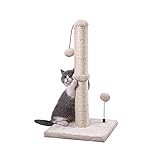
- Premium Quality Materials - This product is made of 100% natural sisal hemp.The base and top is a weighted MDF covering the carpet.Nature High Quality Sisal Safe Plush Long Lasting Usage Stable basement, never tip over easily.
- Protect your furniture - Grab sticks and plush toys combine to attract cats to play and grab, natural sisal is suitable for cats to grab, effectively preventing cats from grabbing furniture
- Designed for indoor use - Neutral colors work well with existing decor in your home.ideal for any living room, bedroom, or home office
- 22"Tall Cat Scratching Post -11.8 x 11.8 x 22 Inches,design for kitties or smaller cats.
- Easy Assemble - ust screw all parts together,Assemble needed, all tools and instructions included.Please contact us if you have any further questions.
What temperament actually means in a selection decision
Temperament is not a single friendliness score. For a household match, consider several related behaviors and needs together.
| What to assess | Questions to ask caregivers | Why it matters at home |
|---|---|---|
| Energy and play | How often does the cat play? What toys or activities does it seek? Does it settle after activity? | A high-energy cat needs daily interaction and enrichment; a low-key home may be a poor fit if it cannot provide that. |
| Social interaction | Does the cat approach people, remain nearby, solicit contact, or prefer distance? How does it respond to ordinary handling? | Your expectations for cuddling, companionship, and handling should match the cat’s demonstrated comfort. |
| Response to activity | How does it react to noise, visitors, movement, or changes in routine? | Busy homes require a cat that can cope with activity or a plan that provides reliable quiet space. |
| Children | What is known about the cat around children, and what ages and behaviors has it experienced? | Children must be able to respect signals and boundaries; suitability is individual, not guaranteed by age or breed. |
| Other animals | Has the cat lived with or been observed around cats, dogs, or other pets? What happened? | Known history helps planning, but even a promising history cannot guarantee that two animals will coexist. |
| Care and supervision | Does the cat need medication, grooming, a special diet, or more supervision than average? | Health and care requirements must fit your time, skills, budget, and access to veterinary care. |
Use these categories as prompts for a conversation, not as a numerical test. No validated universal temperament score or one-visit assessment can guarantee that a cat will suit a particular home.
Kitten or adult cat: choose the life stage you can support
What to expect from a kitten
Cornell University’s Feline Health Center describes kittens generally as curious, playful, and energetic. They need more supervision because they are still learning household routines, safe play, handling, and boundaries. A kitten may climb, investigate, bite during play, wake people, and require several short interactive sessions each day. Its eventual adult personality is not fully established.
Choose a kitten when every household member can provide patient supervision, safe exploration, social learning, veterinary follow-up, and appropriate play. Do not choose one on the assumption that you can reliably mold it into a calm or cuddly adult. Early experience matters, but it does not make adult behavior predictable.
What an adult cat can tell you
An adult cat’s personality is more established, which can make it easier to judge whether its activity, contact, and handling preferences fit your home. This does not mean every adult cat is calm, independent, or instantly sociable. Ask what caregivers have observed over time, including how the cat behaves after settling, during play, and around ordinary household activity.
Rank #2
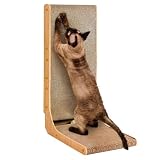
- HIGH QUALITY MATERIALS: The surface of the cat scratching board is made of non-toxic and high-density corrugated paper, which is durable enough to withstand cat scratching.
- INNOVATIVE DESIGN: Our cat scratcher for indoor cats features an L-shaped design. Please place it against wall and sofa to protect your furniture. The L-shaped cat scratcher provides more scratching area for cats to scratch in a variety of positions.
- MULTIFUNCTIONAL USE: Cats can scratch, relax and stretch on our cardboard cat scratcher. Our cat scratch pad also comes with a toy ball to play with. It provides a safe and comfortable environment for cats.
- MULTIPLE SIZES: We offer three sizes of cat scratching pad for you to choose from. The smallest size is specially for kittens. No matter what size your cat is, it enables your cat to scratch and play to its heart's content!
- EASY INSTALLATION: Our cat scratching board adopts a simple installation method and comes with instructions and necessary tools. We also provide an installation video so that you can install it quickly and easily.
Older cats may be an especially good option when you want a more observable routine or cannot supervise kitten behavior. Match the individual cat’s health and care needs to your ability rather than treating age as a shortcut to temperament.
Why age is only one clue
Age describes a stage, not a promise. A lively adult may need more enrichment than a quiet kitten, and a shy cat of any age may need a slow, low-pressure introduction. Evaluate the individual and the household together.
Use the cat’s biography and caregiver knowledge
A label such as “friendly” is too vague to make a decision. Ask for concrete examples and, where possible, a history from a foster home.
- Ask how the cat behaves when a person enters, sits quietly, offers a toy, or stops interacting.
- Ask whether it seeks petting, tolerates handling only briefly, or prefers to remain near people without touch.
- Ask how it responds to feeding, carrier handling, grooming, nail care, and routine changes.
- Ask what situations cause hiding, hissing, swatting, overexcitement, or withdrawal, and what helps the cat recover.
- Ask what is known about previous homes, other animals, children, litter habits, medical conditions, medications, and diet.
Foster observations can reveal behavior in a home setting, but they are still observations rather than guarantees. A shelter environment can suppress or intensify behavior through stress, noise, confinement, and unfamiliar people.
Meet the cat and interpret the meeting carefully
When a meeting is available, observe without demanding a performance. Let the cat choose whether to approach. Notice its body language, interest in play, tolerance for brief contact, and ability to settle after stimulation. A cat that stays back may be frightened or simply cautious; a cat that approaches immediately may be social but could still have needs you have not seen.
Rank #3

- Scratching post provides a place for cats to sharpen their claws and keep nails healthy
- Includes a single pillar scratching post in neutral colors with a replaceable dangle toy
- Natural jute fiber provides an optimal scratching surface
- Sturdy wood base helps prevent the post from tipping
- Ideal for redirecting cats away from scratching household carpet or furniture; spot clean as needed
The ASPCA’s 2012 report on a study conducted in 2011 at five U.S. animal-welfare organizations found that 30% of surveyed adult-cat adopters said behavior with people was their most important selection reason. The finding describes that specific group and period, not a current national rate. The same study reported that adopters valued interacting with a pet more than viewing it in a kennel.
What’s actually slowing this PC down?
Pick the symptom - the matching free tool is one click away.
Use the meeting as one piece of evidence alongside the biography, caregiver history, and your household requirements. Do not reject a suitable cat solely because it is reserved during a short, stressful visit, and do not commit solely because it is affectionate for a few minutes.
Choosing for a home with children
Cats vary in how they respond to children. Some tolerate or enjoy energetic interaction; others are more comfortable with older children who can recognize boundaries and stop when asked. The ASPCA recommends allowing children to spend time with a potential adoption when the organization considers that appropriate.
Before the meeting
- Explain that a cat is allowed to walk away, hide, or end contact.
- Teach children not to chase, corner, pull, carry, disturb while eating or sleeping, or use hands as toys.
- Plan an adult-supervised introduction and a permanent retreat that children cannot enter without permission.
During and after the meeting
Watch whether the cat can remain at ease while children sit, move, speak, and offer an appropriate toy. Ask caregivers whether the cat has been observed with children of similar ages and energy. A single calm interaction does not prove long-term compatibility, and no breed, color, sex, or age is inherently safe with every child. Continue supervision after adoption; children’s behavior and the cat’s comfort can change as the relationship develops.
Choosing when you already have pets
Resident animals add a separate compatibility question. Cats may clash because of territoriality, undersocialization, fear, resource competition, or personality differences. The ASPCA notes that some cats may not be able to live together peacefully, even when owners follow an introduction plan.
Rank #4

- Scratching post provides a place for cats to sharpen their claws and keep nails healthy
- Includes a single pillar scratching post with a replaceable dangle toy
- Natural jute fiber offers an optimal scratching surface
- Sturdy base helps prevent the post from tipping
- Ideal for redirecting cats away from scratching household carpet or furniture; spot clean as needed
Questions for the organization
- What is known about the candidate’s history with cats, dogs, and other animals?
- Has the cat been observed through a barrier, in a foster home, or in another controlled setting?
- What behaviors were seen: relaxed proximity, avoidance, vocalizing, chasing, blocking, swatting, or escalating aggression?
- What introduction pace and separation arrangements does the organization recommend?
Plan for gradual introductions
- Prepare a separate room for the newcomer with food, water, litter, bedding, hiding places, and scratching surfaces.
- Keep animals separated initially and allow each to settle into its own routine.
- Exchange scents and then provide controlled visual contact only when all animals remain sufficiently calm.
- Increase proximity in short, supervised sessions, retreating to an earlier step if fear or aggression appears.
- Provide separate resources and escape routes so no animal must compete for food, litter, resting places, or human attention.
Never force cats to “fight it out.” If conflict persists, seek veterinary or qualified behavior advice and accept that permanent separation or a different placement may be necessary. Adopting a kitten, choosing a particular sex, or following an introduction routine cannot ensure compatibility.
Account for inherited traits and early experience
Breed profiles can offer clues about typical size, appearance, and sometimes personality, especially for a pedigreed cat with documented lineage. They cannot substitute for evaluating the individual, and a breed label does not guarantee behavior.
International Cat Care explains that temperament and comfort around people are influenced by inherited tendencies, the maternal environment, and early experience. The first two months are particularly important for socialization. This makes a kitten’s background worth asking about: what handling, people, sounds, and environments did it experience? It does not turn early history into a deterministic test of adult temperament.
For mixed-breed cats, appearance offers even less reliable prediction. Treat all breed and background information as context, then return to observed behavior and the needs of your household.
Match care, health, and time commitments
Temperament fit includes practical care. Ask the organization what is known about the cat’s health, medications, diet, grooming, litter habits, mobility, and veterinary history. In the ASPCA adopter study, health information was especially important to respondents. Arrange a veterinary appointment after adoption and follow the organization’s advice about records, preventive care, and diet.
Best Value
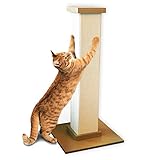
- 32″ height allows cats to stretch fully and tone muscles
- Sturdy 16″ by 16″ base eliminates tipping and wobbling
- Fibrous and durable woven sisal naturally inspires scratching
- Superior to carpeted posts that may snag nail
- Assembles with two included screws
Compare the cat’s needs with your real schedule:
- A highly playful cat needs reliable daily interaction, climbing or exploring opportunities, and rotating enrichment.
- A cat that dislikes handling may be unsuitable if your household expects frequent carrying, dressing, or close physical contact.
- A cat with medical or mobility needs may require medication, accessible resources, and more frequent veterinary visits.
- A shy cat may need a quiet room and a slower transition than a home can provide during a busy move or renovation.
Do not select a cat because you hope its needs will change. Select when you can support the needs already known and remain flexible about preferences that may emerge later.
Prepare the home before arrival
Set up a quiet base room before bringing the cat home. Provide food and water, a litter box placed away from feeding areas, bedding, hiding options, toys, and safe vertical or elevated spaces where appropriate. Keep doors and windows secure and remove hazards that a curious kitten could reach. Ask the organization whether the cat should initially use the same food or litter it knows.
Choose the right scratching surface
Scratching is normal marking and maintenance behavior, not evidence of a bad temperament. Cornell recommends matching a scratching post or other scratching surface to the cat’s established preference for material and orientation. A cat that scratches furniture vertically may prefer a tall, stable vertical post; one that scratches carpet may prefer a horizontal scratcher. ASPCA also lists scratching posts among useful supplies to have ready.
Quick wins for a faster PC:
Scan for outdated or missing drivers - takes under a minuteDriver Scan →Clear out junk files and repair common Windows errorsFree Scan →Place the surface near the locations the cat already chooses to scratch, stabilize it so it cannot wobble, and offer more than one option when you are still learning preferences. A scratching post supports the transition; it does not predict whether a cat will fit your lifestyle.
Give the new cat time to settle
Behavior can change after adoption as a cat moves from a shelter or foster setting into a new environment. Keep feeding, play, litter, and quiet periods predictable. Let the cat hide without dragging it out, and allow it to initiate contact when possible. Learn its likes, dislikes, fears, and needs over days and weeks rather than judging the entire relationship on arrival day.
Introduce additional rooms, visitors, children, and resident animals gradually. Keep the retreat area available even after the cat begins exploring. A foster arrangement may provide more home-based information or help a household decide whether it is ready for a permanent commitment, subject to the local organization’s policies.
A practical decision checklist
Before committing, write down the evidence rather than relying on a photograph or a strong first impression.
Do these 3 things before closing this tab:
1Clear out junk files and repair common Windows errors2Scan for outdated or missing drivers - takes under a minute3Repair Windows errors before they cause bigger problems- Household fit: The cat’s activity and interaction needs match the time, space, and supervision available.
- People fit: Caregivers can describe how the cat behaves with adults, handling, play, and ordinary activity.
- Children’s fit: Children can follow boundaries, and a supervised meeting or reliable history supports the match.
- Pet fit: You have a separate space, separate resources, and time for gradual introductions, with no promise of success.
- Care fit: Known health, diet, grooming, medication, and veterinary needs are manageable.
- Transition plan: You can provide a quiet base room, routine, enrichment, and patience while behavior settles.
- Evidence limits: You have not treated age, breed, sex, color, a photo, or one brief meeting as a guarantee.
If important information is missing, ask whether a foster period, additional visit, or another candidate would give you a more responsible basis for deciding. The right choice is the cat whose real needs you can meet and whose observed preferences you can respect, not the cat that best matches a stereotype.
Quick Recap
Product prices and availability are accurate as of the date/time indicated and are subject to change. Any price and availability information displayed on Amazon at the time of purchase will apply.





Leave a Reply