
Free tools Windows power users keep installed
One-click scans. No signup required.
The safest way to clean a dirty fish tank is a targeted partial cleaning, not a teardown. Leave healthy fish in the aquarium, siphon waste from the substrate, remove algae, change part of the water, and refill with dechlorinated water matched to the tank’s temperature. Preserve the filter media and some established substrate so beneficial nitrifying bacteria continue processing toxic ammonia and nitrite.
Test ammonia, nitrite, nitrate and pH after maintenance. Your fish’s behavior, the visible waste and those test results—not a rigid calendar—determine whether the tank is clean and biologically stable.
As an Amazon Associate I earn from qualifying purchases.
Why a dirty tank needs careful cleaning
Fish waste, uneaten food, dead plant material and algae are normal parts of aquarium life. Problems arise when solids accumulate, organic matter decomposes faster than the biological filter can process it, or water chemistry drifts. The nitrogen cycle converts toxic ammonia to nitrite and then to nitrate through colonies of beneficial microorganisms living mainly on filter media and surfaces such as gravel.
A complete scrub can make the glass look spotless while removing those microorganisms. Connecticut’s Department of Energy and Environmental Protection warns that regularly emptying and washing an established aquarium can cause drastic chemistry changes, stress fish and remove the beneficial microorganisms in the gravel that process waste. Cleaning should therefore remove debris while keeping the biological system intact.
#1 Best Overall
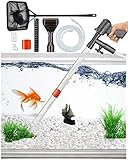
- Mufti-functional cleaning kit: Aquarium gravel vacuum cleaner kit is a mufti-functional aquarium cleaner that uses (adopts)the siphon design principle, which includes the aquarium, aquarium sand washing, algae scraping, fish excrement cleaning, aquarium residual debris, and aquarium water changing. Quick water change gives fish (provides)a clean and comfortable aquarium living environment.
- New safety design: new manual press design, no electricity required and silent while working. Fish tank cleaning tools uses a high-quality pressure resistant air bag, durable, super strong siphon pressure can quickly draw out the muddy water in the fish tank. The aquarium vacuum pipe has a filter net attached to the filter basket to block the blockage caused by the suction of gravel, while preventing your cute fish and the small gravel in the bathtub from being sucked out of the tank.
- Easy to install: This newly upgraded aquarium vacuum is easier to use than traditional fish tank vacuum. Simply hold the handle and press several times until you see water begin to flow out. You can also use a tube to agitate the gravel in the aquarium, causing fish manure, food debris, etc. to drain out of the aquarium with the current. The aquarium cleaning tools is securely attached to the aquarium so you can easily release your hands.
- A wide range of multi-combination accessories: aquarium cleaner vacuum crusher is suitable for different types and sizes of fish tanks, equipped with 2 water pipes and 1 joint, press pump, water flow clip, water pipe clip extended outlet hose, aquarium temperature stickers, fishing nets, plastic algae scraping plate, and detailed aquarium vacuum pump manual.
- Easy to use: The aquarium cleaning kit dust and water changer is hand-held, easy to use and operate, the aquarium cleaners can work stably and efficiently without electricity and without noise, which greatly saves your time and brings more convenience for fish tank cleaning.
Before you start: a safe-cleaning checklist
- Observe the fish. Look for gasping, clamped fins, unusual hiding, loss of appetite, white spots or other signs of illness. Check the thermometer and confirm that the heater, filter and air pump are operating.
- Remove obvious hazards. Net out uneaten food and dead fish or plant material promptly. Decomposing material can raise ammonia.
- Gather dedicated equipment. Use a gravel vacuum or siphon, a bucket used only for aquarium work, an algae scraper appropriate for glass or acrylic, a water conditioner (dechlorinator), a thermometer and a water-quality test kit.
- Plan for hygiene. If you have cuts or wounds, or will handle rough rocks or spiny fish, wear gloves. CDC recommends gloves in these situations. Keep aquarium equipment separate from household cleaning supplies.
- Prepare replacement water. Have enough tap or prepared water to replace the amount you intend to remove. Treat municipal water for both chlorine and chloramine, and bring it close to the aquarium’s temperature before adding it.
How to clean a dirty tank without hurting fish
1. Keep healthy fish in place
Routine maintenance can be performed around healthy fish. Catching and moving them adds handling stress and can damage fins or dislodge scales. Use a separate, clean container only when a fish is being quarantined, treated for illness or the aquarium itself must be moved. Never use a container that has held soap, detergent or other chemicals.
2. Turn off equipment before lowering the water
Unplug the heater, filter and pump before the water level drops. A heater exposed to air can overheat or crack, and a pump running dry can be damaged. Keep the filter media wet in removed aquarium water while you work.
3. Scrape algae from the viewing panels
Use an aquarium algae scraper or pad designed for the tank material. A tool made for glass can scratch acrylic. Work slowly around silicone seams and avoid trapping gravel between the scraper and the panel. Wipe loose algae from the water so it can be removed during siphoning.
Quick wins for a faster PC:
Repair Windows errors before they cause bigger problemsFix Now →Fix the driver behind crashes, sound loss and screen glitchesFind Drivers →4. Clean décor without chemicals
Take out ornaments only if they need cleaning. Scrub them with an aquarium-dedicated brush or pad and rinse thoroughly. Do not use soap, bleach residue, glass cleaner or household disinfectant on anything that returns to the aquarium. If a decoration has absorbed a chemical or cannot be rinsed completely, do not put it back.
5. Siphon the substrate while removing water
Place the bucket below the aquarium and start the gravel vacuum according to its instructions. Push the tube into sections of gravel to lift trapped feces, uneaten food and mulm; for sand, hover just above the surface so you remove waste without continually vacuuming the sand itself. Work methodically across part of the bed rather than stripping every area at once.
Rank #2

- 【Upgraded 6-in-1 Multi-Functional Aquarium Gravel Cleaner】This upgraded gravel vacuum integrates six essential functions: water changing, sand washing, debris removal, water filtration, water showering, and flow control. Designed for use in both freshwater and saltwater aquariums, it is compatible with tanks of various depths and water volumes.
- 【High-Efficiency 28W Pump with 1700L/H Flow Rate】Equipped with a 110V/28W high-torque motor, the pump delivers a maximum flow rate of 1700 liters per hour (L/H). It can drain a 180-gallon (681L) tank in approximately 30 minutes under optimal conditions. The adjustable flow valve allows precise control of suction strength for gentle or deep cleaning.
- 【Powerful Cleaning Performance】The strong suction effectively removes fish waste, uneaten food, algae, and fine debris from gravel and substrate without disturbing beneficial bacteria. Ideal for routine maintenance and deep cleaning, it ensures efficient water changes and a healthier tank environment.
- 【Adjustable Telescopic Tube for Universal Fit】The telescopic cleaning tube extends from 23.6 inches (60 cm) to 37.7 inches (96 cm), accommodating water depths from 13.7 inches (35 cm) to 47.2 inches (120 cm). The ergonomic design allows comfortable operation in shallow or deep tanks, with secure locking mechanisms to prevent accidental retraction.
- 【3-Year Warranty & 24/7 Customer Support】We stand behind our product with a 3-year warranty covering manufacturing defects. Our professional technical team provides round-the-clock support. If you have any questions or encounter issues, please contact us directly—we respond within 24 hours and are committed to your satisfaction.
Stop when you have removed the planned volume of water. A partial change protects fish from abrupt temperature, pH or mineral shifts. If the substrate is extremely dirty, clean different sections during successive maintenance sessions rather than performing a single, aggressive excavation.
6. Preserve the biological filter
Rinse sponge or other biological media gently in the bucket of aquarium water you just removed. Untreated tap water can contain chlorine or chloramine that harms the bacteria you are trying to preserve. Do not replace every medium at the same time. Service or replace activated carbon and disposable cartridges when they are exhausted or clogged, following the filter manufacturer’s design, while retaining mature biological media whenever possible.
The Tool Desk
Outbyte PC Repair FREERepair Windows errors before they cause bigger problemsFix Now →Outbyte Driver Updater FREEScan for outdated or missing drivers - takes under a minuteDriver Scan →If flow is reduced, inspect the intake, impeller and tubing. Remove debris with aquarium-dedicated tools, but do not sterilize the entire filter. Merck’s aquatic-life-support guidance emphasizes maintaining filtration components as part of routine system care.
7. Refill with treated, temperature-appropriate water
Add dechlorinator at the dose specified for the replacement-water volume. Treat tap water for chlorine and chloramine before it enters an established aquarium; never pour untreated municipal water directly into the tank. Add the water slowly over a plate, plastic bag or other clean surface to avoid disturbing the substrate and plants.
8. Restart and verify the system
Restore the water level, restart the filter, heater and air pump, and confirm that water is flowing and the heater is submerged. Check the temperature after the equipment has run. Test ammonia, nitrite, nitrate and pH. Marine or hard-water systems may also require alkalinity or specific-gravity checks. Record the results so you can see trends rather than reacting to one reading.
Rank #3

- FUNCTION --- Easy to control, convenient to siphon fish faeces, impurities, turbid water out of fish tank.
- 5 Feet HOSE --- Made from clear & elastic plastic. Makes it more durable and anti-kinking. Harmless to fishes & No peculiar smell.
- GRAVEL TUBE --- Sinkable, with a detachable filter screen inside. Will not disturb fish or decor when it's working.
- SIPHON BALL --- All you need to do is to pinch it several times, water will flow out automatically. Without striking a blowing.
- WARRANTY --- For 3 months after the date of purchase, we take care of all quality-related issues with a FREE replacement or refund. If you have any questions, do not hesitate to contact our professional after-sale service.
How much water should you change?
No single percentage suits every aquarium. Bioload, feeding, tank volume, plant growth, filtration and test results all affect the schedule. Aquatic Veterinary Services guidance gives 10% weekly or 25% every other week as a general starting point. NSW Department of Education aquarium guidance describes a 20–25% partial change. Merck’s essential-maintenance table lists water changes, substrate stirring and water testing every two weeks as a baseline.
| Task | Merck baseline | How to adapt it |
|---|---|---|
| Fish, temperature and equipment checks | Daily | Check more often during illness, a new setup or a suspected water-quality problem. |
| Glass, cover, evaporation and algae care | Weekly | Remove algae when it blocks viewing or spreads rapidly. |
| Water change, substrate stirring and testing | Every two weeks | Use test results and visible waste to choose a smaller, more frequent change or the stated 20–25% range. |
| Filter and pipework service | Every one to three months | Inspect sooner if flow falls, but rinse biological media only in removed tank water. |
| Lighting check | Every six months | Replace or adjust equipment if output or timers become unreliable. |
For a lightly stocked, well-filtered aquarium, 10% weekly may keep nitrate and debris controlled. A heavily stocked tank, overfeeding or weak filtration may require more frequent partial changes. Increase maintenance gradually and monitor fish rather than assuming a larger change is always better.
Use water tests to decide whether cleaning worked
Ammonia and nitrite
Both should be undetectable in a stable, cycled aquarium. A detectable reading means waste production, filtration or the nitrogen cycle is out of balance. Remove uneaten food, check that the filter is running, perform measured partial changes with conditioned water and retest. If fish are distressed, seek a veterinarian experienced in fish medicine.
Nitrate
Nitrate is less acutely toxic than ammonia or nitrite but accumulates between changes. A rising trend indicates that the current water-change schedule, feeding level or stocking density needs adjustment.
pH and other chemistry
Test pH after maintenance and compare it with the aquarium’s established range. Avoid trying to force a rapid pH correction with unmeasured chemicals. Marine systems and some hard-water aquariums also require alkalinity or specific-gravity testing; match replacement water to the system instead of making a sudden chemistry change.
What’s actually slowing this PC down?
Pick the symptom - the matching free tool is one click away.
Rank #4
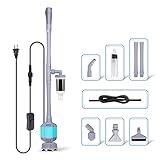
- CLEANING FUNCTION: Our sand cleaner have four spliced rigid tubes, which can be extended from 11.4 inches to 40.5 inches according to the tank. With brush heads, each corner of the fish tank can be cleaned. Aquarium gravel cleaner can also be used with the duckbill suction port to suck dirt from the corner of the fish tank, and the dung can be easily sucked away
- WATER CHANGE FUNCTION: 4.92 ft super high head, and the water changer pump can provide a strong flow of up to 360GPH, the power of sand washer is sufficient to quickly change the water, saving half the time compared to manual. The starting water level can be as low as 2 inches, no water accumulation, and pumping as low as 0.3 inches
- FILTRATION FUNCTION: The filter housing can filter the garbage in the water and make the clean water return to the tank. The fish tank can be filtered without changing water, such as washing sand, and the dirt is directly passed through the filter box. Filter sponge can be repeatedly cleaned and reused and can be replaced with other filter media
- 5 IN 1 MULTI-FUNCTION PUMP: Electric fish tank vacuum cleaner has high-density new plastic, detachable design, wear-resistant, lightweight, anti-fall. The adapter is AC 110V 60HZ, and the power supply has passed UL certification that is good to use. Independent switch control, easy to operate, no longer need to worry about unplugging the socket with wet hands
- ACCESSORIES INCLUDE: functional accessories include 45 ° corner suction inlet(Sand washing head), duckbill suction inlet(Debris vacuum), brush head, gravel washer(sand vacuum), 360 ° water intake strainer, filter housing; other accessories include: adapter ×1, independent switch ×1, water pump motor ×1, extension tube ×4, small connector ×1, Three-way valve ×1, handle ×1, wire slot ×4, outlet ×1, 2m water pipe ×1. 1x improved manual (with detailed use steps)
What to do if the tank is very dirty or tests show danger
Do not respond to a shocking test result by blindly draining and scrubbing the aquarium. Large, abrupt changes can stress fish, and a teardown can remove the bacteria needed to recover. First remove decaying material and uneaten food, verify that filtration and aeration work, and perform a measured partial change with conditioned, temperature-matched water. Retest and repeat appropriately while monitoring the fish.
If ammonia or nitrite remains detectable, review feeding, stocking, filter capacity and recent medication or media changes. Never replace all filter media at once. A fish that is gasping, lying on its side, bleeding or rapidly deteriorating needs urgent advice from a veterinarian experienced in aquatic animals; isolate sick fish when practical and avoid sharing nets or water between tanks.
When should fish be removed?
Leave healthy fish in place for ordinary glass cleaning, substrate siphoning and partial water changes. Remove fish only for quarantine, treatment, a necessary tank move or work that cannot be done safely with them present. If removal is unavoidable, use aquarium water in a clean, covered container, provide appropriate aeration and keep the transfer as brief as possible. Return the fish only after temperature and equipment are stable.
Health precautions for people
Aquarium water and equipment can carry germs even when the tank looks clean. CDC advises wearing gloves when caring for an aquarium if you have cuts or wounds or are handling rough rocks or spiny fish. Keep hands away from your face while working, cover open cuts and wash hands thoroughly afterward. Pour discarded aquarium water into a tub, laundry sink or outdoors when possible, then disinfect the sink or tub. Remove dead fish promptly and isolate sick fish; CDC recommends consulting a veterinarian familiar with fish medicine.
Recommended Free Tools
Common cleaning mistakes and their fixes
- Emptying and scrubbing the whole tank: This removes established microorganisms and can change chemistry abruptly. Use staged substrate siphoning and partial changes instead.
- Rinsing biological media under tap water: Chlorine or chloramine can damage the biofilter. Swish it gently in removed aquarium water.
- Using soap or household cleaner: Residue can poison fish. Use only aquarium-dedicated tools and water.
- Replacing every filter cartridge at once: Keep mature biological media and replace exhausted media according to the filter design.
- Adding cold or untreated tap water: Match temperature and dose dechlorinator before refilling.
- Overfeeding after a cleaning: Extra food becomes extra waste. Feed an amount fish consume promptly and remove leftovers.
- Relying on appearance alone: Clear water can still contain ammonia or nitrite. Test the water and watch behavior.
Equipment that makes maintenance safer
A gravel vacuum is the central tool for removing solid waste while you take out water. An aquarium water conditioner treats replacement tap water for chlorine and chloramine. A test kit measures ammonia, nitrite, nitrate and pH; marine or hard-water systems may need alkalinity or specific-gravity tests. Filter sponges, cartridges and activated carbon are replacement categories for clogged or exhausted media, but biological media should be preserved rather than routinely discarded. Choose tools sized for your aquarium and keep them dedicated to fish care.
How to know the routine is working
After cleaning, fish should resume normal swimming and feeding, the filter should have steady flow, the heater should maintain the usual temperature and test results should remain stable. Keep a simple log of dates, water volume changed, test values, filter service and unusual observations. If nitrate or visible debris rises before the next scheduled service, shorten the interval or reduce the underlying load by adjusting feeding, stocking or filtration.
Merck summarizes preventive fish care as a combination of good diet, water-quality monitoring and a regular schedule of cleanings, water changes and filter replacements. That approach keeps cleaning focused: remove waste, protect the biological filter and verify the water rather than chasing a perfectly sterile aquarium.
Quick Recap
Product prices and availability are accurate as of the date/time indicated and are subject to change. Any price and availability information displayed on Amazon at the time of purchase will apply.





Leave a Reply