A pet evacuation plan works when you can leave with your animal without making transport, supply, or shelter decisions under pressure. The core steps are: choose a destination that accepts animals before an alert, decide how each pet will be carried and who will help you, make each animal easy to identify if you are separated, pack a pet-specific go kit, and rehearse the exit. Official guidance is U.S.-focused, and shelter rules and emergency instructions vary by location, so verify details with your destination and local officials.
Start with a destination that will accept your pet
The most common mistake is assuming a shelter will take your animal. The CDC’s evacuation-center guidance states plainly: “Many evacuation centers (such as Red Cross evacuation centers) do not allow pets and other animals.” (CDC, “Pets in Evacuation Centers,” published January 30, 2025.) Treat a general evacuation shelter as a place you may not be able to bring your pet, and plan around that.
Build a short list of destinations in this order:
- Pet-accepting evacuation facilities in your area. Find them through your local emergency management office before you need them.
- Private backup options. Relatives, friends, pet-friendly hotels, boarding facilities, and animal relief groups can all serve as alternatives.
- A destination outside your immediate area. A backup that is in the same hazard zone may be unavailable at the same time.
Call each option ahead of time and confirm five things: whether it currently accepts pets, which animal types and sizes it allows, whether the pet can stay with the household, what records it requires, and how many animals it can take. Write the answers down and recheck them each season, since policies change.
Plan transport and a backup helper
An evacuation plan fails if the animal cannot be moved. Keep leashes and carriers near an exit so you can grab them without searching. If your household might be away when an order is issued, arrange a trusted neighbor or other person who can check on the animals and evacuate them if you cannot. Give that person a key, your pet’s medication schedule, and written instructions.
#1 Best Overall
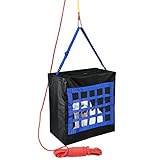
- KEEP YOUR LOVED PETS SAFE: Make sure your pet remains safe in case of fire! Place a pillow in this fire safety device, put your furry friend inside and lower them down to safety. Animal evacuation rescue pouch is mast: In fires, floods, earthquakes, or other disasters, large pets can be hard to control or carry. A dedicated bag or stretcher allows for rapid, safe evacuation.
- EASY TO USE & STORE: Just unfold this easy-to-use fire emergency tool and waste no time in case of fire! This life-saving fire emergency tool comes with a handy storage pouch for space-saving storage. Injury or Panic: Big pets can become injured, scared, or uncooperative during crises. A rescue bag helps secure and calm them while transporting
- ALL YOU NEED FOR A RAPID FIRE ESCAPE IN ONE BAG: We are offering you the heavy-duty 50 ft rope as a BONUS, so that you have everything you need ready for safe fire escape in one place.
- This fire evacuation device works as a backpack or can be used to gently lower down your precious cargo with the included 50-foot rope — plenty long enough for homes with third stories or even fifth floor apartments. (When using this way, place a pillow in first to cushion any accidental falls.)
- DIMENSIONS : 28/21/14 inches WATCH VIDEO ABOUT WEIGHT CAPACITY. 100 lb TEST
If your household does not have a vehicle, ask your local government about transportation options before a disaster. Do not assume a pick-up service exists or will be available during an alert. Record the phone number of a veterinarian or animal hospital near your planned destination, not only one near your home.
Make each animal identifiable if you are separated
Separation is common in disasters, so the identification you carry needs to work without you. Use the following measures:
Rank #2

- Reliable Escape Gear: our fire evacuation device set keep your pets safe in the event of a fire, when danger comes, you don't have to panic with this emergency evacuation kit, just put your beloved pet in a fire emergency evacuation bag, and then use a rope to lower them to safety
- Practical Combination and Suitable Size: this pet fire emergency evacuation set has everything you need for escape, including a sturdy escape bag and heavy-duty descent suspension rope, their sizes are 19 x 18 x 10 inches and 50 ft, which can protect the safety of pet family members during the transfer process
- Durable and Sturdy Materials: our fire evacuation bag is made of thick and stiff frosted cloth as the material, with breathable plastic mesh; The sturdy body of the bag provides pets with a sense of safety while breathing smoothly, without worrying about them falling off, the rope is tightly woven in multiple layers and not easy to wear out, the carbon steel lock buckle is sturdy and tight, and the color is bright and easy to detect and rescue in a timely manner
- Easy to Use and Store: this fire evacuation device is easy to use, can be folded and stored without taking up space, easy to operate and use, it won't make you feel flustered even in stressful situations, our safety equipment survival kit is compact and space saving, and you can place it in a designated area, unfolded for use in case of danger
- Widely Application: the fire emergency evacuation bag can be applied as a shelter for cats in daily life, in case of danger, you can hold a pillow inside for pet to sit on; When you need to take your pet out, it can also be applied as a travel bag with heavy hanging ropes; You can also use it to tie up items or as a high-altitude safety rope; You never know when an emergency situation occur, it can be a gift to protect your pets
- Collar and tag. Fit a collar with a tag showing current contact information on the pet when appropriate for that animal.
- Microchip. Confirm the microchip is registered and that the contact details on the registry are current. Store the microchip number and the registry’s contact phone number in your go kit.
- Photos. Keep recent individual photos of each pet, plus a photo of yourself with each animal. The owner photo helps prove ownership when you are reunited.
- Records. Keep ownership and veterinary records with the kit.
- Carriers. Label each carrier with the pet’s name and your contact details.
The CDC recommends microchipping as part of identification; it is most useful when the registry record is accurate.
Pack a pet-specific go kit
A general emergency kit does not cover animals. Build a separate kit for each household’s pets, stored in a place you can reach quickly and checked at least once a year. The CDC’s kit checklist (published April 9, 2024) lists these core items:
The Tool Desk
Outbyte Driver Updater FREEFix the driver behind crashes, sound loss and screen glitchesFind Drivers →Outbyte PC Repair FREEClear out junk files and repair common Windows errorsFree Scan →Rank #3

- EMERGENCY PREPAREDNESS COMPANION: This cinch bag companion to your existing cat carrier includes everything you need to keep your pet safe for up to 72 hours during emergencies, evacuations or travel situations
- LONG-LASTING FOOD AND WATER: 5 year shelf life food and water with 2 collapsible bowls for convenient feeding and hydration
- COMPREHENSIVE FIRST AID KIT: Vet wrap, Pet Vet wound/burn gel, Mylar blanket, tweezers, cotton swabs, alcohol wipes, gauze pads, hydrogen peroxide spray, and cold pack for treating injuries
- SAFETY ESSENTIALS INCLUDED: 4ft slip lead, LED light, ID card, waterproof ID card holder, and first aid brochure to ensure your cat's safety and identification
- COMPLETE CARE ACCESSORIES: Collapsible nylon litter box, 2 lbs of litter, plastic scoop, waste disposal bags and cat toy for your pet's comfort and hygiene
- Photocopied veterinary and ownership records, pet descriptions and photos, microchip details, and contact information, kept in a waterproof container.
- Two weeks of food and water for each animal, plus non-spill dishes and a manual can opener if the food requires one.
- Feeding instructions and two weeks of any medication, with written dosing directions.
- A one-month supply of flea, tick, and heartworm preventative.
- A leash, collar, and harness.
- A suitable carrier with bedding.
- First-aid supplies and cleaning items.
- Cat litter and a litterbox where relevant.
Ask your veterinarian whether your animal has particular medical needs that change these quantities or require additional items, such as a spare medication that needs refrigeration.
Supply quantities: where the sources differ
The two most-cited federal and nonprofit recommendations do not match exactly on food and water. The table below compares them as published.
Rank #4

- MAXIMUM AIR CIRCULATION & MULTIPLE ENTRANCES: Mesh windows on 4 sides for optimal airflow, 4 entrances (sides, front, and back) allow your pet to enjoy the outside scenery and easy entry into the carrier, and 1 expandable soft mat to keep your pet comfy during the journey
- EXPANDABLE & COLLAPSIBLE: This pet carrier backpack with an expandable back allows your pet to move around more comfortably and reduces the anxiety. And the carrier can collapse flat when not in use. Measures 13x9.8x16.5 inch, easily fits most small/medium-sized pets, weighing up to 18 lbs. Each airline sets their own specific requirements, so it is advised to check with your airline of choice
- STURDY & SAFETY: Equipped with a durable rod on the top and both sides are fixed with frames to stabilize the structure, plus a firm bottom pad offers solid support for your pets. Also comes with a safety leash to prevent escape, this pet backpack carrier is sturdy and safe for your pets
- COMFORT DESIGN: Made with quality and water repellent 300D Oxford fabric for long-lasting use. 2 side pockets to store pet supplies and a ROLLER BLIND can be pulled down to protect from the sun. The travel backpack carrier is portable for traveling, camping, hiking, biking, going to the vet, or walking in the park
- SATISFACTION GUARANTEE: All Lekebobor pet carriers are backed by a 30-180 day solution plan for quality-related issues, as well as friendly customer service
| Item | CDC kit checklist (April 9, 2024) | ASPCA disaster preparedness article (September 1, 2026) |
|---|---|---|
| Food and water | Two weeks per animal | At least seven to ten days |
| Medication | Two weeks, with instructions | Two weeks |
| Flea, tick, and heartworm preventative | One month | Not stated in the summary of the article reviewed |
These are preparedness recommendations, not guarantees that a shelter or relief group will supply food or medication. A practical baseline is the CDC’s two-week amount. Adjust it for the animal’s diet, the length of an evacuation you consider realistic for your area, your climate, and your veterinarian’s advice. Rotate stored food, water, and medication on a schedule so they remain usable when you need them.
Choosing a carrier
The CDC kit includes a carrier with bedding, and FEMA’s pet guidance lists a crate or sturdy carrier for each pet. When selecting one, compare these points rather than brand names:
Do these 3 things before closing this tab:
1Repair Windows errors before they cause bigger problems2Scan for outdated or missing drivers - takes under a minute3Clear out junk files and repair common Windows errorsBest Value
- KEEP YOUR LOVED PET SAFE: Make sure your pet remains safe in case of fire! Place a pillow in this fire safety device, put your furry friend inside and lower them down to safety.
- EASY TO USE & STORE: Just unfold this easy-to-use fire emergency tool and waste no time in case of fire! This life-saving fire emergency tool comes with a handy storage pouch for space-saving storage.
- ALL YOU NEED FOR A RAPID FIRE ESCAPE IN ONE BAG: We are offering you the heavy-duty 50 ft rope as a BONUS, so that you have everything you need ready for safe fire escape in one place.
- DIMENSIONS : 19/18/10 inches WATCH VIDEO ABOUT WEIGHT CAPACITY. 70 lb TEST
- Correct size, so the animal can stand, turn, and lie down.
- Secure closure that a frightened animal cannot open.
- Ventilation on several sides.
- Ease of carrying and loading into your vehicle.
- Whether the pet already accepts it. A carrier the animal has never used is a poor evacuation tool.
- Whether it fits in your household’s evacuation vehicle with other supplies.
Practice the exit
A plan that exists only on paper usually breaks at the carrier. Rehearse it:
- Get the pet comfortable entering and staying in the carrier, using treats and short periods of time with the door closed.
- Take a short vehicle trip with the animal in the carrier, so you know how it behaves during travel.
- Identify where the animal hides when frightened, such as under a bed or behind a appliance, so you can retrieve it quickly.
- For cats, practice a safe retrieval method that protects both you and the animal.
- Walk the household’s route to the planned meeting point and confirm that every person knows which pet and supplies to collect.
Understand shelter and health rules
Even pet-accepting shelters bring animals together in crowded conditions, and the CDC notes that crowding can increase the risk of illness and injury and make waste sanitation harder. Expect the following:
- Dogs, cats, and ferrets will usually need proof of rabies vaccination at entry. Keep current certificates in the go kit.
- Continue ordinary flea and tick prevention during an evacuation.
- If a pet appears ill, seek veterinary advice before or on arrival rather than waiting for symptoms to worsen.
- Wash your hands after handling animals, food, supplies, or waste.
- Keep animals under control and follow each facility’s rules.
Follow official instructions during an alert
Track alerts and local evacuation orders from your official emergency sources. FEMA’s guidance on pets (titled “Prepare Your Pets for Disasters”; the source reviewed does not state a publication date) directs owners to take their animals with them when evacuating. Leave early when an order is issued, while roads remain passable and before a facility fills. Do not wait to see whether a shelter will accept your pet; go to the destination you already confirmed.
If you must leave an animal behind in a true emergency, emergency responders and animal welfare agencies in your area may have specific procedures. Contact local authorities for guidance rather than relying on a general rule.
Quick Recap
Product prices and availability are accurate as of the date/time indicated and are subject to change. Any price and availability information displayed on Amazon at the time of purchase will apply.




